
A chasen and a shaker bottle can both prepare matcha, but they solve different service problems. A bowl of usucha exposes surface texture; an iced latte often hides that surface under milk. Choosing a tool by speed alone can leave clumps in the cup, while choosing by tradition alone can slow a busy cold-drink line. The AVANTCHA guide to chasen, frother and shaker methods describes the basic options. This article shows how a café or beverage buyer can compare a matcha whisk vs shaker bottle with the same powder, recipe and handoff target.
Contents
- 1. What does each tool actually do?
- 2. Which drinks should be compared separately?
- 3. How do you prepare a fair two-tool trial?
- 4. What changes in foam and mouthfeel?
- 5. Which method leaves fewer clumps?
- 6. Does a shaker save time during service?
- 7. How should cleaning and wear affect the choice?
- 8. Can either tool handle milk or ice directly?
- 9. What should wholesale and retail buyers specify?
- 10. How do you choose a method for the menu?
1. What does each tool actually do?
Compare mechanisms before outcomes
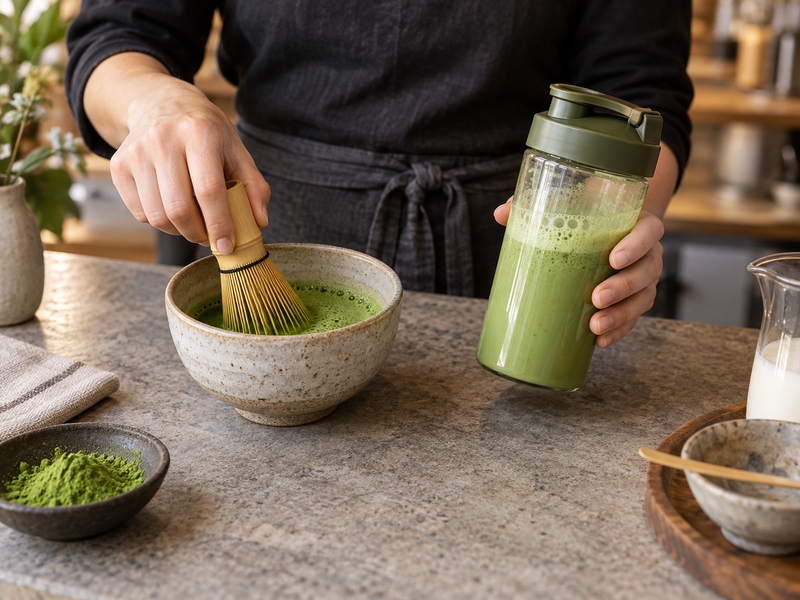
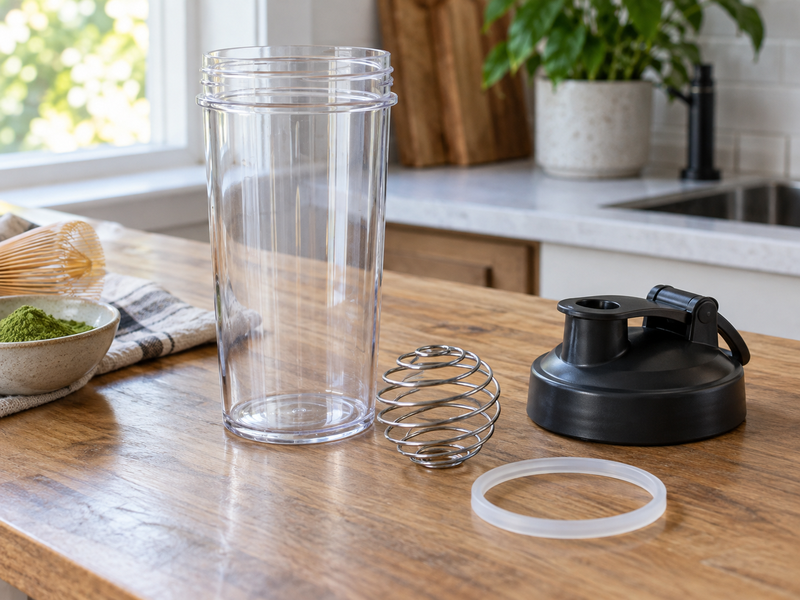
A bamboo chasen moves flexible tines through matcha and water in an open bowl. The operator can see dry powder at the rim, vary the stroke, and stop when the tea reaches a chosen texture. A closed shaker relies on repeated whole-container movement. The liquid and powder collide with the bottle walls and, depending on the design, a screen or mixing insert. You cannot inspect progress until opening it. Neither tool dissolves matcha like sugar; each helps suspend fine tea particles in a liquid.
That difference matters because a bowl gives immediate visual feedback while a sealed bottle contains splashes and may be easier to carry between station points. A whisk also needs room for the hand motion. A shaker needs a secure lid, enough headspace and a repeatable shaking motion.
2. Which drinks should be compared separately?
Define the finished cup
Begin with three use cases: thin matcha served alone, an iced latte made from matcha concentrate, and a larger cold drink prepared for fast handoff. A café may choose a whisk for the first and a shaker for the others without inconsistency. Thin tea asks the customer to taste the matcha directly and see its surface. In a milk drink, even dispersion and service time may matter more than a delicate foam pattern that disappears beneath the milk.
Write a separate pass standard for each drink. For thin tea, inspect visible clumps, bubble size, flavor and the way it feels immediately after preparation. For an iced latte, inspect the finished cup after milk and ice are added, then check the bottom for sediment. A travel bottle should be judged after the time it usually takes a customer to drink it.
| Drink | Main customer-facing check | Likely tool question |
|---|---|---|
| Thin tea | Surface and mouthfeel | Can the shaker match bowl service? |
| Iced latte | Smooth, even final cup | Which tool disperses the base faster? |
| Takeaway cold drink | Texture after several minutes | Does separation change the result? |
3. How do you prepare a fair two-tool trial?
Hold the recipe steady
Use the same matcha lot, dose, water volume and temperature in both methods. Sift or do not sift both samples; changing that step for only one tool will confound the result. For a shaker, document bottle volume, fill level, insert, shake duration and stroke. For a chasen, document bowl dimensions, whisk model, movement and time. Clean both tools before the trial, and use the same operator for the first comparison. Then repeat with another operator to see whether the procedure depends on one person’s skill.
Prepare coded samples in a random order if possible. Taste and inspect promptly, then again at the normal handoff time. One exceptional cup says little about a weekday shift. If matcha sits in the dry shaker before water arrives, the comparison is already different from powder placed in a bowl and wetted immediately. Map the actual station sequence before drawing conclusions about tool performance.
4. What changes in foam and mouthfeel?
Taste the drink rather than counting bubbles
A chasen may produce a fine surface on thin tea when powder, water, whisk and operator work well together. A shaker can also aerate liquid, but its bubbles and the way they settle may differ. AVANTCHA’s comparison describes different textures across preparation tools; treat those descriptions as a starting point for your own menu trial. Photograph the surface at the same moment after mixing, then taste without showing tasters which method produced each cup.
Avoid making foam height the only target. A tall cap can look attractive yet leave large bubbles that vanish before handoff. A low-foam latte concentrate can still make a clean finished drink. Define the intended mouthfeel with plain words such as “no gritty pockets” or “light, even surface,” and tell tasters which drink they are assessing. For milk drinks, evaluate after the concentrate enters milk. That is the product a guest buys, not the intermediate bowl or bottle.
| Observation | Bowl and chasen | Shaker bottle |
|---|---|---|
| Surface | Visible during mixing | Visible after opening |
| Bubble pattern | Depends on stroke and bowl | Depends on fill and shake |
| Final latte | Must be tested after pouring | Must be tested after pouring |
| Decision | Judge against drink standard | Judge against drink standard |
5. Which method leaves fewer clumps?
Locate the powder that escaped mixing
Dry matcha can clump in either tool. In a bowl, powder may cling to the side above the water line or lodge beneath a thick paste. In a shaker, powder can stick around the lid, neck or bottom corners, especially if the bottle is crowded. Inspect the mixing vessel after each sample as well as the served cup. A low number of visible specks in the cup may be misleading if a meaningful amount of matcha stayed behind in the vessel.
Try the same controlled sifting step for both tools before redesigning the whole workflow. Wetting powder with a measured small liquid portion can also be tested as a separate variant. Do not give one method twice as much water and call the absence of clumps a tool advantage. Record how often a second mix is needed. A process that looks fast on its first attempt but regularly needs reopening and shaking may cost more time than a deliberate whisk.
6. Does a shaker save time during service?
Time the whole cycle
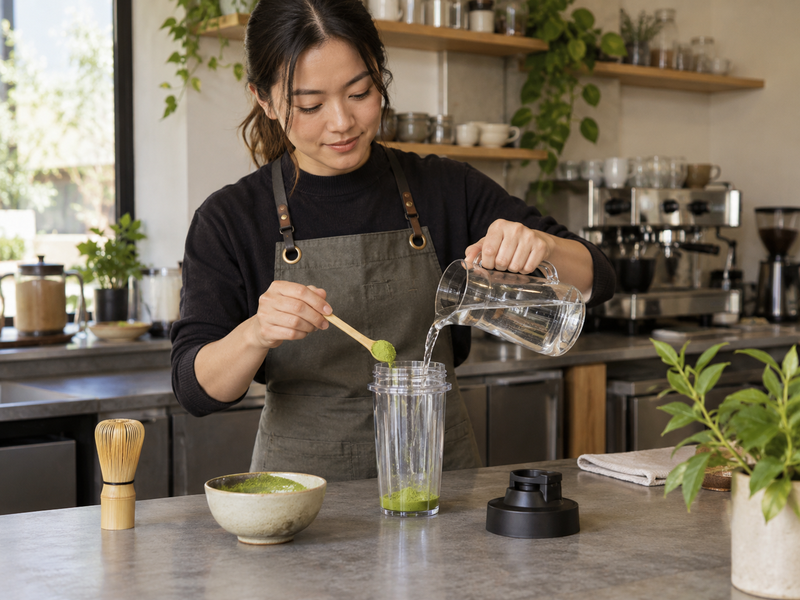
A shaker may be quicker to move than a whisk through a crowded station, but shaking time alone is a poor measure. Start timing when the operator takes the powder and stop after pouring, rinsing, and making the station ready for the next drink. Include reaching for water, fastening the lid, checking the seal, opening, and washing the threads or insert. A chasen cycle includes bowl setup, whisking, pouring and rinsing. Observe several orders in normal queue conditions rather than one demonstration with every tool staged perfectly.
Service speed can also change with batch size. A shaker that works for one serving may lose consistency when staff overload it. A chasen may make a precise single bowl but require a spare tool during a rush. Compare median cycle time and the slowest recoverable failures, such as a leaking lid or clumped powder. The method with the shortest clean demonstration may not deliver the most drinks per hour.
| Cycle step | Chasen workflow | Shaker workflow |
|---|---|---|
| Setup | Bowl, dose, water | Bottle, lid, dose, water |
| Mix | Visible whisk movement | Closed shaking movement |
| Transfer | Pour from bowl | Open and pour |
| Reset | Rinse and dry correctly | Wash bottle, lid and insert |
7. How should cleaning and wear affect the choice?
Include the reset between drinks
A bamboo whisk needs careful rinsing and drying so residue does not remain between tines. Staff should inspect for splits or broken tips and retire a damaged whisk. A shaker’s smooth body may be easy to rinse, but lid threads, seals and mixing inserts can retain powder or milk. Follow each manufacturer’s cleaning instructions and the café’s local food-safety procedures. Do not assume that a tool is hygienic because it appears clean from outside.
Track service life locally. Replacement intervals depend on use, handling and construction, so a single “months per whisk” promise will mislead buyers. Record defects, leaks, damaged tines and replacement dates over a trial period. A cheaper tool that interrupts service or creates uncertain cleaning work can cost more than its purchase price suggests. Conversely, do not reject a shaker simply because a chasen has cultural appeal; assess the intended drink and the actual cleaning routine together.
8. Can either tool handle milk or ice directly?
Keep the recipe inside the tool’s safe use
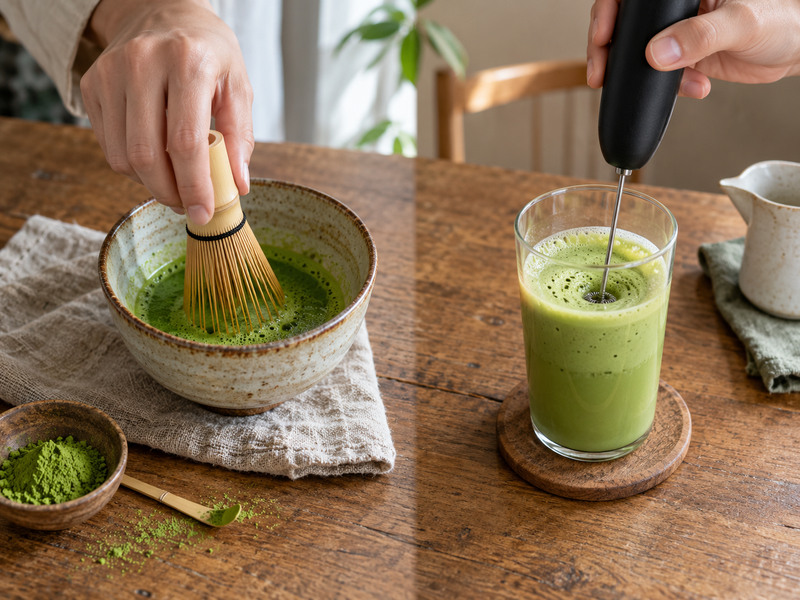
A shaker can combine a cold matcha concentrate with milk if its design, volume and cleaning process support that use. Ice can add mixing force, but it also changes available headspace and dilution. Check the bottle maker’s guidance before shaking hot liquids; pressure and scalding risks differ by product. A bamboo whisk is normally tested in a bowl with liquid at a workable depth. Thick milk or ice can obstruct the tine movement and make results inconsistent. Make the matcha base separately, then pour into milk and ice, unless a specific alternate process has passed a trial.
For a café, split the question into water-only dispersion and finished-drink blending. It may turn out that a chasen produces the best base and a quick closed shake produces the best finished iced drink. If an operation serves allergens through shared shakers, include its cross-contact controls in the decision. A tool choice is also a station and cleaning choice.
| Liquid or addition | Chasen trial | Shaker trial |
|---|---|---|
| Water and matcha | Normal bowl test | Normal bottle test |
| Milk | Test in final drink | Confirm cleanable components |
| Ice | Usually added after base | Test headspace and dilution |
| Hot liquid | Follow whisk recipe | Check maker’s safety guidance |
9. What should wholesale and retail buyers specify?
Sell the use case, not a universal winner
A retailer offering a chasen should identify its construction, compatible bowl, care guidance and the preparation styles tested. A shaker listing should state usable capacity, lid and seal construction, cleaning instructions and whether any mixing insert is included. Avoid “perfect for all matcha” claims. A consumer may be preparing thin tea at home, while a café buyer may be trying to shorten an iced latte line. The same accessory can be a poor fit for one and useful for the other.
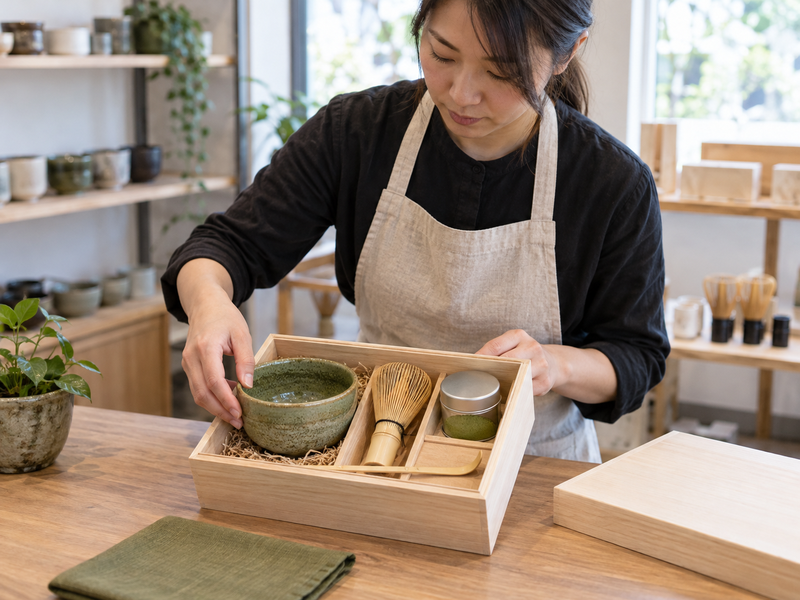
For bundled matcha programs, test the powder with the exact tool sold in the kit. Matcha Village offers matcha supply and can discuss utensil or gift-set combinations; that does not establish that it manufactures the whisk or shaker. Buyers should ask who makes each accessory, approve physical samples, and record packaging protection and replacement terms. Include a short recipe card that matches the components in the box.
10. How do you choose a method for the menu?
Make a decision that staff can repeat
Build a short decision sheet for each menu item. State whether surface presentation, smooth latte texture, speed, portability or low cleaning burden carries the most weight. Review tasting and cycle-time results side by side. If the differences are small, choose the tool that fits the existing station and training plan. If different drinks point to different tools, specify both with separate recipes. Avoid switching methods silently when one tool is busy; the customer should still get the approved drink.
Pilot the choice across ordinary shifts before making a large accessory order. Recheck when a new powder, bowl, bottle or milk enters the menu. A successful comparison ends with a clear staff instruction: which tool prepares which drink, what a passing cup looks and tastes like, and when to take a damaged tool out of service.
| Menu item | Approved tool | Pass check | Recheck trigger |
|---|---|---|---|
| Thin tea | Enter trial result | Surface and taste | Powder or whisk change |
| Iced latte | Enter trial result | Uniform finished cup | Milk or bottle change |
| Takeaway matcha | Enter trial result | Texture at handoff | Cup or ice change |
The matcha shaker bottle guide covers seal and cleaning details worth adding to this equipment comparison.
FAQ
Q1. Is a bamboo whisk always better than a shaker? No. Compare the finished drink and service routine; thin tea and an iced latte may call for different tools.
Q2. Can a shaker make foam? It can aerate a drink, but foam character varies with bottle design, fill level, liquid and shaking motion.
Q3. Should matcha be sifted before shaking? Test sifting as a controlled step. It can remove dry powder lumps, though it adds a station task.
Q4. Can staff shake hot matcha in a sealed bottle? Follow the bottle maker’s guidance. Do not assume a sealed shaker is safe for hot liquids.
Q5. What should a café measure before buying tools? Measure finished-drink quality, full service cycle time, cleaning, defects and staff repeatability with its actual recipe.
Choose by the cup you sell
Run one matcha whisk vs shaker bottle trial for each drink type, then record the approved method on the recipe card. The useful result is a consistent cup at the counter, supported by a cleaning routine and a tool that can be reordered.