
Premade matcha is a matcha drink or concentrate prepared before the customer orders it. For a café chain, distributor, or beverage brand, that simple definition hides several very different products. A refrigerated latte, a shelf-stable can, and a frozen concentrate demand different equipment, storage, pricing, and sensory tests. Choose the wrong format and a good-tasting sample can turn into a slow-moving SKU. This guide gives buyers a practical way to specify the liquid, test it in the intended channel, and compare offers. Our view comes from supplying matcha ingredients and blends for foodservice and product-development teams, where the powder has to work in the finished application.
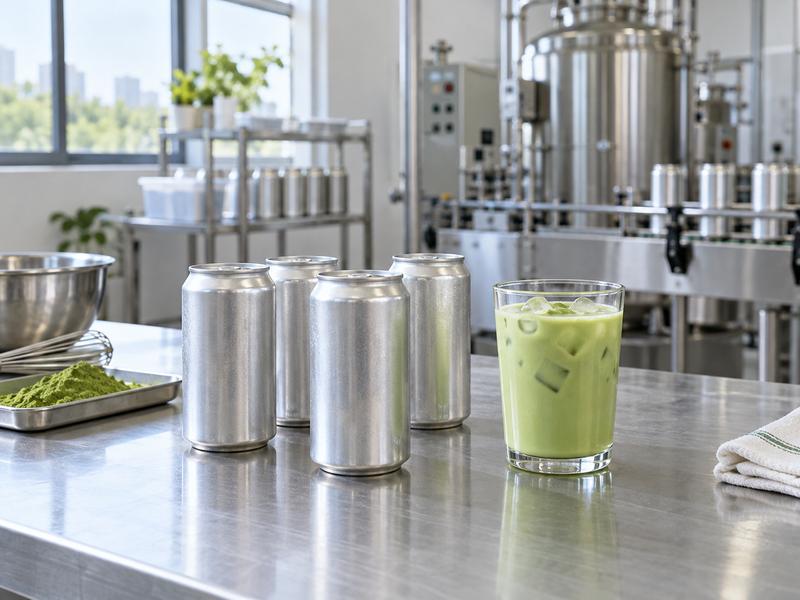
1. What counts as premade matcha in a commercial line?
Define the selling unit before comparing samples
“Premade” can mean ready to drink, ready to dilute, or ready to pour over ice. Those are not interchangeable purchasing specifications. A café may buy a chilled base to shorten ticket time, while a grocery brand may need a sealed can that survives distribution. A dispenser syrup may contain matcha but still need milk or water at service. Ask each supplier to state the product’s intended use, required dilution, serving size, storage condition, and whether separation is expected.
For procurement, define matcha content by the actual formula or ingredient specification rather than the color on a sales sheet. A product can look green because of other ingredients, and a dark concentrate may become pale once diluted. Request the finished beverage formulation under confidentiality if possible, or at least a declared matcha input and a reference serving method. In a blind tasting, prepare every option according to its own instructions and then compare the same finished serving volume. The practical test: if your team cannot recreate the supplier’s sample during a normal shift, the product is not ready for your operation.
2. Which premade matcha format fits the sales channel?
Match the pack to where the drink changes hands
Start with the handoff. A customer who opens a can at a convenience store expects a finished beverage. A barista can dilute a base and adjust milk, sweetness, or ice. A food manufacturer may prefer an ingredient concentrate that enters its own filling process. Buying the most convenient-looking format without mapping that handoff often shifts labor or waste elsewhere. Chilled goods also need dependable refrigeration through receiving, storage, and display.
| Format | Best-fit buyer | Operational question |
|---|---|---|
| Finished can or bottle | Retail or vending | Does the drink taste right at sale temperature? |
| Chilled café base | High-volume foodservice | How many servings can staff pour before quality drifts? |
| Concentrate | Chains with a standard recipe | Can staff hit dilution accurately during rushes? |
| Frozen base | Seasonal or controlled distribution | Does texture recover after thawing? |
Work backward from order frequency. A busy chain may pay more per liter for a base that cuts rework and training time. A small café with uncertain demand may be better served by portioned powder because an opened liquid pack carries a use-by clock. Test the whole transaction: receiving, opening, pouring, garnishing, and disposal. A sample tasting alone cannot show those costs.
3. How should buyers judge flavor, color, and texture?
Use a repeatable tasting rather than a beauty contest
Color matters on a shelf, but it is only one signal. Record aroma before shaking, after shaking, and once the drink reaches its normal serving temperature. Taste for tea character, sweetness balance, dairy or plant-milk notes, bitterness, and any cooked or stale edge. Then assess mouthfeel and visible sediment. Matcha is a suspension of powdered leaf, so some settling can be normal; the question is whether the pack recovers with the instructed shake and still pours acceptably.
| Check | Method | Buyer decision |
|---|---|---|
| Appearance | Photograph under one light at opening and after mixing | Acceptable color range |
| Flavor | Blind taste at intended temperature | Target tea-to-sweetness balance |
| Texture | Pour into a clear glass after instructed handling | Allowed sediment and grit |
| Recovery | Reshake after a short rest | Staff or consumer handling instructions |
Set a reference sample with written notes, not merely a score out of ten. A distributor buying for several accounts may need a balanced profile; a specialty café may want a stronger tea note that survives ice and oat milk. Ask the supplier to send samples from more than one production batch when the project reaches qualification. Repeatability can matter more than the single best cup.
4. What should the ingredient list and formula tell a buyer?
Read the formula as a service and labeling decision
A short ingredient list is easy to understand, but it does not automatically deliver the best shelf behavior. Milk type, sweetener, stabilizer, acidity, and matcha loading all influence texture and flavor. Compare products at equal finished strength. A concentrate with a high matcha percentage on paper may supply less matcha per served drink after dilution than a finished latte. Request grams of matcha per intended serving or enough formulation detail to calculate them.
Review allergens and any claims with your own regulatory and quality teams for the target market. A supplier’s marketing image does not establish that your retail label is compliant. If the brief calls for “unsweetened,” check for sweetened milk components and flavor systems, not just added table sugar. If the brief calls for organic positioning, ask which specific finished product, facility, and market documents support it. Keep one master brief: desired sensory profile, ingredient exclusions, serving method, label claims to verify, and pack size. Without that document, procurement and product development may approve different drinks under the same project name.
5. How can a team test separation and shelf performance?
Test the actual distribution path
Ask for a documented shelf-life study appropriate to the formula and processing method. There is no universal shelf life for premade matcha: a refrigerated dairy drink, ambient can, and frozen base have different failure modes. The processor should define microbiological controls and validated storage conditions. Your team should then test appearance and flavor across the proposed period, including realistic handling such as transit vibration and time on shelf. Never extend a use-by date because a pilot sample still looks green.
| Stage | Sample to inspect | Possible rejection signal |
|---|---|---|
| Fresh fill | Opening baseline | Off flavor or visible clumps |
| After transport simulation | Pack shaken as instructed | Hard sediment that will not redisperse |
| Mid shelf period | Intended service temperature | Color or aroma outside agreed range |
| End of validated period | Sealed pack and poured drink | Failed quality or safety criteria |
Keep retained samples and use fixed lighting for comparison. Record lot, fill date, storage location, and observed conditions. Color change can be gradual enough that a team misses it when evaluating one can at a time. Side-by-side comparisons expose drift. Sensory acceptance limits should be agreed before commercial production, along with a process for handling out-of-range lots.
6. How does packaging change the drink and the buying case?
Choose packaging around light, oxygen, and use
Opaque cans can shield the drink from light; clear bottles let shoppers see color but expose any settling. A resealable bottle may suit multiple pours, while a single-serve can avoids opened-pack handling at a café. The pack also affects shipping cube, damage rates, minimum print quantities, and what information fits on the label. Request filled-pack samples, not empty packaging mockups. Test opening force, pour control, and appearance after handling.
| Pack decision | Upside | Trade-off to test |
|---|---|---|
| Opaque can | Light barrier and single serving | Consumer cannot see liquid |
| Clear bottle | Visible product color | Light exposure and sediment visibility |
| Foodservice pouch | Lower packaging per serving | Opened-pack procedure |
| Frozen tub | Batch use in controlled kitchens | Thaw time and texture recovery |
Packaging decisions belong in the flavor trial. A drink that tastes excellent from a fresh lab beaker may shift after contact with its final container and processing cycle. Have the co-packer or manufacturer supply the specification for closure integrity, fill controls, and distribution testing. Do not promise an ambient product until the formulation and process have been validated as a pair.
7. What does a useful landed-cost comparison include?
Price the served drink, not just the case
List all units before comparing quotes: liters per case, servings per pack, dilution ratio, usable yield, freight terms, taxes, and expected waste. For a café concentrate, include milk, cup, ice, labor, and any discarded base after opening. For a retail can, include packaging, freight, promotional allowances, and returns. The lowest factory price can produce a higher cost per sellable serving if the pack is awkward or the drink requires correction at service.
| Cost line | Premade can | Café concentrate |
|---|---|---|
| Purchased unit | Finished can | Base pack |
| Additional ingredients | Usually none | Water or milk, ice, garnish |
| Labor | Stock and serve | Measure, dilute, finish |
| Waste exposure | Damaged or expired units | Opened-pack remainder |
Run two demand scenarios: ordinary week and a slow week. An opened pack size that works during a promotion may waste product during a quiet period. Ask for pricing at realistic initial volume rather than a distant annual target. Then model the effect of case count, storage space, and reorder lead time. This makes the sourcing discussion about operating margin instead of a headline price per kilogram or liter.
8. What belongs in a pilot before a purchase order?
Test a normal day, including the awkward parts
Build a pilot with production-representative packs and at least two staff shifts. Give staff a one-page preparation instruction, then watch where they improvise. Do they shake every can? Can they pour a concentrate at the specified ratio without slowing the line? Does a partially used pouch fit existing refrigeration? Record actual preparation time and finished drink weight. Training failures are product-design findings, not simply staff mistakes.
Include a small sensory panel of people who match the likely buyer or customer, but keep operational tests separate. A panel may prefer an intense tea flavor while the store manager needs a drink that remains consistent with variable ice. Use a pass/fail sheet with explicit ranges for appearance, serving temperature, dilution, and waste. Retest after correcting one variable at a time. Watch the second day: opened-pack handling and sediment often create issues after the excitement of the first tasting wears off.
9. Which supplier documents reduce launch risk?
Ask for product-specific evidence
At qualification, request a current specification, ingredient and allergen statement, storage and shelf-life basis, batch identification method, and certificate of analysis where appropriate. The required package will depend on product type and market. If a supplier mentions certifications, confirm they cover the actual entity, product scope, and validity period. A certificate for matcha powder does not automatically cover a finished dairy latte from another facility.
For custom production, agree on quality parameters before artwork and inventory are committed. Specify how color, taste, net fill, closure, and shipping damage will be checked, and who approves a deviation. Include the process for formula changes or ingredient substitutions. A dependable supplier should be able to explain what changes between a bench sample and production scale. Matcha Village can discuss powder and blend selection, sample testing, and documentation for the ingredient stage; finished RTD processing may involve a separate qualified manufacturer.
10. How should a brand launch and replenish premade matcha?
Use early sales to refine pack and forecast
Launch with a small number of SKUs that each answer a clear use case. Track sell-through by outlet, returns, complaints, and the share of customers who buy again. For foodservice, log servings made and product discarded. For retail, compare cases shipped with cases sold; distribution into stores is not consumer demand. Keep batch identity in the feedback record so a flavor complaint can be investigated rather than averaged away.
Set reorder points using actual lead time, demand variation, and shelf life. A product with a short remaining life should not be bought in a volume that assumes perfect sales. If the first run underperforms, decide whether the issue is flavor, price, placement, or simply a pack format that does not fit the channel before reformulating. Premade matcha can remove steps for the customer, but it adds requirements for the buyer: formula control, processing evidence, and stock discipline. The right launch makes those requirements visible early.
Buyer takeaway
Define the finished serving, test it in its real pack, and cost the sellable unit. Treat flavor, stability, labeling, and replenishment as linked decisions. If you are developing a premade matcha line and need an ingredient or blend that performs in your target formula, share your serving brief and process constraints with Matcha Village. A useful first conversation starts with the drink you need to sell, not a generic powder grade.
FAQ
Q1. Is premade matcha the same as instant matcha?
No. Premade matcha usually refers to a prepared liquid or concentrate. Instant matcha is a dry product that still requires mixing.
Q2. Must a ready-to-drink matcha latte be refrigerated?
That depends on its formula and validated processing. Follow the manufacturer’s stated storage conditions; do not infer them from the pack type.
Q3. Does sediment mean a matcha drink has failed?
Some settling is expected in a powdered-leaf suspension. Judge whether it redistributes as instructed and remains within the agreed quality standard.
Q4. What should a buyer request before a commercial run?
Ask for the product specification, ingredient and allergen details, validated shelf-life basis, final-pack samples, and batch traceability plan.
Q5. Can one matcha base serve both cafés and retail?
Sometimes, but the serving method, processing, pack, and storage requirements differ. Test each intended channel separately.