
Matcha with condensed milk can give a café a rich, sweet drink with few ingredients. It can also become too sweet, slow to mix, or inconsistent from one barista to another. This guide turns the pairing into a measurable commercial recipe, from matcha dose and dairy handling through menu cost and label review. We write from a matcha supplier’s application perspective: choose a powder only after testing it against the condensed milk and serving method you will actually use.
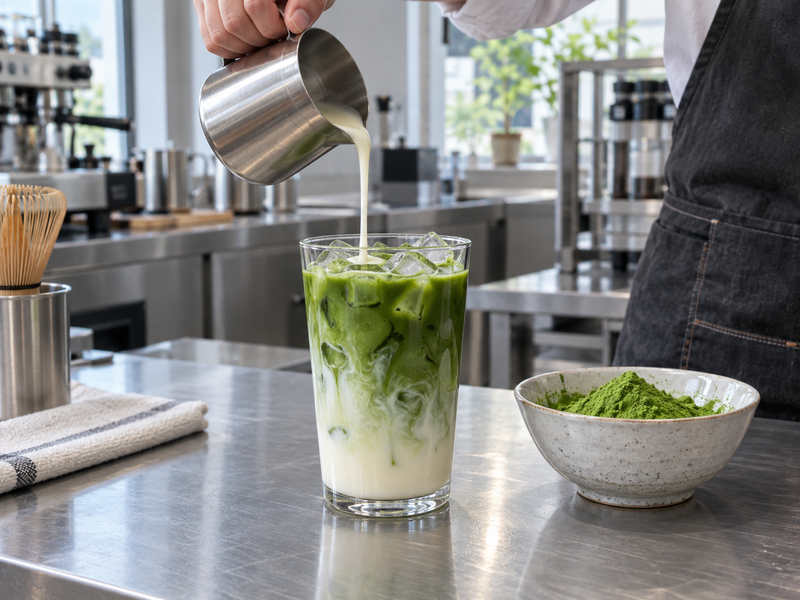
1. What does matcha with condensed milk mean in foodservice?
Most menus mean green matcha powder combined with sweetened condensed milk, water, ice, and sometimes additional milk. Sweetened condensed milk brings both dairy solids and sugar. It is thicker than ordinary milk, so it changes mouthfeel and mixing behavior as well as sweetness. A café may serve the combination as an iced latte, a hot drink, a layered dessert beverage, or a sauce over shaved ice. Each format needs its own measured recipe.
Confirm whether the kitchen uses sweetened condensed milk, evaporated milk, or a plant-based condensed-style product. They do not perform the same way and may have different allergens or ingredient declarations. Matcha powder can be plain or part of a pre-sweetened blend; adding condensed milk to a sweetened mix may double the intended sugar. Write a one-line product brief with serving size, target tea strength, sweetness, appearance, and speed of preparation. That brief makes supplier samples comparable and gives staff a recipe they can reproduce.
2. How should a team balance tea, sweetness, and dairy?
Start with the condensed milk dose, then test matcha levels around a target cup size. Keep the water and milk volumes fixed while changing one variable at a time. Taste the finished drink after stirring, not only a concentrated matcha shot. Condensed milk can soften bitterness but also bury tea aroma. If the matcha disappears, increasing its dose may help; so may reducing condensed milk or choosing a powder with a more distinct tea profile. Adding more powder without changing sweetness can produce a chalky, expensive drink.
Build a three-point trial for sweetness and a three-point trial for matcha dose rather than guessing with “one spoonful.” Weigh the viscous dairy ingredient or use a calibrated dispenser; its flow changes with temperature. Ask several tasters to note whether they can identify matcha, whether the sweetness lasts too long, and whether the finish feels heavy. A drink meant for dessert may be richer than an everyday morning latte, but the menu description and price should match that intent.
| Variable | Test levels | What to record |
|---|---|---|
| Matcha | Low, target, high dose | Tea visibility and texture |
| Condensed milk | Low, target, high dose | Sweetness and body |
| Extra milk | None or fixed amount | Dilution and color |
| Ice | Fixed measured mass | Fill level and melt |
3. Which matcha and condensed milk formats work?
Plain matcha powder gives the operator control over tea dose and sweetness. A matcha latte blend can be easier to portion, but it may include sugar or dairy ingredients that overlap with condensed milk. Ask for the complete formula and test it in the finished cup. For the dairy side, a can, squeeze bottle, or larger foodservice pack changes how staff dispense and store the ingredient. A wide-mouth can may be inexpensive yet awkward during a rush; a pump may improve speed if it handles the viscosity accurately.
Compare the usable yield from each pack, including the amount left behind. Do not assume a pump delivers the same grams per stroke in a chilled and warm room. Weigh ten dispenses at operating temperature. If stores prepare a premade sauce, record the mixture and holding instructions under the café’s food safety plan. A supplier quote should state the exact matcha sample and pack size; a change of powder grade can alter how the drink tastes under the same condensed milk dose.
4. How can staff avoid clumps and heavy streaks?
Matcha disperses more reliably when a measured amount of water is added before the dense dairy ingredient. Mix the powder into a smooth slurry using the café’s chosen whisk, shaker, or mixer, then combine it with condensed milk and the rest of the liquid. Test whether the condensed milk goes into the cup before or after the matcha slurry. A deliberate layer can be attractive, but an unplanned lump of syrup at the bottom gives the customer a very sweet last sip.
Keep equipment and serving time in the trial. A barista can make a perfect sample with a long hand whisk, while the same recipe may fail at a busy counter. Try three drinks consecutively and inspect the third cup for powder specks, milk streaks, and consistent fill. Then stir each drink as a customer would. If the ingredients combine only after vigorous shaking, decide whether that preparation fits the menu format. Write the actual water amount and mixing time on the build card.
| Method | Good fit | Check before approval |
|---|---|---|
| Whisked slurry | Visible bar preparation | Time and clump rate |
| Shaker | Iced, fully mixed drink | Foam and cleaning |
| Electric mixer | Higher volume counter | Consistency and noise |
| Layered pour | Photo-led signature drink | Balance after stirring |
5. Does the recipe change for hot and iced service?
Yes. Ice dilutes the iced drink as it sits, so the first sip and tenth-minute sip can differ. A hot drink has no ice dilution, but condensed milk may disperse faster and appear less layered. Test each service temperature separately rather than pouring one recipe over ice and calling it an iced version. For cold service, check color against the actual cup, ice quantity, and milk base. For hot service, check that the matcha remains pleasant after the drink cools to a realistic sipping temperature.
Do not add matcha to a boiling pot merely for speed. Controlled mixing helps protect flavor and gives a more consistent result. If a hot sauce or dessert topping is the product, run the full heating and cooling cycle and judge texture after holding. A condensed milk sauce can thicken or leave streaks on equipment. The ideal matcha grade may differ between a delicate hot cup and a very sweet iced dessert drink, so send the intended application to the powder supplier rather than asking for the “best matcha” in isolation.
6. Which menu applications justify the pairing?
An iced latte can make the condensed milk visible as a sweet layer; a fully mixed version may offer a smoother experience. A hot latte can use the ingredient for body without a separate syrup. A dessert café might put matcha-condensed milk sauce on shaved ice, waffles, or cake. For each item, test flavor and appearance at the actual serving dose. A sauce that tastes balanced on its own may dominate a light sponge, while a latte that tastes rich in a small tasting cup may feel excessive at full size.
Keep the menu claim specific. “Matcha with sweetened condensed milk” tells customers more than a vague “creamy matcha.” Show the dairy ingredient clearly to anyone asking about allergens. Offer a separate unsweetened matcha item if that is part of your audience’s expectation; simply reducing condensed milk can change texture as well as sweetness. A tight menu can use one tested matcha powder across several items, but each build needs its own portion and cost sheet.
| Format | Target behavior | Watch for |
|---|---|---|
| Iced latte | Balanced after ice melt | Sweet bottom layer |
| Hot latte | Smooth tea and dairy finish | Overly heavy body |
| Dessert drizzle | Clean pour and visible green | Streaking or excess sweetness |
| Shaved ice | Even distribution | Concentrated pockets |
7. What handling and labeling checks are needed?
Sweetened condensed milk is a dairy ingredient unless the specific product says otherwise, so allergen controls matter. Use the manufacturer’s instructions for unopened and opened packs, and apply the café’s approved rules for transfer containers, date marking, refrigeration where required, and discard. Do not infer opened-pack shelf life from the unopened can. If a premixed matcha-condensed milk sauce is made for later use, its handling needs a product-specific food safety decision.
For packaged retail products, ask qualified staff to review the ingredient list, allergen declaration, nutrition information, process, and shelf life for the destination market. Matcha and milk can each bring quality issues that a spoon test will not reveal. Incoming matcha should have the relevant lot records and tests for your market. Keep records connecting the dairy pack and matcha lot to each production batch. Avoid wellness language that implies this sweetened drink has a medical or nutritional benefit merely because it contains tea.
8. How should a buyer cost the finished drink?
Weigh matcha and condensed milk per serving, then add the base, cup, lid, ice, garnish, and labor. Calculate the cost of the amount actually used, including product trapped in the can or bottle. A low-price condensed milk pack may be less economical if staff waste a large fraction or need extra time transferring it. Price the drink against its target margin and the market’s willingness to pay for a rich dessert-style item.
Measure portion drift during a mock rush. Staff may squeeze harder when a bottle is nearly empty or use a heaped spoon for matcha. Ten consecutive drinks reveal whether the build card needs a better dispenser or a pre-portioned ingredient. If a different matcha powder is proposed, calculate the dose needed for equivalent tea strength, not just its kilogram price. A cheaper powder that requires more grams may also increase sediment or bitterness. Small recipe choices become large purchasing differences across many stores.
| Line | Measure | Often missed |
|---|---|---|
| Matcha | Grams at accepted flavor | Overportioning |
| Condensed milk | Grams dispensed | Pack residue |
| Other ingredients | Milk, water, ice, garnish | Substitution versions |
| Service | Prep time and packaging | Remakes and cleaning |
9. What should the supplier brief include?
Tell the matcha supplier the exact drink or dessert, condensed milk brand or ingredient profile, serving size, target sweetness, and expected price point. Ask for matcha samples suited to that base rather than a single generic grade. Request a specification, lot identification, storage guidance, and relevant quality documents. If the product will be a private-label mix, ask which ingredients are already in the blend and who controls future formula changes.
For a chain, forecast powder volume from actual grams per serving and expected sales, then add an agreed allowance for training and waste. Compare pack sizes with store throughput so open powder is used under the supplier’s storage guidance. Set a replacement-lot approval process: taste the new lot in the condensed milk recipe, not only in plain water. Matcha Village offers bulk matcha and custom product discussions; your detailed application brief helps a supplier select a sample that can be judged fairly.
10. What proves the menu item is ready to launch?
Run the recipe through a small store pilot. Use the final cup, equipment, dispenser, and staff instructions. Record preparation time, taste after stirring, appearance at service, and waste from opened condensed milk packs. Include a hot or iced version only if each has passed its own test. Ask staff for specific problems: clumps, sticky cleanup, slow dispensing, and inconsistent sweetness. Ask customers whether the tea flavor comes through and whether they understood the drink would be sweet.
Approve the item when the recipe, ingredient documentation, allergen language, portion cost, and replenishment plan agree. Keep the tested matcha lot as a reference. If the formula changes, retest the drink and review the menu copy. Matcha with condensed milk can be a dependable signature item when the sweet dairy note supports the tea rather than hiding it.
| Gate | Retain | Owner |
|---|---|---|
| Recipe | Measured build card and reference cup | Operations |
| Ingredients | Specifications and lot records | Quality / purchasing |
| Customer copy | Approved ingredient and allergen wording | Brand / regulatory |
| Economics | Per-serving cost and waste data | Finance / operations |
Frequently asked questions
Q1: Is condensed milk the same as ordinary milk?
No. Sweetened condensed milk is concentrated and sweetened, so recipe dose and handling differ.
Q2: Can I use a sweetened matcha latte powder?
Yes, but check its full formula; condensed milk may make the drink too sweet.
Q3: How do I prevent matcha clumps?
Pre-disperse a weighed matcha dose in measured liquid, then follow a tested mixing sequence.
Q4: Does the recipe contain a milk allergen?
Usually yes when it uses dairy condensed milk. Check every ingredient and communicate allergens clearly.
Q5: Can the café hold premixed sauce at room temperature?
Do not assume so. Follow a product-specific food safety plan and validated handling instructions.
Share your condensed milk recipe and target serving with Matcha Village to request a tested matcha sample. The right powder should earn its place in the finished cup.