
An electric matcha maker mixes matcha powder with liquid using a powered whisk or integrated mixing chamber. That sounds like a small equipment choice. In a café, it changes recipe timing, cleaning, staff training, and the texture of every cup. A machine that produces a glossy demo drink may struggle with cold milk, a large queue, or a different powder grade. This guide shows café chains, equipment buyers, and distributors how to run a fair trial and write a workable operating specification. We approach the question from the ingredient side: a maker and a matcha powder need to be tested together in the drink customers will receive.
1. What types of electric matcha maker are sold?
Separate a powered whisk from a full drink station
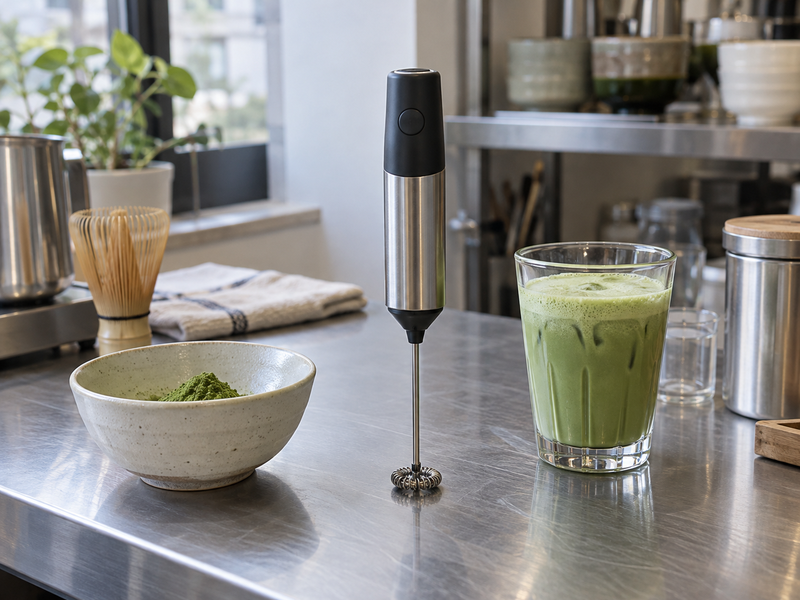
“Electric matcha maker” covers handheld frothers, countertop whisking vessels, and automated devices that dose or heat liquid. A handheld tool is cheap and flexible, but an operator still measures powder, water, and milk. A covered mixing vessel may reduce splashes and deliver a repeatable batch volume. An all-in-one station may simplify a prescribed drink yet demand more cleaning and counter space. Ask what the equipment actually controls: speed, time, temperature, liquid volume, powder dose, or none of these.
Also clarify the intended beverage. Some devices mix matcha with a small amount of warm water to create a base; others claim to make a complete latte. Those tasks place different demands on motor torque and chamber volume. A foam-rich hot latte might be attractive in a demo while an iced drink needs rapid dispersion with less foam. Start with the menu: list your top two matcha drinks and their exact recipes before contacting vendors. An equipment category is useful only when it matches the service step you need to simplify.
2. Which service workflow does a maker improve?
Time the full order rather than the motor
Measure from ticket to handed-off drink. Include powder retrieval, dosing, mixing, pouring, milk, ice, garnish, and cleanup. A machine can cut whisking time but add disassembly between orders. A chain with a long drink queue may care most about a free barista’s hands; a low-volume café may prioritize easy storage and cleaning. The same appliance can have different value in those settings.
| Workflow step | Manual station | Powered station question |
|---|---|---|
| Dose powder | Scoop and weigh | Who verifies each dose? |
| Disperse | Whisk in bowl | Can the chamber mix without clumps? |
| Finish drink | Add milk and ice | Does machine output fit the recipe? |
| Reset | Rinse whisk and bowl | How long until the next safe use? |
Observe simultaneous orders. A single-serve machine can become a bottleneck if its cycle must finish before another drink starts. If the machine can prepare a base while staff complete a different order, that may offset a longer cycle. Record both active labor and elapsed time. For a buyer, “fast” is not a motor-speed claim; it is a measured improvement during the shift your stores actually face.
3. How do you judge mixing quality in a cup?
Inspect clumps, sediment, and foam after service
Set a target recipe and run it several times without adjusting the machine between cups. Weigh the powder and liquid; small dosing differences can disguise a mixing problem. Pour each drink into a clear glass. Look for dry specks on the surface, granules at the bottom, and streaks on the side. Then taste. A visually smooth drink can still carry gritty particles; a little sediment after rest may be normal for powdered tea.
| Check | Practical method | Why it matters |
|---|---|---|
| Dry clumps | Inspect first pour and chamber wall | Customer perceives poor preparation |
| Foam | Measure immediately and after a short rest | Changes cup fill and appearance |
| Sediment | Compare glasses after equal standing time | Shows dispersion behavior |
| Temperature | Measure at handoff | Affects taste and service standard |
Test hot and iced menus separately. A maker may blend warm water well but leave visible matcha in cold milk. Consider whether the standard process should make a concentrated base before milk is added. Keep a manual preparation as the control and blind-taste both. If staff prefer the machine only because it adds more sugar or milk, you have compared recipes rather than equipment.
4. Does matcha powder choice affect machine performance?
Yes: particle behavior and formula both matter
Matcha grade names do not predict how a powder will run through a specific machine. Flow, clumping, particle distribution, and flavor in the finished beverage are more useful test variables. A fine powder may disperse readily but can adhere to a damp dosing chute. A formulated latte blend may contain sugar or other ingredients that change flow and cleaning. Ask the equipment vendor which ingredients are permitted, especially if its warranty excludes powders with certain compositions.
Use one production-representative lot for the initial trial, then test another lot before rollout. Keep powder containers closed during the trial and follow normal receiving and storage practices. Compare a pure matcha recipe with any sweetened blend your menu uses; the results may differ sharply. If color looks weak, do not immediately increase dosage. Check water volume, dilution, milk type, and lighting first. Matcha Village can provide application-oriented powder or blend samples for bench evaluation, but a machine specification must be confirmed with its manufacturer. The right ingredient is the one that meets flavor and service requirements in your exact recipe.
5. How much capacity does a café really need?
Design around peak periods and recovery time
Ask for usable servings per hour under a documented recipe, not a maximum motor cycle count. Include water refill, chamber rinsing, cup changes, heating recovery, and staff movement. A device that makes a drink in forty seconds on an empty counter may take much longer when two people share a crowded bar. Peak demand also arrives in clusters. Measure how the station handles several matcha orders mixed among coffee orders.
| Scenario | Trial observation | Decision |
|---|---|---|
| Single order | Time and cup quality | Baseline suitability |
| Three back-to-back orders | Queue and quality drift | Peak handling |
| Order after rinse | Residue or dilution | Reset procedure |
| Mixed hot and iced orders | Changeover steps | Menu fit |
Consider redundancy. If matcha sales are material to the store, one proprietary machine can create a single point of failure. Ask about spare parts, local service, and a manual fallback recipe. For a small operator, two inexpensive whisks may be more dependable than one complex station. For a chain, a standardized machine may justify its cost if it controls variation across dozens of shifts. Capacity is an operating calculation, not a product brochure number.
6. What cleaning procedure should buyers test?
Make the reset as visible as the drink
Matcha leaves green residue around seals, spouts, whisks, and corners. Milk adds another cleaning requirement. Before ordering, ask the vendor for a written daily and between-drink procedure, approved chemicals, dishwasher permissions, and replacement intervals for food-contact parts. Have an ordinary staff member perform the procedure from the manual while a manager observes. If the instructions require a tool that is missing at the station, the process is not ready.
| Area | What to inspect | Common operational issue |
|---|---|---|
| Whisk head | Residue between wires | Slow between-order rinse |
| Mixing chamber | Seams and corners | Hidden powder buildup |
| Spout | Drips after cycle | Counter mess and inconsistent fill |
| Seals | Wear and access | Hard-to-find replacement parts |
Do not equate an automatic rinse cycle with complete cleaning unless the maker’s validated instructions say so. Record disassembly and drying time at close. A device may be quick during service but impose a long closing task. For a distributor selling equipment to cafés, training and parts support are part of the product. The cleanest workflow is often the one staff can repeat without improvisation.
7. Which safety and site requirements belong in the specification?
Check the installation before buying units
Record counter footprint, clearance for refilling, power supply, water needs, noise, and proximity to a sink. If a unit heats liquid, verify the manufacturer’s safe operating procedure and how the site handles hot surfaces. If it connects to water, review plumbing and filtration requirements. Ask the equipment vendor for documentation relevant to the destination market and have your facilities and safety teams assess it. A product video cannot establish that an appliance is approved for commercial use in your location.
Think about the electrical cord as well as the machine. Crowded wet counters are a poor place for improvised power strips. Position controls where staff can reach them without reaching over hot or wet work. Check the maximum and minimum batch size: running below the stated minimum may splash or mix badly, while overfilling can create a spill. Write a site checklist for each store type. The aim is simple: the installed station should look and work like the one used in the pilot.
8. How should equipment cost be compared with labor and waste?
Build a per-drink view, then test assumptions
Purchase price alone misses consumables, repairs, cleaning labor, downtime, and ingredient losses. Estimate drinks per day using actual sales data and test a lower-volume scenario. Divide the equipment cost over its planned service life without pretending that every store will sell at peak volume. Include spare units or replacement parts in a chain rollout. If a machine reduces measuring errors, quantify the avoided remake rate from a trial rather than assuming it.
| Cost bucket | Measure during trial | Owner |
|---|---|---|
| Ingredient | Powder and milk per accepted cup | Product team |
| Labor | Active preparation and cleaning minutes | Operations |
| Waste | Rejected cups and residue | Store manager |
| Equipment | Unit, service, parts, and downtime | Procurement |
A machine that saves fifteen seconds but leaves expensive powder in its chamber may not improve margin. Conversely, a small cost increase can make sense if quality becomes more consistent across shifts. Keep the comparison honest: same cup size, same matcha dose, same milk, same service temperature. Changing the recipe during the equipment test makes financial conclusions unreliable.
9. What should a fair pilot look like?
Give staff a test plan before the demo
Run the machine in at least two stores or service conditions if the chain has different layouts. Train a small group, then observe users who did not design the test. Record times, failed cups, cleaning steps, and reasons staff depart from the written process. Keep photographs of cup appearance under fixed light. Gather customer feedback without telling them which drink came from the machine. This separates sensory preference from novelty.
Ask the vendor to stay out of part of the trial. A representative can make a perfect sample by adjusting water or powder every time; ordinary staff need a recipe they can execute when no expert is present. Test the stated cleaning cycle, an empty powder hopper, and a temporary outage. If the unit fails, staff should know how to switch to the manual recipe without stopping sales. The revealing moment: watch the tenth cup, not just the first. Heat buildup, residue, and fatigue often appear only after repetition.
10. How can a chain roll out an electric matcha maker?
Lock recipe, training, and service ownership together
Approve a standard recipe with ingredient weights, liquid volumes, cycle settings, cup type, and visual acceptance examples. Put powder handling and cleaning in the same training card. Assign who owns preventive maintenance and who orders seals or whisks. A store should know whether a bad cup is a dosing, powder, water, machine, or training issue. Give managers a short troubleshooting tree and a channel for reporting repeated faults.
Roll out in waves and compare results with the pilot. Track drink quality complaints, remake rate, throughput, and maintenance tickets. If a new matcha lot changes foam or dispersion, run a controlled test before altering every machine setting. For distributors, sell the operating method with the device. For cafés, buying an electric matcha maker should make a specific service step easier, not add a new ritual that nobody can maintain. If you need powder or blend samples for a device trial, share the machine model and target drink with Matcha Village.
FAQ
Q1. Can an electric matcha maker replace a bamboo whisk?
It can replace that step for some café recipes. Compare the finished cup and cleanup under your own service conditions.
Q2. Will one machine work with every matcha powder?
No guarantee. Test flow, dispersion, taste, and cleaning with each intended powder or blend.
Q3. Should matcha be mixed in water before milk?
Often that is a useful trial method, especially for iced drinks, but follow the appliance instructions and compare results.
Q4. What matters more than the advertised cycle time?
Measure ticket-to-handoff time, accepted cups per hour, cleaning time, and downtime.
Q5. What should a buyer request from an equipment vendor?
Ask for commercial-use documentation, written cleaning instructions, parts availability, warranty terms, and a trial using your recipe.