
Pear matcha can be a soft fruit latte or a lighter juice based tea. The choice starts with the pear ingredient: fresh ripe flesh, a prepared puree and a clear juice create different textures and different preparation work. A cafe should settle that decision before adding cinnamon, honey or an elaborate garnish.
This guide develops the drink around usable fruit, measured tea and the customer’s actual sip. Suggested quantities are unvalidated trial formulations. They provide a controlled place to begin, while the business remains responsible for its finished recipe, ingredient handling and any commercial storage specification.
Contents: 1. Which pear matcha texture are you aiming for | 2. How should you judge fresh pear readiness | 3. What small latte trial can establish the base | 4. How can you manage pear texture in the cup | 5. How do you prevent a weak or clumpy tea component | 6. Should the drink be served hot or iced | 7. How much spice should accompany the pear | 8. What happens to cut pear during preparation | 9. Which costs are easy to miss in a pear drink | 10. What should you test before placing the launch order
1. Which pear matcha texture are you aiming for?
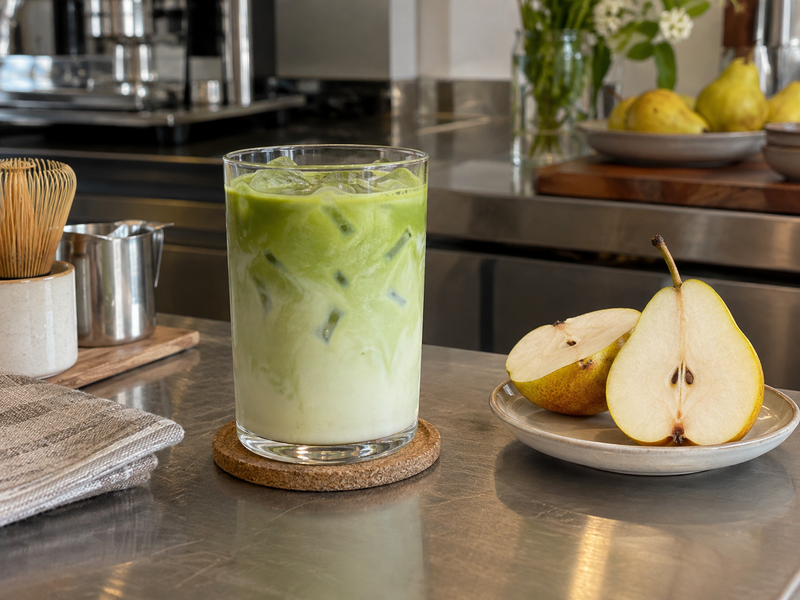
Choose the fruit format first
A fresh pear blended into milk produces a different mouthfeel from a juice and water drink. Neither is automatically better. The useful choice depends on whether the menu promises a creamy fruit latte, a light iced tea or a spoonable blended item. Staff need to know which result the development team approved.
Bree Matcha’s spiced pear latte uses pear with oat milk and a separately prepared tea component. It illustrates a fruit latte route. A cafe using a bottled pear juice instead needs its own formula rather than treating the products as equal replacements.
| Fruit format | Likely service task | Acceptance question |
|---|---|---|
| Fresh prepared pear | Ripeness and trimming checks | Is texture repeatable? |
| Commercial puree | Supplier specification review | Is the product sweetened? |
| Clear pear juice | Measured liquid portion | Can pear remain recognizable? |
| Pear syrup | Defined flavor and sweetness | Does the menu name reflect it? |
Select one fruit format for the first recipe. If a second format is intended as a backup, test it separately and write an approved substitution formula. Leaving that decision to each barista can produce noticeably different drinks under the same name.
2. How should you judge fresh pear readiness?
Match the check to the variety
Ask the produce supplier which pear variety is being delivered and the intended ripening conditions. European pear types and crisp Asian pears should not be treated as interchangeable ingredients. A fruit that stays crisp by design will not necessarily produce the same puree as a soft ripe Bartlett or Anjou.
USA Pears’ FAQ describes checking near the stem with gentle pressure for the European varieties it discusses. It also notes that skin color is not a reliable ripeness signal for every variety. Use that guidance within its scope rather than applying one color rule to all pears in the kitchen.
Prepare a small sample from the incoming lot and assess texture and flavor before assigning it to the drink. A pear that can be sliced neatly for garnish may not be the best one for blending. Keep the garnish specification separate if the two uses require different conditions.
Record usable prepared weight after cores, damaged areas and any peel removal. A delivery that looks economical by whole fruit weight may require more trimming or give less suitable puree. That loss belongs in purchasing records alongside the sensory observations.
3. What small latte trial can establish the base?
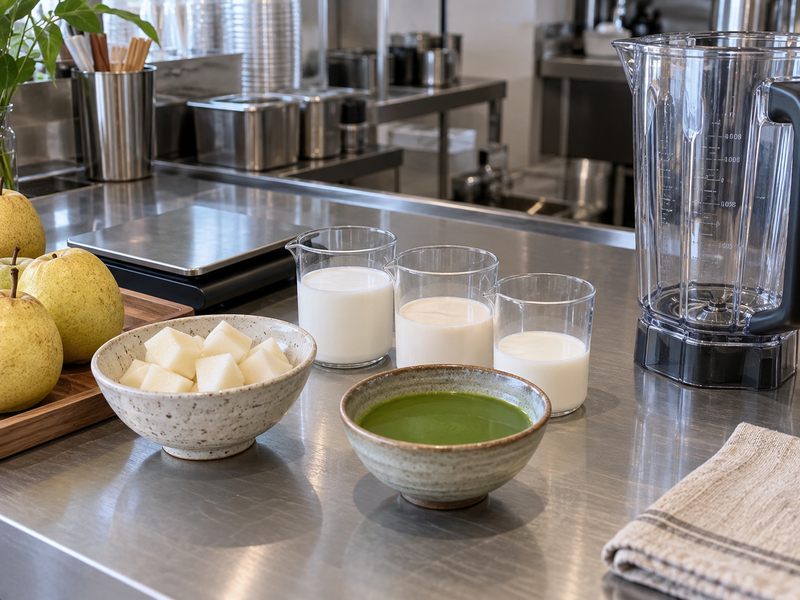
Compare pear amount with the same tea dose
The following unvalidated comparison uses prepared ripe pear flesh, one selected milk or plant beverage, and a separately whisked tea portion. Start with 1.5 g matcha in 40 g water for every sample. Keep the pear preparation and blending equipment identical while varying the fruit amount.
| Trial | Prepared pear flesh | Milk or plant beverage | Tea preparation |
|---|---|---|---|
| Light fruit | 40 g | 180 g | 1.5 g tea with 40 g water |
| Middle fruit | 60 g | 160 g | 1.5 g tea with 40 g water |
| Fuller fruit | 80 g | 140 g | 1.5 g tea with 40 g water |
Blend the pear with the selected milk, then combine with the prepared tea and assess the base before adding ice or spices. This first round is intended to compare fruit character and thickness, not to establish a final cup fill or production yield.
Do not add honey automatically. Taste the chosen pear and beverage first, then make a separate measured sweetener comparison if needed. Record the exact plant beverage because sweetened, flavored and unsweetened products can produce different results even when they are all described casually as oat milk.
4. How can you manage pear texture in the cup?
Inspect what the blender leaves behind
Record whether the pear is peeled and how it is cut before blending. Peel fragments may be acceptable in one style and distracting in another. Changing those preparation details during a trial can make a tea sample appear gritty when the main difference actually comes from the fruit.
Use the intended commercial blender and a practical batch size. A tiny tasting portion may not circulate properly in a large jug, while an overfilled jug may process unevenly. Observe the mixture rather than assuming a fixed time produces the same result at every fill level.
Test the finished base with the chosen straw or drinking opening. A smooth looking surface can conceal larger pieces that make the last part of the drink difficult to consume. If straining is considered, weigh the retained material and reassess the flavor because the usable yield and fruit contribution have changed.
A clear juice version needs a fresh comparison rather than a texture correction to this latte. Keep it on another recipe sheet. Its fruit concentration, sweetness and total liquid balance may differ enough that reducing milk or increasing tea by instinct gives an unreliable result.
5. How do you prevent a weak or clumpy tea component?
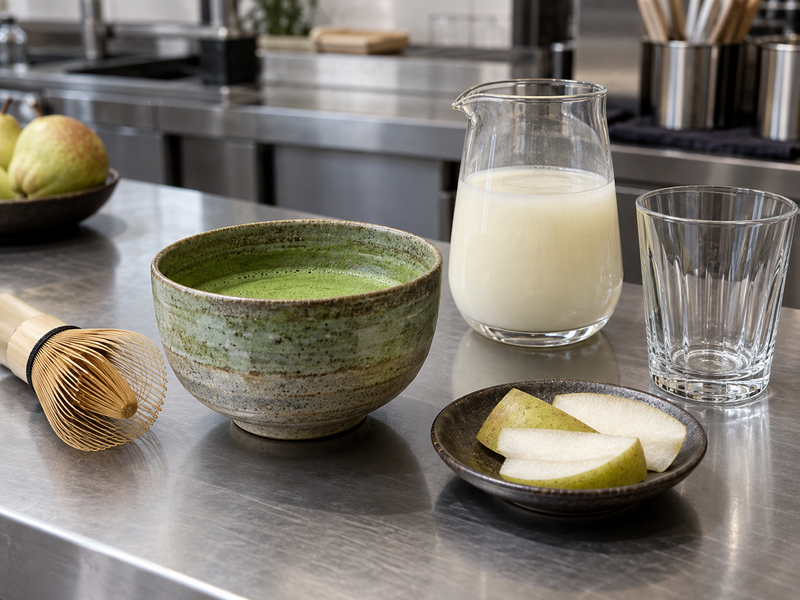
Prepare tea separately from the fruit base
Sift the weighed matcha and whisk it with its assigned water before combining it with pear. This lets staff inspect the tea for dry pockets without confusing them with fruit particles. Scrape or pour the complete measured component into the drink so residue in the bowl does not silently reduce the dose.
| Observation | Check | Next comparison |
|---|---|---|
| Dark specks | Tea clumps before assembly | Improve sifting and whisking |
| Weak tea character | Fruit and milk proportions | Reduce masking ingredients first |
| Rough texture | Plain pear base | Revisit fruit preparation |
| Uneven cup flavor | Assembly and mixing | Compare a fully mixed drink |
Taste the tea alone during development, then in the latte. The Matcha Village beverage formulation guide can help structure the ingredient record. A supplier sample needs to perform in the selected pear base, not merely produce an attractive bowl of tea.
If the latte tastes mostly of cinnamon or sweetened milk, do not immediately increase matcha. Remove optional additions and compare again. A simpler base can reveal whether the tea needs adjustment or whether the recipe has buried it beneath several competing flavors.
6. Should the drink be served hot or iced?
Treat them as separate service versions
A cold blended pear latte and a warm spiced pear drink can share ingredients while needing different preparation instructions. Develop each at its intended serving condition. Do not assume an iced recipe becomes a successful hot version simply by omitting ice and heating the remaining mixture.
For a warm version, use equipment and a process suitable for a fruit containing mixture. Confirm the milk or plant beverage supplier’s handling guidance and the cafe’s approved heating procedure. Avoid sending an unassessed pulpy mixture through equipment that the station normally uses only for plain milk.
Assess aroma, thickness and any visible separation after heating through that procedure. Keep the finished portion comfortable and practical to drink from the intended cup. A texture that seems pleasant when cold may feel heavier in a warm serving, so taste a normal portion rather than only a spoonful.
For an iced version, specify the ice weight and test dilution after the normal service interval. Record the cup fill and whether the fruit component settles. The two service versions should have distinct station instructions even if the menu presents them as hot and iced options of the same flavor.
7. How much spice should accompany the pear?
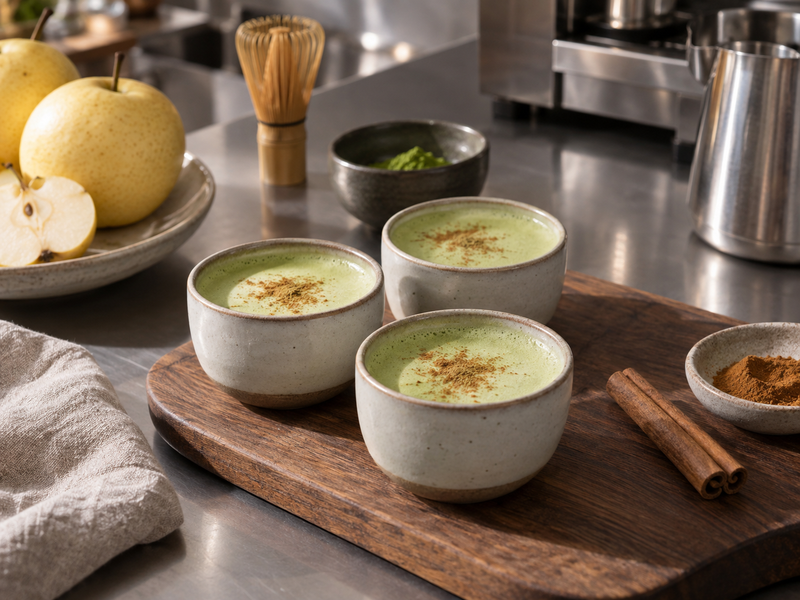
Establish fruit recognition before adding spice
Cinnamon, ginger or vanilla can make the drink feel familiar, but they can also become its main flavor. Keep an unspiced reference and add only one flavoring in each trial. Record the actual product and weight; ground spice, extract and flavored syrup are not equivalent additions.
| Addition | Potential role | What to check |
|---|---|---|
| Ground cinnamon | Warm aromatic note | Powder sensation and dominance |
| Ginger ingredient | Sharper finish | Whether pear remains clear |
| Vanilla flavoring | Softer aromatic background | Added sweetness or carrier |
| Honey or syrup | Sweetness adjustment | Full portion balance |
For a cafe serving several seasonal drinks, consider station simplicity. A new syrup may make portioning easier but adds another stock item and a different ingredient list. A ground spice may be inexpensive while requiring a more careful dispensing and mixing method.
Ask tasters to name the fruit without seeing the recipe title. If they consistently identify only spice and milk, revisit the balance before making a pear claim prominent on the menu. Keep the successful spice level as a measured part of the formula, with garnish dusting recorded separately if it is used.
8. What happens to cut pear during preparation?
Keep appearance and handling decisions separate
Observe the prepared fruit through the cafe’s approved preparation sequence. USA Pears notes that cut pear can brown through oxidation. A change in appearance may therefore arise before matcha is added, making it useful to photograph the plain pear base as well as the finished drink during development.
If the business considers an acid treatment or a commercial preparation aid, evaluate it as a formula change. It may alter the flavor and ingredient statement. Do not add lemon by habit and then attribute a new tartness or change in milk behavior to the tea powder.
Use the cafe’s documented controls for prepared fruit and dairy or plant beverage ingredients. This article does not establish how long a fresh pear base can be stored. A pleasant smell or acceptable color is not a replacement for the responsible manager’s handling and shelf life decisions.
Commercial puree may reduce some preparation work, but it brings its own supplier instructions and composition. Compare it on an independent recipe sheet, including whether it contains added sugar or other fruit. A convenient product is useful only if it supports the drink identity the cafe intends to sell.
9. Which costs are easy to miss in a pear drink?
Account for ripening and preparation loss
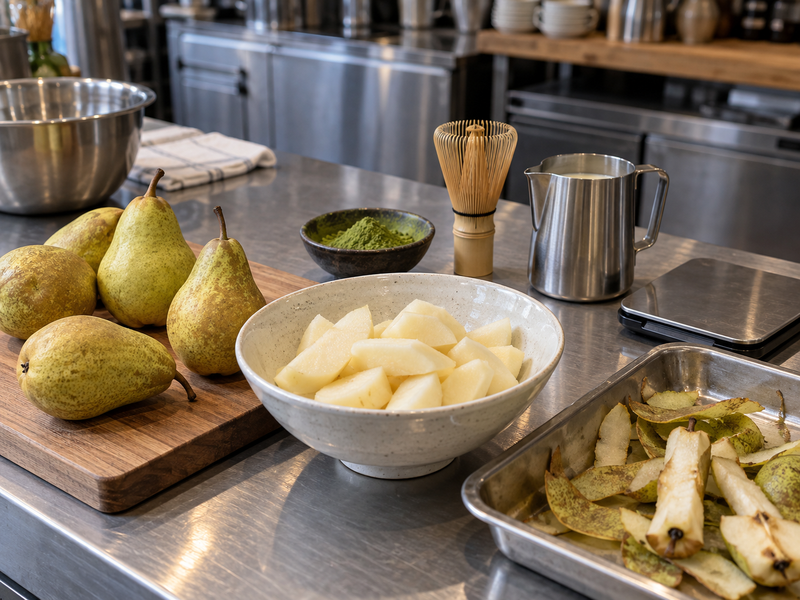
Track whole fruit purchased, usable prepared flesh and finished cups. Fruit waiting to reach the desired condition occupies space and requires checking, while overripe or damaged material can reduce usable yield. A costing based only on the weight blended into the cup misses these practical losses.
| Cost item | Record | Reason |
|---|---|---|
| Pear purchase | Whole weight and price | Establishes incoming cost |
| Prepared flesh | Accepted usable weight | Captures trimming loss |
| Milk choice | Exact product and portion | Prevents substitution errors |
| Tea | Accepted dose and lot | Links flavor approval to quotation |
| Blender work | Preparation and cleaning time | Reveals station demand |
Compare a fresh fruit route with a prepared puree using the complete cost and the actual taste. Do not presume one is cheaper or better without the local quotation, labor requirement and usable yield. Keep the comparison tied to the same intended finished portion.
Share the selected formula with the matcha supplier when requesting application samples. State whether the drink is hot or iced and which pear format is used. Those details make the sample feedback more useful than a request for a generic latte grade powder.
10. What should you test before placing the launch order?
Ask another employee to reproduce the drink
Give a trained employee the exact pear preparation, milk product, tea weight and assembly instructions. Have that person make the drink using a normal fruit delivery. Record any questions about ripeness, peeling, blending or spice measurement; those questions show where the recipe still depends on the developer’s personal judgment.
Compare the finished cup with the accepted sample for fruit recognition, tea balance, texture and ease of drinking. Include the last portion from the cup, where fruit particles may be more noticeable. A recipe that tastes good at the first sip should remain practical to finish.
Write an approved response for fruit outside the chosen specification. Staff should know when a delivery requires review instead of adding more syrup or blending longer to hide the difference. Keep purchasing and preparation staff involved so the required fruit condition is understood before it reaches the bar.
Calculate the tea order from the approved dose and expected sales, then request a sample associated with the proposed supply lot. Make one complete hot or iced version, as applicable, with the launch cup and selected fruit ingredient before confirming the initial production quantity.
Frequently asked questions
Q1: Can crisp Asian pears replace a soft ripe pear?
They need a separate texture and flavor comparison. Variety matters, so do not assume the same preparation and blending instructions will produce an equivalent base.
Q2: Does the pear have to be peeled?
Choose through a practical trial. Record the decision because peel fragments can change texture, appearance and preparation yield in the finished drink.
Q3: Can I use pear juice instead of fresh fruit?
Yes, as a separately developed recipe. Juice changes the solids and liquid balance, so it should not replace fresh flesh gram for gram without assessment.
Q4: Is cinnamon essential?
No. Establish a recognizable pear and tea base first. Add spice only at a measured level that supports the chosen flavor rather than hiding it.
Q5: Can one formula cover hot and iced service?
The ingredients may overlap, but each version needs its own preparation and tasting checks. Heating and ice dilution can change the texture and perceived balance.