
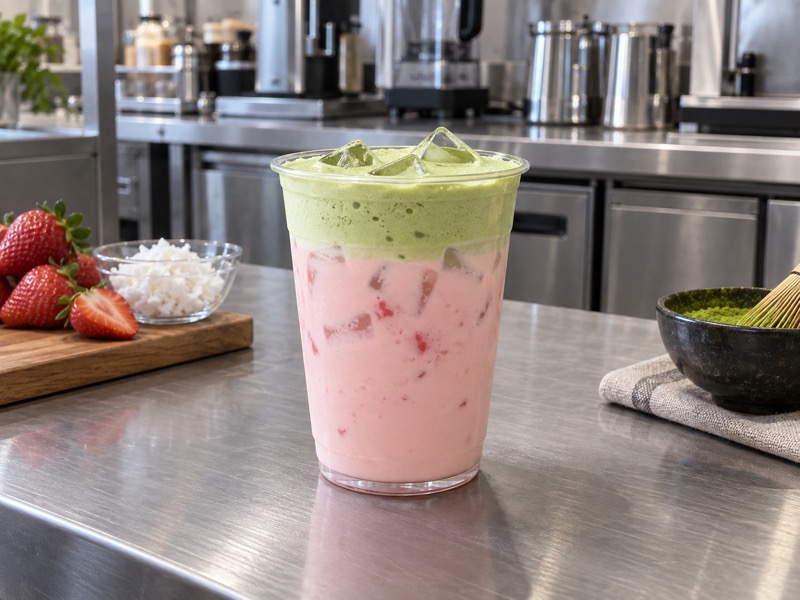
A pink drink with matcha cold foam places a separate green matcha-flavored topping over a chilled pink fruit-and-milk-style base. The pink portion is the drink; the green portion is cold foam, not a matcha latte poured over it. That distinction matters when a café names ingredients, trains staff and measures cost. A two-color photograph can hide an overly sweet base or a foam that disappears under its lid. A useful development trial starts with the exact fruit product, milk or plant base, foam system and cup planned for sale. It then checks the drink after a normal handoff and through the final sip.
Jump to drink definition, service route, fruit, tea, formula, foam process, defects, handling, cost and pilot.
1. What belongs in a pink drink with matcha cold foam?
Describe the two components accurately
The base can use a strawberry or other fruit preparation blended with a dairy or plant-based liquid. Its color may come from fruit, a purchased fruit drink or another declared ingredient. The topping is a cold foam flavored with matcha; it needs a separate foam-forming base. Matcha does not create that foam structure by itself. List the chosen components rather than relying on the phrase “pink drink,” which customers may associate with another brand’s recipe. Write a precise menu sentence: name the fruit, the type of milk or plant base and the matcha topping.
If the base uses a strawberry-açaí preparation, say so. If it uses only strawberry syrup, do not imply whole fruit. The customer’s sip should connect fruit, creaminess and tea without requiring the layers to remain untouched. Taste a stirred cup as well as the photograph-ready one. Also ask whether the menu should instruct customers to mix the foam. If they do, the final color will change, but the flavor may be more consistent. A staff script should describe that expected change honestly rather than suggesting that the cup will remain sharply divided throughout drinking.
2. Where will customers receive the cup?
Design around the longest planned handoff
A sit-down café can serve an open cup quickly; drive-through and delivery usually require a lid and more movement. Those differences affect whether the foam remains distinct or mixes into the pink liquid. Set the actual route before choosing foam height and cup fill. A mound that clears a domed lid might be flattened by a sip lid. Delivery may tilt the drink and stain the green cap pink. Take the cup for a walk. Close it with the planned lid, carry it as a customer or courier would, then inspect appearance and taste after the expected wait.
Record where the foam touches the lid and whether a straw opening breaks it. If the drink is intended for only quick counter service, say so in the product brief. Do not let an online ordering page automatically offer it for a route the foam has not passed. That decision belongs with the menu owner and delivery team because the customer will judge the cup at arrival, not at the bar. Do not give a packaged or delivered version the same acceptance criteria merely because it starts with the same ingredients.
| Route | Test the cup for | Possible specification change |
|---|---|---|
| Sit-down | Foam at immediate service | Open-cup presentation |
| Drive-through | Lidding and vehicle wait | Headspace and lid choice |
| Delivery | Tilt, delay and opening | Foam system or route limit |
3. How should the pink base be selected?
Balance fruit identity and milk compatibility
A strawberry puree, syrup and prepared fruit refresher differ in sweetness, acidity, pulp and color. A fruit base that tastes clean in water may taste muted or uneven when combined with milk. Select candidate fruit ingredients from suppliers that can document their full declaration and preparation method. Test each at the same finished liquid volume with the intended dairy or plant base. Look for pulp at the bottom, separation, a too-thick sip and a pink color that changes once ice is added. Taste against the foam. A bright, acidic base can make a matcha topping seem more bitter; a very sweet base can hide it completely.
Do not use a fruit dose chosen solely to match a photograph. If a supplier changes the fruit blend, the menu description and the tea balance may need revision. Record the specific item and lot used in the approved cup. Some fruit preparations contain pieces that clog a straw or settle below ice. Test the purchased straw width and lid opening with the proposed fruit texture. Straining the fruit may solve that problem while changing yield and the authenticity of the menu description.
4. How should matcha be tasted in the cold foam?
Use the same topping system for every tea sample
Compare matcha lots inside the chosen foam base at equal tea mass. A water-only tasting helps identify the tea, but the purchase decision belongs in the complete drink. Foam fat, sweetness and air can change how matcha presents; the fruit base adds another contrast. Taste foam alone, foam plus pink base and the stirred final portion. Note bitterness, lingering tea character and any green flecks from poor dispersion. Judge color after lidding. A vivid fresh foam may pale or take on a gray edge where it contacts pink liquid.
Keep the fruit base, ice and foam portion fixed when tea lots change so the team can attribute a difference to the tea. If more matcha improves color but makes a harsh cap, adjust the menu target or foam opacity rather than accepting a drink customers dislike. Log the lot and opening date for later comparison. The tea may look greener in a white foam than in a pink-stained one, so evaluate color with the final cup and lighting. Record separate scores for tea taste and cap appearance. Otherwise a panel may approve an attractive foam while failing to notice that fruit syrup dominates the drink.
| Sample | Hold constant | Evaluate |
|---|---|---|
| Matcha lot A versus B | Foam base and tea mass | Flavor and green appearance |
| Fruit option A versus B | Approved foam | Tea-fruit balance |
| Milk choice | Fruit and foam portions | Creaminess and separation |
5. What should the serving specification measure?
Put every layer on the formula sheet
Record grams of fruit preparation, milk or plant base, sweetener if used, ice, foam base and matcha for the final cup. Show prepared-foam yield and the amount deposited per serving; a large bowl can retain enough topping to change cost. Check the base liquid volume beneath ice, because two cups at the same fill line may contain different amounts of drink. Define the visible boundary: specify how much headspace the foam needs and a practical appearance standard after a normal handoff. A menu photograph can guide color, but it should be made from an ordinary staff portion rather than an oversized foam cap.
Include cup and lid item numbers on the card. If the café offers dairy and plant versions, write separate formulas where the base or foam behavior differs. Staff cannot infer a safe or tasty substitution from the word “milk.” A plant-based alternative may create a thinner pink base while a different foam product may hold more air. Test those as separate menu variants, including their labels and cost. If only one version passes, the ordering interface should avoid offering an untested combination.
6. How can staff make the foam consistently?
Control dispersion, whipping and deposit
Sift or pre-disperse matcha into a measured portion of liquid before it is mixed into the foam base. Dry tea added directly to cold cream or a plant whipping product can form spots that look like defects on the green cap. Follow the selected foam ingredient’s preparation directions, then test the actual café mixer at the intended batch size. Record the mixing sequence, equipment setting and a visible endpoint such as a pourable foam that forms a defined layer without immediate drainage. Try the busiest shift. A method that requires a clean blender jar for every cup may obstruct service.
If foam is prepped in a larger batch, check whether the initial and final deposited portions have the same texture. Weigh the amount placed on the drink and state whether it should be poured, spooned or dispensed. Each method changes the layer boundary. A spoon can place foam gently but slow a line; a dispenser may speed service yet produce uneven portions near the end of a batch. Compare both using the same accepted-cup criteria, including the amount of foam that remains in the tool after service.
| Process point | Record | Fault to watch |
|---|---|---|
| Matcha dispersion | Tea and liquid masses | Green flecks |
| Whipping | Tool, batch and endpoint | Coarse or weak foam |
| Deposit | Foam mass and technique | Pink streaks or overflow |
7. Which visual and flavor faults appear after handoff?
Look beyond the initial green cap
Pink liquid may creep into the foam, creating a gray or brownish band at the interface. Fruit pulp can collect beneath the ice while foam drains into the base. A customer who drinks through a straw may encounter sweet pink base for several sips before reaching any matcha. Inspect the drink at handoff and again after realistic waits for each planned route.
Taste the upper sip, bottom sip and stirred cup. Diagnose by component. If the boundary muddies immediately, test the deposit technique and foam density. If bitterness appears only after stirring, compare matcha dose against the complete fruit base. If color changes only under a new lid, revisit headspace. Photograph cups under consistent light so a team can distinguish an actual process change from a camera artifact. Define a reject condition for collapse, separation or missing foam rather than asking staff to improvise.
8. How should fruit and foam components be held?
Apply handling rules to each prepared mix
Fruit preparation, opened milk, prepped foam and the final cold drink each require handling under the operation’s food-safety plan. Record preparation time, storage conditions and discard rules for the complete mixes, not merely the unopened supplier packs. The foam may contain dairy, coconut or another plant base; its declaration and handling instructions belong on the approved card. Check every layer for claims. An allergen can enter through the fruit preparation, foam base, milk or garnish.
A statement such as dairy-free needs verification across all of them. A finished cup with ice and foam is designed for a short service window unless a separate process validates a packaged version. Train staff to label prepared containers by formula version so a changed fruit syrup or foam product does not silently enter the same menu item.
| Component | Document | Service use |
|---|---|---|
| Fruit base | Ingredients, lot and opening record | Color and menu claim |
| Foam base | Allergens and preparation details | Cold handling and topping |
| Finished cup | Build time and route check | Handoff decision |
9. How much does an accepted cup cost?
Include foam losses and remakes
Cost the fruit ingredient at the accepted dose, not at the amount in a home recipe. Add milk, matcha, foam base, sweetener, ice, cup, lid and labor. The foam left on mixer walls or in a dispenser is not a sellable portion. If a premium fruit preparation yields pulp that staff strain out, that lost mass also affects cost. Count the failed cups. A drink remade because its foam collapses or pink and green layers muddle during a normal handoff changes average unit cost. Compare a made-to-order foam and a prepared batch with both labor time and discard volume in view.
A generous cap can make a menu photograph striking while increasing cost and leaving too little pink drink in the cup. Check the ratio of foam to liquid in a normal sip, not only on a scale. If the topping dominates, reduce its portion before changing the fruit base. A smaller cap may also leave enough headspace for a standard lid and reduce the number of remakes during takeout service. Price the portion that customers will actually receive, then confirm the drink still tastes balanced at that portion.
10. What should the launch pilot confirm?
Test what a normal customer sees
Ask several baristas to build consecutive drinks from the written card using the final fruit base, foam system, cup and lid. Weigh finished cups and deposited foam. Record build time, visible boundary and remakes. Photograph a normal staff-made serving at handoff and after the planned route. Taste immediately and after waiting, including the last sip through the intended straw or lid. Release against written criteria: fruit flavor, recognizable matcha, acceptable layer change, handling and accepted-cup cost all need a decision before the menu goes live.
If delivery fails while counter service passes, limit the offer or revise the delivery version. Keep the approved photograph and formula version for training. Matcha flavor pairings can support later menu work; a consumer pink drink copycat provides topic context, not a commercial service specification.
| Pilot check | Capture | Release decision |
|---|---|---|
| Staff-built fresh cup | Mass, foam and fruit flavor | Recipe repeatability |
| Lidded wait | Boundary and foam survival | Route suitability |
| Final sip | Tea recognition and sediment | Whole-cup balance |
FAQ
Q1: Is the pink base a matcha latte? No. The pink base is a separate fruit-and-milk-style drink; matcha flavors the cold foam on top.
Q2: Does matcha alone make cold foam? No. The topping needs a suitable foam-forming base; matcha provides color and tea flavor.
Q3: Must the fruit be strawberry? No. Name the actual fruit or fruit preparation used and check its flavor against the chosen foam.
Q4: Can the drink travel with a flat lid? Only if the approved fill and foam survive that lid and the intended handoff route.
Q5: What should staff measure? Measure fruit base, milk, ice and deposited foam, with matcha weighed into the foam batch.
Reference: Pink Drink With Matcha Cold Foam Copy Cat is a consumer example; this article focuses on an original café development process.