
“Blooming” a bamboo chasen means wetting its fine tines before whisking. It is a tool-care step, not a treatment for matcha powder or a way to change the tea’s flavor. A dry whisk can be brittle, especially when it has sat in storage. For a café, the useful question is how to bloom matcha whisk tines without turning a short preparation step into a wet-storage problem. The method below connects pre-wetting with inspection, use, rinsing and drying so another barista can repeat it.
1. What does “bloom” mean for a bamboo chasen?
Wet the tines, then make tea
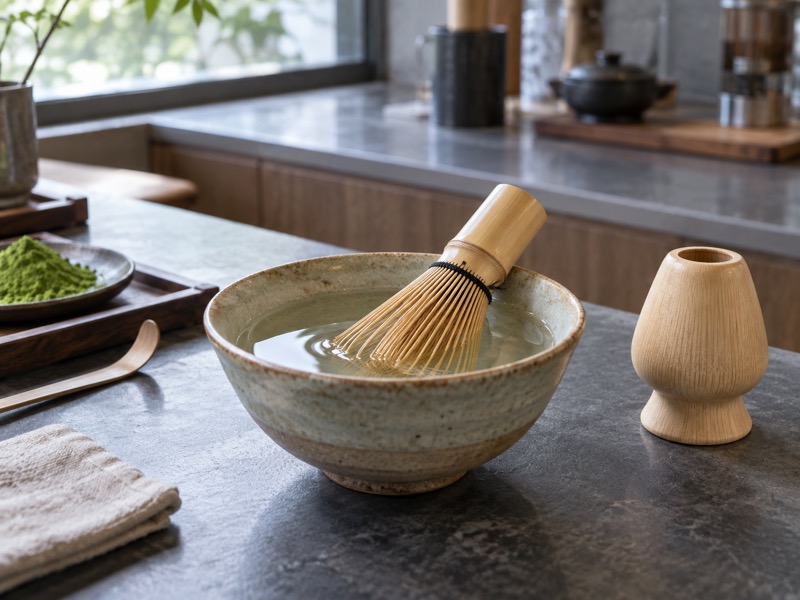
The word can sound like a brewing instruction, but the matcha itself does not bloom in this step. The bamboo whisk is briefly dipped in clean water so its thin tips are less brittle when they move through the tea. Ippodo’s chasen care guidance suggests dipping the tips for about one to two minutes before use. That is a useful starting point for a staff card. Follow the care instructions for the particular whisk your café buys, especially if its maker specifies a different method.
The action should be observable: a staff member sees intact tips, wets them, lifts the whisk and proceeds to the matcha bowl. Do not describe blooming as “activating” bamboo or claim that it makes low-quality tea taste better. It is a modest preparation habit meant to protect a delicate tool. If the whisk is already damaged, water will not repair it. A clear definition keeps new staff from leaving whisks submerged for a whole shift or confusing pre-wetting with cleaning after service.
2. Why make pre-wetting part of the service card?
Give a small habit a clear place
In a café, isolated advice is easy to lose. “Soak the whisk first” is not enough if staff do not know where the clean water comes from, when to inspect the tool or where it goes afterward. Put pre-wetting immediately before the tea preparation step on the same recipe card. Name the bowl or small vessel used for it and keep that vessel clean. If several people share a station, identify which tools are ready to use and which have been used but not yet cleaned. That separation matters more than an attractive stand beside the register.
Time the process during a real order. A brief wetting period can overlap with weighing tea, checking the cup and preparing water. Do not let the step drift into indefinite soaking while staff handle other tasks. At the end of a drink, the whisk moves to rinse and drying, not back into the pre-wetting vessel. Teach the sequence with a demonstration and then ask a second operator to follow the written card. Their questions will show whether the station setup or wording needs revision.
| Point in service | Whisk state | Staff check |
|---|---|---|
| Before preparation | Clean and dry or properly stored | Tips intact |
| Pre-wetting | Tips in clean water briefly | No prolonged soaking |
| After the drink | Rinsed and drying | No trapped tea |
3. What should staff inspect before the whisk touches water?
Start with the dry tool
Look for cracked, bent or missing tines, loose thread and anything trapped between the tips. A whisk that sheds bamboo into a drink has already failed the pre-use check. Also look at the handle and smell the tool; stale tea or an off-odor suggests the previous cleaning and drying cycle was incomplete. Set a separate container for rejected whisks so a busy colleague does not put one back into service. The inspection should take moments, but it needs an explicit retire-or-use decision.
Check the bowl as well. A rough or chipped base can damage a good whisk. If a new batch of whisks begins losing tips at one station, the preparation vessel may be the cause. Keep a note of which tool and bowl were used when damage appears. Water can soften sound bamboo tips for use; it cannot make a cracked tine safe. This distinction helps staff avoid an easy but unsafe shortcut: soaking longer to compensate for a tool that should be replaced.
4. Which water and vessel should be used?
Keep the pre-wetting step simple
Use clean water and a vessel that lets the tips sit without pressing against the bottom or sides. The aim is to wet the delicate end of the whisk, not immerse the whole handle. A narrow cup may hold the whisk upright but can squeeze its outer tines; a shallow bowl gives staff room to lower and lift it. Check the actual whisk in the selected vessel before writing the method. The pre-wetting bowl should be easy to clean and should sit away from used tools and spills.
Some guides describe warm water, but staff should follow the whisk maker’s instructions and use a safe, consistent station method. There is no need to invent a precise temperature for every bamboo whisk. Change the water as required by the café’s sanitation plan and do not treat a shared standing cup as self-cleaning. If the café uses a separate bowl to warm the matcha vessel, decide whether that water is suitable for pre-wetting under the site’s procedure. The answer belongs on the local card so staff are not improvising during a rush.
| Vessel choice | What to examine | Avoid |
|---|---|---|
| Small bowl | Tip clearance and easy cleaning | Rough or chipped base |
| Tall cup | Space for outer tines | Squeezing the whisk |
| Matcha bowl | Whether water is clean and available | Confusing used tea with clean water |
5. How should staff bloom matcha whisk tines?
Turn the guidance into a repeatable motion
First, inspect the clean whisk. Add clean water to the chosen vessel, lower only the tine end and allow it to wet briefly; Ippodo’s one-to-two-minute guidance is a sensible reference for its chasen. Lift the whisk without pushing the tips against the vessel. Let excess water drip off, then move promptly to the prepared matcha bowl. The sequence can overlap with measuring and sifting tea, so it does not need to become a separate production delay. Do not rest the whisk on its tips while waiting.
During training, ask staff to show the position of their hand and the depth of immersion. They should be able to explain why they are wetting the bamboo and when they would stop because of damage. Write the steps in the order the station actually uses them, not in a ceremonial order copied from a product page. A photo of the approved vessel and whisk depth can help across shifts. Keep the written method short enough to use, while the fuller care record covers cleaning, drying and retirement.
6. How should the whisk move in the matcha bowl?
Keep pressure off the tips
Pre-wetting protects the bamboo only if the whisking motion also respects it. Set the whisk into the tea and water so the tips move freely rather than grinding against the base. A loose, quick motion can disperse powder without pushing downward. The bowl needs enough room for the whisk to travel; a vessel that makes staff scrape the side should be changed or paired with a different tool. Watch an actual barista prepare the menu drink and listen for contact with the bowl. Repeated scraping can explain damage that was blamed on poor bamboo.
For lattes, whisk matcha with water before adding milk when that is the approved recipe. Ippodo’s care page specifically advises using its chasen with water and matcha, then adding milk afterward. This also makes the tines easier to rinse. If a café wants to whisk a different ingredient, confirm that the tool maker supports that use rather than assuming the same care guidance applies. Record the beverage formula separately from the whisk care card; otherwise staff may alter powder dose or water volume while trying to protect the tool.
| During whisking | Visible sign | Correction to test |
|---|---|---|
| Too much downward force | Tips scrape bowl | Lift hand and review bowl depth |
| Bowl too narrow | Outer tines hit sides | Use a compatible bowl |
| Thick residue remains | Powder clumps survive | Review sifting and mixing method |
7. What should happen immediately after whisking?
Remove tea before it dries
Move the whisk to the rinse step soon after use. Tea left between fine tines dries into stubborn patches that invite rough scrubbing later. Rinse in water and gently dislodge remaining powder without pulling or bending the bamboo. Ippodo advises water without soap for its chasen; follow the maker’s instructions and the site’s approved sanitation procedure for the specific equipment. Inspect the inner and outer ring of tines before setting the tool to dry. A green stain or trapped granule is easier to see against a light background.
Do not leave the whisk in the preparation bowl while another order is made. That can mix used tea with the next wetting step and leave the handle in water longer than intended. Put used equipment in a defined place until it can be rinsed. If the rush prevents immediate cleaning, the station needs enough spare whisks and a documented holding process, not a vague instruction to “clean later.” The complete cycle should be timed during a pilot because a tool that is quick to use but hard to reset may slow the next order.
8. How should a bamboo whisk dry and be stored?
Give the tines air and space
After rinsing, allow the chasen to dry in the open air in a position that protects its shape. Ippodo warns that leaving a damp whisk in its case can lead to mold and notes that a whisk stand can support the tines as they dry. A stand is useful only if it is clean, stable and placed where staff will not knock it. Check whether the station has enough drying space for the number of whisks used during a normal shift. A decorative holder crowded beside wet utensils does not solve the workflow.
Before closing, inspect the drying area. A tool that still smells damp or has visible powder needs attention before storage. Once dry, protect the whisk from pressure and dirt. Do not treat a plastic transport case as a drying chamber unless the maker explicitly designed it for that purpose. For multi-site cafés, photograph the accepted storage setup and add it to training. The care routine should survive a change of shift, when the person who used the whisk is not the person who puts it away.
| Storage condition | What can go wrong | Station response |
|---|---|---|
| Closed case while damp | Moisture remains trapped | Dry openly first |
| Loose beside other tools | Tines get bent or crushed | Provide protected space |
| Unlabeled used whisk | Next operator may reuse it | Separate ready and used tools |
9. When should the whisk be replaced?
Retire damage instead of treating it
A broken or loose tine is a replacement signal, not a prompt for another soak. Ippodo’s care guidance says to replace the chasen when tips are broken. The café should make its own inspection rule specific enough for staff to act on: which damage takes the tool out of service, where it goes, and who records the loss. Also examine repeated odor, persistent trapped residue or a misshapen whisk that can no longer make the approved drink. Do not use a photo of foam as evidence that a damaged tool is safe.
Record the opening and retirement dates of several whisks. If all fail quickly, examine bowl contact, drying position and staff technique before changing suppliers. If only one unit fails, inspect its manufacturing and shipping condition. A short log helps buying estimate replacement stock and helps trainers find the real cause. The lifespan will vary with use and care, so avoid promising a fixed number of cups without a local trial. Retirement should be a normal operational choice, not an argument during peak service.
10. How can a café verify the routine works?
Pilot the full cycle
Run the care card across several shifts with more than one operator. Observe whether staff inspect, wet, whisk, rinse and dry in the prescribed order, then check the tools at the start of the next shift. Record damaged tines, retained powder, off-odors, cleaning time and drink quality. If staff skip a step, ask whether the instruction is unclear or the necessary vessel and drying space are missing. Fix the station before adding more words to the card. A reliable routine is one people can carry out during real service.
Compare the trial with the café’s previous method using the same matcha, bowl and serving formula. The aim is fewer damaged tools and consistent cups, not an elaborate ritual. Update the card with the tested vessel, approximate wetting interval under the maker’s guidance, rinse procedure, drying position and retirement rule. Name an owner for weekly tool checks and reordering. For wider tea selection decisions, see our matcha flavors guide. A finished care procedure should make the next shift’s first cup easier, not just look tidy on paper.
| Pilot record | What to note | Action if it fails |
|---|---|---|
| Start-of-shift tool | Shape, cleanliness and odor | Remove questionable whisk |
| Drink sample | Clumps and serving texture | Review recipe and motion |
| End-of-shift tool | Residue and drying space | Repair the cleaning workflow |
Further reading: A guide on how to care for bamboo matcha whisk properly and Ippodo chasen care.
FAQ
Q1: What does it mean to bloom a matcha whisk? Briefly wetting the bamboo tines before making tea so they are less brittle during use.
Q2: How long should the tines be wet? Follow the maker’s care instructions. Ippodo suggests about one to two minutes for its chasen.
Q3: Should the entire handle stay underwater? The pre-wetting step is aimed at the tines; use a vessel that does not force the whisk against its sides or base.
Q4: Can a long soak fix broken tines? No. Remove a whisk with broken or loose tips from service.
Q5: What happens after the drink is made? Rinse tea away, inspect the tines and let the whisk air-dry in a protected position.