
Matcha espresso combines whisked matcha and brewed espresso, usually with milk and ice. The pairing can give a café a distinct drink, but a beautiful three-layer sample may taste muddled once a customer stirs it. This guide gives beverage teams a way to specify both tea and coffee, write a service method, and judge the finished cup. Treat every formula below as a trial plan, not a tested recipe.
1. What belongs in a matcha espresso?
Define the drink before buying ingredients
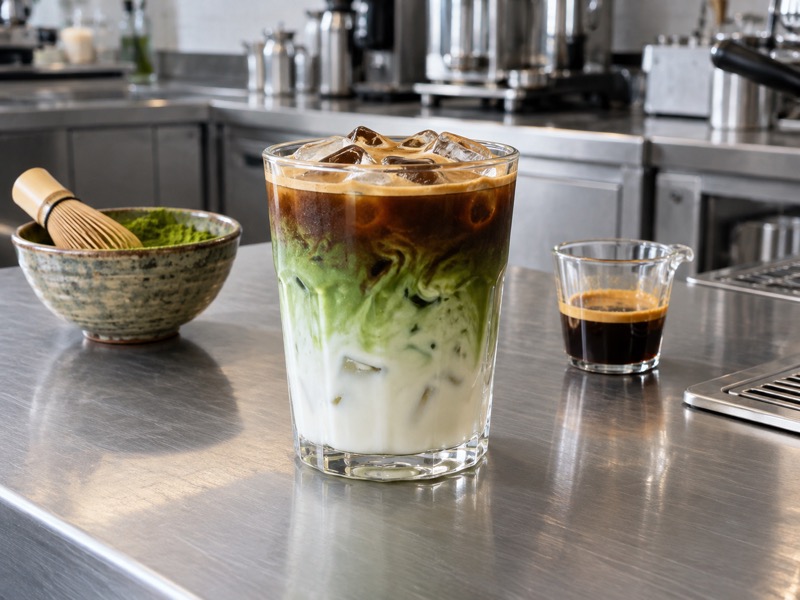
A matcha espresso has two brewed components with different strengths: suspended green tea powder and concentrated coffee. Milk, a plant beverage, water, syrup and ice may sit between them, but neither tea nor coffee should disappear behind sweetness. The product brief should say whether the customer will see a layered iced drink or receive a blended latte. That choice changes the preparation card, product photo and tasting method. A drink that looks separated at handoff will not stay that way once carried across a shop, so sample it both untouched and stirred. Record the intended cup size and base before comparing tea lots; otherwise the team can mistake a dilution problem for a weak matcha.
Describe caffeine honestly
Both matcha and espresso contribute caffeine. A claim such as “gentle energy” or “less caffeine than coffee” needs evidence from the actual serving and the chosen ingredients. Shot yield, coffee dose and matcha mass all affect the total. Staff should be able to tell customers that the drink contains tea and coffee, while any numerical caffeine statement should come from a defensible calculation or finished-product analysis. This is especially relevant when the name sounds like a standard matcha latte to someone ordering quickly.
2. Which service format can the café repeat?
Choose between a display layer and an integrated cup
Iced layering makes the tea, pale base and espresso visible. It also adds pour steps and relies on density, ice placement and a careful hand. A hot version usually needs a different build; pouring espresso into a warm milk-and-matcha mixture gives a consistent cup more readily than chasing distinct bands. Test each format with the actual cup and lid, then carry it the distance a takeaway order travels. Photograph the handoff cup and observe it again after the normal wait. Customers will drink a changing mixture, not a still photograph.
Write the order as an operating instruction
An iced card might specify a dispersed matcha base, a measured ice charge, milk and a freshly pulled espresso component. The café must decide where sweetener enters, since syrup in the tea base changes both taste and layering. Specify whether the barista stirs before handoff or serves a layered drink with a stir instruction. A drive-through station may not have the same space or timing as a slow bar. Give every component a station owner so a two-person build does not become a missed coffee shot during rush hour.
| Format | Service choice | Check in the actual cup |
|---|---|---|
| Layered iced | Pour components in a fixed order | Appearance at handoff and after carrying |
| Stirred iced | Mix before serving | Tea and coffee balance after ice melt |
| Hot latte | Combine under a hot-service method | Temperature, texture and aroma |
3. How should matcha and espresso be selected together?
Compare paired ingredients in one base
A coffee roast that tastes pleasing alone can dominate a delicate tea when the two meet. Start with one milk or plant base, one sweetener setting and a fixed finished volume. Compare two identified matcha lots against the same espresso, then compare coffees against the selected tea. Keep coded cups if possible. Ask tasters to note tea aroma, coffee aroma, bitter finish and any cooked or ashy note separately. A very dark roast may call for a different coffee choice rather than more sugar or matcha. Cup color matters, but the useful buying decision comes from the stirred drink at its expected service temperature.
Keep the ingredient specification practical
Ask the matcha supplier for lot identity, storage advice and a sample from the type of stock the café would purchase. Coffee buyers should define roast, beans, grind controls and espresso yield, since a changed shot changes the whole drink. Milk and plant beverages need their own specification; a coconut base brings flavor and fat behavior that dairy does not. Trial a substitution only after the standard cup has been approved. If each store chooses its own beans or matcha scoop, the menu name promises a consistency that operations cannot deliver.
4. What must the recipe card record?
Measure the finished serving
Write the formula in grams for matcha, water, milk, syrup and ice. Record espresso input and liquid yield using the shop’s coffee standard. A “scoop” and a “shot” are poor cross-site units because scoops vary and shot recipes differ. Note both the target liquid volume and the cup size, leaving realistic headspace for ice and a lid. Record ice mass because the melt changes bitterness and sweetness as a guest drinks. A recipe card should show the tea dispersion step and the order of pours, rather than merely listing ingredients.
Track versions without confusing staff
Give each trial a version number, ingredient lot list, operator, date and observed result. When a coffee change improves bitterness, keep the matcha and milk fixed for that comparison. When a sweeter syrup makes the first sip pleasant but buries tea near the bottom, note that too. Bring the accepted version into the POS recipe, training card and purchasing file together. A written card in product development has little value if the barista’s station still displays an older syrup quantity. Save a reference photo under fixed light, but use tasting notes to decide acceptance.
| Record | Unit or identifier | Reason to keep it |
|---|---|---|
| Matcha and water | Grams per cup | Repeat tea strength and dispersion |
| Espresso | Coffee dose and liquid yield | Control coffee intensity |
| Milk, syrup and ice | Grams per cup | Track dilution and sweetness |
5. How should baristas build the drink?
Disperse the tea before assembly
Dry matcha dropped straight onto cold milk can leave clumps that survive a quick stir. Use a documented dispersion method with a measured amount of water or another approved liquid, then check it in the equipment available at a normal station. A handheld frother, whisk and production mixer can produce different textures. Make the trial at rush speed with the shop’s usual water and vessel. If a pre-dispersed matcha base is proposed, the team must define its storage, mixing and discard procedure under the café’s food-safety plan; a home-kitchen method is not a holding specification.
Set the handoff standard
Pull espresso according to the coffee program and use it within the shop’s established service process. For an iced layered cup, specify where the stream lands: over ice, down a spoon or directly into milk. Watch how the layers shift when the lid goes on. A simple handoff instruction such as “stir before drinking” may be honest and useful if the best flavor appears after mixing. For hot service, check the final drinking temperature rather than assuming the coffee machine setting controls the cup. Train staff on one accepted sequence, then let them report steps that slow the line.
6. Which defects should the team diagnose?
Separate sensory failures from visual ones
A dark top layer can be attractive while the stirred cup tastes harsh. Taste a top sip, a bottom sip and a fully mixed sample at the intended drinking time. If coffee bitterness dominates, test coffee roast or shot yield before buying a more expensive tea. If a grassy or dusty finish remains, check matcha lot, dose and dispersion. A watery middle can come from excessive ice melt or too much dilution water. Sediment at the bottom may reflect matcha settling; a homogeneous drink can still change during a customer’s wait.
Diagnose one variable at a time
Make a small defect log with the batch and operator. “Brown at handoff” points toward pour order or density. “Grainy after stirring” points toward tea dispersion. “Too sweet after ten minutes” may mean the ice and syrup combination needs work. Do not fix every complaint by adding more syrup, since that obscures both ingredients and raises cost. A customer complaint about unexpected caffeine belongs in the same review as flavor complaints: the name, menu description and staff script may have failed even if the recipe was made correctly.
| Defect | Likely variable to inspect | Retest |
|---|---|---|
| Coffee masks tea | Roast or espresso yield | Stirred cup at normal serving size |
| Matcha clumps | Dispersion step | Bottom sip after a wait |
| Layers turn muddy | Pour order and ice | Lidded takeaway cup after carrying |
7. How should ingredients be held and served?
Treat a café cup as a fresh product
Milk or plant beverages, prepared matcha and espresso each have different handling needs. Follow the café’s approved cold holding, cleaning and discard rules and the suppliers’ open-pack instructions. Write a station method for any advance preparation rather than improvising a jug of matcha during a busy shift. The finished cup should be assessed through the real service window, including pickup or delivery time if those channels are offered. A sensory trial at room temperature does not establish a safe hold time or shelf life. Any longer packaged format needs a separate validated process for the complete formulation.
Plan substitutions before they happen
An unavailable milk or espresso blend can trigger informal substitutions. Specify approved alternatives and whether they require different menu language, allergen information or a new tasting check. If no alternative has been checked, the team should remove the item until the specified ingredient returns. Maintain clear cleaning instructions where dairy, plant beverages and coffee equipment share a station. The tea-and-coffee combination also makes nutrition and caffeine communication more complicated than a plain latte; route any final claims through the business’s usual review rather than relying on supplier marketing copy.
8. What supplier records support the menu claim?
Build one file for both tea and coffee
Keep the approved matcha lot specification, coffee specification, milk or plant-base details, syrup ingredient list and current recipe together. Track incoming lots and the effective date of each change. A tea certificate alone cannot explain why a drink suddenly tastes smokier if the coffee roast changed. Request normal commercial documentation from suppliers, including allergen and ingredient information relevant to the final menu. Staff need a concise version at the counter; buyers and quality staff need the full file for investigation and reorders.
Avoid borrowed brand language
The recipe linked below describes a home-style layered matcha, milk and espresso drink. It shows why this combination draws search interest, but its quantities and branded context are not a commercial standard for another café. Name the actual ingredients sold at your site. If a menu mentions an espresso count, make that wording align with your coffee program. If a caffeine number appears on a menu or pack, keep the calculation and its assumptions in the product file. The approved photo should depict the drink customers can receive with normal staff and equipment.
| File item | Owner | Change that triggers review |
|---|---|---|
| Matcha lot and specification | Tea buyer | New source or grade |
| Espresso recipe | Coffee lead | Roast or yield change |
| Menu and claim copy | Product owner | Serving or ingredient change |
9. How should the café cost a matcha espresso?
Count both stations
The ingredient cost includes matcha, coffee beans, milk, syrup and ice. Add cup, lid, straw or stirrer, plus the cost of any garnish actually used. Labor deserves attention because the barista may whisk tea at one point and pull espresso at another. Time the build in a realistic queue; a drink made alone on an empty counter gives a misleading estimate. Record spills, remakes and unused pre-dispersed tea. Use the actual supplier pack size and open-pack waste when comparing a premium tea with a cheaper option.
Decide what a viable menu price buys
A higher ticket can be justified by a distinct tea-and-coffee experience only if staff can deliver it predictably. Test whether a simpler stirred cup tastes as good as the layered one and saves work. Keep the margin calculation tied to the approved serving, not a smaller tasting sample. If customers routinely ask for extra espresso or sweeter syrup, track those paid modifications separately; they alter both cost and caffeine communication. Recheck the number after a launch week using receipts and waste records, then revise the card or price when the observed serving differs from plan.
10. What pilot should precede a menu launch?
Run the drink under ordinary pressure
Give staff a final draft card and use normal tools, ingredients, cups and staffing. Have more than one barista prepare the iced version during a representative busy period. Include the first and last cup in a set, not only the most attractive one. Record build time, missed steps, temperature, appearance at handoff and flavor after carrying. Repeat separately for a hot version if it will be sold. Ask a taster who did not design the recipe to describe what they taste; “matcha espresso” should bring recognizable tea and coffee, not merely a sweet brown latte.
Approve the exact offer
Set acceptance rules before tasting: recognizable matcha, acceptable coffee balance, no obvious dry clumps, workable line time and truthful menu language. Keep failures and corrective actions in the pilot file. If the cup passes only when an expert pours slowly, simplify the design or retrain and retest. Once approved, issue the recipe, staff script and purchasing specification as one version. Revisit the drink after the first purchasing cycle and compare actual waste and customer feedback with the pilot. For more on tea flavor choices, see the matcha flavors guide.
| Pilot observation | Record | Release decision |
|---|---|---|
| First and last cups | Appearance, flavor and temperature | Repeatable result? |
| Peak-period builds | Time and missed steps | Fits the line? |
| Menu explanation | Staff and customer questions | Tea and coffee clear? |
FAQ
Q1: Does matcha espresso contain caffeine from both ingredients? Yes. Matcha and espresso each contain caffeine. Any amount stated for a menu serving needs a basis tied to the actual tea and coffee used.
Q2: Can a café serve it hot and iced from one card? Use separate build instructions. Temperature, ice, pour order and the way the components mix differ.
Q3: Which ingredient should a buyer sample first? Fix the milk and serving size, then compare tea lots with one espresso recipe. Compare coffees against the chosen tea after that.
Q4: How long can a prepared matcha base be held? Use a hold and discard rule approved for your exact preparation and service conditions. A fresh-cup recipe does not establish one.
Q5: Should a layered drink be stirred? Taste both forms. If mixing gives the intended flavor, tell customers to stir and train staff to explain it.
Reference: Copycat Starbucks Matcha Espresso Fusion Recipe. This home recipe is background on the layered format, not a commercial formula.