
Pineapple matcha asks a cafe to balance a sharp fruit ingredient with tea and, often, a coconut base. The drink can become heavy if the wrong coconut product is used, or taste mostly of juice if the tea dose is too low. Start by choosing the exact pineapple and coconut ingredients, then test the full cup after stirring.
This is a development guide for made-to-order service. The suggested formula is an unvalidated bench trial, and its quantities should be adjusted through recorded tasting. It is not a process for a bottled beverage or a claim that the drink matches a particular chain’s product.
Style · Juice · Trial · Coconut · Mixing · Ginger · Ice · Defects · Costs · Launch
1. Which pineapple matcha style fits the menu?
Choose a texture before adding more ingredients
A clear pineapple tea emphasizes juice and tea. A coconut version adds body and another flavor. A blended version changes the service equipment and the way ice enters the recipe. Choose the format that suits the existing station and the customer’s expected drinking occasion.
Texanerin’s pineapple matcha recipe combines pineapple juice, matcha, coconut milk and ginger. It is a useful flavor reference, but its health statements and copycat positioning do not establish claims for your own product. Write the menu around the ingredients your cafe uses.
| Format | Likely service need | First development question |
|---|---|---|
| Juice and tea | Shaker or mixing vessel | Is acidity comfortable? |
| Coconut drink version | Measured creamy base | Is pineapple still distinct? |
| Blended version | Blender and cleaning time | Is the texture repeatable? |
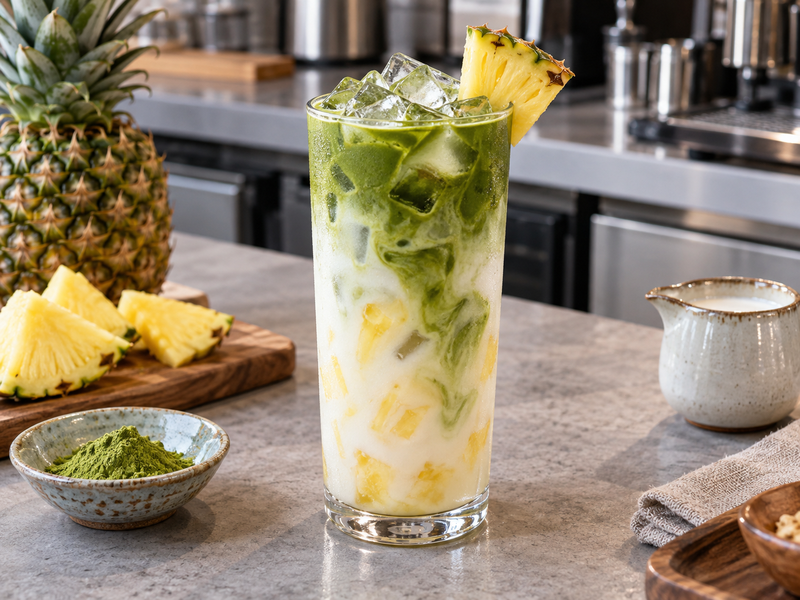
Keep the first trial free of decorative toppings. Cream, fruit cubes and extra syrup can hide a weak base while adding preparation work. Approve the liquid recipe, then test the garnish as a separate menu decision.
2. What should the pineapple juice specification say?
Identify juice, nectar and flavored syrup correctly
Read the ingredient declaration and product name. Pineapple juice, nectar and pineapple-flavored syrup are different purchasing items. Their water, sugar and fruit contributions can vary enough to change the whole drink. Record whether a concentrate needs reconstitution and follow the supplier’s instructions for that step.
For development, compare the candidate juice at the proposed dilution with tea. Note aroma, acidity, sweetness and pulp. A juice that tastes pleasant alone may dominate the cup, while a mild one may need a different proportion rather than extra sweetener.
The FDA juice safety guidance explains that untreated juice can carry harmful bacteria. Confirm the supplied juice’s treatment and handling requirements; pineapple’s sour taste does not provide a safety guarantee.
Ask for the pack size, lot identification, unopened storage requirements and directions after opening. Trial the pack size against expected sales. A large container can reduce price per kilogram but increase unused product if demand is modest. Include the receiving condition in the store checklist so a damaged or incorrectly stored pack does not enter the preparation station.
3. How can you build a measured first cup?
Start with a modest juice load
The following amounts are a proposed small trial for a creamy iced drink. They have not been kitchen tested. Choose a cup that holds the complete build with suitable headspace, then keep the cup and ice type fixed through the comparison.
| Ingredient | Suggested trial amount | Role in the test |
|---|---|---|
| Pure matcha | 2 g | Tea reference dose |
| Water | 40 g | Tea dispersion |
| Pineapple juice | 70 g | Fruit contribution |
| Unsweetened coconut beverage | 120 g | Creamy base |
| Ice | 100 g | Chilling and dilution |
Prepare the tea with the measured water. Mix the juice and coconut beverage, pour over ice and add the tea. Stir completely before tasting. Add no separate sweetener in the first screen so the team can assess what the juice and coconut product already contribute.
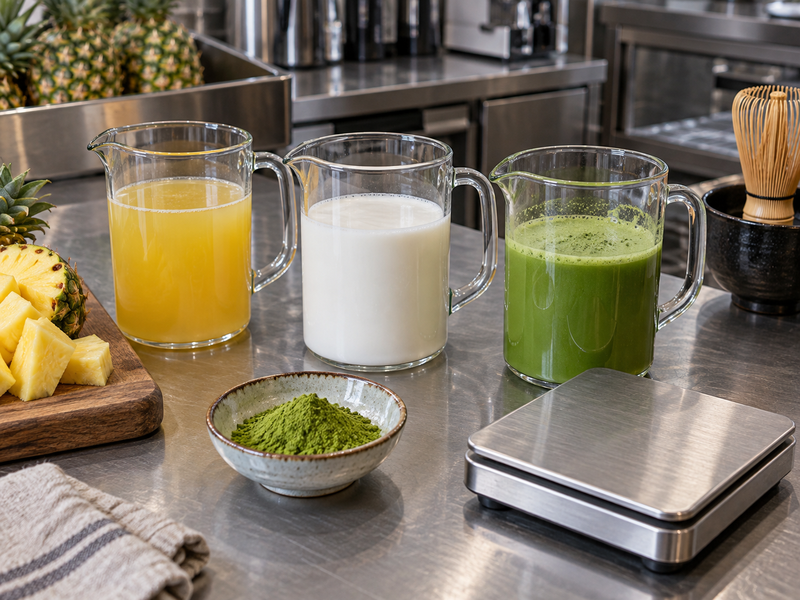
Make the next cup with a single deliberate change. For example, compare less juice while holding tea, coconut and total liquid weight constant by replacing the removed juice with water. Record that dilution change explicitly rather than describing both drinks as the same recipe with “a little less pineapple.”
4. Why does the coconut product need its own test?
Canned coconut milk and drinking beverages are different
A can intended for cooking can produce a richer result than a carton formulated as a drinking beverage. Read the fat and ingredient information on the actual products. Brand names and the word “coconut” do not tell the barista whether the two items can be interchanged.
Bring the product to its specified use condition and follow instructions for shaking or mixing before measuring. Unevenly distributed contents can make the first cup in a pack different from the last. Record any lumps or persistent separation before tea and juice are added.
| Product type | Purchasing check | Cup observation |
|---|---|---|
| Coconut beverage | Sweetened or unsweetened | Body and added sweetness |
| Canned coconut milk | Composition and mixing directions | Richness and uniformity |
| Coconut cream | Intended culinary use | Whether dilution is required |
| Coconut blend | Other ingredients and allergens | Competing flavors |
If the business wants milk substitutions, trial them independently with the pineapple ingredient. Do not assume dairy milk or another plant drink will behave like the selected coconut base. Keep appearance and flavor observations tied to the exact product pair, especially when the juice supplier changes.
5. How should the tea and fruit be combined?
Remove powder lumps before the cup is full
Sift the tea and prepare it in a separate vessel. Ippodo’s clump guidance supports sifting before whisking. Inspect the prepared tea for dry pockets before adding it to juice, where pulp and foam can make lumps harder to see.
Compare two complete assembly methods if the store is undecided: a fully mixed build and a gently layered build. Use the same ingredient weights. Record preparation time, foam, cup appearance and the taste after a standard stir. Select the method staff can repeat with the tools already at the station.
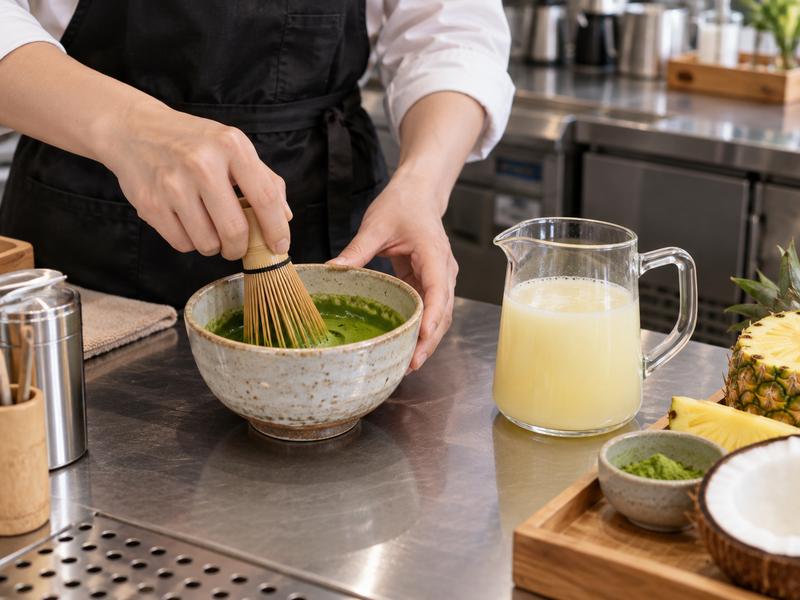
A shaker may help blend the ingredients, but the amount and type of ice used in it become part of the recipe. If the drink is then strained over fresh ice, account for both stages during dilution testing. Avoid adding an unmeasured handful of ice to a carefully weighed formula.
Check the transfer vessels for residue. Thick coconut material or tea left behind changes the delivered dose. The preparation card should state whether staff scrape, rinse with measured recipe liquid or use a vessel designed to pour cleanly.
6. When is ginger worth adding?
Test aroma, heat and particles separately
Ginger can add a sharp aromatic note, but it also creates another variable beside pineapple acidity and tea bitterness. Approve the plain pineapple version first. Then compare a small ginger addition using a documented ingredient with supplier dosing guidance, rather than switching freely among fresh root, juice and powder.
Fresh grated ginger introduces visible fibers and preparation work. A strained ginger syrup adds sweetness as well as flavor. A concentrated flavor requires a much smaller dose and appropriate measuring equipment. These formats should not share one vague instruction such as “add ginger.”
| Ginger format | Main control |
|---|---|
| Fresh preparation | Yield, particle removal and handling |
| Ginger syrup | Sugar contribution and pump delivery |
| Ginger juice | Ingredient identity and measured dose |
| Food flavor concentrate | Supplier use rate and accurate dosing |
Ask tasters to score the ginger finish after swallowing. An initially pleasant aroma can leave more heat than expected over a full cup. Keep one sample without ginger in the tasting set so the team can decide whether the extra ingredient improves the drink enough to justify its cost and station space.
7. How do you check ice and takeaway quality?
Test the cup that leaves the shop
Weigh the ice and use the same cube format throughout development. Small fragments and large cubes do not create the same immediate drinking experience. If the ice machine produces variable pieces, measure a representative service portion and make the recipe tolerant of that reality.
Prepare one cup for immediate tasting and another for the expected pickup or delivery interval, within the business’s approved handling conditions. Record fruit intensity, body and the remaining ice. A drink that starts rich can become thin, while a heavily sweetened build may remain cloying even after dilution.
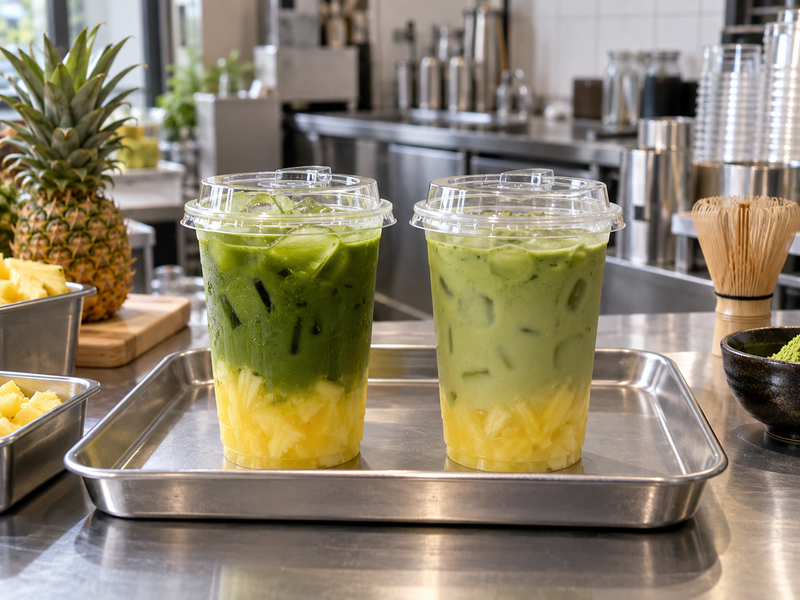
Test the lid and straw with any garnish included. A pineapple wedge under a lid can press on the seal or obstruct drinking. A garnish placed outside the cup needs a clear preparation and handling routine.
Keep promotional photography aligned with the actual takeaway cup. If the display glass is much larger or contains dramatically less ice, customers may expect a different quantity and color balance. Photograph an approved service build once the final recipe is measured.
8. What do separation and sediment tell you?
Describe the layer before choosing a correction
Record where the separation appears and whether gentle stirring restores a uniform drink. Tea sediment near the base, coconut-rich material near the top and distinct fruit liquid are different observations. A photo plus a brief description gives the development team a better starting point than “the drink split.”
Change one ingredient pair at a time to investigate. Compare tea and water, juice and coconut, then the full build. These small controls can help identify which combination needs further work. Keep the same temperatures and weights so the controls remain useful.
| Observation | Trial to consider |
|---|---|
| Dry green specks | Review tea preparation alone |
| Coconut lumps before mixing | Review the coconut product condition |
| Layers after standing | Compare mixing method and ingredient pair |
| Excess foam | Compare agitation and transfer |
Appearance testing does not establish product safety or a commercial shelf life. If the plan changes from made-to-order cups to bottled distribution, involve a qualified beverage developer and food safety specialist. A stabilizer suggestion on a supplier sheet is not a complete manufacturing process.
9. Which costs can a tropical drink hide?
Include the fruit that never reaches a customer
Track juice left in opened packs, coconut residue and discarded working batches. These losses can outweigh a small matcha price difference. Start the menu trial with pack sizes that fit likely demand, then revisit purchasing once sales are measured.
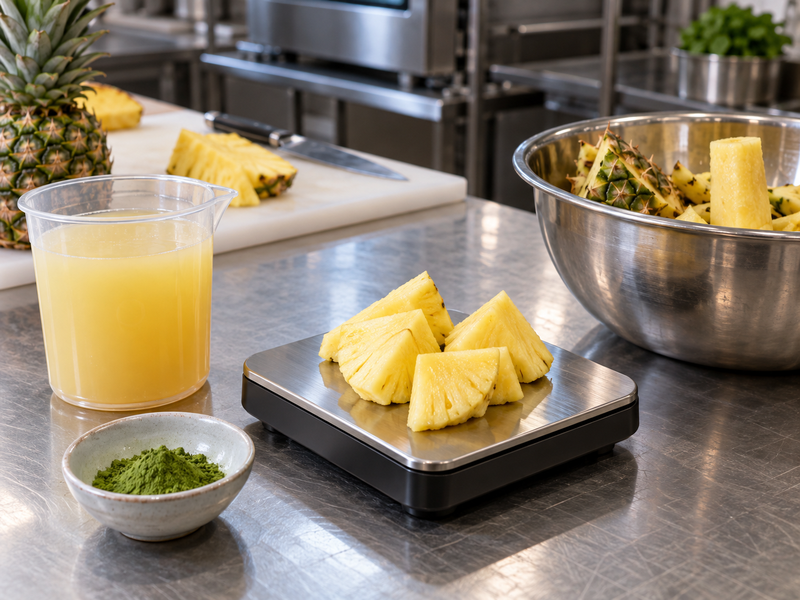
If fresh pineapple is used for garnish, record peel, core and cutting loss. Cost the garnish by usable pieces rather than whole-fruit weight. Set a size standard so different staff do not put noticeably different amounts on the same drink.
Time cleaning as part of the build. A blender version may require more equipment attention between orders than a stirred cup. Compare that labor with the price customers are willing to pay for the texture difference.
The Matcha Village ingredient buyer guide can help organize tea sample and documentation requests. Include the approved dose and expected monthly usage so quotations describe a real application. Recalculate cost when the formula changes; an old spreadsheet tied to a lower juice dose gives a misleading margin.
10. What should be fixed before the first order?
Turn the preferred cup into a receiving standard
Record the tea, juice and coconut item codes together, including whether any component is sweetened. Keep the approved formula version with the supplier quotations. If a buyer accepts a substitute ingredient, the store should know that a new comparison may be needed before use.
Specify the cup, ice amount, mixing method and optional ginger version. Give staff a photograph of the finished mixed drink as well as any intended layered presentation. That helps them recognize a preparation error after the layers have naturally moved.
Run several consecutive orders with the normal staffing level. Measure the range of completed cup weights and note which step causes delays. Revise the station layout or instructions before adding another topping to the product.
Place a modest first order using the tested ingredient identities. On arrival, compare the commercial lots with the approved trial under the same preparation conditions, then record the result beside the receiving date and release those lots for the menu only after the check is complete.
FAQ
Q1: Can fresh pineapple replace juice?
It creates a different preparation with additional yield, particle and handling considerations. Decide whether the fruit will be juiced, pureed or blended, then test the final cup. Keep that version separate from a recipe developed with a specified commercial juice.
Q2: Does the drink need added sugar?
That depends on the juice, coconut product and target flavor. Taste the first trial without separate sweetener, then adjust deliberately. A sweetened coconut beverage can already contribute enough sweetness to change the result substantially.
Q3: Can canned coconut milk be poured in at the same amount?
Do not assume a direct substitution. Check composition, mixing instructions and flavor, then test it in a small batch. A cooking product may give a much richer cup than the drinking beverage used during development.
Q4: Is ginger required for pineapple matcha?
No. It is an optional flavor direction. Keep a plain version in the development tasting so the team can judge whether ginger improves the drink. If selected, specify the format and dose rather than allowing an unmeasured addition.
Q5: Can the cafe describe it as a healthy energy drink?
Describe the ingredients and taste accurately. This guide does not establish nutritional or health claims, and caffeine depends on the actual tea and dose. Use verified product information and destination-market review for any specific claims on the menu.