
Lychee matcha can lose its fruit character quickly when a cafe adds too much milk, sugar or tea. The development task is to keep a recognizable lychee aroma after the drink is stirred, while making the recipe easy to repeat during service. Begin with the fruit ingredient because fresh flesh, canned fruit and flavored syrup create different drinks.
The quantities below describe a proposed small tasting trial, not a tested house recipe. Use them to compare ingredient choices and write a preparation card. Storage, batch preparation and commercial sale still require the business’s own approved procedures.
Format · Fruit · Trial · Tea · Milk · Balance · Service · Quality · Cost · Supply
1. What kind of lychee matcha will the cafe sell?
Define the drink customers will receive
A lychee latte, a clear fruit tea and a blended drink have different textures and preparation needs. Choose one before sourcing every possible fruit product. A cafe with a short preparation bench may favor a strained syrup, while a dessert shop may want visible fruit pieces and a wider straw.
Matcha Union’s lychee latte combines a homemade fruit syrup, milk, ice and whisked matcha. That reference supports a latte direction. Your recipe card should still identify the syrup concentration and the amount of milk instead of leaving either to the barista’s preference.
| Menu format | Customer experience | Operational question |
|---|---|---|
| Strained syrup latte | Smooth and creamy | Does the fruit remain recognizable? |
| Fruit pulp latte | Visible lychee texture | Can the straw pass the pieces? |
| Clear fruit tea | Lighter body | Is the tea too drying? |
| Blended drink | Thick iced texture | Does the blender delay service? |
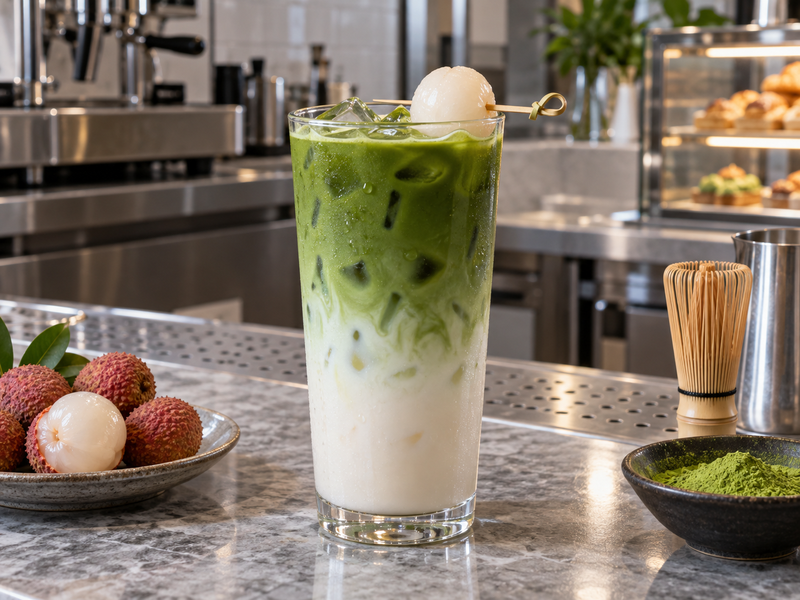
Describe the selected format plainly on the menu. If the flavor comes from syrup, a whole fruit garnish should not imply that every cup contains a large quantity of fresh lychee.
2. Which lychee ingredient is easiest to control?
Compare the ingredient as delivered
Fresh lychees require peeling, seed removal and a usable-yield record. Canned lychees add a packing liquid that may contribute sweetness. Puree and syrup reduce some preparation work, but their fruit content and flavor strength need checking on the supplier’s specification.
Taste each candidate diluted in the intended drink base. Smelling a concentrated syrup from the bottle can exaggerate its appeal, while tasting undiluted puree can overstate the fruit intensity available in a finished cup. Use equal final drink weights for a fair comparison.
Ask for the ingredient list, fruit percentage where available, pack size, lot identity and handling instructions after opening. If the item contains added flavors, colors or preservatives, record them accurately for the product and market. Their presence should be a specification decision rather than a surprise after launch.
For canned fruit, weigh the drained flesh and packing liquid separately. Decide which parts the recipe uses. A purchasing comparison based only on the can’s gross weight can make an apparently inexpensive product costly once the unused liquid is counted. Check that fruit pieces are free of seeds and unsuitable fragments before they reach the service station.
3. What is a useful one-cup trial?
Fix cup weight before chasing a layered appearance
The following suggested latte is an unvalidated development starting point for one cup. Select a cup with sufficient capacity for the actual ice displacement and leave the headspace required by its lid. Gram weights make comparisons easier than counting variable ice cubes.
| Ingredient | Proposed trial amount | What to keep constant |
|---|---|---|
| Unsweetened matcha | 2 g | Same tea lot |
| Water for tea | 40 g | Same preparation temperature |
| Milk or selected plant drink | 140 g | Same item and batch |
| Lychee syrup | 20 g | Known syrup product |
| Ice | 100 g | Same cube type |
Prepare the tea separately, combine syrup with the milk and assemble over the weighed ice. Stir the finished cup for tasting even if the menu presentation is layered. The customer should receive a balanced drink after the layers mix.
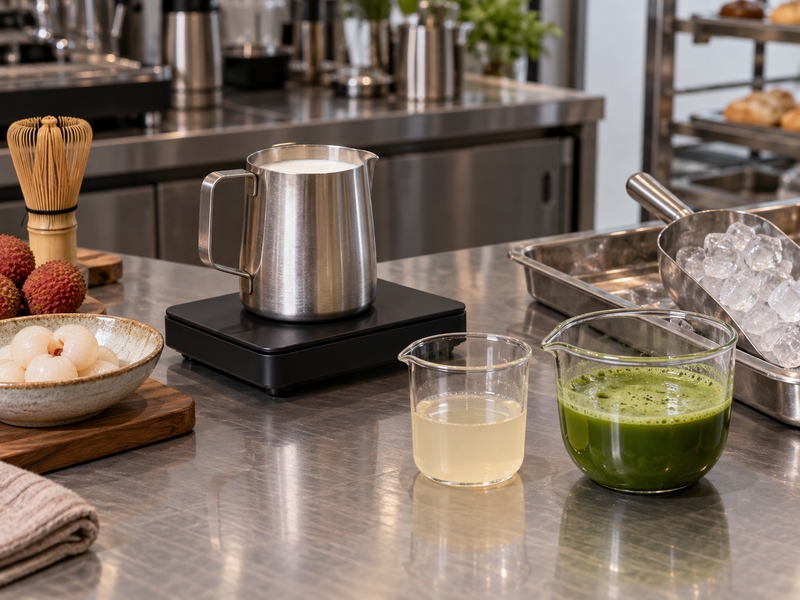
For the next trial, change only the syrup amount or the tea amount. Do not change both while also switching milk. Keep notes on aroma, sweetness and the finish after swallowing. Those observations tell the team which variable deserves another test.
4. How should the matcha be prepared?
Make a smooth tea portion before adding fruit
Sift the powder and whisk it with the measured water until no dry pockets remain. Ippodo’s explanation of matcha clumps recommends sifting to break them apart before preparation. This small step is easier to control than chasing lumps after the tea enters a full cup of milk and ice.
Choose the water condition during the trial and record it. If one operator uses recently boiled water and another uses water from a cold pitcher, the comparison includes a preparation change. Matcha Village’s water temperature guide can help organize that separate tea-preparation test.
Inspect the bowl after pouring. A ring of wet powder left behind means the weighed dose did not all reach the cup. Adjust the mixing and transfer method before increasing the ingredient allowance.
For a busy store, compare individual preparation with a small controlled batch only after a holding procedure has been approved. Record how the batch is identified, mixed before use and discarded. A recipe that works freshly whisked does not automatically establish the flavor, appearance or safety of tea held for later service.
5. How can you choose the milk without losing lychee?
Taste with the fruit at its selected dose
Milk contributes its own sweetness, aroma and body. A strong plant-drink flavor can make the lychee hard to identify, while a very rich base can turn the drink toward dessert. Compare the exact products available through your distributor because broad categories such as “oat” or “coconut” cover different formulations.
Prepare equal cups with the same tea, fruit and ice. Ask tasters to identify the lychee without seeing the ingredient bottles. If they recognize only sweet milk and tea, record that result before adding more fruit syrup.
| Base option | Question for the tasting team |
|---|---|
| Dairy milk | Is the fruit clear beside the dairy flavor? |
| Oat drink | Does cereal flavor cover the lychee? |
| Coconut drink | Does coconut become the main flavor? |
| Soy drink | Is the combined finish pleasant? |
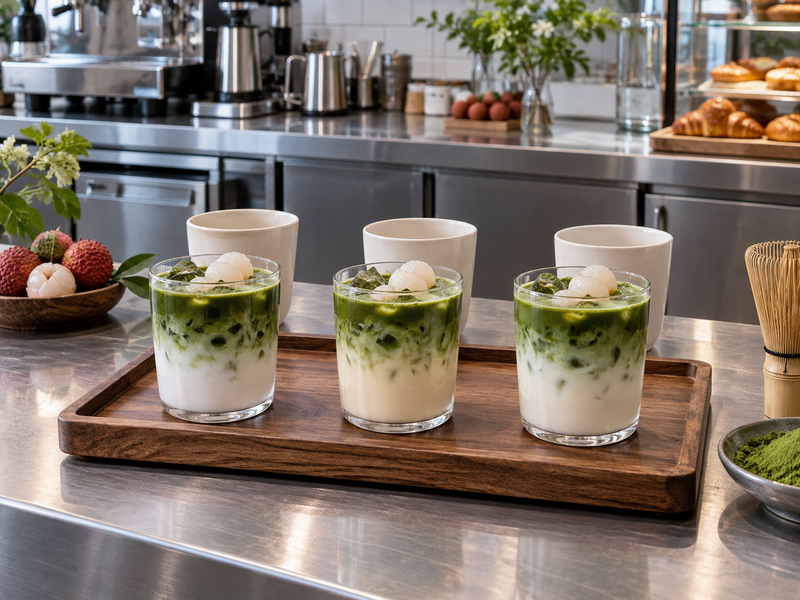
Record allergen information and the selected product identity. If the menu allows milk substitutions, test those as separate builds. Staff need to know whether the same syrup dose works or whether a substitution changes the intended balance enough to require another recipe card.
6. How do you separate sweetness from fruit strength?
Stop using extra syrup as the answer to every defect
A weak lychee note may need a different fruit ingredient rather than a larger quantity of sweet syrup. Compare the current syrup with a fruit-forward candidate at similar perceived sweetness. If one gives a clearer aroma, purchasing has a useful specification to discuss with the supplier.
A refractometer can help a trained team track soluble solids in a syrup, but its reading does not identify lychee content or flavor quality. Use it alongside the ingredient specification and a tasting reference. Follow the instrument’s calibration and temperature instructions.
| Observation | Proposed next comparison |
|---|---|
| Sweet but little fruit aroma | Different lychee ingredient |
| Clear fruit but excessive sweetness | Lower syrup or less-sweet base |
| Strong tea overwhelms fruit | Lower tea dose at fixed syrup |
| Thin finish after stirring | Ice and total liquid balance |
If making syrup in-house, record fruit input, sugar input and final strained yield. Evaporation and retained fruit solids can change the result between batches. A timed simmer alone does not describe the finished concentration. Establish a repeatable endpoint and have the process and storage conditions reviewed before routine use.
7. What should the barista do in what order?
Write the build around the available station
Place the syrup, milk and tea tools where the operator can follow a short sequence without crossing the dirty-tool area. The proposed order is to weigh syrup, add milk, add ice and finish with prepared tea. Confirm that order with the chosen cup and ingredients during the trial.
Use the same pour technique for photographs and service. A carefully layered promotional cup can set an expectation that a rushed pour will not meet. If layering takes too long for the store, a well-mixed drink with consistent color may be a better menu presentation.
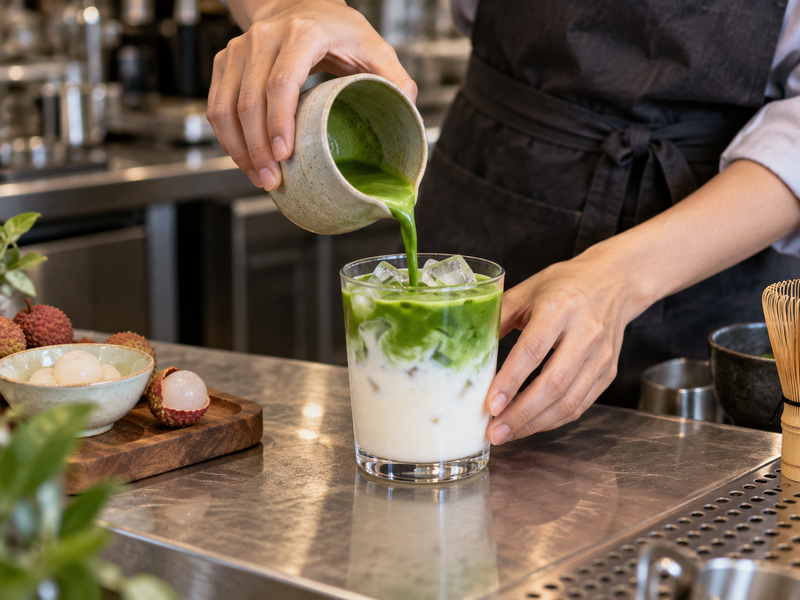
Time several consecutive builds, including retrieving fruit, changing a syrup bottle and cleaning the whisk. The fastest isolated cup rarely represents a busy shift. Record spills and rework as well as preparation time.
Make garnish optional only if staff can explain the choice accurately. A whole lychee needs a defined handling method, and any pick or straw must suit the service format. If fruit pieces settle at the base, test whether customers can reach them without removing the lid.
8. Which changes should a holding check look for?
Follow the cup through realistic handover
Taste the freshly assembled cup, then inspect another after the normal pickup or delivery interval. Use the same conditions expected in service and stay within the business’s approved handling limits. Record separation, sediment, aroma and the amount of ice remaining.
The FDA juice safety guidance distinguishes treated juice from untreated products. If a lychee juice is used, confirm its treatment and supplier instructions rather than assuming fruit acidity makes it safe.
| Check point | Observation to write |
|---|---|
| Immediately after mixing | Fruit recognition and tea texture |
| Normal pickup time | Layer mixing and sweetness |
| Expected delivery handover | Ice loss and leakage |
| After gentle stirring | Sediment redisperses or persists |
Do not turn a pleasant taste after a short test into a storage claim. The test describes customer quality under observed conditions. A bottled version, a syrup held for days or a central-kitchen concentrate requires its own assessment. Keep those products outside the launch scope until their processes are established.
9. How do fruit yield and pumping affect cost?
Count what reaches each cup
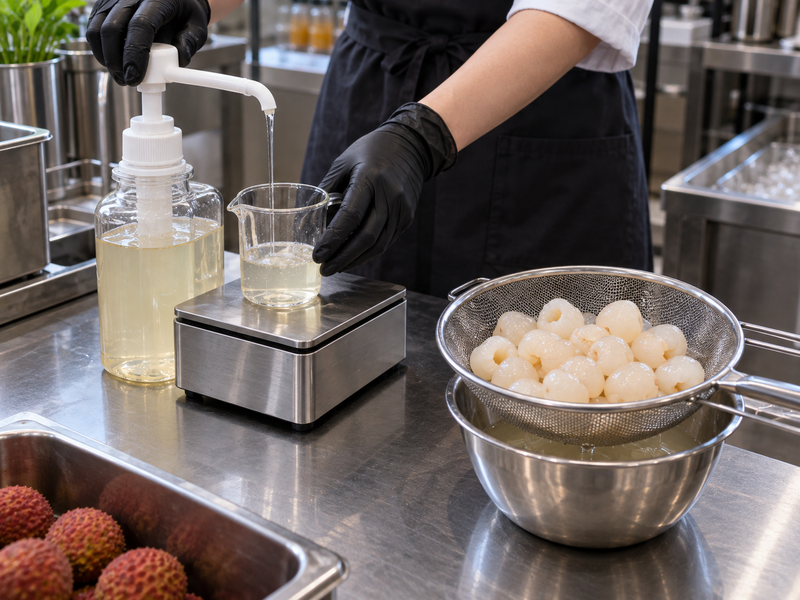
Weigh several syrup pump strokes into a container and divide by the number of strokes. Repeat with the bottle at a typical service condition. Pumps that look identical can deliver different amounts, and incomplete strokes create another source of variation.
Calculate the lychee cost from usable syrup or drained fruit, including preparation loss where relevant. Add garnish separately so managers can see what it contributes. A garnish that staff forget half the time creates both cost inconsistency and a changing customer experience.
Compare matcha cost per cup at the approved dose. Include powder left in the bowl or discarded with an expired working batch. If a higher-priced tea gives the chosen balance at a lower dose, calculate the result before judging the purchase price alone.
During a short menu trial, record remakes caused by sweetness complaints, missing fruit or powder lumps. These notes give the buyer a more useful picture than ingredient cost alone. Fix the repeated preparation fault before negotiating a marginally cheaper syrup or tea.
10. What should the supplier and store approve?
Connect the sample to the purchase order
Send the matcha supplier the fruit format, milk product, tea dose and sensory target. A clear request might describe a smooth latte with recognizable lychee and moderate tea bitterness. Attach the trial formula so the supplier understands the dilution.
Ask the fruit supplier for an agreed ingredient identity and change notification process. Replacing a lychee puree with a flavored syrup can affect both menu wording and cup balance. Record the approved item codes for tea, fruit and milk together.
Have two baristas prepare the drink without verbal coaching. Compare their cup weights and taste the mixed drinks side by side. If the preparation card leaves room for different interpretations, revise it before training the whole team.
Set a small launch quantity and a review date. Give staff a simple place to record customer comments about fruit strength, sweetness and texture. Order the first commercial ingredients against the approved sample codes, then run a receiving comparison before those ingredients enter normal service.
FAQ
Q1: Can canned lychee liquid replace syrup?
It can be tested as a separate ingredient, but its sweetness and fruit intensity may differ from the selected syrup. Record the can specification and dose by weight. Do not substitute it during service without checking the complete drink.
Q2: Should the drink stay layered?
Layering is a presentation choice. Taste the drink after stirring and provide a practical way for the customer to mix it. A cup should remain pleasant when the fruit, milk and tea combine during transport or drinking.
Q3: Can lychee pieces go into the cup?
Yes, if their preparation, size and handling suit the business’s procedure. Remove seeds and unsuitable fragments, choose a suitable utensil or straw and check how pieces behave under the lid. Include their usable weight in the recipe cost.
Q4: Is additional rose flavor necessary?
No. Establish the lychee and tea balance first. Rose introduces another aroma and can make it harder to recognize the fruit. If the menu needs that variation, develop it as a named version with its own measured dose.
Q5: Can a cafe bottle this recipe for retail?
A freshly made cup does not validate a bottled product. Bottling needs a defined manufacturing process, packaging, storage conditions and appropriate safety and shelf-life work. Keep the cafe recipe and any retail development as separate projects.