
A buyer can approve a vivid green sample and still end up with the wrong product. One packet may contain only ground tea. Another may include sugar, milk powder, flavoring, and additives designed for a fast café service. Both might be called “matcha” in a sales conversation. For a commercial order, identify the matcha ingredients in the exact SKU, then test that formulation in the drink or food you plan to sell.
1. What Ingredients Belong in Pure Matcha?
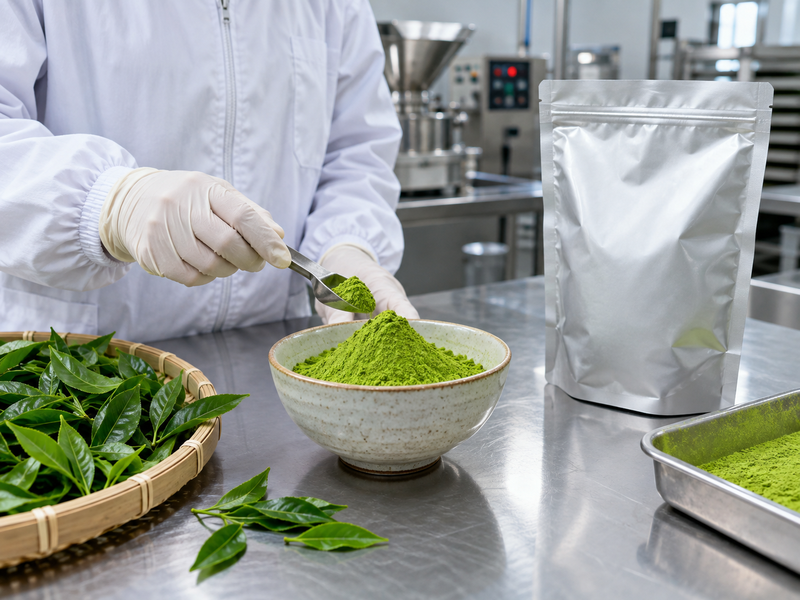
Read the ingredient line before the grade name
Pure matcha is a powder made from processed green tea leaves. For a product sold as a single-ingredient matcha powder, the ingredient statement should identify tea alone. Ask the supplier whether the offered item is pure powder or a premix; a photograph of a green drink will not tell you. Grade names also describe a supplier’s intended use rather than a universal recipe. A “ceremonial” sample and a “culinary” sample may both have one ingredient, yet differ in flavor, color, and cost. Put the ingredient declaration beside the product code on every sample request.
Check the form you actually buy
Matcha can arrive in a bulk pouch, retail tin, or portioned sachet. Request the specification for the exact format you intend to buy. If a distributor offers a bulk bag and a retail-ready private-label pack, compare their product codes and lot references. The useful check is simple: can the supplier trace the submitted sample, the proposed commercial pack, and the written specification to the same formulation? Matcha Village offers pure matcha as well as formulated products, so that distinction belongs at the start of the buying brief.
| Product description | Ingredient question | Buyer action |
|---|---|---|
| Pure matcha powder | Is green tea the only ingredient? | Match sample code to the specification |
| Retail matcha tin | Is the fill identical to the bulk sample? | Compare product and lot references |
| Matcha blend | Which other ingredients are present? | Request the full formulation declaration |
2. How Can Buyers Verify the Product Behind a Label?
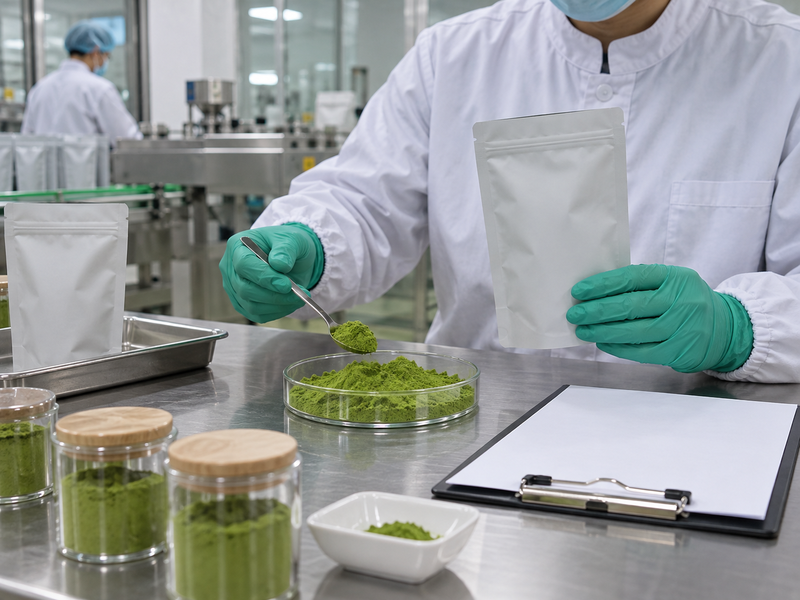
Tie each document to a named SKU
An ingredient list without a product code is hard to use. Ask for a current specification that names the SKU, pack format, intended application, and revision date. The supplier should be able to identify which document applies to the powder in your sample pouch. If the label says “matcha green tea” while the specification describes a sweetened beverage base, stop the approval process until someone explains the difference. This is a documentation problem, not a tasting problem. Your purchasing, quality, and product teams need the same item identity before placing an order.
Separate formulation facts from sales language
Words such as “premium,” “smooth,” and “vibrant” can help position a product, but they do not disclose what goes into it. Record the ingredient declaration, nutrition or composition data when relevant, allergen statement, shelf-life basis, storage conditions, and packaging details in one file. Ask for the supplier’s current version instead of copying an older product page into your approval record. A practical way to spot gaps: compare the ingredient statement on the sell sheet, sample label, proposed retail artwork, and commercial specification. Differences may be harmless revisions, or they may reveal that two separate products have been grouped under one name. Resolve them before artwork or production is locked.
3. What Changes in Matcha Latte Powder?
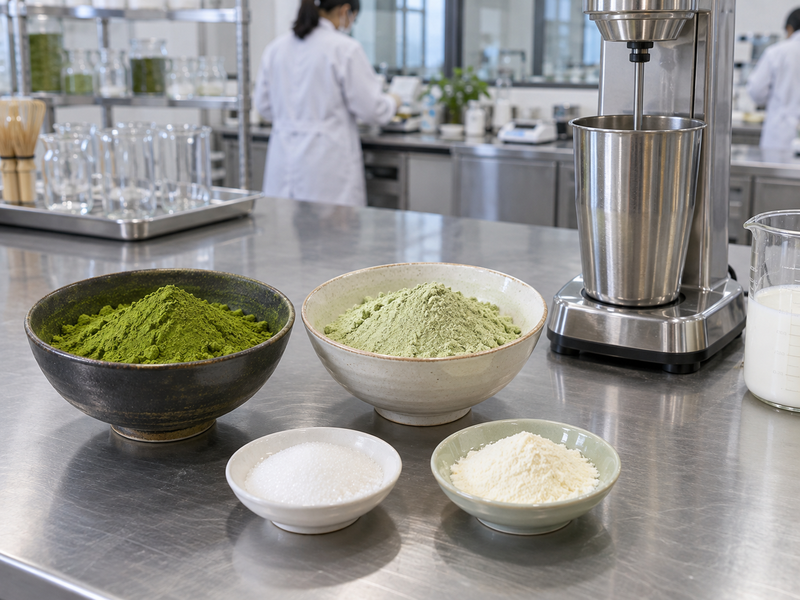
Identify the base before judging flavor
A matcha latte powder may combine matcha with sugar, dairy ingredients, plant-based ingredients, or other components that make a drink faster to prepare. Formulas vary. You cannot infer the ingredient list from the phrase “latte powder.” Ask for the exact declaration and the recommended preparation ratio. A blend that tastes balanced in hot whole milk may seem flat in water or too sweet in an oat-based drink. Test each base you intend to serve rather than treating the sample cup as a universal result.
Compare workflow as well as composition
For a café chain, the right formulation must fit the bar routine. Measure scooping, mixing, foam behavior, settling, and taste after the drink sits for a few minutes. For a packaged beverage manufacturer, include your real mixing equipment, processing temperature, and storage trial. A sweetened premix might save a step during peak service, while pure matcha offers more control over a brand’s sugar level and flavor profile. That choice changes the ingredient line: procurement should compare complete drinks at a fixed serving size, not compare the bag price alone. The Matcha Village latte range provides a starting point for requesting products intended for beverage applications.
| Buying route | Formulation control | Trial question |
|---|---|---|
| Pure matcha plus separate ingredients | Buyer controls sweetness and base | Can staff repeat the recipe quickly? |
| Ready-to-mix latte powder | Supplier defines more of the recipe | Does it fit each milk and serving size? |
| Custom blend | Formula is agreed for one application | Can both parties approve a stable specification? |
4. How Should Sweeteners Be Evaluated?

Taste the finished serving at a fixed dose
Sugar or another sweetening ingredient can change more than sweetness. It affects the dose per cup, the strength of tea flavor, and the space left for other ingredients in a finished formula. Compare candidates using identical cup size, matcha dose, milk or water volume, and serving temperature. Note what happens as ice melts or a hot drink cools. If your brand sells a low-sugar line, request a formulation that supports that brief rather than assuming a standard café premix can be diluted without changing flavor.
Calculate cost per drink
A buyer who looks only at price per kilogram may miss the cost of the actual serving. Record powder mass, yield, waste, and any extra sweetener added at the bar or production line. A premix may cost more per bag but require fewer ingredients and less handling. A pure powder may support a broader menu if you make several drinks from the same base. Keep the arithmetic visible: put every test recipe in a shared worksheet so purchasing and operations compare identical servings. When a sample is approved, freeze both the supplier SKU and your drink recipe. Otherwise, an ingredient switch may be mistaken for a service issue.
5. Which Milk and Plant Bases Need Separate Trials?
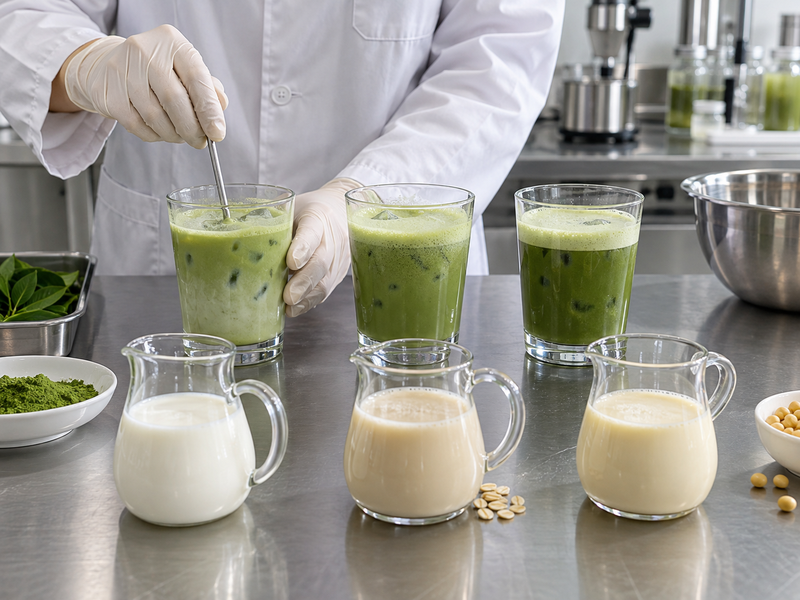
Test against your menu, not a generic recipe
Matcha’s taste and visual appearance change once you add a base. Whole milk, oat milk, and other plant drinks have different sweetness, fat, and texture. A blend designed for one base may clump or separate in another. Use the same powder dose for a first comparison, then adjust only if your menu would realistically use a different ratio. Photograph each finished drink under normal service lighting. Customers see the cup on your counter, not a supplier’s sample prepared under ideal conditions.
Watch texture through the holding time
Stir a fresh drink and inspect it again at the time customers typically receive it. For iced drinks, check powder at the bottom and uneven color around ice. For bottled or ready-to-drink products, a quick cup test is only a screening step; your production trial must cover the actual process and storage period. Keep notes on mixing order and equipment. One sample may behave differently when staff whisk powder into water before adding milk versus adding powder directly to cold milk. Record the method you approve so a later team can reproduce it.
| Application | Sample test | What to record |
|---|---|---|
| Hot café latte | Standard milk and service temperature | Flavor, foam, color, prep time |
| Iced plant-milk drink | Normal ice and mixing order | Settling, color after holding |
| Packaged beverage | Pilot production conditions | Separation and shelf-life observations |
6. How Should Flavorings and Colors Appear in the Brief?
Ask what creates the intended sensory result
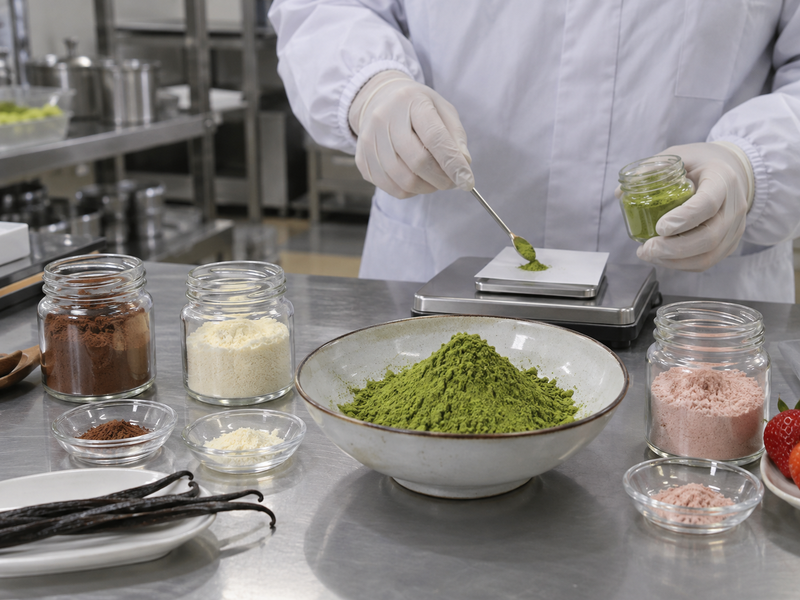
A matcha blend may use flavoring to meet a specific beverage target. Buyers should know whether that flavor is part of the product they approved, not discover it after artwork is written. Describe your target in ordinary terms: tea-forward, creamy, sweet, roasted, or suited to milk. Then ask the supplier which ingredients produce that profile. If your brand wants a short ingredient list, say so at the start. The same applies to color expectations. A bright cup from a studio image is not a specification; compare powder and finished drinks under consistent lighting.
Review the label wording with the formula
Marketing and quality teams often work at different times. Bring them together before printing packaging. The proposed claim, ingredient statement, sample, and final recipe should describe one product. If the formulation changes after a pilot run, repeat the label review rather than assuming the old wording still fits. Your regulatory team should confirm language for each destination market. The supplier’s useful contribution is a clear declaration and product documents tied to the final SKU. Matcha Village’s company overview describes formulation and private-label support, which makes this a sensible subject for a product-development discussion.
7. What Should an Allergen Review Cover?
Look beyond the headline ingredient
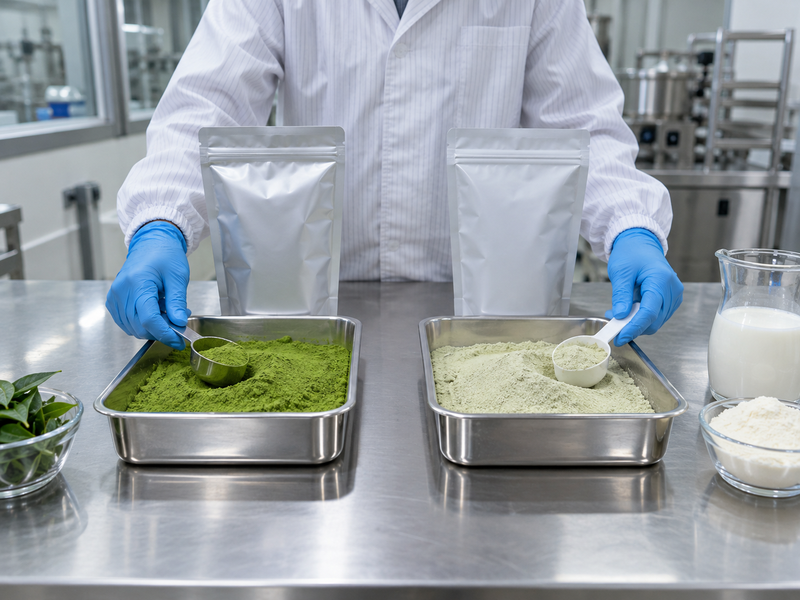
Pure matcha and a creamy latte powder raise different questions for an allergen review. The latte product might include a dairy ingredient, while a plant-based blend may involve other raw materials that need checking. For products sold in the US, the FDA lists milk among major food allergens. Do not infer allergen status from a front-of-pack phrase or from the appearance of the powder. Request the supplier’s product-specific allergen statement and ask how shared equipment and packing are managed. Your quality team can then assess the proposed product against your market and customer requirements.
Keep the review tied to revisions
An allergen file can become stale when a blend changes. Put formulation version, document date, sample identifier, and intended market in the approval record. If a customer requests a different sweetener or base, treat that as a new review. The same discipline applies when you move from a bulk bag to retail sachets packed on a different line. The question for purchasing: do the document and the lot being ordered refer to the same recipe and packing route? If that answer is unclear, ask for a corrected file before the product enters a menu or finished-good label.
| Document | Why buyers request it | Cross-check |
|---|---|---|
| Ingredient declaration | Shows the complete recipe | Matches final sample and artwork |
| Allergen statement | Supports product risk review | Names current formulation and site |
| Pack specification | Describes filling and storage | Matches commercial order format |
8. Which Quality Records Help Confirm the Ingredients?
Request records that answer a buying question
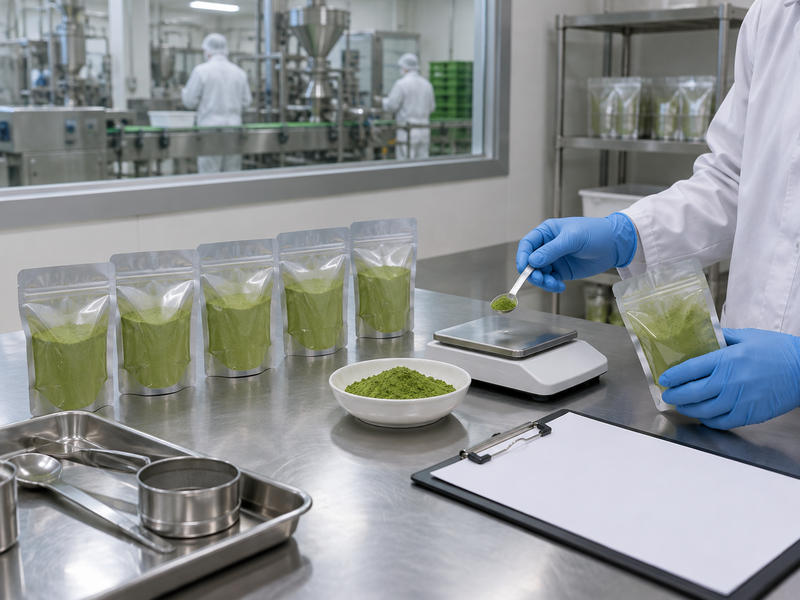
A certificate or test sheet is useful when it relates to the product and lot you intend to purchase. Ask for a product specification, lot identifier, relevant test results, and the supplier’s method for handling a change in raw material or formulation. Requirements depend on your market and product category, so have your quality team define the needed records. For a pure powder, buyers may pay close attention to tea identity, sensory consistency, and contaminant testing. For a premix, they must also review every added ingredient and the finished blend’s performance.
Compare retained samples with commercial lots
Keep an approved reference sample and a brief sensory record: appearance, aroma, bitterness, sweetness, and performance in your actual recipe. On receipt of a new lot, compare it under the same conditions. This approach will not replace laboratory testing, but it can reveal a practical mismatch quickly. A repeat order needs repeatable evidence. Ask how Matcha Village links raw materials, milling, blending, testing, and packed lots in its traceability process. Do not rely on an attractive sample alone when your brand will sell thousands of servings from a commercial shipment.
9. How Can Buyers Compare Samples and Total Cost?
Build a comparison sheet around the finished product
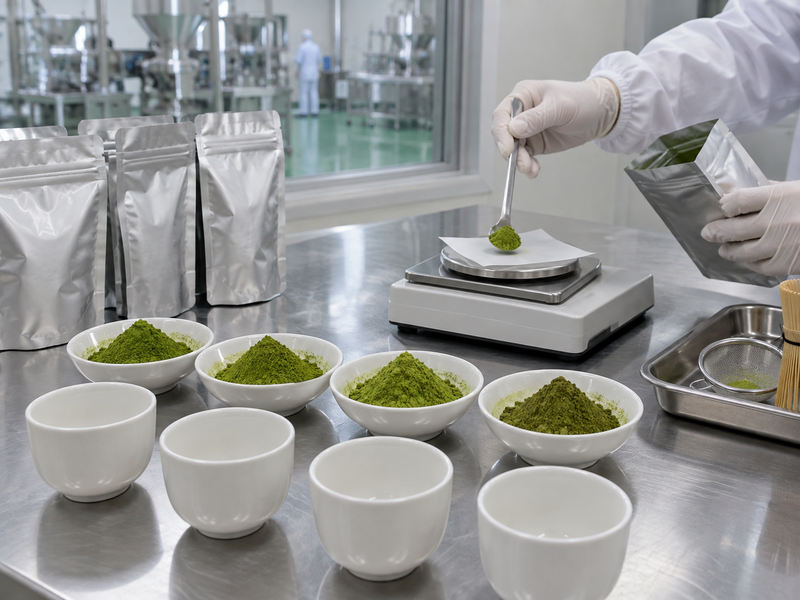
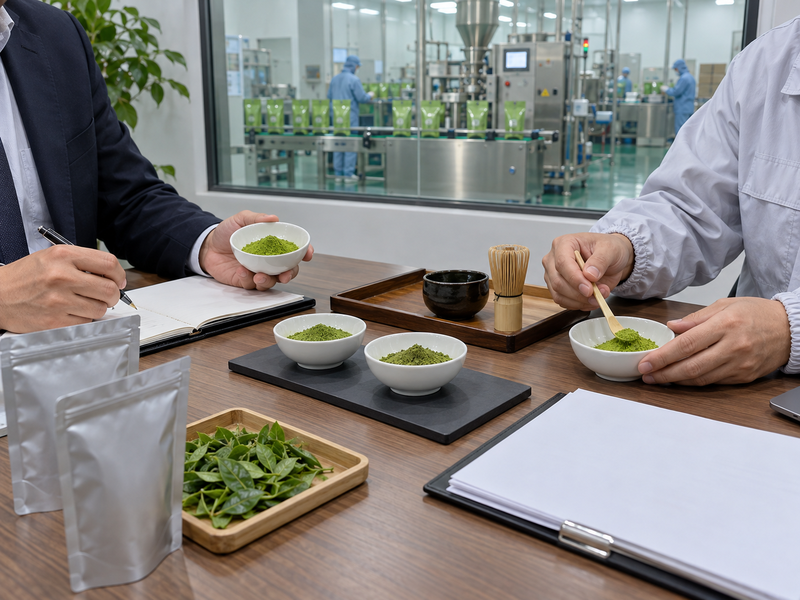
Choose two or three candidate SKUs that fit the ingredient brief, then test each in the same recipe. Assign a code so tasters do not know the brand or price during the first round. Record dose, color, flavor, texture, preparation time, and cost per serving. If the tea is for a bakery or ice cream manufacturer, test it after processing and during your planned storage interval. The lowest quotation is not automatically the lowest usable cost if a higher dose is needed to reach the target flavor.
Include the cost of change
Procurement decisions also affect artwork, training, inventory, and approval work. A late move from pure matcha to a sweetened premix can force a label revision. A move between grades may change the recipe dose or finished color. Ask the supplier about minimum order size, pack options, lead time, and repeat-lot process before declaring a sample approved. One clear comparison helps all teams: keep ingredient list, sample performance, commercial terms, and documentation status on the same page. Buyers looking for larger packs can use the bulk matcha range as a starting point for a focused inquiry.
| Decision area | Pure powder | Formulated blend |
|---|---|---|
| Ingredient control | Buyer adds other ingredients | Supplier defines more of formula |
| Bar or line work | More mixing steps may be needed | Trial preparation speed |
| Label review | One primary ingredient to verify | Review every component and claim |
| Cost comparison | Tea dose plus separate inputs | Complete premix dose per serving |
Before approving artwork or a purchase order, send the supplier one version-controlled brief. State the product code, ingredient rules, target recipe, market, pack size, and documents required. Request samples against that brief and keep the version that passed your trial. A clear ingredient record makes later reorders easier because both sides know exactly which powder or blend the business approved.
10. What Do Buyers Ask About Matcha Ingredients?
Q1: Does pure matcha contain anything besides tea?
A pure single-ingredient matcha powder should have tea as its only declared ingredient. Ask for the exact SKU’s current declaration and specification. Do not infer the answer from a grade name or a green product photo.
Q2: Is a matcha latte powder the same as pure matcha?
No. A latte powder can contain sweeteners, milk components, or other formulation ingredients. The actual recipe varies by product. Compare ingredient statements and test both products at the intended serving size.
Q3: Can a buyer approve a blend from a sample alone?
Use a sample for sensory and process testing, then match it to a written specification, allergen statement, pack format, and commercial product code. A sample cup does not show the full documentation needed for repeat purchasing.
Q4: Should one blend be used across hot and iced drinks?
Only if it performs well in both. Test each drink with the milk, ice, mixing order, and holding time used in service. Record recipe changes before adopting one SKU across a menu.
Q5: What belongs in a first supplier inquiry?
Send your application, target flavor and sweetness, ingredient restrictions, expected volume, destination market, and desired packaging. Ask the supplier to identify suitable SKUs and provide product-specific documents with each sample.