
Orange matcha has little room to hide an uneven ingredient. Juice supplies much of the cup, while a concentrated tea portion adds bitterness, aroma and green color. A cafe should first decide whether the drink will taste mainly of orange with a tea finish or present a stronger balance between both ingredients.
That decision can be tested with a few weighed cups. The suggested trials below are original development proposals, not validated recipes. They focus on made-to-order iced service, with separate records for juice identity, tea dose, pulp, ice and the customer’s experience after stirring.
Target · Juice · Trial · Tea · Sweetness · Pulp · Assembly · Checks · Cost · Approval
1. What should orange matcha taste like?
Write the balance in everyday language
Use a concrete target such as “orange first, tea clearly present, no harsh finish.” Give the tasting team a plain orange juice sample and a prepared tea sample before the combined cups. This helps people describe which component they want changed rather than asking vaguely for a “better balance.”
d:matcha’s iced orange recipe uses orange juice, whisked matcha and optional syrup. Its short ingredient list provides a useful reference for a juice-based build. Your cafe can develop its own ratio without adding milk or extra flavors at the outset.
| Target direction | First variable to compare |
|---|---|
| Orange-led | Tea dose at fixed juice weight |
| Tea-led | Juice dilution at fixed tea dose |
| Less sweet | Juice identity before syrup changes |
| Softer finish | Tea candidate and overall ratio |
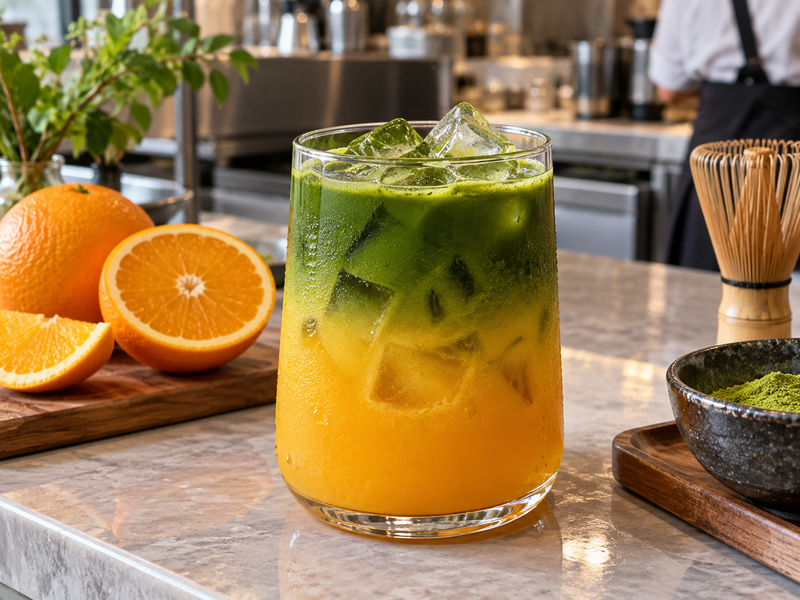
Taste the entire mixed drink, including the last few sips. A strong top layer and sweet lower layer can create two very different impressions if the customer starts drinking before mixing. Decide how the service presentation will address that behavior.
2. How should a cafe compare orange juices?
Purchase against a named product
Record whether the juice is from concentrate, not from concentrate, freshly prepared on site or another specified product. These descriptions help trace the ingredient, but they do not replace tasting. Compare the exact commercial item that purchasing can supply consistently.
Keep pulp level, sweetness and acidity as separate observations. A pulpy juice can feel more substantial without necessarily giving a stronger orange aroma. A sweeter juice may soften perceived tea bitterness, but that does not mean the tea itself has improved.
The FDA juice safety guidance addresses risks from untreated juice. Confirm treatment and handling instructions with the supplier, or establish an appropriate process for on-site preparation. Sourness alone is not a safety control.
Ask for pack size and usable life after opening according to the supplier’s directions. Then compare that with realistic daily demand. An economical large pack may produce more waste during a slow menu launch than a smaller pack. Keep the label and lot record accessible so staff can identify the juice used when a flavor complaint appears.
3. What is a practical first cup formula?
Keep the first comparison free of garnish
The following is a proposed one-cup development formula. It has not been tested in your kitchen and is not intended as a universal orange matcha recipe. Use a cup that accommodates the actual ice and leaves enough room for mixing without spilling.
| Ingredient | Suggested starting amount | Trial control |
|---|---|---|
| Pure matcha | 2 g | One sample lot |
| Water for tea | 40 g | Fixed preparation condition |
| Orange juice | 140 g | One named juice |
| Ice | 100 g | Fixed cube format |
| Syrup | None initially | Add only in a separate comparison |
Whisk the tea, place juice and ice in the cup, then add the tea. Stir before tasting. If the finish is too strong, compare a lower tea dose while keeping juice and water fixed. If orange dominates, compare a higher tea dose without changing the juice at the same time.
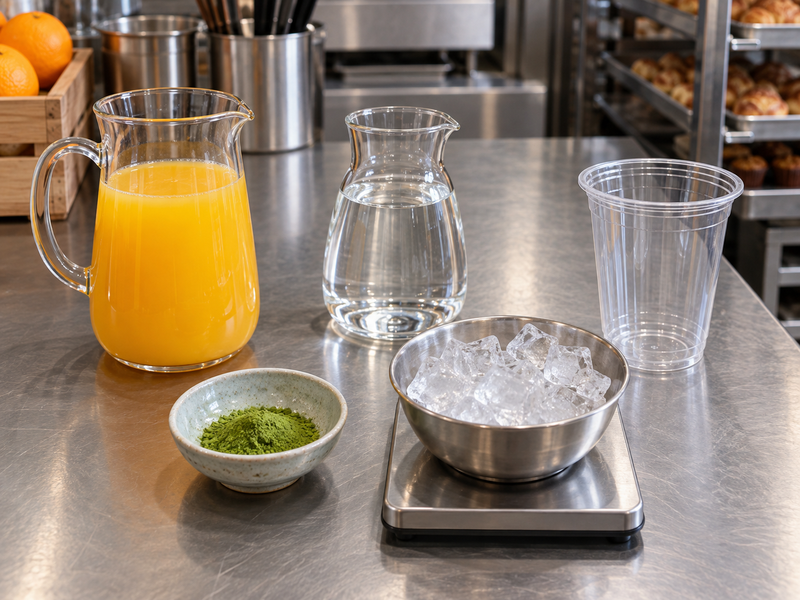
Label cups with neutral sample codes for the tasting team. Keep the formula key separately so a darker green appearance or a higher ingredient price does not automatically become a quality judgment. Record preferences before revealing which sample contains which tea.
4. How can the tea portion stay smooth?
Inspect the tea before it touches juice
Prepare the matcha in a bowl or mixing vessel large enough for effective whisking. Sift before adding water; Ippodo’s clump explanation describes this preparation step. Look for dry powder pockets and check the vessel after pouring for residue.
Use a scale that can measure the intended dose reliably. A heaped spoon changes with powder packing and operator technique. Once a scoop has been checked against the scale, it may serve as a service aid, but its delivery should be verified again when the powder or scoop changes.
Matcha Village’s usucha service guide can support a separate evaluation of the tea in water. That comparison is useful for diagnosing preparation, though the final approval must happen in orange juice because the drinking conditions differ.
Do not keep whisking a full juice cup to correct tea that was poorly dispersed at the start. The extra agitation can add foam and complicate presentation. Correct the tea preparation step, then transfer it cleanly into the measured fruit base. Record the chosen water condition so all operators begin from the same method.
5. When should you add syrup?
Make sweetness a measured option
First taste the selected juice and tea without added syrup. If the drink needs more sweetness, test a small weighed addition of a defined syrup. Record the syrup concentration or commercial product identity; equal pump counts from different bottles may not deliver equal sugar.
For a proposed comparison, add 5 g of the selected plain syrup to one trial cup and 10 g to another, keeping a no-syrup reference. These are tasting levels, not a validated recipe recommendation. Replace an equal amount of another liquid only if you are deliberately maintaining a fixed total weight, and record that choice.
| Tasting result | Next action |
|---|---|
| Balanced without syrup | Keep the simpler build |
| Bitter at every sweetness level | Compare the tea or its dose |
| Sweet but sharply acidic | Review juice identity and dilution |
| Acceptable only with much syrup | Revisit the base ratio |
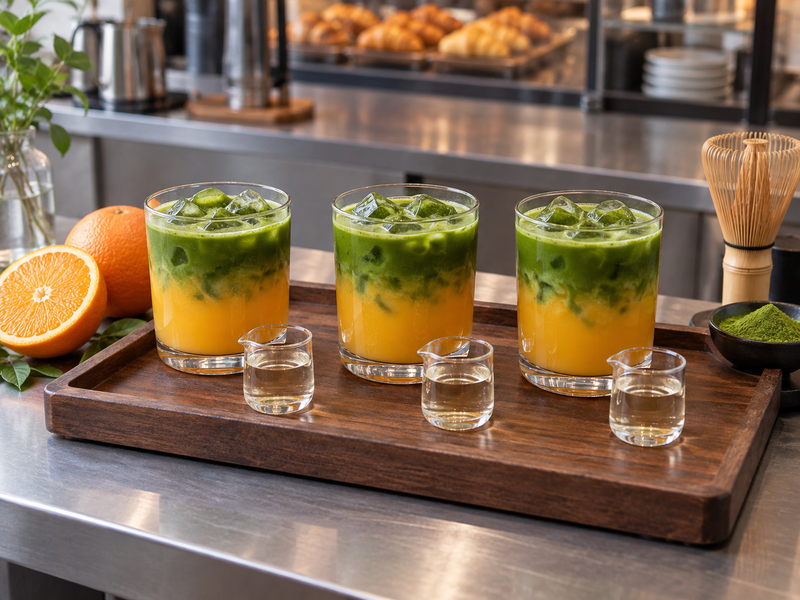
If customers can choose sweetness, define the available versions by weight. “Half sweet” needs a reference amount, and the juice still contributes its own sugars. Train staff to describe the adjustment accurately rather than calling the reduced-syrup version sugar free.
6. How much pulp fits the service format?
Test drinking comfort through the chosen lid
Pulp affects texture, settling and the way the drink passes through a straw or sipping lid. Compare the juice as supplied with a strained version only if the operation is willing to carry the extra preparation step. Weigh the strain loss and include it in the recipe yield.
For fresh juice, establish how staff handle visible seed fragments and coarse material. Use appropriate food preparation tools and an approved cleaning procedure. Keep that work away from the finished-drink area so the service station stays organized during peak demand.
| Service format | Pulp check |
|---|---|
| Sipping lid | Pulp does not block the opening |
| Narrow straw | Customer can draw the drink comfortably |
| Wide straw | Texture suits the intended experience |
| Open glass | Settling remains acceptable after stirring |
Ask tasters to distinguish fruit pulp from tea grit. A complaint about “bits” can refer to either. Inspect the tea preparation alone and the juice alone before changing the powder. Keeping these simple controls in the trial makes it easier to identify whether the problem belongs to the fruit specification or the tea preparation method.
7. How should a barista build the cup?
Use a sequence that survives a busy shift
Place the weighed ice into the selected cup, add the measured juice and finish with prepared tea. If syrup is part of the chosen formula, mix it with the juice first. Confirm this sequence in your station trial rather than requiring staff to preserve a fragile layer at any cost.
A layered presentation needs a consistent pour. Train with the actual cup, pitcher and ice. The height of the pour and the way it hits the ice can affect appearance, so a short demonstration is more useful than a vague instruction to “pour carefully.”
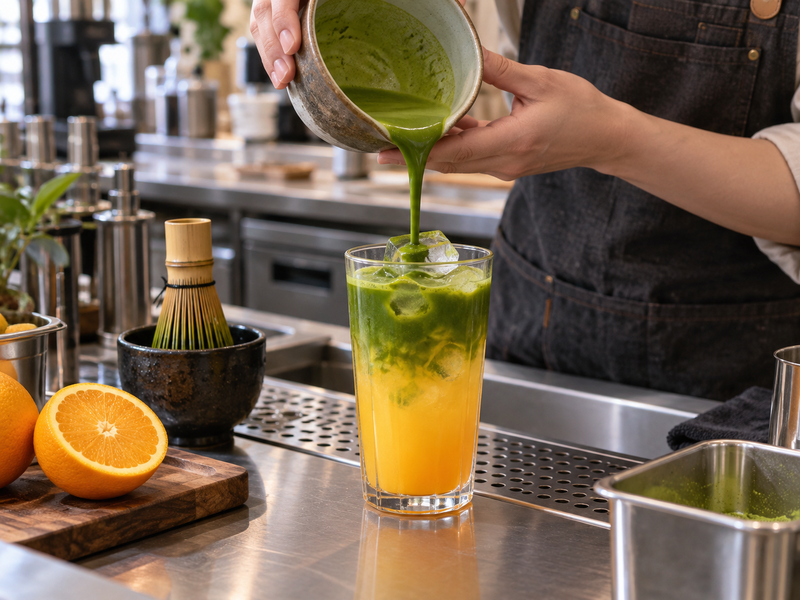
Time a sequence of orders with normal cleaning and replenishment included. Note whether the tea bowl becomes the bottleneck, whether juice measurement causes spills or whether staff forget the optional syrup choice. Revise the layout before expanding the menu.
Give customers a practical way to mix the drink. A spoon, straw or clear service instruction should fit the container. The approved taste should be reachable without removing a sealed lid or stirring so vigorously that liquid spills onto the counter.
8. What should the team check after stirring?
Evaluate the changing cup honestly
The combined color may be less vivid than the separate green and orange layers. Judge that appearance under the cafe’s actual lighting and in the intended cup. Avoid setting a color standard from a heavily edited photograph that the drink cannot reproduce.
Inspect another sample at the expected pickup interval, within approved handling conditions. Record whether sediment redistributes with gentle stirring, whether the juice aroma remains clear and whether melting ice makes the finish thin. This is a quality observation, not a storage validation.
| Check | Useful record |
|---|---|
| Mixed color | Photograph under fixed lighting |
| Fruit aroma | Clear, weak or masked |
| Tea texture | Smooth, gritty or concentrated at base |
| Dilution | Ice weight and elapsed interval |
| Package | Leaks, lid fit and drinking access |
Do not correct normal mixing by adding color ingredients without reconsidering the product specification. If a colored ingredient is chosen, purchasing, labeling and the formula all need to reflect it. A cafe can also choose an opaque cup if the mixed appearance does not suit its presentation goals.
9. How do you price fresh and bought-in juice?
Count preparation and usable yield
For fresh oranges, weigh the purchased fruit and the usable juice from a representative preparation batch. Record peel, seeds and other discarded material. Add the time for washing, cutting, juicing and cleaning through the business’s costing method.
For bought-in juice, track product left in opened packs and any waste caused by low sales. Compare the two routes at the same finished-cup formula. A price per kilogram of whole fruit cannot be compared directly with a price per kilogram of ready-to-use juice.
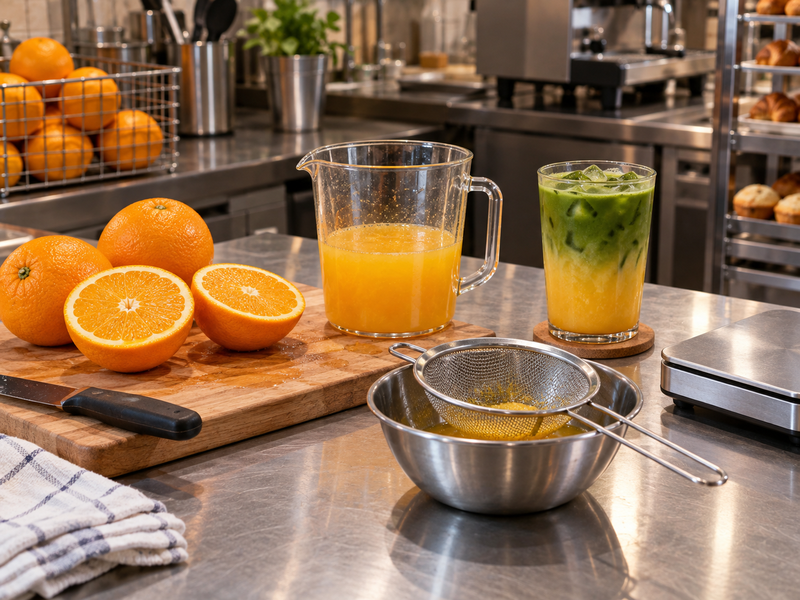
Include the tea dose, optional syrup, cup, lid and garnish. If the menu image includes an orange slice, specify whether every cup receives it. Inconsistent garnishing makes both the cost and the customer’s expectation unreliable.
Run a short demand trial before committing to equipment or large ingredient packs. Record how many drinks sell during different service periods. That information can guide whether fresh preparation is practical every day or whether a specified commercial juice provides a more workable supply pattern.
10. What should go on the approved recipe card?
Make substitutions visible
List the tea item, juice item, syrup product if used, ingredient weights, cup and ice format. Include the mixing method and a photograph of the completed drink after stirring. Keep the attractive layered image as a presentation reference, with the mixed image as a realistic quality check.
For the tea supplier, state the juice type and target dose. Ask for lot identity, ingredient declaration and documentation appropriate to the destination market. Compare the proposed commercial sample in the complete drink before accepting a change based only on powder color.
Define what happens when the juice is unavailable. An approved alternative should have its own trial record. Letting staff replace it with any orange beverage can alter sweetness, fruit content, label information and taste in one step.
Have another operator prepare the selected formula from the card without coaching. Weigh the completed cup and taste it beside the developer’s version. Correct any ambiguous instruction, then attach the final recipe to the first ingredient order and the store’s receiving checklist.
FAQ
Q1: Can orange matcha be made without milk?
Yes. The juice-and-tea format in this guide uses no milk ingredient. If a milk version is desired, develop it separately and check the exact ingredient combination for taste and appearance. Review allergen handling for the final service setup.
Q2: Why does the mixed drink look less bright?
The green tea and orange juice combine into a new color. Compare samples under the same lighting and cup conditions. Set the appearance standard from the real mixed beverage rather than judging only the separated layers in a photograph.
Q3: Does orange juice remove caffeine from matcha?
No. Adding juice changes dilution and flavor, not the amount of tea added. Any caffeine figure should come from reliable information for the actual ingredient and dose. Avoid making an exact caffeine statement from a generic teaspoon estimate.
Q4: Can one juice recipe work with every orange brand?
It may not produce the same result. Compare candidate juices in the full cup and record pulp, sweetness and acidity separately. Keep approved alternatives on file so purchasing can substitute deliberately instead of leaving the decision to a busy shift.
Q5: Should a cafe offer several tea strengths?
Start with one approved version unless demand supports more. Additional strengths need clear doses, costs and ordering instructions. A limited menu with accurately measured tea is easier to evaluate during launch than several loosely defined variations.