
Mint matcha can be built with fresh leaves, a flavored syrup or a food flavoring extract. Those ingredients are not interchangeable. They differ in sweetness, preparation work and the amount needed to change the drink, so the recipe should name the exact mint format before staff begin measuring it.
For a cafe or beverage brand, a good development brief asks whether the customer should notice tea first, fresh herb aroma first or a familiar sweet mint profile. The following steps turn that brief into small comparisons and practical station instructions. Suggested quantities are unvalidated trials, not established commercial formulas.
Contents: 1. What kind of mint matcha are you trying to serve | 2. How do you select and prepare fresh mint | 3. What fresh leaf trial can reveal a useful amount | 4. What changes when you use syrup or extract | 5. How do you keep leaf texture separate from tea clumps | 6. Which milk or water base lets both flavors remain clear | 7. How should you evaluate aroma through a full serving | 8. What differs between hot and iced mint drinks | 9. How do you compare fresh mint with a purchased flavoring financially | 10. What should the cafe document before launch
1. What kind of mint matcha are you trying to serve?
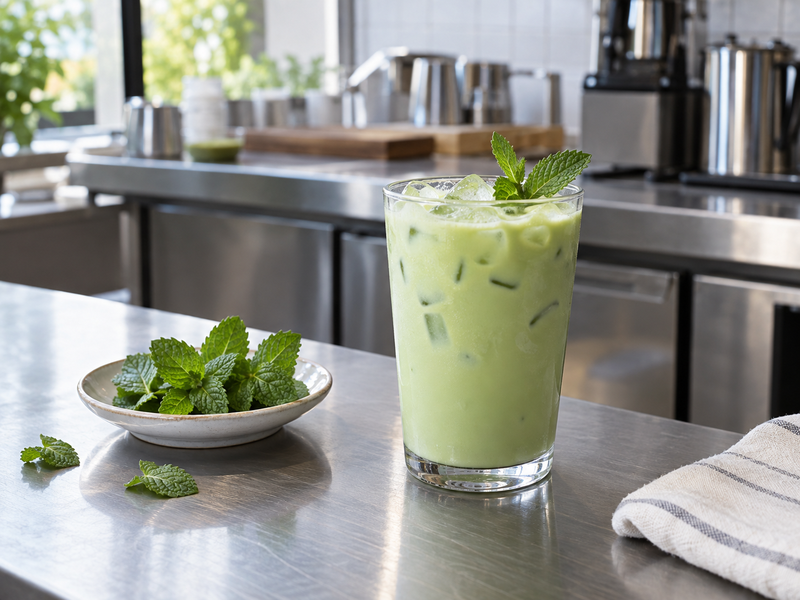
Define the aroma and drink format
An iced latte blended with fresh mint leaves is different from a clear mint flavored tea or a sweet peppermint style drink. Choose a format and describe the desired aroma in ordinary sensory language. This helps the buyer avoid ordering whichever bottle has mint printed most prominently on the label.
Minimalist Baker’s minty iced matcha latte uses fresh mint in a blended drink. It is a useful example of the fresh leaf route. A commercial syrup or extract version needs a different formula and should be assessed on its own terms.
| Mint format | Preparation task | Main development question |
|---|---|---|
| Fresh leaves | Washing, sorting and blending | Are leaf particles acceptable? |
| Flavored syrup | Measured dispensing | Is sweetness tied too closely to aroma? |
| Food extract | Accurate small dose | Is the strength manageable? |
| Prepared infusion | Controlled preparation | Is aroma consistent enough? |
Decide whether milk is part of the product. A water based tea gives mint and matcha a different setting from a sweetened latte. Keep the first comparison within one format so the team can identify what the mint ingredient contributes.
2. How do you select and prepare fresh mint?
Buy the herb you intend to describe
Ask the produce supplier for the mint identity available and assess a sample. Different mint types and deliveries can have different aroma, leaf size and stem content. Avoid making a specific variety claim unless it is supported by the purchasing specification and the actual delivered product.
Sort out unsuitable leaves and prepare the herb under the cafe’s produce handling procedure. Record whether stems are excluded from the drink. A handful with many stems and a handful of selected leaves may weigh the same while producing a different texture and aroma after blending.
Use prepared leaf weight as the formula measure. Leaf counts are convenient during a demonstration but become unreliable when deliveries contain different sizes. Keep a photograph of the prepared portion for training, with the weight on the written recipe rather than assuming the photograph can replace measurement.
Separate garnish leaves from the ingredient portion. A sprig placed on top may contribute aroma near the nose without giving the same flavor as leaves blended through the liquid. If the menu photograph uses a garnish, document its preparation and include its usable yield in costing.
3. What fresh leaf trial can reveal a useful amount?
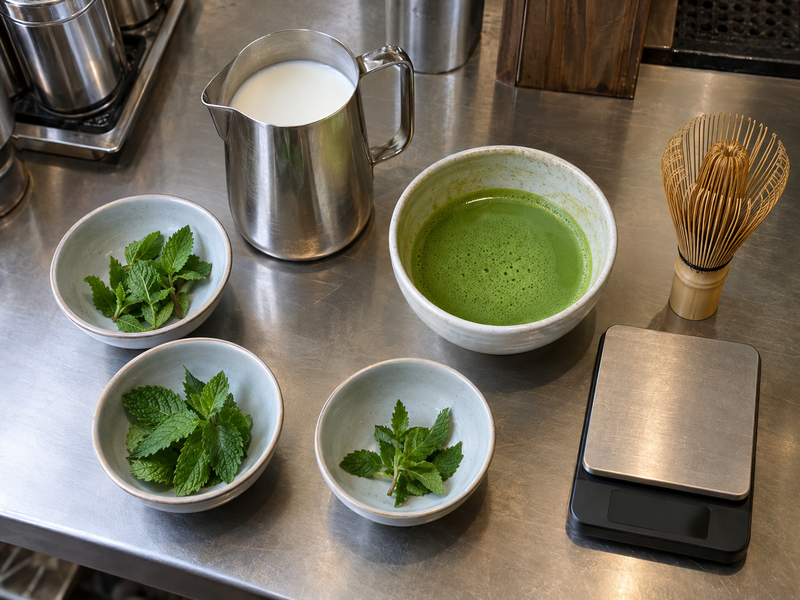
Compare mint while keeping the latte fixed
For an unvalidated starting comparison, use the same milk or plant beverage and a separately prepared tea portion in every sample. The proposed base is 180 g of the selected beverage plus 1.5 g matcha whisked with 40 g water. Blend the prepared mint leaves into the beverage before combining with the tea.
| Sample | Prepared mint leaves | Shared liquid base | Observation |
|---|---|---|---|
| Control | 0 g | 180 g beverage and prepared tea | Normal tea and milk balance |
| Light mint | 0.5 g | Same base | Detectable fresh aroma |
| Middle mint | 1 g | Same base | Tea recognition and leaf texture |
| Stronger mint | 1.5 g | Same base | Dominance or harsh finish |
Taste without added syrup first, then assess sweetness separately if needed. Keep the blending method and batch size consistent. Very small portions in a large blender may not circulate well, so choose equipment suited to the trial rather than extending the time indefinitely.
Add an equal ice portion only after comparing the liquid bases. Record the final cup fill and the appearance after stirring. The table is intended to find a useful mint direction, not to define an approved serving size or a commercial holding procedure.
4. What changes when you use syrup or extract?
Follow the specific product’s instructions
Read the full ingredient statement and ask the supplier for application guidance. A syrup normally contributes sweetness as part of its role, while an extract may carry mint flavor in a different liquid system. Do not convert a fresh leaf amount into a generic spoonful of extract without a product specific trial.
McCormick’s pure mint extract page lists alcohol, water, spearmint oil and peppermint oil. That example shows why the word mint does not identify a single flavoring composition. Other products require their own ingredient and usage review.
Use only an ingredient intended for food use and follow its supplier’s directions. A concentrated flavoring should have a dispensing method suitable for the required small amount. If the station cannot measure the chosen product accurately, select a more manageable format or develop a documented preparation with the responsible technical team.
When comparing syrups, record both the product and dose. Reducing sweetness by simply using less syrup also reduces its mint contribution. If those two needs conflict, consider whether the chosen ingredient format fits the menu brief rather than repeatedly adjusting the tea to compensate.
5. How do you keep leaf texture separate from tea clumps?
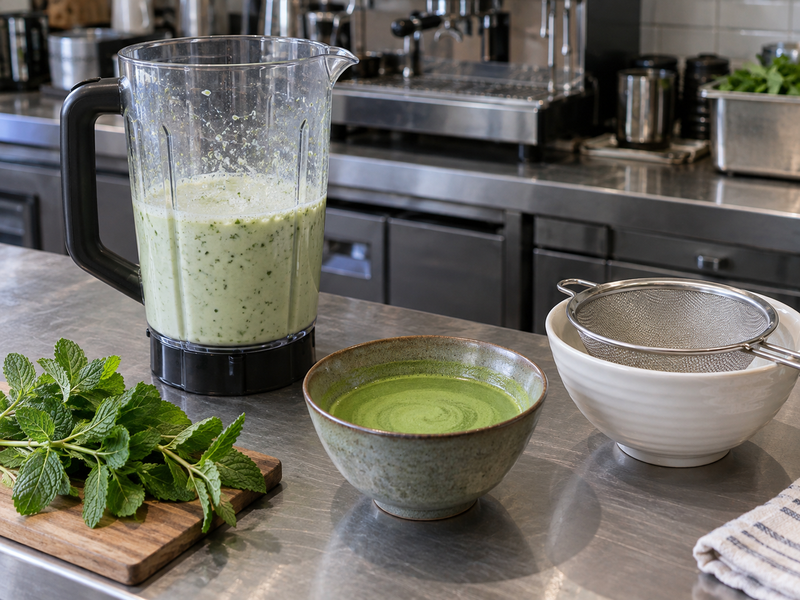
Inspect the two components before assembly
Blend or prepare the mint component according to the selected method, then examine it without tea. Separately sift and whisk matcha with its measured preparation water. This sequence makes it easier to identify the source of particles in a finished drink instead of treating every visible speck as a tea quality issue.
| Observation | Component to inspect | Practical next check |
|---|---|---|
| Large green fragments | Fresh mint base | Leaf preparation and blending |
| Dark powder pockets | Matcha preparation | Sifting and whisking |
| Grit at the bottom | Both components separately | Settling and particle source |
| Uneven aroma | Mint portion and distribution | Weighing and mixing method |
If straining the mint base is considered, compare both flavor and yield after that step. A filter can remove more than the unwanted visible pieces. Document the chosen equipment and the amount of finished component available for portioning so costing reflects the actual process.
Use the Matcha Village solubility guide to distinguish dispersed tea particles from dissolved flavoring. An extract based mint drink and a fresh leaf drink will not have identical physical behavior, even if their mint aroma initially seems similar.
6. Which milk or water base lets both flavors remain clear?
Compare the exact products used at the bar
Choose a plain base for the first assessment, then test the specific milk or plant beverage planned for sale. Sweetened and flavored versions can change the perceived mint profile. Keep their ingredient identities on the recipe so a purchasing substitution does not quietly introduce vanilla or a different sweetness level.
For a water based drink, make a separate formula with the desired tea strength and mint format. Removing milk from a latte changes more than the appearance; the resulting drink needs its own tasting. Do not fill the missing volume with water and assume the same mint dose will remain appropriate.
Ask tasters to identify tea, mint and the base in a complete sip. A strong coconut note or heavily flavored syrup may dominate the drink even when the ingredients are individually pleasant. Decide whether that is the intended menu identity before adjusting the matcha upward.
If more than one milk option will be offered, assess each substitution in the actual portion. Keep any approved adjustment simple enough for staff to execute. A customization menu that requires several unrecorded changes can make the same named drink inconsistent across orders and difficult to cost.
7. How should you evaluate aroma through a full serving?
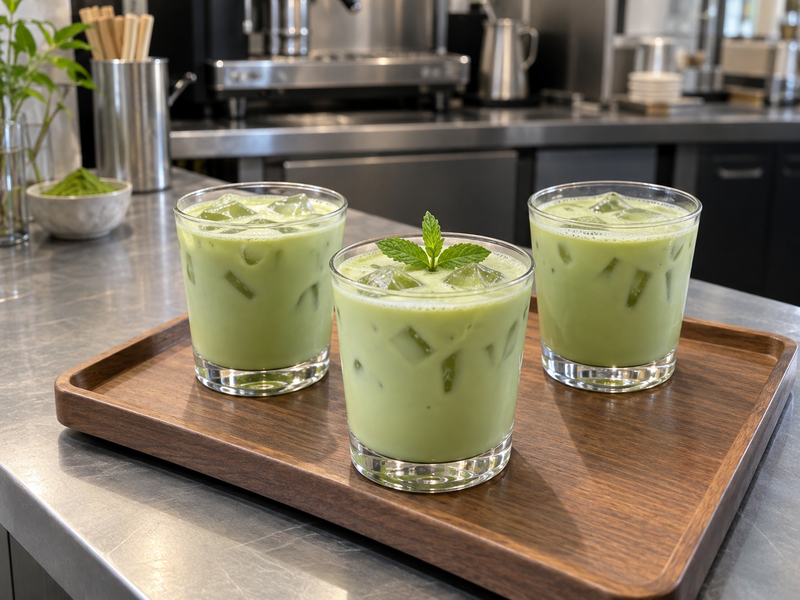
Look beyond the first refreshing impression
Smell and taste the drink immediately after assembly, then assess it again after the usual service interval. Record the conditions and elapsed time used. Fresh leaves, syrup and extract may produce different impressions over that period, so compare them in the cup and lid customers will actually use.
| Tasting question | Useful note | Decision it supports |
|---|---|---|
| What is noticed first? | Tea, mint or milk | Intended menu identity |
| Is the middle of the sip balanced? | Sweetness and tea recognition | Formula adjustment |
| What remains afterward? | Pleasant mint or overpowering finish | Upper aroma level |
| Is the whole portion enjoyable? | Comfortable or tiring | Serving size and dose |
Include an ungarnished sample if the usual drink has a mint sprig. This reveals whether the aroma comes mainly from the garnish or from the liquid. Both may be acceptable, but the recipe and photograph should represent the version that will consistently reach customers.
Have tasters describe the result without leading terms such as cooling boost or clean energy. Specific flavor comments are more useful to development, and they avoid turning a menu drink into an unsupported health promise. Record disagreements rather than averaging them into a vague positive score.
8. What differs between hot and iced mint drinks?
Write two preparation routes if both are sold
Develop the hot drink at the intended service temperature and the iced drink with its actual ice portion. Aroma and perceived balance can change with serving conditions, so a cold tasting does not approve the warm version. Keep the cup size and preparation water explicit in each recipe.
For fresh mint, decide whether leaves remain in the hot drink or whether a prepared component is used. Floating leaves may be attractive in one presentation and inconvenient through a takeaway lid. Test the customer experience rather than assuming a garnish used in a glass will work in a covered cup.
Follow the beverage ingredient supplier’s heating instructions and the cafe’s equipment procedures. If the recipe includes leaf particles, assess the preparation method before using equipment intended for plain milk. Avoid making the steam wand or pitcher cleaning routine an afterthought in a busy station.
For iced service, observe dilution and settling during normal consumption. A strong first sip can become a weak later portion if ice and mixing are poorly controlled. The approved recipe should include a clear handoff method, whether that means a brief stir or an instruction the customer can easily follow.
9. How do you compare fresh mint with a purchased flavoring financially?
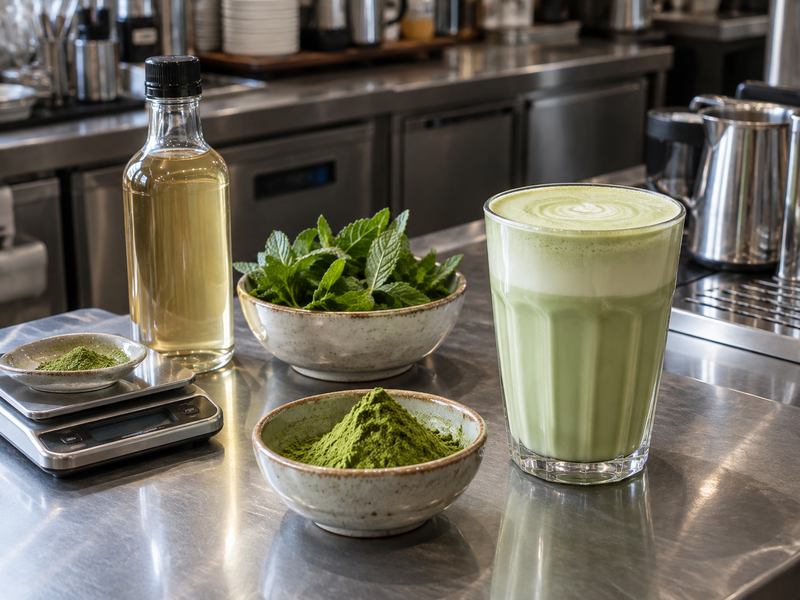
Include preparation and waste
Price per kilogram of leaves and price per bottle of syrup are not directly comparable. Calculate the actual amount that enters a saleable drink, then add the work needed to prepare and dispense it. Fresh mint involves sorting and washing; another format may involve a higher ingredient price but simpler portioning.
| Cost factor | Fresh leaf route | Purchased flavoring route |
|---|---|---|
| Usable ingredient | Prepared leaf yield | Usable bottle contents |
| Portion measure | Grams of leaves | Product specific dose |
| Labor | Preparation and blender cleaning | Dispensing and setup |
| Waste | Rejected or unused herb | Remainder under approved handling |
| Recipe effect | Leaf texture and aroma | Sweetness or carrier contribution |
Compare tea samples in the chosen mint system. A powder that works with fresh leaves may be masked by a stronger peppermint flavored syrup. Keep the mint product fixed while evaluating tea lots so the supplier receives interpretable feedback.
For a multi location business, consider whether the selected herb or flavoring is reliably available to every site. If a backup is needed, approve it with a specific formula before launch. A verbal instruction to use any mint syrup can undermine both the costing and the drink identity.
10. What should the cafe document before launch?
Make every mint addition visible in the recipe
List the mint ingredient, preparation method, dose and garnish separately. Add the tea lot, tea weight, preparation water, base beverage, sweetener if used and ice. This prevents a well meaning barista from adding both the full fresh leaf amount and the full syrup amount because each appears in an informal development note.
Have another trained employee make a short sequence of drinks using only the final instructions. Observe portion accuracy, cleaning time and how the completed drink behaves in the actual cup. Ask where the employee needs clarification and revise that part of the station sheet before training the wider team.
Retain a photograph and a concise sensory description of the accepted product. The description should say what is perceptible in the sip, not rely on a promise of unusually bright color or an unverified nutritional benefit. Keep any supplier substitutions subject to a fresh application check.
Estimate matcha consumption from the approved dose and expected sales, then request samples tied to the proposed supply lot. Make the final drink with the chosen mint ingredient and service materials, and attach that completed tasting record to the initial purchase request.
Frequently asked questions
Q1: Can fresh mint and mint extract be exchanged directly?
No. They differ in concentration, composition and texture. Use the selected extract’s food application guidance and develop a separate measured formula.
Q2: Is peppermint the same as a product labeled mint?
Check the ingredient information. A mint flavoring may use spearmint, peppermint or a combination, and the resulting aroma should be assessed in the drink.
Q3: Should fresh leaves be counted or weighed?
Prepared leaf weight is more repeatable when sizes vary. Define whether stems are included and keep garnish leaves separate from the ingredient portion.
Q4: Can syrup sweetness be adjusted independently of its mint flavor?
Not by changing the syrup amount alone. If sweetness and aroma cannot both reach the desired level, assess a different ingredient format or a separately developed formula.
Q5: Does mint make matcha caffeine free?
No. Mint does not remove the caffeine contributed by matcha. Any quantified caffeine statement needs appropriate data for the tea and the actual served portion.