
Passion fruit matcha combines tart tropical fruit with powdered green tea in a water based drink or latte. The choice between those formats should come before recipe development. Passion fruit can dominate a mild tea and create a difficult pairing with some milk products. A useful commercial trial checks fruit concentration, seeds, sweetness and the drink after stirring. The proposed quantities in this guide are starting points for small tests, not validated formulas for cafe batching or packaged production.
1. Should passion fruit matcha be a latte or a fruit tea?
2. What does a passion fruit ingredient specification need?
3. What is a useful water based development formula?
4. How should a latte variation be tested?
5. How should seeds and toppings be handled?
6. What tea profile suits passion fruit?
7. How do concentration and usable yield affect cost?
8. What food safety controls apply to the fruit base?
9. How can the trial team diagnose flavour problems?
10. What should be included in a commercial sample request?
1. Should passion fruit matcha be a latte or a fruit tea?
Select the base around the intended flavour
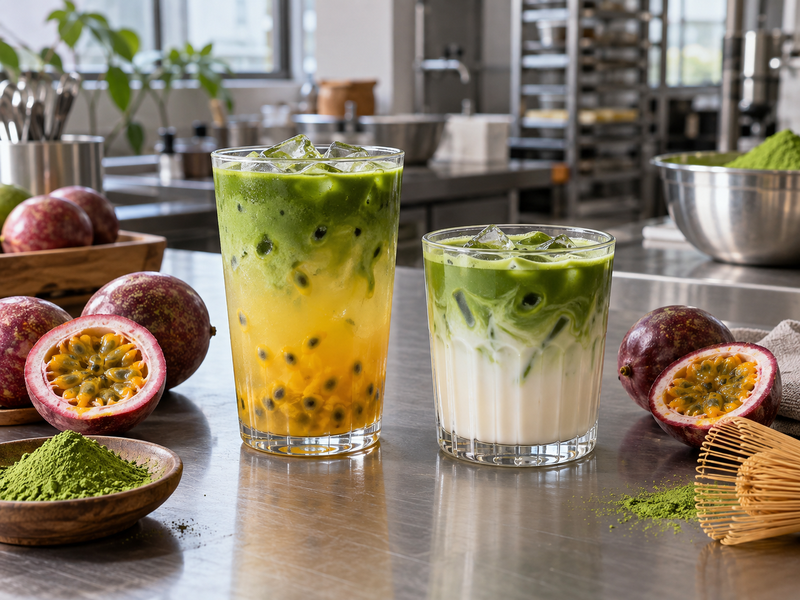
A water based drink leaves the fruit more exposed. A latte adds body and can soften the impression of tartness, but the fruit and milk still need compatibility testing. Decide whether the menu should emphasize clean fruit acidity or a creamy dessert character. Calling both versions the same drink can make staff training and customer expectations confusing.
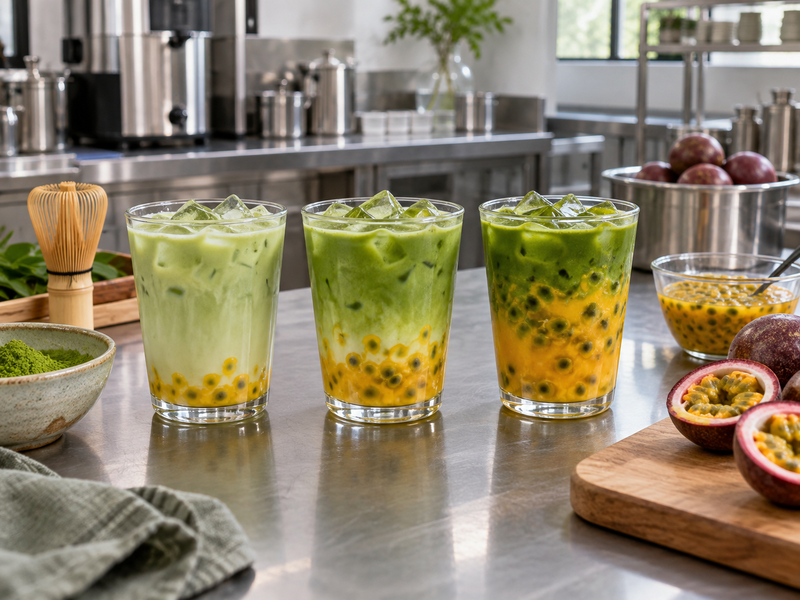
Back Porch Paleo’s recipe on FoodSocial combines frozen passion fruit, tea and creamer, with chia seeds in the preparation. That is one consumer recipe direction. Chia is optional to the broader drink concept and should not enter a commercial formula merely because it appeared in a reference photograph.
| Format | Main advantage to test | Practical question |
|---|---|---|
| Water based | Clear fruit and tea character | Does sweetness balance acidity? |
| Milk latte | Fuller body | Does the mixture stay pleasant? |
| Cream topped | Separate rich layer | Can customers mix it cleanly? |
Choose one format for the initial trial. If both interest the menu team, develop separate cards and cost sheets. The same fruit dose can behave very differently when the surrounding liquid changes.
2. What does a passion fruit ingredient specification need?
Distinguish pulp, puree and concentrate
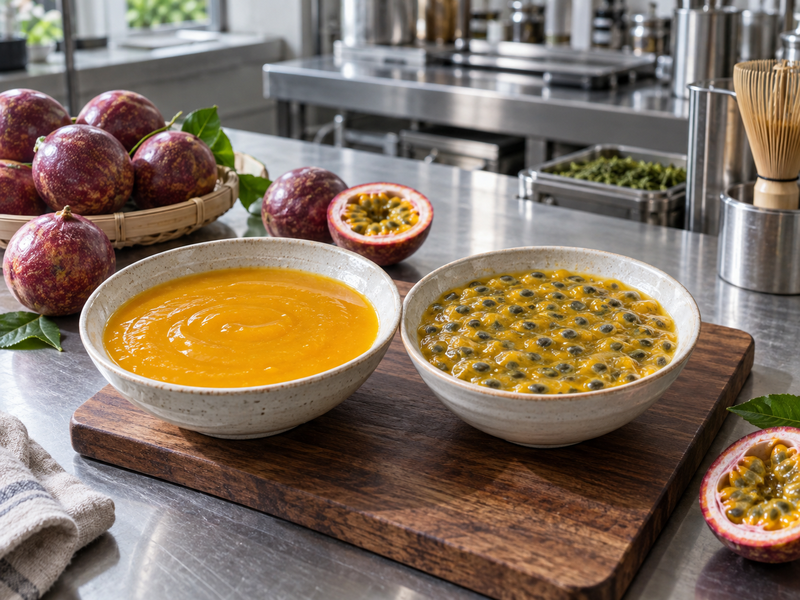
Ask the supplier to identify the product’s form, added sugar, seed content and recommended preparation. A concentrate needs dilution; an unsweetened puree and a sweetened beverage base do not have equivalent fruit strength. Request a composition sheet and record the commercial product code. The phrase passion fruit base is too broad for repeatable purchasing.
For whole fruit, calculate the usable pulp after shells and unsuitable fruit are removed. For frozen pulp, follow the supplier’s thawing and intended use instructions. Ask whether seeds are present and whether the processing controls make the ingredient suitable for the proposed cold beverage. Do not infer readiness for direct consumption from a photograph of fruit on the package.
A supplier may report soluble solids and acidity, but those figures still need interpretation in the actual drink. Use them to describe incoming material and investigate variation, not as a substitute for tasting. Ask whether the supplier blends lots to meet a specification and what changes require notification. If a chain plans a fixed seasonal menu, agree on the sample approval process before committing to several months of fruit purchases.
3. What is a useful water based development formula?
Keep the initial recipe small and measurable
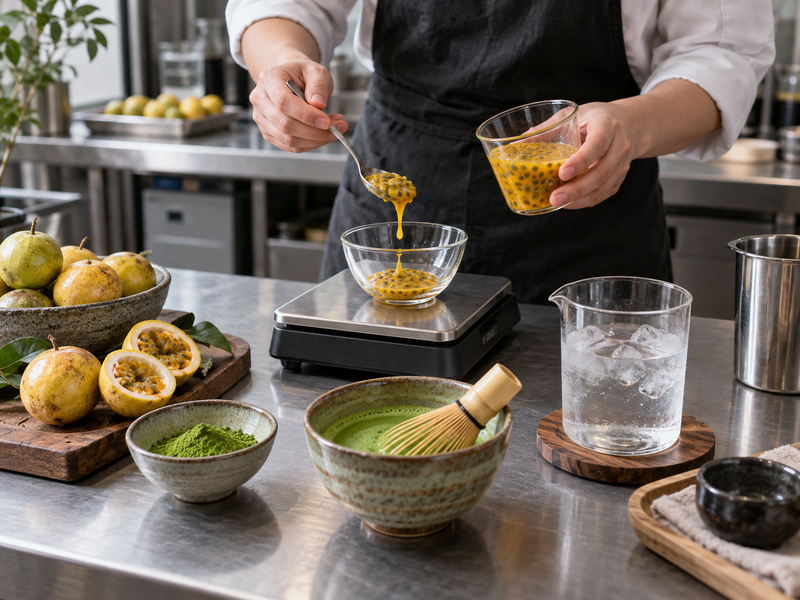
The proposed trial below uses a ready to use, unsweetened, seedless passion fruit puree. Confirm the product’s preparation requirements before tasting. The formula is deliberately written by mass so a developer can reproduce it without relying on fruit count or a scoop of unknown size. Check the final volume against your actual cup.
| Ingredient | Proposed mass | Role in the trial |
|---|---|---|
| Pure matcha | 2 g | Green tea flavour |
| Water for tea | 40 g | Powder dispersion |
| Passion fruit puree | 25 g | Fruit component |
| Equal mass sugar and water syrup | 20 g | Sweetness |
| Additional chilled water | 140 g | Dilution |
| Ice | 90 g | Cooling |
Compare the listed cup with separate 15 g and 35 g puree trials, adjusting chilled water to keep total mass similar. Do not change sugar during this comparison. Once fruit intensity is chosen, run a separate sweetness test using the same puree lot.
Whisk the matcha with its measured water, mix puree and syrup with the chilled water, and combine over ice. Taste fully stirred. Record whether the tea remains identifiable after the fruit has been swallowed, as a pleasant aroma at the top of the cup may not survive the complete sip.
4. How should a latte variation be tested?
Treat milk compatibility as a separate trial
To investigate a latte, replace some or all of the additional water in a small candidate cup with a specified milk or plant drink. This is a proposed screening approach, not a guaranteed substitution. Start with the approved fruit level and observe the mixture both immediately and during the intended drinking period. Record graininess, visible flecks, separation and changes in flavour.
Test the fruit with the milk before adding tea. That intermediate cup can reveal whether the base pairing needs work. Compare only one milk product at a time and note whether it contains added sugar or stabilizers. A product sold for coffee service has not necessarily been designed for acidic fruit drinks, so its barista label does not settle the question.
Do not try to hide a failing formulation beneath an undisturbed top layer. Customers stir or drink through several layers, and a visually neat cup can still have an unpleasant mixed texture. If the intended passion fruit character cannot coexist with the selected milk, return to the water based version or ask the ingredient supplier for technical support. Packaged beverage development requires additional process work beyond this fresh service test.
5. How should seeds and toppings be handled?
Give every solid ingredient a service purpose
Passion fruit seeds make the fruit recognizable, but they change how customers drink. They may settle below the ice and collect around a narrow straw opening. Chia seeds introduce another texture and preparation requirement. Choose these additions because the menu calls for them, then test the cup and utensil together.
| Texture choice | What it adds | Check before approval |
|---|---|---|
| Seedless puree | Smooth sip | Fruit aroma remains clear |
| Pulp with seeds | Visible fruit character | Straw and lid suitability |
| Small pulp garnish | Surface detail | Portion and handling consistency |
| Chia preparation | Gelled texture | Separate recipe and controls |
Measure garnish portions instead of allowing a spoonful to vary by employee. Extra pulp changes acidity and can move an otherwise balanced drink away from the approved flavour. If seeds are intended, show them in the menu photograph and describe the drink accurately where customers choose it.
Do not assume every topping can share the fruit base’s holding instructions. Give each preparation a label and handling procedure appropriate to its ingredients. During a pilot shift, inspect discarded cups for large amounts of uneaten topping. That observation can reveal a poor utensil choice or a texture customers do not want.
6. What tea profile suits passion fruit?
Compare a clear finish rather than colour alone
The fruit’s aroma can overwhelm a delicate matcha sample, while a harsh tea can make the tart finish less pleasant. Request beverage samples and taste each in water before comparing them in the selected fruit recipe. Write down the tea character that remains after swallowing. Descriptions such as grassy, marine, dry or mellow are more useful than calling every strong sample premium.
Use equal matcha doses in the initial comparison and keep the fruit preparation thoroughly consistent. If a fruit container separates during storage, follow the supplier’s mixing instructions before portioning. Otherwise, the tea trials may receive different amounts of fruit solids and produce misleading results.
The Matcha Village taste guide can help the team agree on tasting vocabulary. For procurement, send the chosen fruit specification with the sample request and state whether the beverage contains milk. Ask the supplier to identify pure matcha versus a blend and provide lot documentation. Avoid using a grade name as the sole acceptance criterion. Approve the powder through the actual passion fruit application and keep the recipe with the tasting record for incoming comparisons.
7. How do concentration and usable yield affect cost?
Compare portions after preparation
A concentrated fruit ingredient may look expensive per kilogram yet deliver more portions after its prescribed dilution. A whole fruit purchase may look inexpensive until shell loss, sorting and preparation labour are counted. Use the supplier’s actual instructions and your measured yield when comparing the alternatives. Never invent a dilution rate to make a quote appear cheaper.
| Purchasing form | Measure for costing | Potential extra cost |
|---|---|---|
| Whole fruit | Usable prepared pulp | Shell loss and labour |
| Frozen pulp | Usable prepared mass | Thaw handling |
| Ready puree | Dispensed mass | Container residue |
| Concentrate | Prepared usable yield | Dilution and mixing work |
| Sweetened base | Approved drink dose | Different sugar balance |
Keep tea, fruit, syrup, packaging and labour as separate cost lines. If a fruit change reduces syrup use, update both lines rather than crediting the saving to fruit alone. Include any topping and the wider straw or spoon it requires.
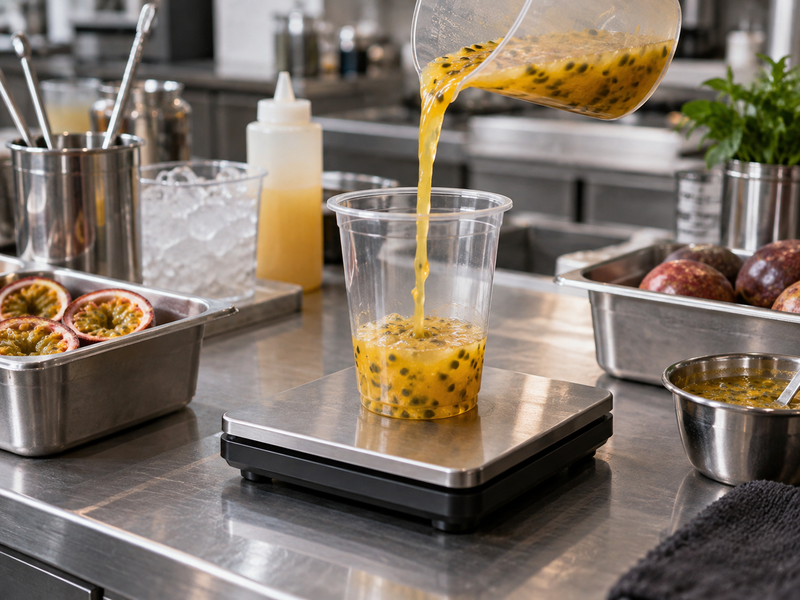
Run the planned dispenser with the actual fruit. Seeds, viscosity and temperature may prevent repeatable delivery. Weigh multiple portions and record the variation before accepting a pump count as a recipe measure. A simple ladle may be easier to control in some stations, but its mass still needs checking against the written specification.
8. What food safety controls apply to the fruit base?
Keep acidity separate from safety decisions
A tart taste does not establish that a prepared fruit drink is safe to store at room temperature. Follow the supplier’s storage and preparation instructions and your approved food safety plan. The recipe here provides no validated holding period for opened puree, thawed pulp, chia preparation or a finished beverage.
When using whole fruit, wash the exterior before cutting so handling does not transfer contamination into the pulp. FDA produce handling guidance covers washing and separation from raw animal foods. Use clean cutting tools and retain fruit lot details in the preparation record. The shell will be discarded, but it still contacts hands and equipment during preparation.
The FDA Food Code is a retail safety model, with requirements applied through relevant jurisdictions. Have the responsible person translate local rules into clear holding, cooling and disposal instructions. For an intended bottled product, obtain a product specific process and shelf life assessment. A small freshly prepared cup cannot validate the safety of a sealed package, even when the ingredients taste sharply acidic.
9. How can the trial team diagnose flavour problems?
Identify whether fruit, tea or dilution is responsible
A drink described as too sour may have too much fruit, too little sweetness or a milk combination that tastes unpleasant after mixing. Sample the prepared fruit dilution without tea and compare it with the complete cup. Then examine the tea alone. This sequence narrows the cause before anyone changes several ingredients at once.
| Observation | Check | Next comparison |
|---|---|---|
| Tea disappears | Fruit intensity | Lower fruit at fixed tea dose |
| Sharp finish | Fruit and syrup balance | Separate sweetness trial |
| Grainy latte | Fruit with milk alone | Another specified milk base |
| Seeds collect at bottom | Cup and utensil | Seedless version or wider opening |
| Watery late sips | Ice mass and melt | Standardized ice and fill |
Record whether the drink changes during the customer’s expected drinking period. The assessment should occur under normal service conditions, not only at a perfectly staged tasting table. Use the same cup size, ice and lid as the planned sale.
If a staff member needs extra stirring to rescue every cup, make that work visible in the recipe or change the formulation. Repeated unrecorded corrections create variation between locations and make ingredient forecasting unreliable.
10. What should be included in a commercial sample request?
Ask for ingredients that fit the chosen format
Send the fruit supplier the required seed status, pack size, service format and expected usage. Send the matcha supplier the same recipe and describe the desired tea finish. If the menu contains both a water based drink and a latte, identify them as separate applications so samples can be assessed honestly in each one.
Ask for representative commercial samples, ingredient declarations, handling instructions and lot documents. A sales sample should be traceable to the product that can be supplied after approval. Record substitutions and require a new tasting when the puree strength, milk formulation or tea composition changes. These changes can affect flavour, texture and cost simultaneously.
Before launch, have a different employee make the drink from the written card without verbal coaching. Check the cup after normal stirring, verify the portion cost and confirm that the intended utensil handles any seeds. Give purchasing the approved product codes and the measured consumption estimate. Request a replenishment sample early enough to compare the next fruit lot while some of the approved stock remains available.
FAQ
Q1: Does passion fruit matcha require milk?
No. A water based version can make fruit and tea easier to evaluate. A latte needs a separate compatibility trial with the exact milk or plant drink being purchased.
Q2: Can concentrate replace puree?
Use the supplier’s preparation instructions and design a new weighed comparison. Concentrate strength and added ingredients vary, so equal spoonfuls are not equivalent.
Q3: Are passion fruit seeds necessary?
No. Seedless puree can suit a smooth drink. If seeds are included, test the cup opening, straw and portion so customers can consume the drink comfortably.
Q4: Can sweetness fix a separating latte?
It may change taste but should not be assumed to repair physical instability. Test the fruit and milk together, then compare another base or ask for formulation support.
Q5: Can this formula be used for bottled drinks?
The quantities are proposed fresh service trials. Bottled drinks require their own process, packaging, stability and safety assessment before commercial sale.