
What does matcha tea taste like when it reaches a café menu or packaged product? The answer changes with the powder and the recipe. A sample that tastes balanced in water may disappear under oat milk, while a forceful baking grade can overwhelm a plain drink. Buyers need a shared vocabulary and a repeatable tasting method. This guide explains the flavor cues, grade language, origin questions, and application trials that help a team buy for its actual product. Matcha Village supplies several matcha grades and application formats, so selection can begin with use rather than a label alone.
Contents: profile · variation · grades · regions · processing · applications · tasting · faults · color · selection
1. What flavors define a good matcha cup?
Use words your team can score
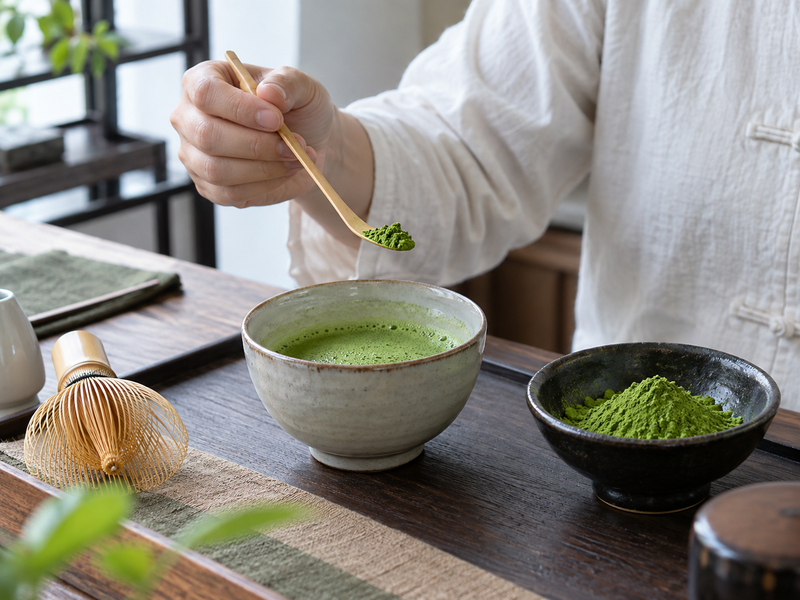
Plain matcha often brings a vegetal character, savory depth called umami, mild sweetness, and some bitterness or astringency. The balance matters more than the presence of any one note. A powder can taste pleasantly brisk in a sweetened latte and too sharp in water. Another may have a soft, rounded profile that works for ceremonial-style preparation yet disappears in a cookie. “Grassy” can describe fresh green notes or an unpleasant raw edge; ask the taster what they mean before adding the word to a rejection report.
Name the sensation and its intensity. Sweetness, bitterness, and umami are taste impressions. Astringency describes the drying feel in the mouth. Aroma may suggest leafy greens, toasted notes, or a stale package, depending on the sample. Record them separately. When a purchasing team uses only “smooth” or “strong,” the supplier cannot tell whether a reformulation should change sweetness, bitterness, texture, or dose. A short tasting vocabulary makes the sample conversation faster and gives product development a clearer target.
| Attribute | What to record | Why it matters |
|---|---|---|
| Umami | Low, medium, or high savory depth | Plain drinks and premium positioning |
| Bitterness | Onset and aftertaste | Sugar level and dosage |
| Astringency | Drying sensation | Mouthfeel in water or milk |
| Aroma | Fresh, leafy, toasted, stale | Ingredient acceptance |
2. Why do matcha samples taste different?
Look beyond a single “quality” ladder
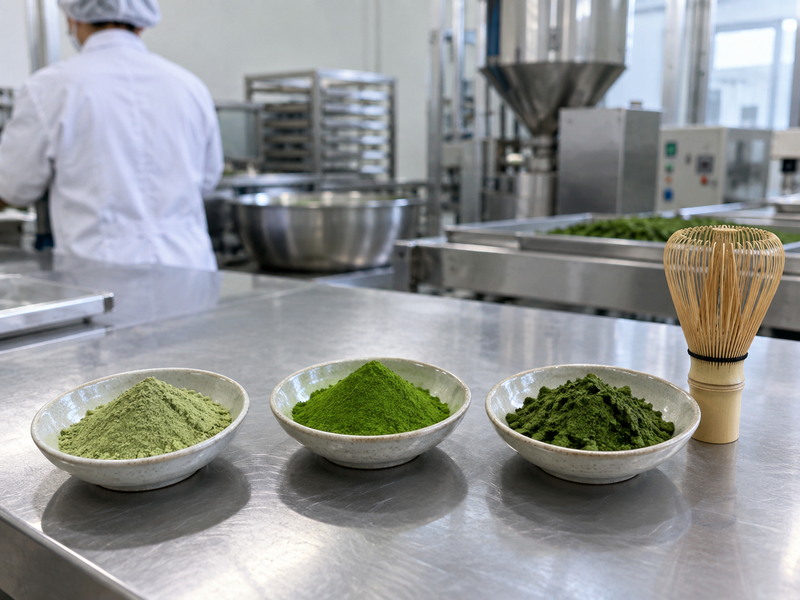
Leaf selection, growing conditions, harvest, steaming, drying, grinding, and storage can all change what a matcha powder delivers. Particle size affects dispersion and mouthfeel. Packaging and storage influence how much of the fresh green character remains when the sample reaches your bench. A grade intended for baking may have a firmer flavor than one intended for plain whisked tea because it must remain perceptible alongside flour, fat, and sugar. That does not make either sample automatically suitable for every application.
Control the tasting conditions. Make equal-weight cups with the same water, temperature, and whisking method. Note the sample age and packaging condition. Then run a second trial in the intended product, whether dairy, oat milk, ice cream, or cake. A supplier comparison loses value when one powder gets a larger dose or a sweeter base. Matcha Village offers culinary, premium, ceremonial, TOP-series, and organic matcha in its portfolio. Ask for the specifications behind each proposed sample and judge its performance in the product you plan to sell.
3. How do grade labels relate to taste?
Read the specification behind the name
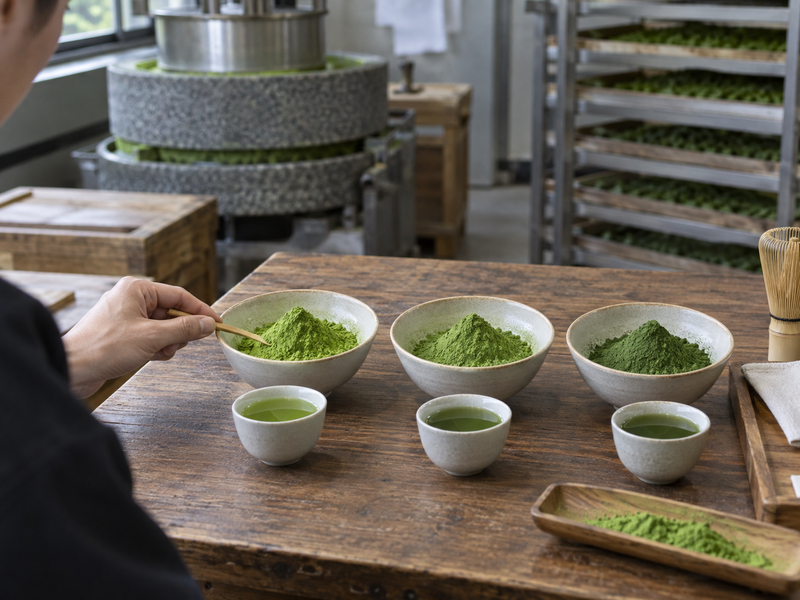
“Ceremonial,” “premium,” and “culinary” are familiar commercial terms, but they do not form one universal grading standard across suppliers. Each company may use them differently. A ceremonial-positioned powder may aim for a softer profile in water. A culinary-positioned powder may offer more assertive flavor for baking. These descriptions help narrow a sample request; they do not replace a sensory test, written specification, or agreement on acceptable color and flavor variation.
Ask what the grade does in your formula. For a plain drink, compare aftertaste and texture without milk. In a sweetened café latte, check whether the matcha remains recognizable at the planned serving cost. In a muffin, compare baked color and flavor after cooling, not only raw batter. Matcha Village’s pure matcha selection can support different applications. The useful procurement question is which coded product passes your own test at a viable dose, with documentation that matches the material ordered.
| Grade language | Sensory question | Practical trial |
|---|---|---|
| Ceremonial-positioned | Is plain preparation balanced? | Whisk in water |
| Premium-positioned | Does it work in water and light milk? | Compare both bases |
| Culinary-positioned | Does flavor survive other ingredients? | Bake or blend as sold |
| Organic option | Does its exact sample meet the brief? | Test and verify documents |
4. Do growing regions change matcha flavor?
Origin is context, not a tasting result
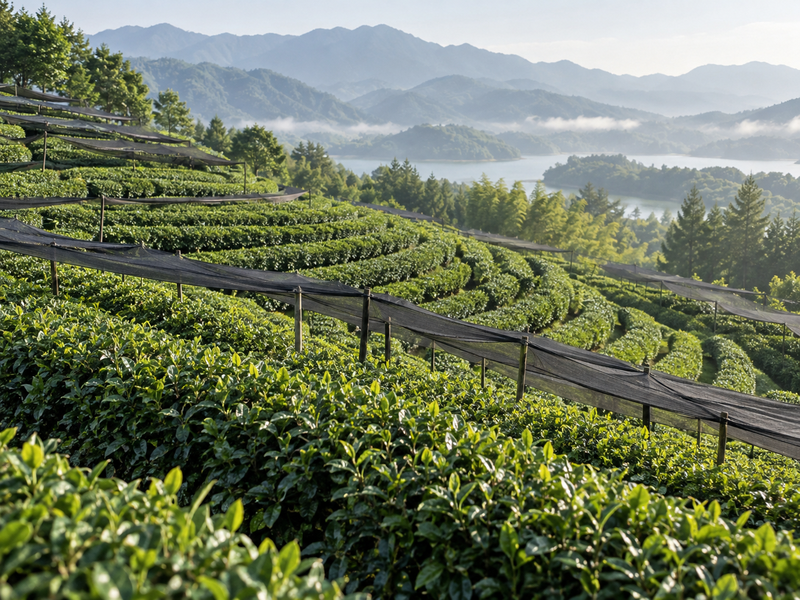
Tea growing areas differ in climate, soil, cultivation practices, and producer decisions. Those differences can influence leaf characteristics, although one region rarely has only one flavor profile. Origin names can help a buyer ask better questions about cultivation and traceability. A study comparing Chinese matcha from different regions reported differences in sensory quality and composition; the specific lot still needs tasting. They cannot tell you precisely how an individual lot will taste after grinding or how a finished latte will taste after sweetening. A brand making an origin claim also needs records that support the wording on its package.
Use origin as one line on the sample sheet. Note where the leaves were grown, where powder was processed, and whether the offered product blends sources. Then taste the actual sample. Matcha Village describes tea resources in the Hangzhou growing area of China and management from cultivation through packing. That gives buyers a concrete origin and supply-chain discussion to pursue. The sensory result still belongs to the particular product code and lot. If origin storytelling is part of the brand brief, procurement, regulatory, and marketing teams should agree on the evidence before approving copy.
5. How do shading and processing affect the cup?
Connect each step with a sensory question
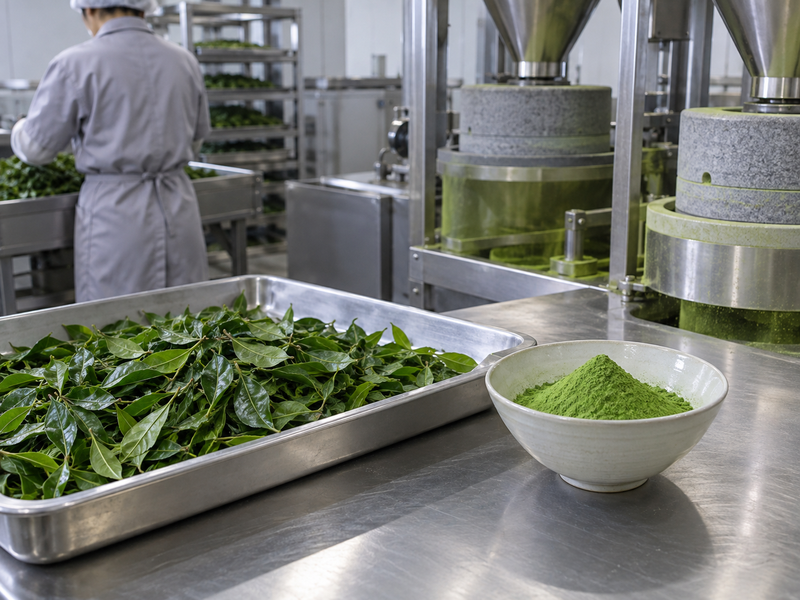
Matcha production includes cultivation and leaf processing before grinding. Shading before harvest is commonly used to shape leaf color and flavor. Matcha Village describes roughly 15 to 20 days of shading in its own material. Steaming and drying stabilize the leaf for later processing, while grinding creates the powder texture customers recognize. Poor handling at any stage can undermine a promising leaf. Heat, oxygen, moisture, and extended exposure after opening can dull aroma or color.
Ask for the effect you need to taste. A brand planning a clear-water matcha drink may value restrained bitterness and a fine, even suspension. A bakery may value stronger flavor after baking. A latte chain may prioritize repeatable color and speed of dispersion. Those are testable outcomes, whereas “traditional processing” alone says little about a production recipe. Request a representative sample in the commercial packaging format where possible. A fresh, carefully stored sample and an old open sample do not provide a fair comparison of suppliers or grades.
| Production factor | Possible sensory effect | Buyer check |
|---|---|---|
| Shading and leaf selection | Color and flavor balance | Taste at equal dose |
| Grinding | Texture and dispersion | Inspect prepared drink |
| Packaging | Freshness during storage | Check format and seal |
| Storage conditions | Aroma and color retention | Test within shelf-life plan |
6. How does matcha taste in milk and food?
Test in the matrix you will sell
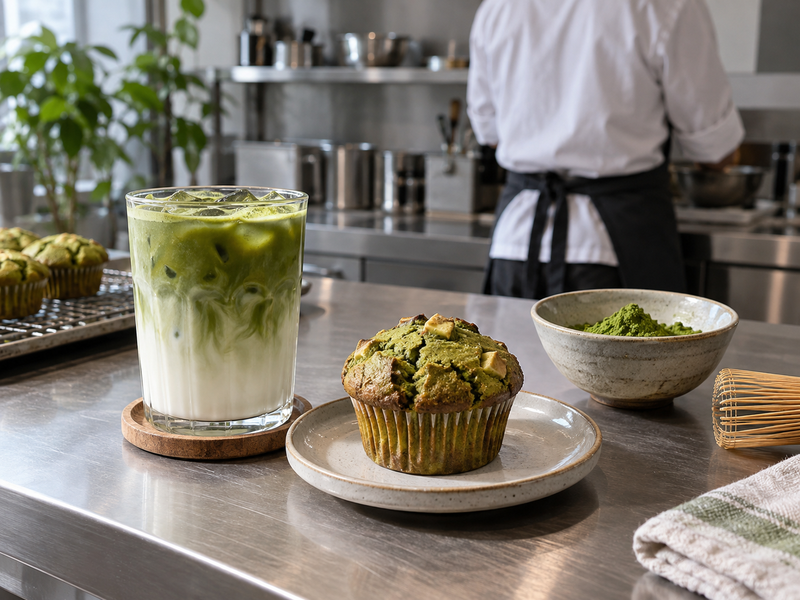
Milk and plant drinks soften some bitter edges and add their own sweetness, fat, and aroma. Sugar can make matcha seem gentler, while a high-fat dessert may mute its top notes. In bakery products, heat and brown ingredients can reduce the visual impact of green powder. A chocolate or coffee recipe may need a different matcha profile than a vanilla base. That is why the “best” powder in water does not automatically win a formulation trial.
Keep the recipe fixed for comparison. Use identical sweetener, base, powder weight, mixing order, and serving temperature for every candidate. Taste immediately and after the product has sat for its normal service interval. A latte that looks bright right after whisking may settle or taste flatter during delivery. An ice cream needs tasting after freezing, not only as an unfrozen mix. Matcha Village lists beverage, bakery, dairy, ice cream, and chocolate applications. Each deserves its own trial, and a product chosen for one line should be retested before use in another.
| Application | Sensory risk | Trial checkpoint |
|---|---|---|
| Milk latte | Tea flavor gets muted | Taste at service temperature |
| Plant-based drink | Base adds cereal or nut notes | Compare after full mixing |
| Bakery | Heat and browning change profile | Taste cooled product |
| Ice cream | Cold reduces aroma perception | Taste after freezing |
7. How should a buying team run a sensory test?
Make the trial repeatable before debating preferences
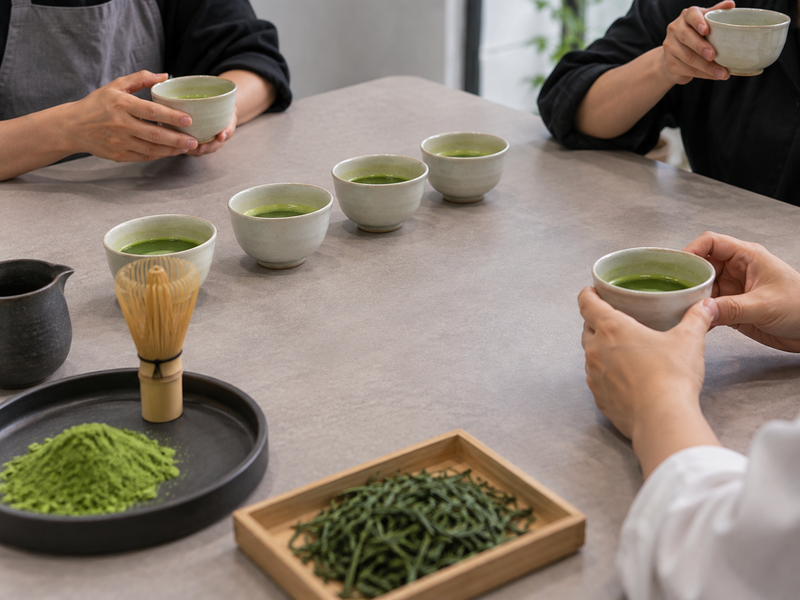
Give samples neutral codes so tasters do not know the price or grade while scoring. Prepare each at the same powder weight and ratio. Record water temperature, base ingredients, mixing method, and time between preparation and tasting. A small panel with people from purchasing, product development, and operations is more useful than one buyer’s unstructured impression. Let each person write notes before group discussion; that prevents the loudest opinion from becoming the only one recorded.
Use two passes. Evaluate powder in water to see its own character. Then test the proposed application at the planned commercial dose. Score attributes that matter to the brief: color, aroma, umami, bitterness, astringency, texture, dispersion, and aftertaste. If a sample fails, state why. “Too bitter at our current sugar level” gives a supplier a route to another grade or a recipe adjustment. Keep the coded results beside cost and documentation, so a pleasant cup does not obscure a supply or labeling issue.
| Scorecard field | Record |
|---|---|
| Sample code | Exact supplier product and lot |
| Preparation | Dose, base, temperature, method |
| Sensory result | Notes for each agreed attribute |
| Application result | Performance in finished recipe |
| Decision | Approve, adjust, or reject with reason |
8. Which flavors should trigger a quality check?
Separate a style preference from a possible fault
Some bitterness is normal in tea. A buyer may dislike it in a plain drink yet welcome it in a sweet dessert. Persistent stale, musty, smoky, or foreign odors deserve a closer check because they may point to storage, processing, or contamination problems. A gritty mouthfeel can indicate a particle or dispersion issue, although the recipe and mixing method must be ruled out. Color fading may accompany age or exposure, but appearance alone cannot diagnose the cause.
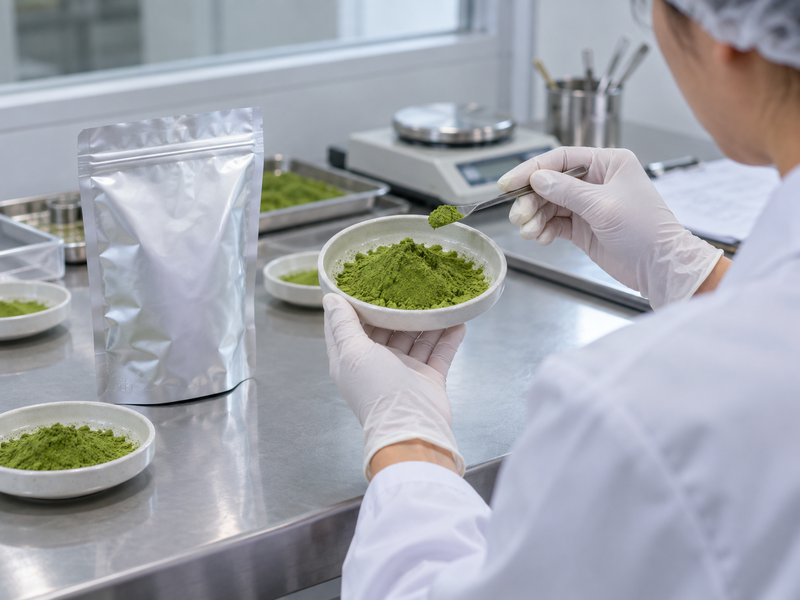
Document the finding before rejecting a lot. Retest from a sealed sample, confirm the preparation method, and compare with an approved reference. Record photos and sensory notes with the lot code. Ask the supplier for its quality process and relevant test documents. Do not substitute a smell test for food safety testing or invent a chemical explanation from a single tasting session. A clear complaint record helps supplier quality teams investigate and prevents repeated debate over vague words such as “off” or “different.”
| Observation | Immediate check | Next step |
|---|---|---|
| Stale aroma | Storage and seal | Compare sealed reference |
| Unusual smoke note | Preparation and sample | Raise with supplier |
| Gritty finish | Mixing and particle feel | Test in target recipe |
| Marked color shift | Light and age exposure | Review lot and storage |
9. Can color predict how matcha will taste?
Use color as one measurement
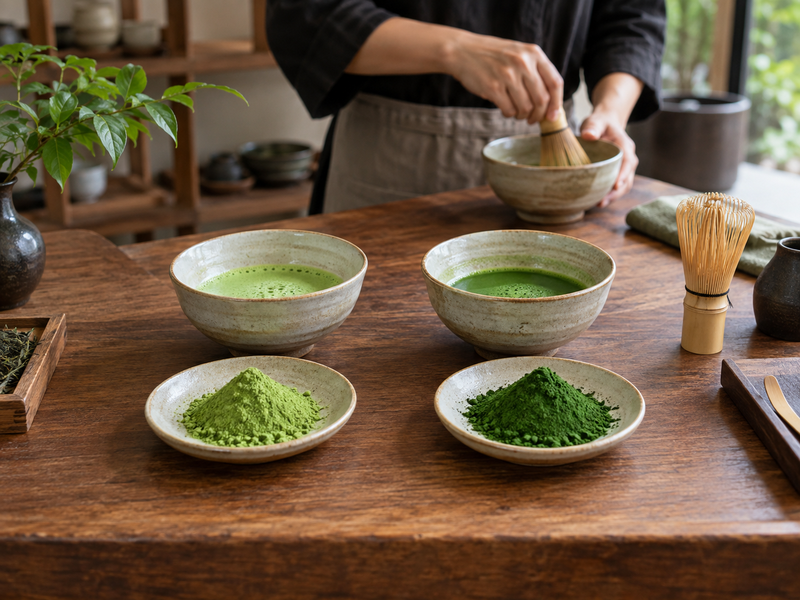
Bright green matcha can signal appealing leaf and handling characteristics, and buyers understandably use appearance during selection. Still, color does not tell the whole flavor story. Lighting, vessel color, powder dose, and the background ingredients can change what a taster sees. A vivid powder may taste too bitter for a delicate plain tea. A darker powder may serve a chocolate cake well if its flavor remains clear and its price fits the formula. The relationship depends on the actual lot and application.
Evaluate color where customers see it. A pure powder product needs a pleasing dry appearance and prepared cup. A bottled oat latte needs a stable appearance after processing and storage. A cake needs an acceptable slice after baking and cooling. Agree on a visual reference and viewing conditions if color is critical. Matcha Village describes different fineness, color, and flavor profiles across its product range; specify the acceptable appearance together with a sensory profile. This avoids approving a powder solely because its sample photograph looked especially green.
10. How should you select matcha for a product brief?
Send the supplier a use case, then compare coded samples
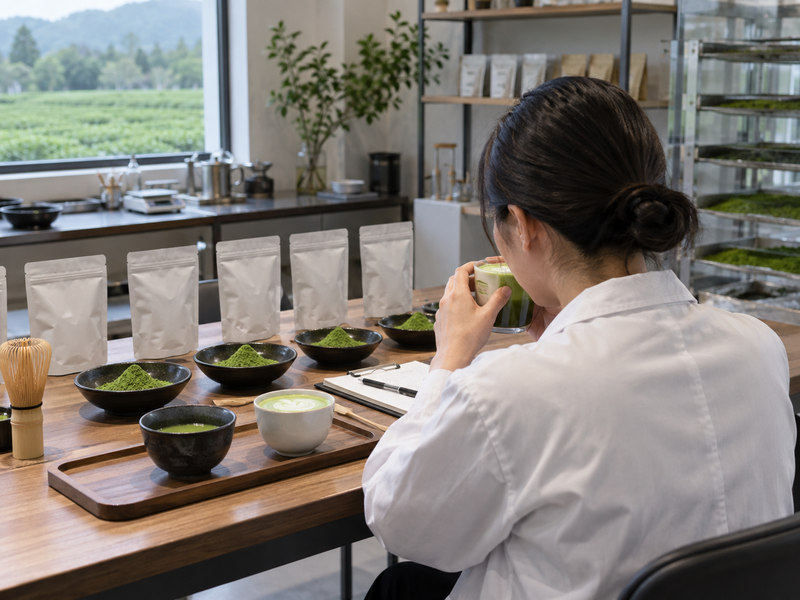
Describe the finished product, target market, intended serving, sweetener and base ingredients, desired color, preferred flavor, budget, and packaging format. Identify any claims under consideration and the documents needed for your import market. Ask for a small set of samples with exact product codes rather than a box of unlabelled “grades.” Test them in water and in the finished formula, then compare supply and documentation alongside sensory results. An approved sample should become a reference for later deliveries.
Turn preference into a purchase specification. Record which attributes matter most, what range your product can tolerate, and how the supplier should communicate changes. A café chain may place fast dispersion above subtle umami. A retail tea brand may reverse those priorities. A bakery may need strong color at a workable dose. Matcha Village offers bulk matcha and latte powders as well as pure matcha, allowing a product team to compare formats within one application brief.
| Brief item | Buyer decision |
|---|---|
| End use | Plain tea, latte, bakery, or dessert |
| Sensory target | Preferred bitterness, umami, texture |
| Operational target | Dispersion, portioning, packaging |
| Commercial target | Dose and cost per serving |
| Approval evidence | Sample code and quality documents |
Matcha can taste vegetal, savory, sweet, bitter, and astringent in different proportions. Grades and regions give useful context, but the final selection comes from a controlled tasting in the intended recipe. Send Matcha Village your application brief and ask for coded samples through its company contact route so the chosen flavor can be specified for repeat orders.
FAQ
Q1: What does matcha tea taste like without milk? Expect green, savory, mildly sweet, bitter, and sometimes drying notes; balance varies by powder.
Q2: Is bitter matcha always poor quality? No. Judge intensity and aftertaste against the intended product and dose.
Q3: Does “ceremonial grade” guarantee a certain flavor? No. Grade terms differ across suppliers; taste the coded sample.
Q4: Can a matcha that tastes good in water work in baking? It might, but a baked trial is needed because heat and other ingredients change perception.
Q5: What should a buyer send when requesting samples? Share the finished application, planned dose, flavor and color targets, market, and budget.