
Blackberry matcha combines dark berry flavour with powdered green tea, often in an iced latte. For a commercial menu, the difficult decisions are seed removal, fruit yield and the colour customers see after stirring. A purple layer beneath pale milk can look convincing while delivering little berry flavour. Build the recipe around an identifiable blackberry preparation and test the complete cup with the intended lid and straw. All quantities below are proposed development trials, not validated production formulas.
1. What should a blackberry matcha drink deliver?
2. How should buyers compare blackberry ingredients?
3. What is a useful blackberry latte trial?
4. How can a cafe remove seeds consistently?
5. Why does the mixed colour deserve its own check?
6. Which matcha should be selected for a berry latte?
7. How should blackberry preparation costs be calculated?
8. What does safe berry handling require?
9. Which defects should staff investigate first?
10. How can the launch specification prevent substitutions?
1. What should a blackberry matcha drink deliver?
Describe the berry before selecting the tea
Ask whether the menu needs fresh berry sharpness, a cooked jam character or a smooth syrup impression. These directions call for different ingredients and preparation work. A drink with visible pulp should have an intentional texture, while a smooth latte should not surprise customers with seeds. Write both flavour and texture expectations in the development brief.
The Healthful Ideas blackberry latte uses strained homemade syrup and separately whisked tea. The format is a useful reference, but its household storage advice does not establish commercial holding times. A cafe should validate its own preparation and use the handling controls appropriate to the purchased fruit.
| Drink brief | Fruit format to evaluate | Customer experience |
|---|---|---|
| Smooth berry latte | Seedless puree | Uniform sipping texture |
| Syrup latte | Strained berry syrup | Lighter fruit body |
| Fruit textured drink | Controlled pulp preparation | Spoon or suitable opening |
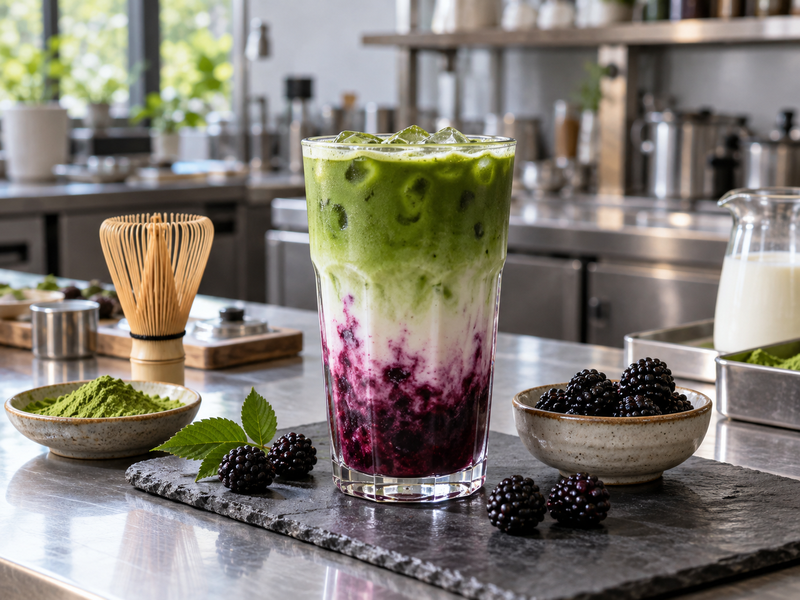
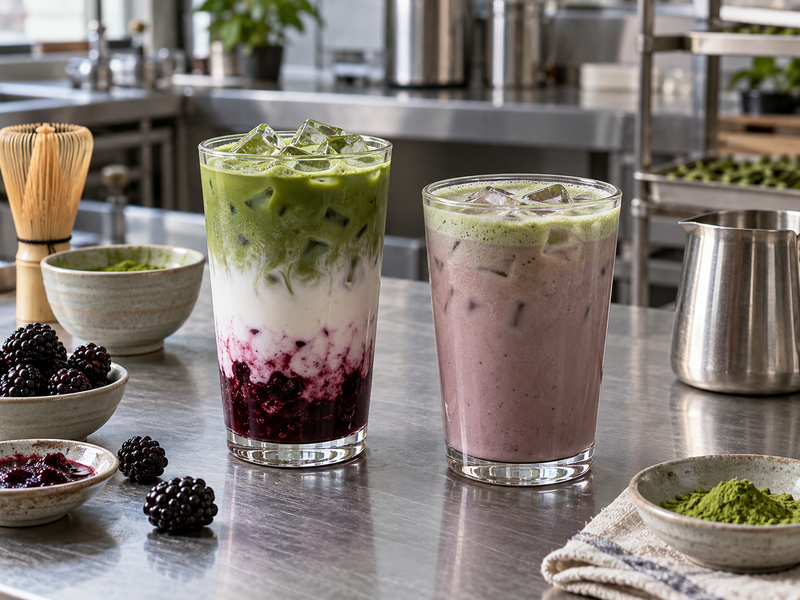
Serve the trial both layered and fully stirred. Record the mixed colour under the lighting used at the counter. The appearance after stirring belongs in the product brief because customers will encounter it within moments of purchase.
2. How should buyers compare blackberry ingredients?
Request seed and solids specifications
A supplier’s use of the word puree may still allow seeds or coarse particles. Ask whether the product is seedless, screened or simply crushed. Request its ingredient list, fruit content, added sugar, soluble solids information if available, and handling instructions. For a dispensing system, ask for a sample large enough to test flow through the actual nozzle.
Frozen whole berries can offer flexibility, but they create a preparation job. Staff must follow the supplier’s intended use, manage thawing and process the fruit consistently. A ready to use puree moves some of that work to the ingredient supplier. Compare the options by usable drink portions and labour rather than the purchase price per kilogram alone.
Check colour and aroma after the product has been prepared according to its instructions. Do not approve a frozen sample solely from its appearance in the bag. Capture the supplier lot and the date of the evaluation so a later colour change can be discussed with evidence. For a chain menu, ask whether the supplier permits seasonal variation and how replacement lots are communicated. A specification should describe tolerable differences before a shipment arrives at several locations.
3. What is a useful blackberry latte trial?
Define the fruit base before weighing the cup
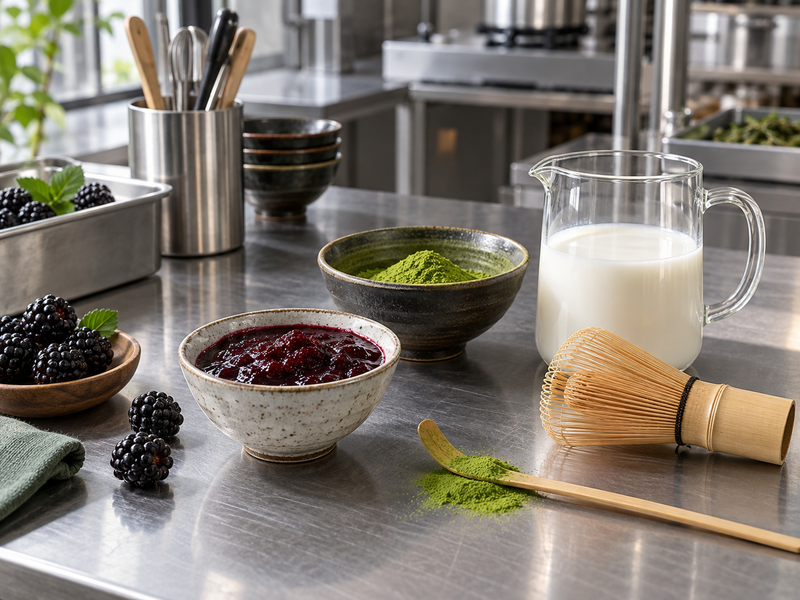
This proposed formula uses a commercially prepared, ready to use, unsweetened seedless blackberry puree. A syrup or concentrate needs a separate trial. Use pure matcha rather than a sweetened latte mix so the tea and sugar can be adjusted independently. Choose one milk product for the initial screening.
| Ingredient | Proposed amount | Development note |
|---|---|---|
| Matcha | 2 g | Sift before dispersion |
| Water | 40 g | Keep preparation consistent |
| Seedless blackberry puree | 25 g | Use a defined product |
| Equal mass sugar and water syrup | 12 g | Adjust in a later trial |
| Selected milk | 170 g | Record brand and formulation |
| Ice | 90 g | Weigh each portion |
Prepare one cup at the listed puree amount and two more at 15 g and 35 g, compensating with milk to keep the liquid mass similar. These are screening suggestions. Taste for blackberry recognition, acidity, milk compatibility and tea finish. The winning puree level may need a different sugar dose before launch.
Disperse the tea separately, combine the fruit and sweetener, and assemble over ice. Stir one sample immediately and leave another undisturbed only long enough to assess the intended presentation. Check the real cup capacity and leave room for customers to mix without spilling.
4. How can a cafe remove seeds consistently?
Measure yield through the chosen sieve
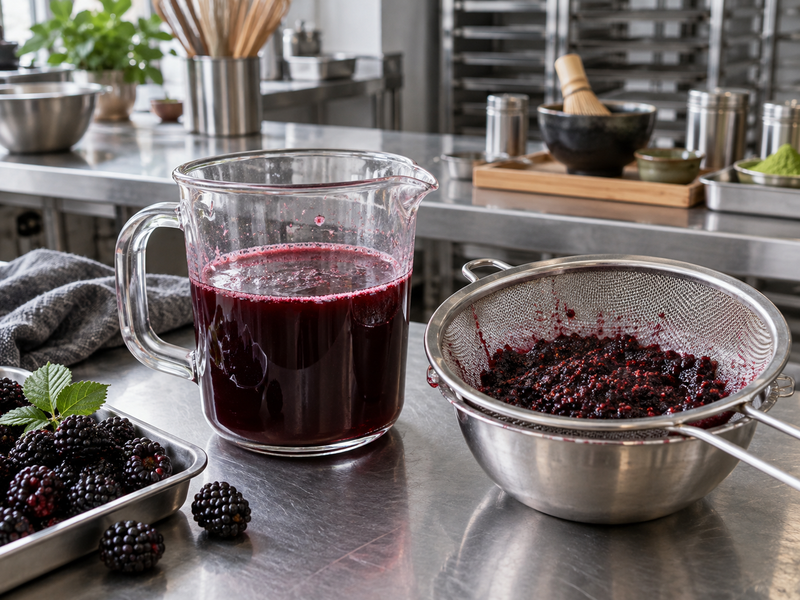
If the operation prepares its own base, use a sieve suitable for the intended particle size and write down the process. Crushing pressure, cooking method and pressing time can all change how much pulp passes through. Staff should follow a defined endpoint rather than forcing every last gram through the mesh. Overworking the fruit may produce a texture different from the approved sample.
Weigh the prepared fruit before straining and the finished base afterward. Record the mass left behind and the time required. This gives purchasing a usable yield and gives the kitchen a way to spot an unexpected change. If a batch suddenly yields much less, inspect the fruit, sieve and method before compensating with added water.
Inspect the finished base with the intended utensil. A few seeds may seem harmless in a spoon tasting yet block a narrow straw or feel unpleasant in a milky drink. Have someone outside the development team taste the texture without knowing which method was used. Keep food safety controls separate from screening: removing seeds is a texture operation and does not make fruit microbiologically safe. Follow all required supplier preparation steps before service.
5. Why does the mixed colour deserve its own check?
Approve the cup customers will drink
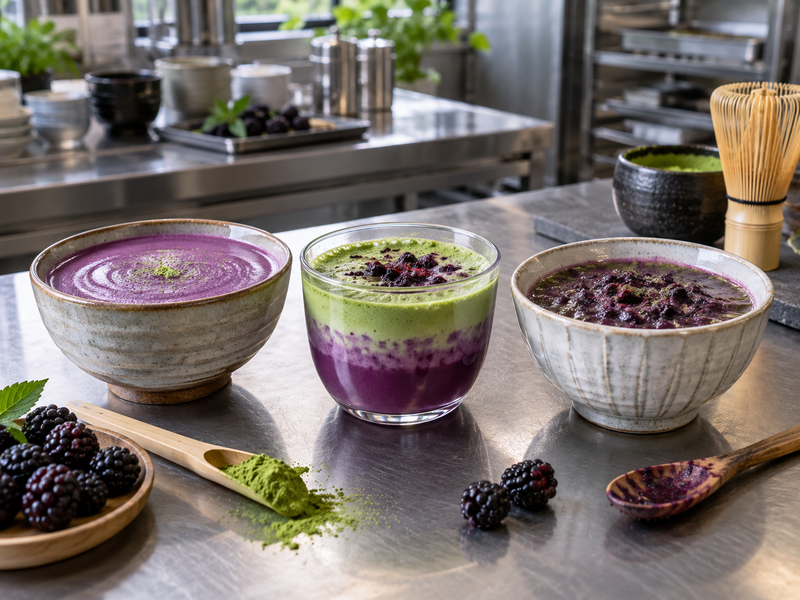
Berry, tea and milk contribute different colours. Their combined appearance can be muted even when each ingredient looks bright alone. Do not promise a permanently separated purple, white and green drink unless the normal service experience supports it. Show the mixed cup to the people approving menu photography so the image and the drink tell the same story.
| Viewing condition | What to record | Useful decision |
|---|---|---|
| Just assembled | Layer definition | Pouring sequence |
| Normally stirred | Combined colour | Customer expectation |
| Under counter lighting | Apparent hue | Menu photography setup |
| In takeaway packaging | Visibility through cup | Packaging selection |
Use identical clear cups and the same milk for colour comparisons. A thicker white base can make the tea look paler; increasing matcha solely for a greener photograph may worsen flavour. Decide whether a darker, berry led colour fits the menu before altering a balanced recipe.
Keep exposure and white balance consistent when recording trials. Photographing one sample in daylight and another beneath a warm lamp makes a later comparison unreliable. Include the same neutral background in every frame and keep those pictures with the ingredient lot information.
6. Which matcha should be selected for a berry latte?
Taste tea clarity after fruit and milk
A blackberry preparation can mask delicate tea aromas. Request two or three matcha samples suited to beverages and test them at an equal weighed dose. Taste each in water to identify obvious defects, then evaluate it in the same blackberry latte. The final choice should have a recognizable tea finish without pushing the drink toward harshness.
Keep the berry preparation constant across the tea comparison. If a different puree bottle is used midway through the trial, stir or prepare it according to its instructions and note the change. Uneven fruit distribution can make one tea appear stronger merely because its cup contains less berry material. The scale and the preparation record help prevent this false comparison.
Use the Matcha Village bulk supplier guide to frame a request around your approved drink, monthly volume and destination. Ask for the relevant lot documents and a clear statement of product composition. A pure matcha powder and a sweetened blend are different ingredients. If purchasing considers a premix for easier service, evaluate its sweetness, tea dose and milk compatibility as a new formulation rather than a direct substitution.
7. How should blackberry preparation costs be calculated?
Price the drinkable yield
The price of berries is only part of the fruit cost. A cafe making a strained base also pays for sugar, labour, utilities, containers and the material retained by the sieve. Use a pilot batch to determine the number of acceptable servings rather than assuming the purchased fruit mass becomes drinkable puree.
| Cost component | What to measure | Where it enters the estimate |
|---|---|---|
| Whole berries | Purchased mass | Ingredient input |
| Strained base | Finished usable mass | Cost per gram served |
| Preparation labour | Active minutes | Batch labour |
| Container residue | Unusable remainder | Waste allowance |
| Fruit garnish | Acceptable portions | Cost per cup |
For illustration, a base costing 18 currency units and yielding 900 g has a cost of 0.02 per gram before other costs. A 25 g portion then contributes 0.50. These hypothetical numbers demonstrate the calculation, not current ingredient prices or expected yields.
Compare that result with the delivered cost of a ready to use seedless product. The prepared product may cost more per kilogram but remove labour and variation. Run both through the actual dispenser or scoop, since an ingredient that cannot portion cleanly can lose its apparent cost advantage during service.
8. What does safe berry handling require?
Follow the purchased product’s intended use
Fresh, frozen and processed berry ingredients come with different handling requirements. Check whether the supplier describes a product as ready to eat or requires a treatment before consumption. Frozen berries are not automatically suitable for direct use in a cold latte. Put any required preparation step in the working recipe, where staff will see it.
For fresh berries, FDA produce guidance describes washing under running water and separating produce from raw animal foods. This is basic handling guidance, not a commercial kill step. Reject visibly unsuitable fruit through your receiving procedure and avoid leaving inspected fruit beside unclean packaging or utensils.
The FDA Food Code supplies a retail safety framework; local adoption and your operation determine the applicable controls. This proposed latte formula gives no shelf life for homemade syrup, thawed fruit or premixed milk drinks. Have the responsible person approve preparation, cooling, holding and disposal instructions before staff batch the base. Retain original lot details when decanting fruit into smaller containers, and avoid topping up an old working bottle without following its cleaning procedure.
9. Which defects should staff investigate first?
Use the smallest comparison that answers the question
If the drink tastes gritty, inspect both the tea dispersion and the fruit base. Green clumps suggest a tea preparation problem; dark hard particles may be fruit seeds. A vague instruction to blend longer can hide the cause and introduce unwanted foam. Examine each component before changing the whole recipe.
| Defect | Component to inspect | Proposed correction trial |
|---|---|---|
| Seed crunch | Fruit base | Finer screening or seedless product |
| Green clumps | Tea slurry | Sifting and controlled whisking |
| Weak berry aroma | Puree dilution | Compare a higher fruit level |
| Excessive tartness | Fruit and milk together | Adjust base or fruit specification |
| Uneven bottom layer | Mixing sequence | Premix measured fruit and syrup |
Test the corrected version with the same straw and lid that customers receive. A texture fix that works in an open tasting cup may still fail in takeaway service. Record how much material remains at the bottom after normal drinking and whether the customer needs an instruction to stir.
During the pilot, ask staff which preparation step slows them down. Repeatedly wiping a dripping puree spoon may justify a different portioning tool. Solve that practical issue before adding a garnish that introduces another handling step.
10. How can the launch specification prevent substitutions?
Name the approved fruit preparation precisely
The order should state seedless or screened status, ingredient composition, pack size and supplier product code. Attach the approved recipe and the mixed cup photograph to the internal product file. If the fruit supplier changes the formulation, the buyer needs enough detail to recognize that the drink should be retested.
Match the tea specification to the approved supplier sample and request representative material for incoming comparisons. Check the first commercial fruit container for texture and dispensing behaviour before sending it to every store. A large pack can handle differently from a small sample, especially when staff must reach the remaining product at the bottom.
Set a short pilot covering the expected busy period and collect portion count, preparation time and customer comments about seeds or sweetness. Use those records to revise the order quantity and service method. Then give the purchasing team one final specification containing the chosen puree, tea dose, milk, utensil and approved handling instructions. Ask them to obtain the next lot sample before the seasonal stock is exhausted.
FAQ
Q1: Can blackberries be muddled directly in the cup?
They can create a textured style, but seeds and pieces remain. Test the drinking method and make that texture clear to customers. A smooth latte needs another fruit preparation.
Q2: Is seedless puree always better than syrup?
It depends on the intended body and flavour. Puree can contribute more fruit texture, while syrup may pour more easily. Compare finished drinks at controlled sweetness.
Q3: Why does the drink turn a duller colour after stirring?
The berry, tea and milk colours combine. Approve the mixed appearance during development and use honest photography that reflects the cup customers will receive.
Q4: Can the drink use oat milk?
Yes, subject to testing with the exact product. Sweetness, ingredients and fruit compatibility vary between oat drinks, so a category name alone is not enough for the recipe card.
Q5: Can a cafe reuse the strained solids?
Only through a separately defined preparation with suitable handling controls and a genuine menu use. Do not count an unplanned reuse as revenue when costing the drink.