
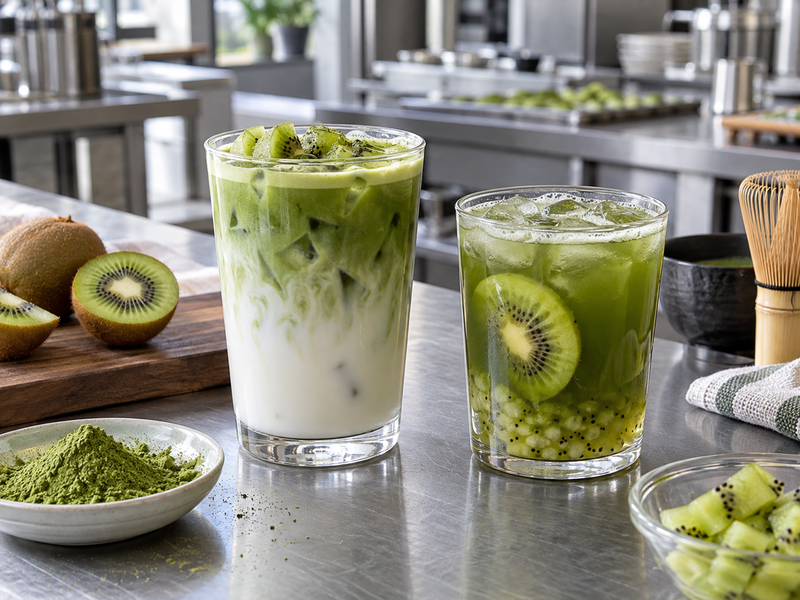
Kiwi matcha pairs fresh green or gold kiwifruit with powdered green tea in a cold drink. For cafes, ripe fruit, usable yield and milk compatibility deserve more attention than a striking green photograph. Raw kiwi also contains a protein breaking enzyme, so a latte needs its own texture checks rather than assumptions borrowed from another fruit drink. The recipe quantities below are proposed small trials for development. They do not establish commercial holding times or a packaged beverage process.
1. What style of kiwi matcha should a cafe develop?
2. How should buyers specify kiwifruit?
3. Why does raw kiwi need a milk compatibility check?
4. What quantities should be used for an initial trial?
5. How should staff prepare the fruit consistently?
6. What matcha should buyers evaluate with kiwi?
7. What should a cafe measure during the service trial?
8. How should fruit costs and handling be controlled?
9. How can common kiwi drink problems be diagnosed?
10. What should the final purchasing and launch file contain?
1. What style of kiwi matcha should a cafe develop?
Decide whether fruit texture belongs in the cup
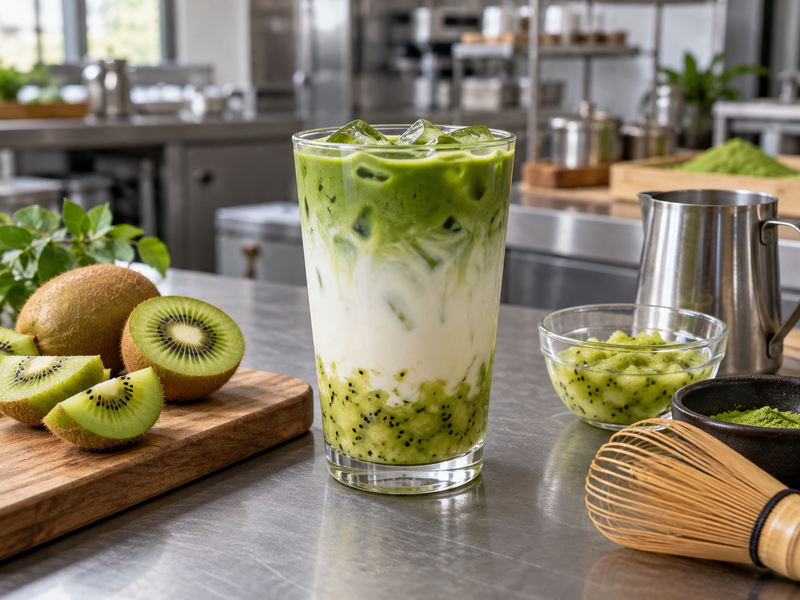
A mashed kiwi latte contains visible seeds and pulp. A screened fruit tea can offer a smoother sip. Start by deciding which experience fits the menu, then select packaging and utensils around it. Customers should not need to discover that a standard straw cannot handle the drink they ordered.
Jade Leaf’s kiwi latte recipe uses mashed kiwi, sweetener, milk and a matcha latte mix. The reference establishes a consumer serving format. Its sweetened mix should not be treated as equivalent to pure matcha in a new formula. Our proposed trial separates tea and syrup so developers can adjust them independently.
| Menu format | Texture target | Development priority |
|---|---|---|
| Mashed fruit latte | Small visible pulp pieces | Milk compatibility |
| Smooth fruit tea | Controlled fine pulp | Fruit and tea balance |
| Spoonable fruit drink | Deliberate thicker texture | Cup opening and portion |
Ask a taster to describe the fruit without seeing the ingredient tray. A pale green drink that tastes mostly of sweet milk may need a stronger fruit specification, not a larger matcha dose.
2. How should buyers specify kiwifruit?
Record variety, ripeness and usable flesh
Green and gold kiwifruit can differ in colour, flavour and texture. Choose the intended type and obtain consistent supplier descriptions. Do not buy by an undifferentiated count of fruit if the recipe depends on flesh mass. Fruit size, skin removal and trimming all change how much usable ingredient reaches the cup.
For fresh fruit, develop a receiving description covering acceptable condition and suitability for preparation. Very firm fruit may resist mashing and taste different from the ripe samples used during development. Soft, damaged or leaking fruit requires handling through the site’s receiving procedure. Record usable flesh from several deliveries to make purchasing estimates more realistic.
If the business needs a prepared puree, ask whether it is raw or processed, sweetened or unsweetened, and ready to use or subject to further treatment. Request particle size, seed information and storage directions. A processed puree may behave differently from freshly mashed fruit, including in contact with milk. Test the exact product before changing the service card. Ask the supplier to notify you of changes in fruit type or formulation so a quiet ingredient substitution does not alter every drink across the menu.
3. Why does raw kiwi need a milk compatibility check?
Separate enzyme effects from acidity
Zespri identifies actinidin in green kiwifruit and describes its ability to break down proteins, including proteins in dairy foods. That supports checking a kiwi and milk combination rather than assuming it will behave like a neutral syrup. It does not provide a shelf life or a prediction for your particular latte. See Zespri’s explanation of actinidin.
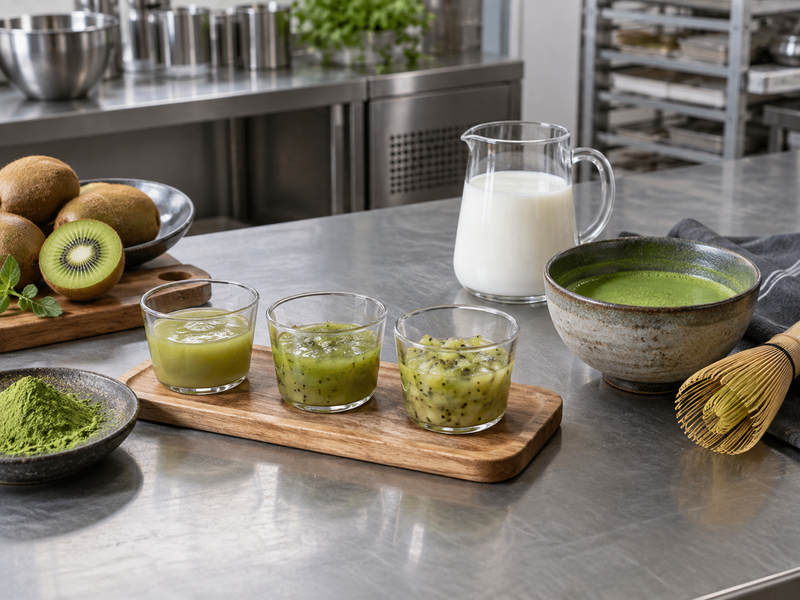
Fruit acidity can also affect the drink. A cafe does not need to identify every mechanism during the initial tasting, but it does need to observe the mixed product under realistic conditions. Compare fruit and milk without tea, then repeat with the complete recipe. Record flavour changes, graininess and separation using the actual ingredients.
| Pairing | What to observe | Why record it |
|---|---|---|
| Fresh green kiwi and milk | Mixed texture over service period | Raw fruit compatibility |
| Gold kiwi and milk | Flavour and texture | Different fruit comparison |
| Prepared puree and milk | Supplier product behaviour | Processing may change performance |
| Kiwi and water | Fruit baseline | Remove milk from diagnosis |
Keep trials small and follow approved handling controls. If the milk version fails, a water based kiwi tea may offer a clearer route to the intended fruit character.
4. What quantities should be used for an initial trial?
Make a water based reference before the latte
As an unvalidated starting point, test 2 g pure matcha dispersed in 40 g water, 40 g prepared kiwi flesh, 15 g equal mass sugar and water syrup, 130 g chilled water and 90 g ice. Weigh peeled usable flesh after the approved preparation. This cup provides a fruit and tea reference without milk masking either ingredient.
Mash the kiwi consistently, combine it with the syrup and chilled water, then add the separately dispersed matcha over the measured ice. Taste after a normal stir and inspect the texture using the intended utensil. Check the cup volume before assuming these masses fit your standard package. Record whether coarse pieces remain at the bottom.
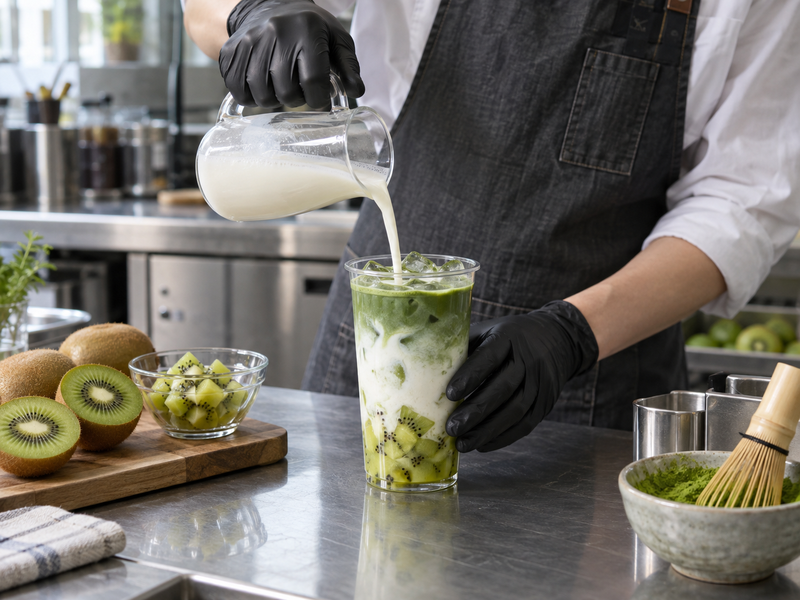
For a latte screening trial, replace the additional chilled water with the same mass of the selected milk. Treat this as a new candidate requiring compatibility checks, not an approved substitution. Compare a lower fruit level if the mixture is too sharp or pulpy, keeping other ingredients fixed. Once the fruit level is chosen, test sweetness separately. Do not adjust several components until the panel can no longer explain why the drink improved.
5. How should staff prepare the fruit consistently?
Weigh after peeling and trimming
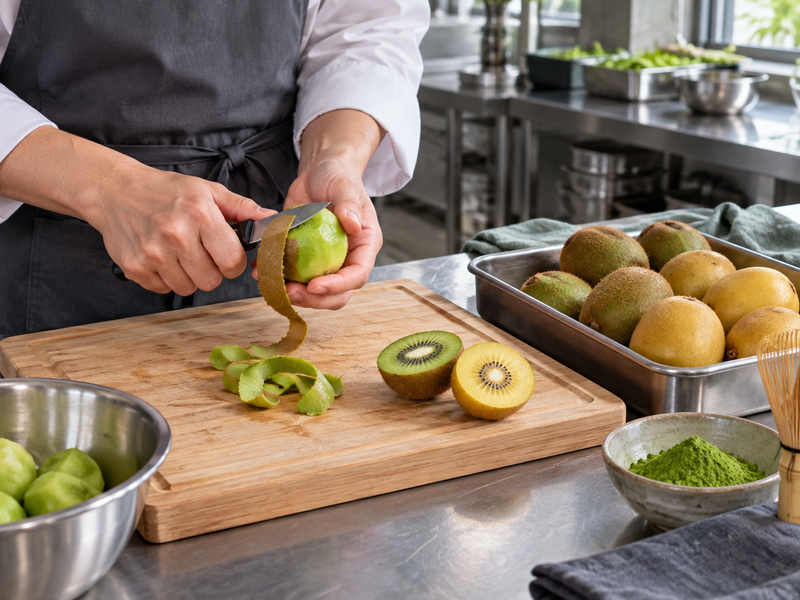
Wash fresh fruit before peeling, then use clean tools and the site’s produce handling procedure. Portion the usable flesh by mass. A recipe calling for one kiwi leaves variation whenever purchasing changes fruit size. Mashing by hand can be practical for a small menu, but staff need a target texture they can recognize.
| Preparation decision | Write on the card | Check during training |
|---|---|---|
| Skin removal | Approved peeling method | Excess flesh lost with skin |
| Portion | Usable flesh mass | Scale before mashing |
| Mashing | Desired particle appearance | No unexpected large chunks |
| Seeds | Retained or screened | Customer utensil works |
| Assembly | Fruit, liquid and tea sequence | Consistent mixing |
If a blender is used, test a repeatable batch size and operating method. More blending does not automatically produce a better drink; it may change aeration and the appearance of seeds. Make a sample using the tool available at the service station, since a development kitchen may have equipment the cafe does not own.
Keep preparation waste visible in the cost record. Overly aggressive peeling and fruit that is too firm can both reduce usable portions. Address those causes before increasing the fruit purchasing allowance for every future delivery.
6. What matcha should buyers evaluate with kiwi?
Keep tea identity separate from fruit colour
Both ingredients can contribute green colour, so appearance alone gives little information about tea strength. Taste matcha samples in water, then in the approved kiwi drink. Ask whether the tea remains identifiable and whether its finish works with the fruit’s tartness. A higher tea dose can make the cup more bitter without making the fruit taste riper.
Request pure powder when the development recipe specifies it. If the cafe chooses a sweetened matcha mix for service convenience, obtain its complete ingredient declaration and rebuild the syrup calculation. Equal powder weights do not guarantee equal tea content. Compare final drinks at their proposed service doses rather than claiming one ingredient replaces another gram for gram.
Matcha Village’s matcha ingredient guide provides a useful basis for sample discussions. Send the fruit form, milk choice if any, and desired service period with your request. Ask for relevant lot traceability and market documentation. Approve the matcha in a finished application trial, then record the exact product code. This gives purchasing a concrete basis for comparing a replacement lot when the seasonal fruit menu returns.
7. What should a cafe measure during the service trial?
Test the full customer experience
Prepare the drink in the intended cup with the chosen ice and lid. Give staff the actual straw or spoon and ask them to consume a portion normally. A thick fruit base may remain inaccessible below ice, even when it looked attractive at assembly. Observe whether ordinary stirring distributes the fruit without spilling over the rim.
| Service check | Measurement or observation | Possible action |
|---|---|---|
| Fruit portioning | Time per cup | Preportion through approved process |
| Drinking texture | Large pieces remaining | Adjust mashing method |
| Milk compatibility | Visible or sensory change | Rework base choice |
| Fill level | Headspace after ice | Change cup or quantities |
| Waste | Usable fruit left unsold | Revisit preparation quantity |
Run the trial through a short simulated queue. The operator should follow the written sequence without asking the developer what to do next. Record where hands, utensils or fruit containers cross paths at the station. That may reveal a layout problem that is easier to fix than changing the drink.
For delivery service, assess the journey separately under the business’s approved controls. A drink that works when handed across the counter may not retain an acceptable texture through transport and delayed consumption.
8. How should fruit costs and handling be controlled?
Keep yield and storage records connected
Calculate fresh kiwi cost from usable prepared mass, then add labour and other drink ingredients. Record actual fruit loss rather than choosing a convenient fixed percentage. If one delivery has a different size or ripeness, investigate the yield change. This can explain why a promotion uses more fruit than the original purchasing forecast.
The FDA’s produce guidance advises washing produce before preparation, including fruit whose skin will not be eaten. Follow your local commercial food handling requirements and supplier directions for prepared puree. The proposed recipe does not give a safe storage duration for cut kiwi, mashed fruit or a mixed latte.
Label prepared fruit according to the site’s system and retain the supplier lot connection. Avoid topping up a partly used container without the approved cleaning and rotation procedure. For initial testing, prepare only the amount required for the controlled tasting session. A larger batch should be justified by demand and an approved handling process. Fruit that looks and smells acceptable still needs the same documented controls, particularly when there is no further treatment after it enters the drink.
9. How can common kiwi drink problems be diagnosed?
Compare the components before changing the formula
If the drink tastes harsh, taste the kiwi by itself and compare its ripeness with the approved sample. Then taste the tea dispersion. Adding syrup can make a cup sweeter without correcting hard fruit texture or a stale tea note. Record the specific defect so the next trial answers a clear question.
| Problem | Check first | Proposed next test |
|---|---|---|
| Hard fruit pieces | Ripeness and mashing | Prepared flesh from suitable fruit |
| Milk texture changes | Fruit and milk pairing | Water based control |
| Tea hard to recognize | Tea dose and profile | Another tea at equal dose |
| Fruit collects under ice | Particle size and utensil | Finer mash or wider opening |
| Excess sweetness | Milk and mix ingredients | Remove overlapping sugar sources |
A green colour difference does not necessarily mean tea quality changed. Kiwi type, flesh colour and milk all influence the final appearance. Use the same fruit and base when comparing tea lots, and use the same tea when checking a new fruit delivery.
Write successful corrections into the recipe card before the next shift. If one employee quietly uses riper fruit or a different mashing method, the improvement will disappear when someone else prepares the drink.
10. What should the final purchasing and launch file contain?
Tie fruit type to the approved recipe
Name the fruit type or prepared puree code, the tea ingredient, syrup composition, milk product and packaging. Include the usable fruit mass and target texture. If the recipe permits a substitute, identify the limits and the check required before use. A general instruction to buy ripe kiwi gives staff too little guidance during a large menu rollout.
Have purchasing request representative matcha and fruit samples with complete handling directions. Ask the cafe team to make the approved candidate from those samples using the station equipment. Compare the mixed texture, fruit recognition and portion cost with the development record. Do not release a new commercial pack solely because its product name matches the sample label.
Choose a limited pilot quantity and record fruit yield, preparation time and customer comments about texture. Review the observations before expanding the offer to delivery or additional branches. Give the buyer the final usable fruit requirement per day and the preferred pack sizes. Place the next sample request while the approved fruit and tea are still available for a direct comparison.
FAQ
Q1: Can a kiwi latte be prepared far ahead of service?
This trial does not support that claim. Fresh kiwi and milk need compatibility checks, and advance preparation requires an approved handling and holding process for the actual recipe.
Q2: Does gold kiwi replace green kiwi directly?
Test it as a different fruit option. Colour, flavour and texture may differ, so the same mass does not guarantee the same finished drink.
Q3: Does kiwi matcha need a blender?
No. Mashing may suit a textured drink. A blender can support another texture, but its method and batch size should be tested with the intended cup and utensil.
Q4: Can a sweetened matcha mix be used?
Yes, with a revised formula based on its ingredients and tea content. Do not add the same syrup automatically when moving from pure matcha to a sweetened mix.
Q5: Is the water based version easier to evaluate?
It removes milk from the initial compatibility question and makes fruit and tea easier to compare. It still needs its own flavour, handling and service approval.