
Apple matcha can mean a crisp juice drink or a creamy latte with cooked apple syrup. Those two ideas need different ingredient choices. For a seasonal cafe latte, develop the apple component first and decide how much spice the menu promises. Otherwise, cinnamon and sugar can take over while the apple becomes difficult to recognize.
This guide focuses on a measured syrup latte, with comparisons for juice-based alternatives. Its proposed cup formula is a small development trial, not a validated commercial recipe. Use the process to establish a repeatable drink, then approve preparation and storage through the business’s normal controls.
Identity · Apple · Trial · Syrup · Spice · Milk · Tea · Service · Cost · Launch
1. What kind of apple matcha do customers expect?
Name the flavor direction clearly
An apple juice tea suggests a light fruit drink. An apple syrup latte suggests a creamier product, and a spiced apple latte creates another expectation. Choose a name that reflects the actual recipe. A decorative apple slice cannot explain whether the main flavor comes from juice, puree or syrup.
The Missing Lokness apple latte combines apple syrup, milk and whisked tea. It offers a reference for the creamy direction. A cafe can use that general architecture while developing its own ingredient ratios and service method.
| Product direction | Ingredient to investigate first |
|---|---|
| Crisp apple tea | Specified apple juice |
| Creamy apple latte | Apple syrup or smooth preparation |
| Spiced apple latte | Apple ingredient plus measured spice |
| Dessert drink | Apple body, milk and topping together |
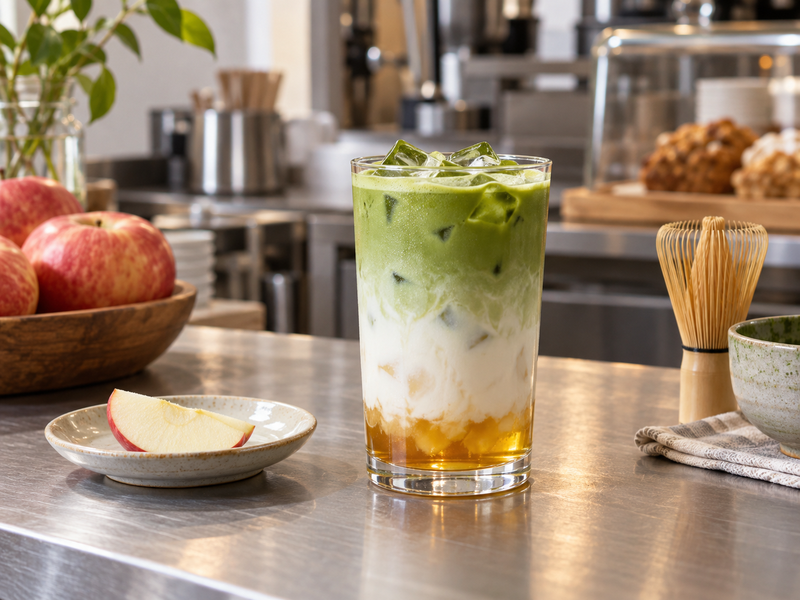
Write down what should remain after the cup is stirred: recognizable apple, tea aroma and a chosen sweetness level. This short description helps the team reject an attractive layered cup that tastes mostly of generic sweet milk once the customer mixes it.
2. How should you select the apple component?
Compare flavor and preparation burden together
Whole apples give the kitchen control over selection and processing, but require washing, trimming and yield records. Commercial juice provides a defined liquid ingredient. Puree adds body and possible particles, while a formulated syrup can simplify dosing. Each route has a different job at the preparation station.
Read the supplier’s ingredient declaration and intended use. An apple-flavored syrup may have a different fruit contribution from a concentrated juice preparation. Record that distinction before writing menu copy or calculating fruit content.
For juice, check treatment and handling instructions. The FDA juice safety guidance identifies risks associated with untreated juice and cider. Use that as a reason to verify the ingredient, rather than assuming that a fresh-sounding name establishes suitability.
Taste each candidate at its proposed dilution in the milk base. A strong cooked-apple aroma may work well in a seasonal latte but feel wrong in a drink advertised as crisp and refreshing. Keep samples of the selected item or their documented sensory description for receiving comparisons when the next lot arrives.
3. What is a practical first latte trial?
Weigh the syrup instead of counting spoonfuls
The following cup is an original proposed tasting formula. It has not been validated for commercial use. Select the syrup and milk first, then hold them constant while screening the tea dose. Use a cup with room for ice and comfortable mixing under its lid.
| Ingredient | Proposed amount | Trial note |
|---|---|---|
| Pure matcha | 2 g | Weigh on a suitable scale |
| Water for tea | 40 g | Use a recorded preparation condition |
| Milk or selected plant drink | 150 g | Keep item identity fixed |
| Apple syrup | 20 g | Record syrup composition |
| Ice | 100 g | Use one cube format |
Prepare the tea separately. Blend syrup with the milk, add the measured ice and finish with tea. Stir before assessing the flavor. Keep one cup without spice as the reference even if a spiced version is planned.
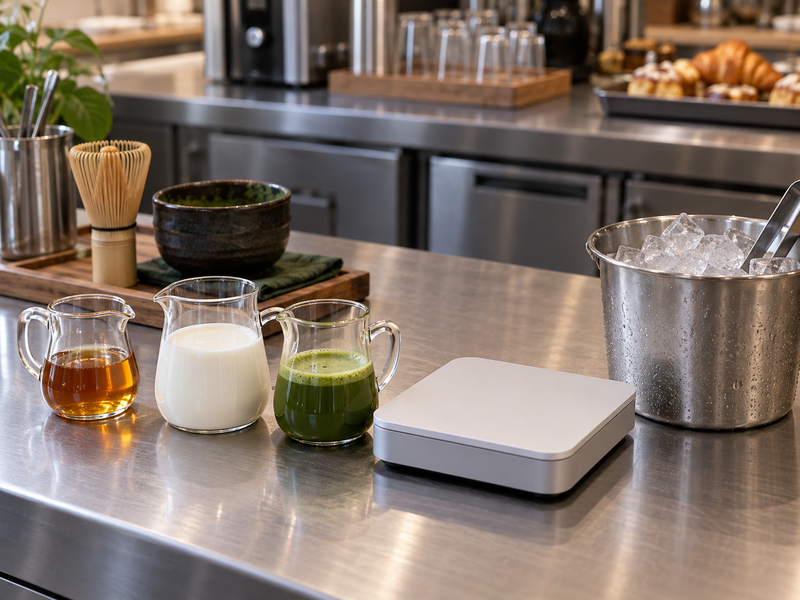
If the apple is weak, compare the syrup identity before automatically increasing its amount. More syrup can add sweetness faster than recognizable fruit. A later trial can vary syrup by weight, with the milk and tea unchanged, so the team can identify the source of any improvement.
4. How can a house apple syrup be repeated?
Specify the finished yield and texture
A house syrup needs a written process covering the apple preparation, ingredient weights, cooking method, straining and final yield. “Cook until it looks right” leaves too much variation between shifts. A wider pan or stronger heat can change evaporation while the timer shows the same duration.
Record the weight of usable apple after trimming. If the recipe uses juice instead, record the exact juice item. Weigh the finished strained syrup so the team can identify concentration changes between batches. Any adjustment to final weight should follow the approved recipe rather than an improvised addition at the service station.
| Batch record | Reason to keep it |
|---|---|
| Apple or juice identity | Trace flavor variation |
| Prepared fruit weight | Separate trim from usable input |
| Sugar and water input | Describe the starting formula |
| Final strained yield | Track concentration |
| Texture and particle check | Confirm pump suitability |
Have the food safety lead establish the process, cooling, storage and discard controls. A recipe on a blog does not validate the life of your syrup in a different bottle or kitchen. Keep batch labels attached through transfer and use clean equipment under the site’s established procedure.
5. How much spice belongs in the drink?
Let tasters identify apple before adding cinnamon
Spice can support a cooked apple direction, but it can also become the only identifiable aroma. Taste the base first. Then compare a measured spice preparation at a small supplier-recommended dose, retaining the unspiced cup alongside it.
Ground cinnamon can leave visible particles and collect around foam or the cup wall. A strained infusion or commercial syrup may give a different texture and sweetness. Test the actual format you will use during service, rather than approving one format and buying another later.
| Spice approach | Development check |
|---|---|
| No spice | Apple remains the main fruit cue |
| Ground spice | Sediment and gritty finish |
| Strained spice infusion | Consistency and preparation yield |
| Spiced syrup | Sugar contribution and dose control |
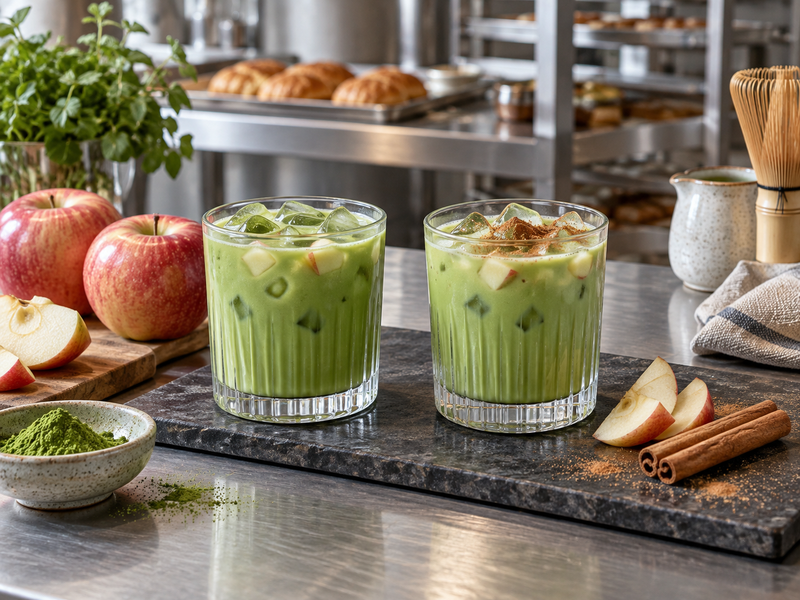
If several spices are proposed, introduce them one at a time. A mixture of cinnamon, clove and ginger can make a clear apple problem difficult to diagnose. Give the selected variation a defined name and recipe code, and include the spice preparation in the ingredient and allergen review.
6. Which milk should be tested with apple?
Evaluate the actual commercial products
Dairy and plant drinks bring their own sweetness, body and aroma. Compare the items available from your distributor, using identical tea and syrup weights. A category name such as oat drink does not establish how one brand will taste beside your apple syrup.
Observe the mixture immediately and during the expected service interval. Record flakes, separation or persistent surface changes if they occur. Test the apple ingredient with the milk alone as a simple control before attributing every defect to matcha.
| Milk trial observation | What it can help decide |
|---|---|
| Apple aroma is hidden | Try a less dominant base |
| Drink feels too sweet | Check milk and syrup together |
| Thin body | Compare a different milk product |
| Visible instability | Review the exact ingredient pair |
If the menu offers a dairy-free option, check every ingredient and the preparation environment before making the corresponding claim. Keep the selected product’s allergen information available to staff. A recipe change to another plant drink can alter both the taste and the information that customers need, even if the final cup remains pale green.
7. How can the tea preparation stay consistent?
Keep fruit syrup out of the initial whisking step
Prepare the measured matcha with water first so the operator can inspect its texture. Ippodo’s guidance on clumps recommends sifting before preparation. Transfer the smooth tea portion only after checking for dry pockets and residue around the bowl.
The water quantity belongs in the formula. An operator who adds extra water to make whisking easier changes the dilution of the finished latte. If more water improves preparation, revise and retest the full recipe instead of treating the addition as invisible.
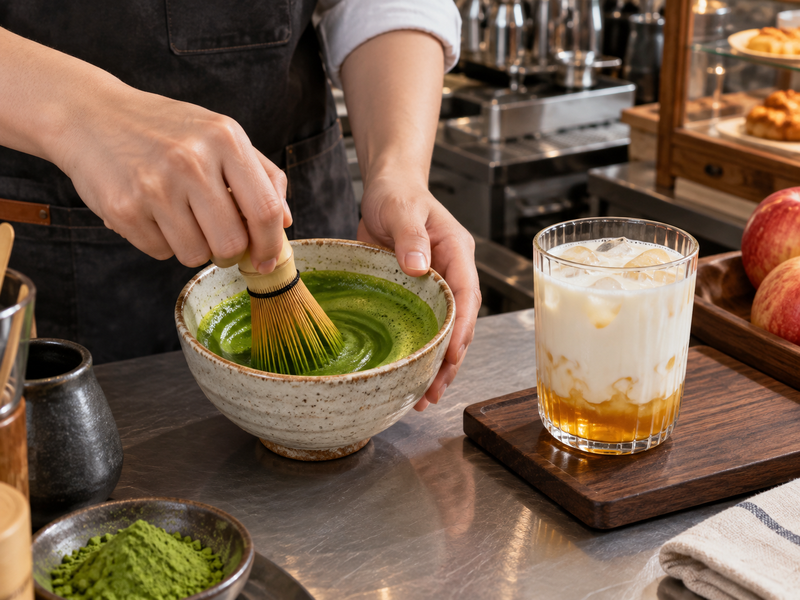
Record the chosen preparation temperature and tool. The Matcha Village water temperature guide can help structure a separate comparison if tea bitterness remains a concern. Keep apple and milk fixed while testing the tea method.
Ask a second operator to make several cups from the written card. Weigh the completed builds and taste them after stirring. This reveals unclear measures or transfer losses before the drink reaches a busy shift, when staff have less time to correct a cup.
8. What changes between iced and hot service?
Treat the hot latte as a second recipe
A hot version removes the ice and changes the milk preparation. Reusing the iced formula without adjustment can give a different concentration and cup volume. Develop the hot version in the intended mug with the selected steaming or heating method.
Use measured syrup and tea in both versions, then compare flavor at the actual serving conditions under your established procedure. Decide whether the hot version needs the same spice amount; aroma and sweetness can be perceived differently in the two presentations, so let tasting guide the decision.
| Service detail | Iced version | Hot version |
|---|---|---|
| Dilution | Includes melting ice | Defined by added liquids |
| Milk handling | Chilled selected product | Approved heating method |
| Cup check | Lid, straw and ice space | Mug volume and handling |
| Garnish | Must fit takeaway service | Must suit hot liquid |
Write separate cards if both versions are sold. Include the cup size and the exact milk quantity. Avoid a single instruction that tells staff to “make it hot” because it leaves too many decisions about water, syrup and fill level to the operator.
9. How do you cost a seasonal apple drink?
Include the preparation batch that may not sell
A house apple syrup carries fruit trim, straining loss and preparation time. A bought-in syrup carries its own pack-size and unused-stock risk. Compare both at the amount required for one approved cup, including the actual usable yield.
Seasonal demand can change quickly. Start with a limited preparation quantity and record sales by day. Do not order a large amount of a special apple ingredient solely because the unit price is attractive. Review how much the cafe can use within its approved handling period.
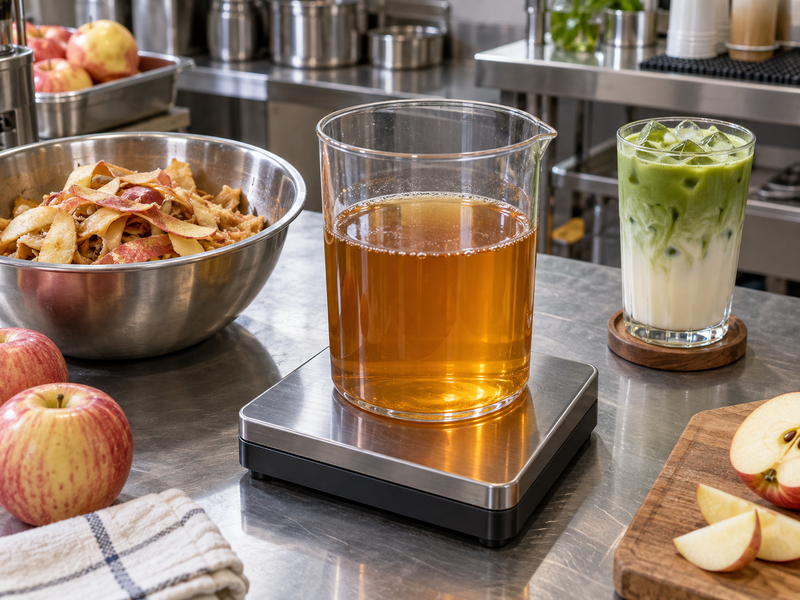
Include optional toppings separately. A cream cap, biscuit crumb or decorative apple slice adds labor and changes the eating experience. If the menu photograph includes them, either make them standard or describe the option clearly.
For tea purchasing, calculate the cost at the approved dose and include preparation loss. Compare alternate powders in the complete apple latte. A cheaper powder that requires substantially more tea, syrup or milk adjustment may create a different product rather than a straightforward saving.
10. What should the cafe approve before launch?
Keep the seasonal recipe traceable
Approve the apple preparation, tea item, milk, spice option, cup and service method as one formula version. Store the recipe where staff can find it during service. Include photographs of the ingredients at the station and the finished mixed cup, which are more useful than a styled promotional scene alone.
Send the tea supplier a sample brief that names the apple format and milk base. Ask for pure matcha if that is the recipe requirement, and request the lot and specification documents needed for the target market. Keep sample codes linked to tasting results.
Decide how the cafe will handle the end of the seasonal offer. Ingredient purchasing should reflect the remaining selling period so staff do not create unplanned variations to use leftover syrup. Any new use needs its own preparation and safety review.
Run the final iced build and any hot version with normal staff and equipment. Record cup weight, preparation time and customer-facing description, then release the menu with those exact ingredient identities and a small first order that can be reviewed against actual sales.
FAQ
Q1: Can apple juice replace apple syrup in the latte?
It changes sweetness, dilution and possibly milk behavior. Treat it as a new trial rather than a direct substitution. Compare the juice with the milk first, then add the prepared tea and assess the complete cup at the intended serving condition.
Q2: Does the recipe need cinnamon?
No. A clear apple and tea combination can stand on its own. Add spice only after the base is approved, using a measured preparation. Keep an unspiced reference so the tasting team can tell whether the apple remains recognizable.
Q3: Can a cafe use apple puree?
Yes, if the intended texture suits the service format. Check particles, pump or pouring behavior, straw access and the final cup’s body. Record the puree’s composition and test the exact product rather than substituting it for syrup by volume.
Q4: How long does homemade apple syrup last?
This guide does not assign a storage life. The formula, process, container and storage conditions need an appropriate assessment. Follow a validated procedure and a documented discard rule instead of borrowing a duration from an unrelated household recipe.
Q5: What is the first change to make if apple disappears?
Check the apple ingredient at the planned dilution. Then compare the tea dose or milk identity one at a time. Increasing syrup immediately may raise sweetness without restoring the fruit character that customers expect from the menu name.