
Nitro matcha puts a chilled matcha drink through equipment that adds nitrogen and pours a fine, temporary foam. Yet a handsome first pour says little about the tenth drink from a held batch. Powder can settle, milk can change the mouthfeel, and staff may charge or pour inconsistently. This guide turns those concerns into a small, measurable development plan for café operators and ingredient buyers. Matcha Village supplies matcha and matcha blends for application trials; each operator must validate the final drink with its own equipment and handling rules.
Table of contents
- What exactly should nitro matcha deliver?
- Which drink format belongs on the menu?
- How should a cafe choose matcha for a nitro drink?
- What recipe should the first trial use?
- How should the base be mixed before charging?
- Which dispensing setup suits the service volume?
- What does a good pour reveal about the process?
- How should holding and separation be tested?
- What does each saleable serving cost?
- What belongs in the supplier and rollout brief?
1. What exactly should nitro matcha deliver?
Define the drink before choosing the machine
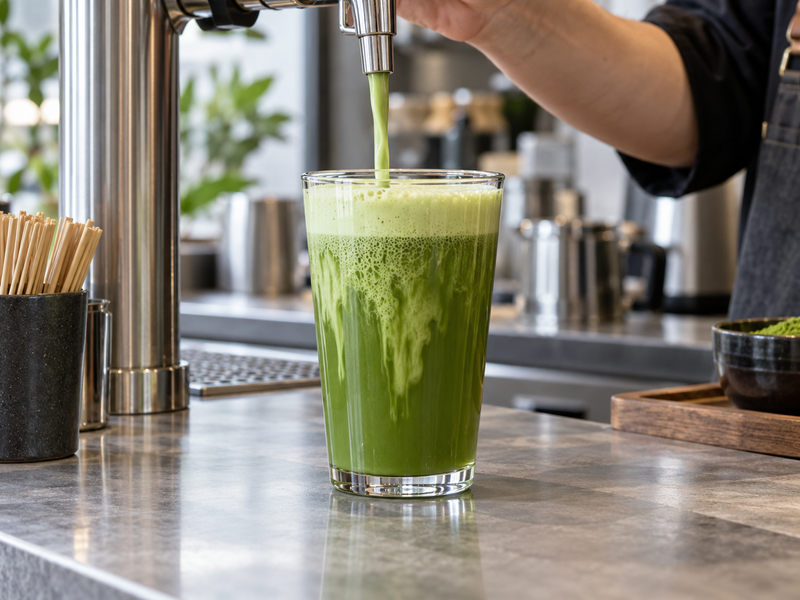
Nitrogen changes the serving texture and appearance of a prepared drink. It does not brew matcha, sweeten it, or stop tea particles from settling. That distinction matters when a buyer evaluates equipment demonstrations. A dense head may look impressive while the liquid underneath tastes weak or gritty. Set three separate acceptance points: recognizable tea flavor, pleasant liquid texture, and a consistent visual pour.
Watch the drink during its actual serving window. A guest may see the cascade settle before taking a sip; the barista needs enough time to hand it across the counter without losing the intended effect. Compare a first sip with a sip after a few minutes, when the foam has thinned. If flavor disappears with the foam, the base needs work. Write the sensory target in words staff can use: smooth but clearly tea-forward, evenly green, and free of powder pockets at the bottom. That gives a more useful approval standard than “looks creamy.”
2. Which drink format belongs on the menu?
Keep the pilot small enough to interpret
Start with one cold, unsweetened base and one milk-based version if the café serves both audiences. A water-based matcha shows powder flavor directly; a latte base tests whether tea remains noticeable after dilution by milk. Sweetened blends may pour attractively, but sugar, stabilizers, and dairy or plant milk can alter foam and cleaning needs. Avoid choosing five flavors before the equipment team can make one reliable drink.
Decide how guests will order the beverage. A nitro pour served straight in a clear glass shows the moving foam; ice can change that presentation and dilute the drink. A sealed takeaway cup hides some visual appeal and may trap foam against the lid. For each format, test the intended cup, fill line, and handoff time. The purpose of the pilot is to decide which combination of base and service vessel makes commercial sense at this counter.
| Proposed format | Main buying question | Service test |
|---|---|---|
| Plain cold matcha | Can the powder carry flavor without milk? | Compare first and settled sips |
| Oat or dairy latte | Does matcha remain distinct in the chosen milk? | Check foam, tea note, and residue |
| Lightly sweetened version | Does sweetness improve balance without masking tea? | Keep matcha dose fixed in a paired test |
| Takeaway cup | Does the drink still justify the nitro step? | Check appearance and flavor at handoff |
3. How should a cafe choose matcha for a nitro drink?
Judge powder in the finished glass
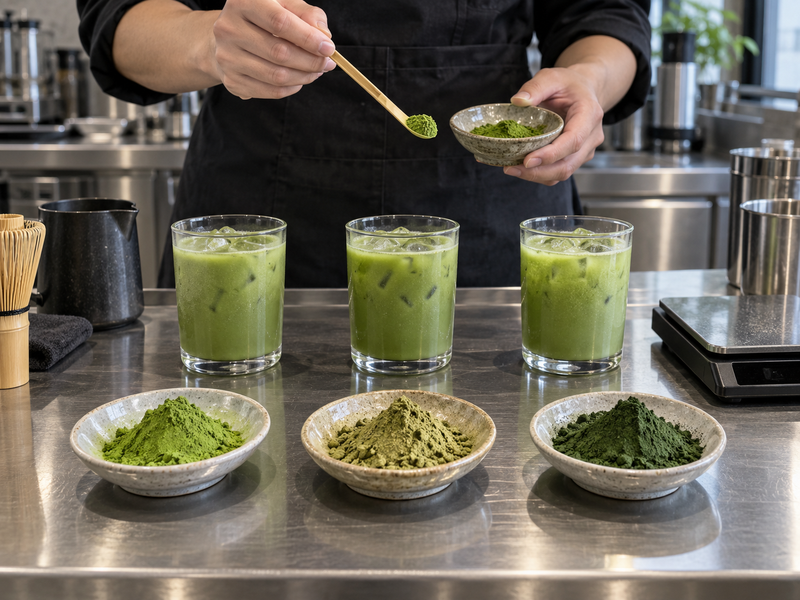
The highest priced powder is not automatically the best choice for this application. Milk, sweetness, and serving temperature can mute a delicate tea. A more assertive culinary or beverage grade may carry flavor through the base at a lower use rate, but bitterness should be checked after the drink settles. Compare two or three identified samples at the same powder weight in the same base.
Look for dark specks after mixing, sediment after holding, and a tea note that survives the foam’s collapse. Matcha is a suspension of fine leaf particles, so “dissolved” is the wrong acceptance test. The powder should disperse evenly enough for the intended service interval and equipment route. Ask Matcha Village for candidate product codes and current specifications that match the target market. Its stated portfolio includes culinary, premium, and formulated matcha products; the café should confirm which sample is pure matcha and which is a blend before comparing costs or writing a menu description. The existing wholesale matcha for cafés guide provides a broader purchasing checklist; use the nitro trial to narrow that checklist to one service method.
4. What recipe should the first trial use?
Fix a baseline and change one variable
An initial recipe is a test instrument, not a menu promise. For example, a café could trial 3 g of matcha, 40 ml of preparation water, and 160 ml of chilled milk for one small serving. A plain version would replace the milk with chilled water. The exact ratio should be adjusted for the chosen powder, cup size, and equipment volume. Record the final volume after mixing and the amount actually dispensed.
Run paired tests. In round one, keep the base fixed and compare powder samples. In round two, retain the preferred powder and change its dose. Only then test milk type or sweetener. Otherwise an attractive outcome cannot be traced to a specific decision. Use the same cup, temperature, charging sequence, and operator for the paired samples. If the drink tastes flat after the nitrogen effect fades, adjust the base rather than increasing gas or changing the pour alone.
| Trial | Change only this | Hold steady | Record |
|---|---|---|---|
| A | Baseline | Equipment and cup | Flavor, foam, visible sediment |
| B | Matcha sample | Dose and base | Tea note after settling |
| C | Matcha dose | Chosen sample and base | Balance and cost per serving |
| D | Milk or sweetener | Approved powder dose | Texture and service appeal |
5. How should the base be mixed before charging?
Make a uniform liquid before adding gas
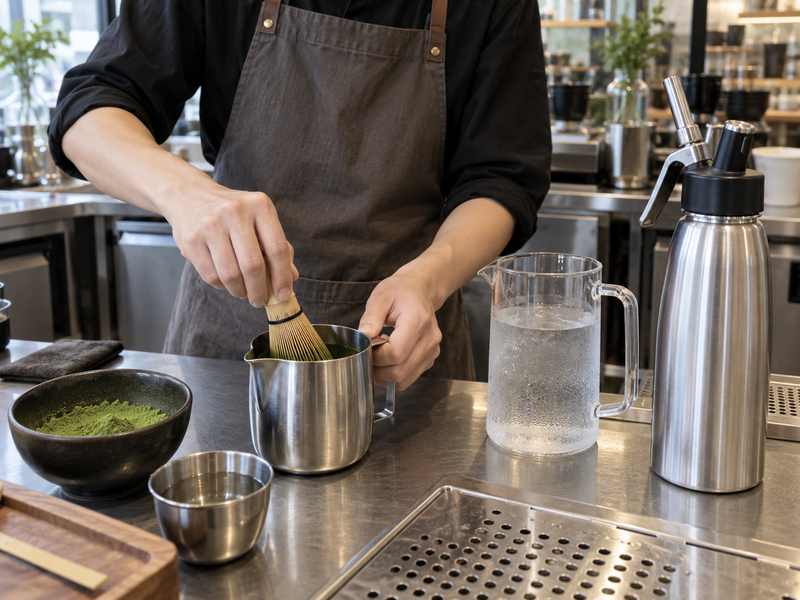
The nitrogen stage will not reliably break dry clumps. Sift or inspect the powder if the sample tends to cake, then wet it with a measured small water portion. Whisk until the mixture is smooth before adding the remaining chilled liquid. A blender or controlled high-shear mixer may suit a larger batch, provided the team checks whether it creates excess air or heat. The base should be uniform before it enters any canister or line.
Check the equipment maker’s instructions for fill limits, permitted liquids, gas type, charging steps, and cleaning. Do not substitute a different charger simply because a cartridge fits. Nitro systems and cream whippers do not all use the same gas or operating method. A filter may protect a narrow valve from coarse particles, yet a fine filter can also remove matcha solids and weaken the beverage. Test any filtration step by tasting the retained liquid and checking what remains in the filter. Label trial batches with time and formula, then keep them under the operator’s food-handling program.
6. Which dispensing setup suits the service volume?
Match the tool to the operating day
A compact canister can help an independent café test demand without committing counter space to a dedicated tap. It also asks staff to refill, charge, and clean the vessel repeatedly. A keg or installed tap may suit a higher-volume program, but it introduces line sanitation, batch transfer, refrigeration, and a need to keep the base uniform. Neither format removes the need to measure powder and beverage loss. The equipment choice should follow expected servings during the busiest hour, not only daily sales.
Run a timed service drill with the intended staff. Count preparation minutes, cups poured before refill, liquid left in the vessel, and the time required for disassembly and cleaning. Ask the equipment supplier which wetted parts contact the matcha base and how those parts are inspected. Dairy and plant-milk versions can create different cleaning burdens from a water-only drink. Hardware availability and staff training may decide whether the recipe can run through peak service.
| Setup | Suitable pilot question | Operational check |
|---|---|---|
| Small approved canister | Will customers buy the drink at all? | Refill, charge, clean, and loss per batch |
| Counter dispenser | Can one barista pour repeatably? | Fill process and handoff during a rush |
| Refrigerated keg and tap | Can a larger batch remain consistent? | Sediment, line cleaning, and last-cup quality |
7. What does a good pour reveal about the process?
Use the glass as a process check
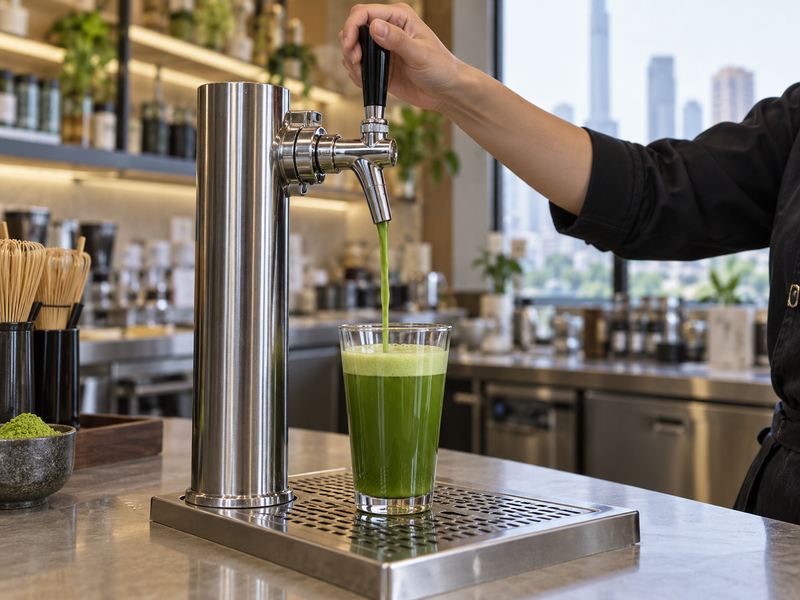
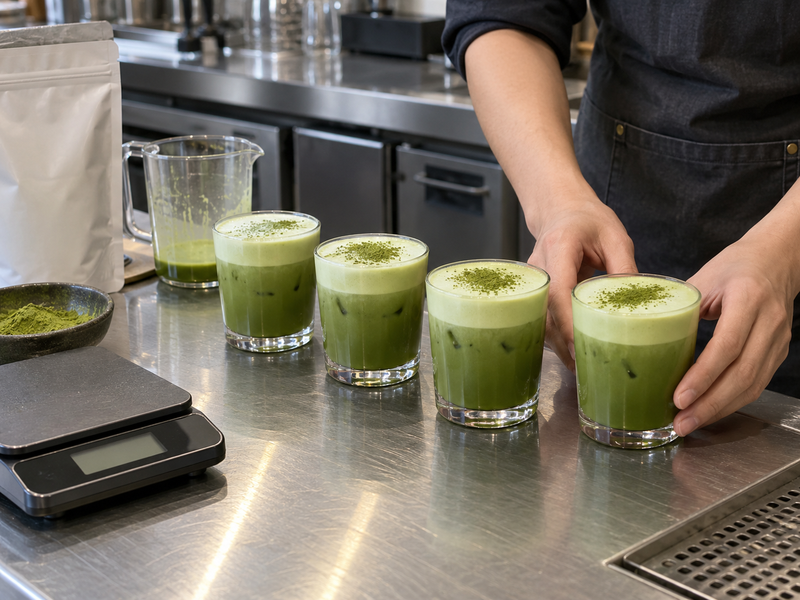
The cascade and head provide quick feedback, but they are not a complete quality test. Note how much foam forms, whether it rises evenly, and whether the liquid below looks uniformly green. Then taste. The drink can have a fine head and still carry a bitter edge or diluted tea flavor. A white ring, separated milk layer, or dark streak may point to a mixing or base problem rather than a lack of nitrogen.
Teach staff what to do when the pour misses the agreed reference. If the foam vanishes unusually quickly, confirm base temperature, fill level, equipment state, and charging procedure according to the machine manual. If the first cup tastes stronger than later cups, inspect batch mixing and particle settling. If the nozzle sputters or blocks, stop service and follow the approved cleaning process rather than forcing a pour. A visual standard alone can reward foam while overlooking the tea customers paid for.
8. How should holding and separation be tested?
Sample the beginning, middle, and end of a batch
Powdered leaf does not remain suspended indefinitely. Matcha particles may settle while a prepared base waits in a pitcher, canister, or keg. Design a short holding trial at the café’s intended temperature and service schedule. Take samples at the start, at the middle of the planned window, and from the last pour. Compare color, sediment, sweetness, and tea strength. The team may need a compatible mixing step before charging or a smaller batch size. Any agitation procedure must follow equipment guidance.
Holding time for a finished milk or tea drink is a food-safety and quality decision for the operator. Neither a vivid green color nor a strong foam validates microbiological life. In the US, the FDA Food Code is a model for retail food safety; the operator must check the rules adopted in its own jurisdiction. A chain planning a packaged or off-site drink needs separate development work for processing, packaging, and distribution; a café canister trial does not validate shelf life. The practical question here is narrower: can staff serve every cup in the intended service window with the same taste and clean equipment?
| Checkpoint | Take a sample from | What to compare |
|---|---|---|
| Immediately after mixing | Base before charging | Smoothness and powder pockets |
| Opening pour | Charged vessel | Foam, tea strength, color |
| Mid-window pour | Same operating batch | Sediment and flavor drift |
| Final pour | Near-empty vessel | Concentration, sputter, and loss |
9. What does each saleable serving cost?
Count the full service step
Calculate powder cost from the approved grams per serving and the landed price of the exact tested product. Add milk, sweetener, cup, lid, gas or equipment consumable, and cleaning materials. Then count liquid lost during charging, purging, testing, and end-of-batch disposal. A recipe that looks inexpensive on paper can become costly if every refill leaves a sizable remainder. Include staff time for making base and cleaning the dispenser, especially at the start and end of a shift.
The premium must pay for extra hardware and work, not simply a new menu name. A higher grade powder may be worth the cost if it permits a lower dose or a cleaner taste, but that claim requires a controlled cup test and a cost calculation. Write the calculation per saleable cup, not per theoretical batch volume. Keep price and margin decisions tied to the operator’s actual market and purchase terms.
| Cost input | Measure from the pilot | Why it matters |
|---|---|---|
| Matcha | Grams in an accepted serving | Connect quote to tested dose |
| Base ingredients | Actual milk, water, and sweetener | Avoid using recipe estimates alone |
| Dispensing loss | Prepared volume minus saleable pours | Reveal refill and end-batch waste |
| Consumables and labor | Gas, cups, cleaning, and staff time | Price the full service method |
10. What belongs in the supplier and rollout brief?
Tie the approved glass to a named material
Send Matcha Village a brief that describes the finished drink, not just the word “nitro.” Include whether the base is water, dairy, or plant milk; desired tea strength; sweetness; target cup volume; equipment type; destination market; and expected monthly powder use. Ask for identified powder samples and current specifications, then trial them in the actual base. Confirm pack size, lead time, documents, and commercial terms for the named product instead of assuming one sample represents every available grade.
Turn the pilot into an operating card that names the approved matcha code, dose, base temperature range determined by the café, mixing sequence, equipment procedure, cup, and sensory reference. Keep cleaning and food-safety instructions under the operator’s program and equipment maker’s guidance. A useful next action is to request two traceable matcha samples and run the same small-batch service drill with both.
FAQ
Q1: Is nitro matcha the same as a cold matcha latte? No. The base may resemble a cold latte, but nitrogen charging and dispensing create a different serving texture.
Q2: Does nitrogen stop matcha from settling? No. Matcha remains a suspension of tea particles, so test the first and last pours of a held batch.
Q3: Can any cream whipper make nitro matcha? Use only equipment and gas approved by its maker for the intended beverage and procedure.
Q4: Should a café choose the brightest dry powder? Compare identified powders in the finished, settled drink for flavor, dispersion, color, and cost.
Q5: What should a buyer request from Matcha Village? Request coded samples, current specifications, available packs, and a quote for the material that passed the café’s trial.