
Matcha babka is an enriched, twisted loaf with matcha worked into its filling, dough or both. A household recipe can produce one striking slice while a bakery needs every slice to carry recognizable tea flavor and a clean spiral. Filling may leak, proofing may blur the layers and a long bake can dull green color. This guide gives bakery developers and ingredient buyers a test sequence that links the loaf’s appearance to formula control, service life and purchasing decisions. Matcha Village can offer matcha candidates for application testing; the bakery should approve the finished product against its own process and market requirements.
Table of contents
- What product should the bakery develop?
- Which matcha belongs in the formula?
- How should the dough and filling be designed?
- What trial plan isolates the important variables?
- How can shaping and proofing protect the spiral?
- How should the loaf be baked and cooled?
- What should a finished slice look and taste like?
- How should packaging and shelf life be tested?
- What will each saleable loaf cost?
- What belongs in the supplier and rollout brief?
1. What product should the bakery develop?
Choose a format the channel can handle
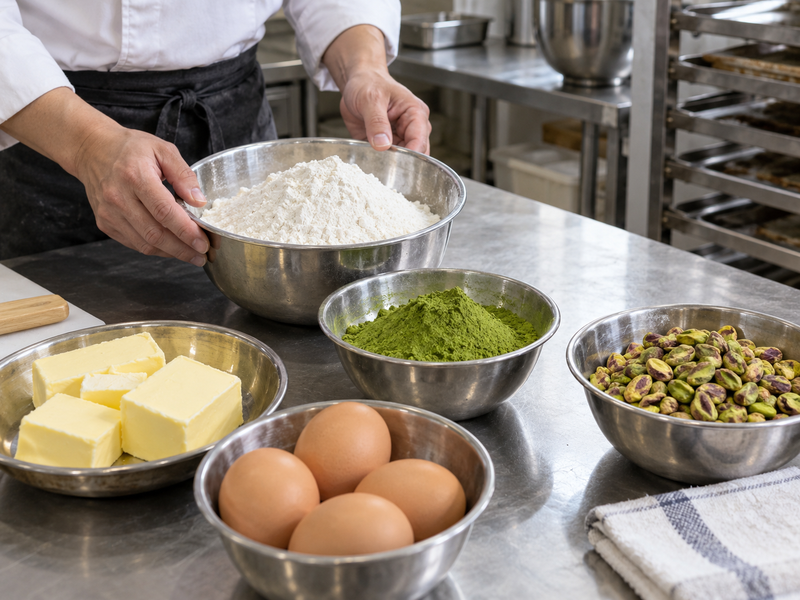
Before mixing dough, decide whether the product will be a whole loaf, a sliced retail pack or a single-serve bakery item. Those formats place different demands on the same recipe. A whole loaf can show a dramatic cut face at the counter, but customers may have to slice it at home. A pre-sliced pack makes portioning easy while exposing more crumb to drying. A café slice needs a thickness that survives handling and looks complete after a few hours in a case. Ask the sales team how customers will encounter the product, then choose the format that suits that occasion.
Write a short sensory target: a soft enriched crumb, a distinct matcha layer, moderate sweetness and no bitter tail after chewing. If pistachio is part of the planned offer, specify whether it appears as paste, chopped nuts or a finishing element. Each form changes texture, allergen handling and cost. The Czech reference title pairs matcha with pistachio; it does not establish a formula for this bakery. Build one base loaf before multiplying flavors.
2. Which matcha belongs in the formula?
Evaluate powder inside the baked matrix
A green powder that tastes pleasant in water may be too delicate once butter, sugar and a long bake surround it. Conversely, a matcha with a stronger tea note may work well in the filling even if it seems assertive as a plain drink. Compare candidate powders in the actual babka system. Keep dough, filling fat, sugar and bake conditions fixed for the first round. Inspect the dry sample for lumps and aroma, but make the purchasing decision on baked color, flavor and consistency. The ingredient name alone cannot predict those results.
Matcha Village lists culinary, premium and other matcha ranges, along with application selection support. Ask for named, traceable samples rather than selecting solely by grade language. The buyer needs the product specification, pack format, lot identification and documents required for its destination. Clarify whether the proposed powder is pure matcha or a formulated blend; a blend may alter sugar, allergen or labeling work. A single material that performs acceptably across uses is easier to operate.
| Matcha check | Sample evidence to record | Buying implication |
|---|---|---|
| Baked color | Center slice under standard lighting | Compare finished goods, not loose powder |
| Flavor after cooling | Tea note against butter and sugar | Avoid selecting from water tasting alone |
| Dispersion | Filling after mixing and spreading | Watch for dark specks and clumps |
| Product identity | Code, lot and specification | Match approved sample to quoted material |
3. How should the dough and filling be designed?
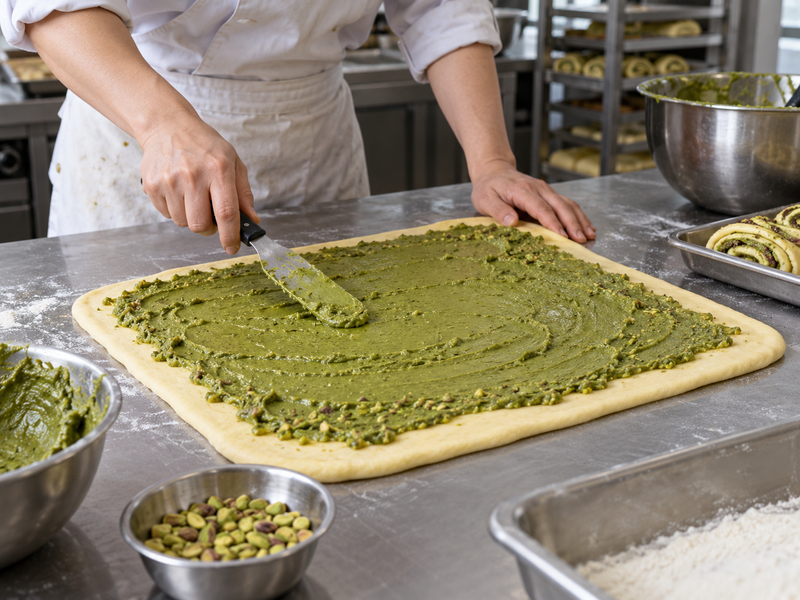
Keep the filling spreadable and the dough strong
Enriched dough must stretch thinly enough to roll yet hold the weight of the filling. Excess flour during shaping can dry the seam, while dough that is too warm may tear and smear the spiral. Develop the base dough without matcha first so the team understands its normal mixing, rest and proof behavior. If powder is added to the dough, make it a separate trial; the color will be more uniform, but the matcha may change water demand and make the layered filling less legible. Record dough temperature and handling observations rather than judging by appearance alone.
The filling needs enough body to stay in a thin layer through rolling, twisting and proofing. A loose syrup may run into the pan; a stiff paste may pull the dough apart. Make a small spread test at the intended working temperature before shaping full loaves. When pistachio paste is included, inspect its oil separation and sweetness, because both affect spreadability. Matcha should be incorporated evenly into the fat or paste phase according to the bakery’s formula. Avoid adding powder until the filling becomes dry and bitter.
4. What trial plan isolates the important variables?
Change one factor per round
Start with a baseline loaf using the bakery’s familiar enriched dough and one measured matcha filling. Keep pan size, dough piece weight, filling weight, proof endpoint and oven program unchanged. Run a second loaf with only the matcha dose changed. This makes the sensory difference interpretable. In the next round, the team can adjust filling moisture or sweetness while holding matcha steady. A four-loaf test in which every dough and filling component changes produces photographs but little usable evidence.
Assign each loaf a simple code and keep its sample pouch. The production record should include ingredient lot, mix endpoint, dough temperature, rest period, sheet thickness, filling weight, proof observation, bake program, baked weight and cooling time. Taste a central slice and an end slice after full cooling. The end may contain less filling or more crust, so testing only the photogenic center overstates consistency. If the bakery plans to sell slices, also check the least attractive slice that would realistically be sold.
| Trial | Variable changed | Keep fixed | Readout |
|---|---|---|---|
| A | Baseline formula | Pan and process | Reference color and texture |
| B | Matcha dose | Filling mass and sugar | Tea flavor without bitterness |
| C | Filling body | Approved matcha dose | Leakage and spiral definition |
| D | Proof endpoint | Approved formula | Volume, seam stability and crumb |
5. How can shaping and proofing protect the spiral?
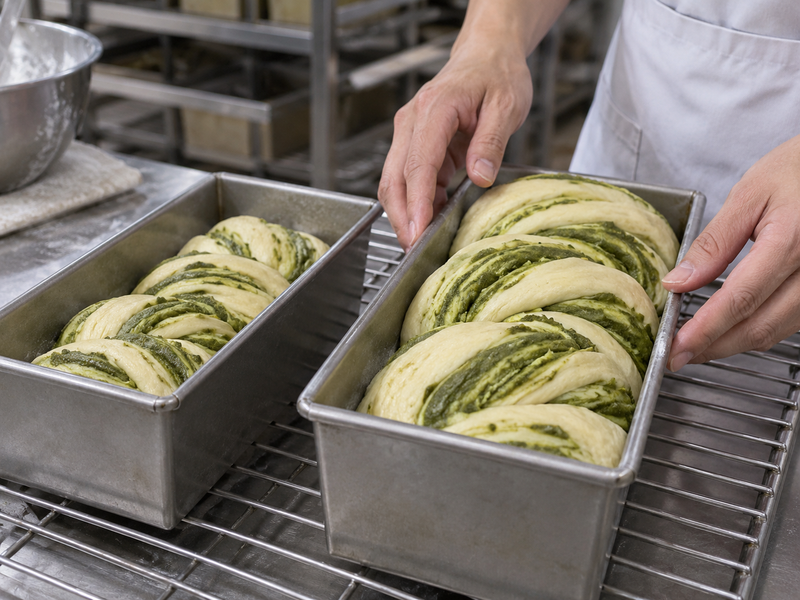
Treat the twist as a production step
Spiral definition depends on sheet thickness, filling spread, roll tension and the way the log is split and twisted. Too much filling can create a dramatic raw cross-section but squeeze out in the oven. Too little leaves long unflavored stretches. Give bakers a target fill weight and spreading pattern, then show where the edges should stay clear for sealing. If the formula includes chopped pistachios, scatter them evenly and keep large pieces away from a narrow seam. A large nut fragment can tear the dough when the log is cut or twisted.
Proofing should be judged by dough condition, not the clock alone. An underproofed loaf may split sharply and leave dense pockets near the filling; an overproofed one can lose shape or leak. Mark pan position, dough height and surface feel on a photo-based training card. Run a trial at the bakery’s actual room and proof-box conditions, including a busy shift when trays may queue. If production uses chilled dough, verify that filling firmness and yeast activity still permit clean shaping after refrigeration.
6. How should the loaf be baked and cooled?
Set an internal finish and a cooling rule
The bake needs to set the center without taking the exposed matcha filling far past its best color. A dark crust can be attractive, but a blackened green seam looks burnt and may taste harsh. Test pan material, oven loading and rack position because these can change bottom heat and side coloration. Measure the loaf’s internal finish using the bakery’s food-safety and quality method; do not borrow a single temperature from a household recipe without validating it against the actual formula and equipment. Record baked weight loss as another way to detect a wet or over-dry result.
Cooling matters before slicing or packing. A warm loaf can compress under a knife, smearing the spiral and creating gummy-looking crumb. Packed warm, it may also leave visible condensation. Set a cooling endpoint that the bakery can verify on a normal production day. If a glaze or syrup is used, apply a measured amount and evaluate whether it hides the tea aroma or makes packaging sticky. Compare the day-of-bake sample with the intended sale-day sample.
| Observation | Likely process area to inspect | Next trial action |
|---|---|---|
| Wet center | Bake load, pan and filling moisture | Check finish across several oven positions |
| Blurred spiral | Warm dough or soft filling | Recheck shaping temperature and spread |
| Dark bitter seam | Exposed filling and oven heat | Change placement or bake program |
| Crushed slice | Cooling or knife setup | Delay slicing and inspect blade choice |
7. What should a finished slice look and taste like?
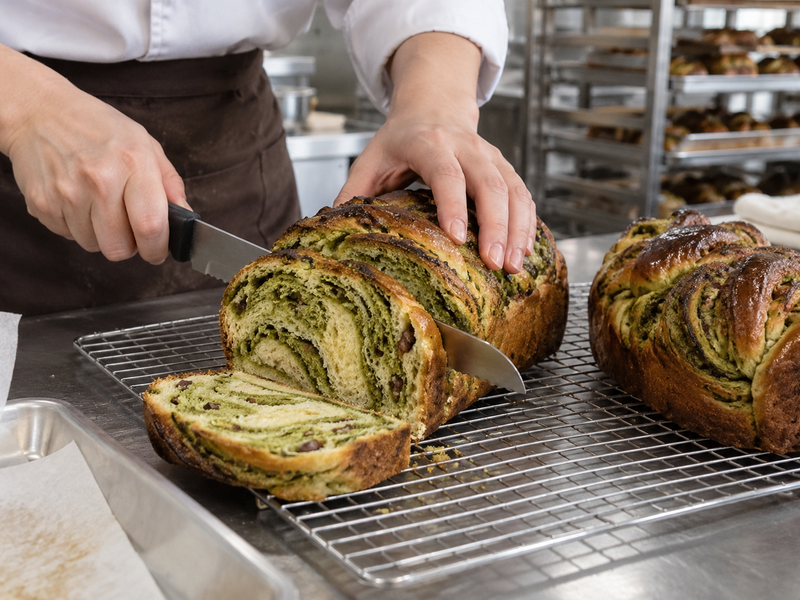
Judge several slices, not one hero piece
Cut the loaf at the center, near an end and at the point where the twist changes direction. A useful sensory check asks whether each slice has an identifiable matcha note, whether the filling remains tender and whether the crumb is soft without gumminess. The green should look plausible under the bakery’s display lighting. Extremely bright color may be a formulation choice, but buyers should know exactly what causes it and whether labeling reflects every ingredient. Matcha color naturally changes with formulation and heat, so define an acceptable range rather than a single photograph treated as a guarantee.
Have tasters sample the loaf plain before adding a spread or sweet drink. Otherwise a strong companion flavor can mask a weak tea layer. Compare texture on the planned selling day as well as after cooling. An attractive fresh slice that dries by the next morning may suit a same-day bakery case but fail in a distributor’s wrapped pack. Record defects using ordinary terms such as “filling pulled from crumb” or “bitter edge,” and connect each defect to a likely process variable.
8. How should packaging and shelf life be tested?
Validate the route to the customer
Choose packaging after deciding where the loaf will be sold. A counter loaf may need a hygienic cover and same-day display rule. A wholesale loaf may need a sealed pack, transport tray and damage checks. Sliced packs introduce more exposed surface and may need a different moisture strategy from whole loaves. Run packaging trials with the approved formula. Assess condensation, crust softness, filling transfer to film, slice breakage and flavor at each planned handoff. If the loaf is shipped chilled or frozen, test thawing in the actual pack.
Shelf-life dates require evidence under the product’s real formulation, process and distribution conditions. The bakery’s quality team owns microbiological, allergen and labeling decisions for the finished food. Pistachio, milk, egg and wheat may be relevant depending on the recipe and facility; a matcha specification does not replace the final product review. Ask whether the packing line can handle irregular braided tops without crushing them. A windowed pack may show the swirl but expose light; a plain opaque pack protects appearance but relies on a truthful product image. Test both before paying for printed film.
| Route | Main exposure | Practical verification |
|---|---|---|
| Café slice | Drying in display | Taste at opening and late service |
| Whole retail loaf | Compression in pack | Inspect top and seam after handling |
| Sliced wholesale pack | Crumb exposure | Compare slice quality across distribution |
| Frozen distribution | Thaw moisture | Check condensation and filling texture |
9. What will each saleable loaf cost?
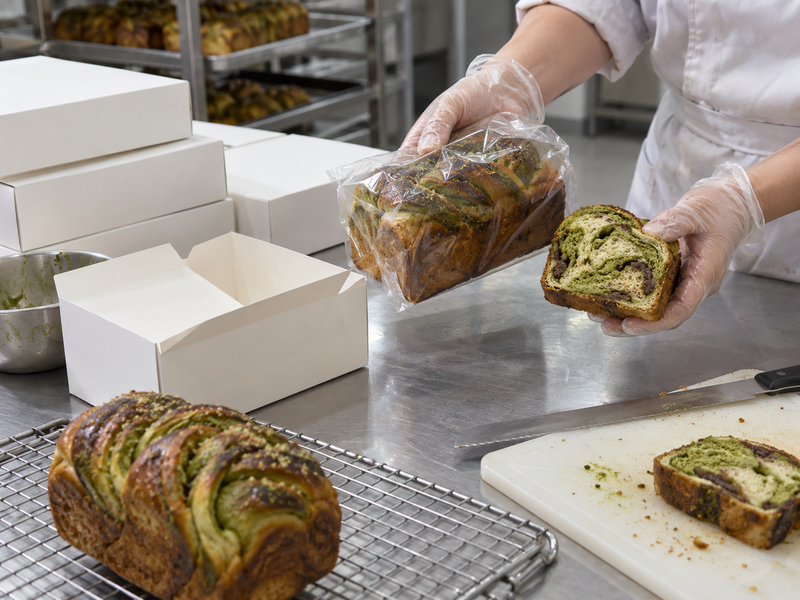
Cost the yield the customer can buy
Calculate matcha cost from the approved grams per loaf and the quoted landed ingredient cost, then add dough, filling, pistachio if used, glaze, packaging, labor and ordinary production loss. The difference between dough pieces mixed and loaves sold matters. A complex twist may look efficient in a bench test but create more damaged pieces during a full shift. Weigh trimmed ends and record any unsaleable loaves in a pilot batch. If slices are sold, determine how many meet the visual standard; do not price on the theoretical number of cuts.
Compare the babka against other enriched bakery products using the same accounting method. Matcha may be a small part of total ingredient weight yet a visible reason customers choose the loaf. That does not justify ignoring its cost or using a lower-priced powder that needs a much larger dose. Evaluate cost per saleable loaf along with taste and color. A supplier quotation should identify pack size, price basis, shipping scope and the sample material.
10. What belongs in the supplier and rollout brief?
Share the application and the decision rules
Send Matcha Village a concise bakery brief: intended product format, matcha placement in dough or filling, target flavor and color, draft usage range, destination market, monthly demand estimate and required documents. Ask for candidate samples with product codes and lot identity. Request current specifications and available pack options, and explain whether the bakery needs bulk matcha or a private-label finished product. Matcha Village’s portfolio and application support can help narrow sample options, while the buyer remains responsible for validating the babka in its own equipment.
After the pilot, approve a named material against a retained baked reference, written process and purchase terms. Define how the team will check a repeat lot before full production: a small filling mix and bake may be more informative than a dry-powder color check. Decide who can release substitutions if supply changes. The next useful action is to request traceable samples and run a controlled baseline batch with a cost sheet beside the sensory record.
| Brief item | Detail to provide | Decision owner |
|---|---|---|
| Finished application | Whole loaf, slice or wrapped retail pack | Product team |
| Matcha use | Filling, dough, dusting or combination | Bakery development |
| Acceptance | Baked color, tea note and slice quality | Sensory panel |
| Commercial need | Forecast, packing and delivery market | Procurement |
| Quality documents | Specification and destination requirements | Quality team |
FAQ
Q1: Can a bakery put matcha in both dough and filling? Yes, but test each placement separately before combining them, so color and flavor changes remain interpretable.
Q2: Does matcha babka need pistachio? No. Pistachio is one possible pairing; it adds a distinct cost and allergen review.
Q3: Why does the green spiral turn dull after baking? Heat, exposed filling, formula and lighting can all affect appearance. Compare controlled bakes before blaming one ingredient.
Q4: Can a bench recipe be scaled directly to production? Run a full-shift trial. Mixing, shaping, proof queues and oven load can change results at scale.
Q5: What should a buyer ask a matcha supplier for? Ask for identified samples, specifications, pack options and a quotation tied to the material tested in the bakery.