
Matcha mochi brownies promise brownie richness with a chewy mochi-like bite. That contrast may come from one rice-flour batter or from distinct brownie and mochi layers. Either route can fail when the center remains underbaked, layers separate or moisture softens a product meant for display. This guide helps bakery, café and packaged dessert teams build a controlled trial, assess saleable yield and buy matcha for the finished format. Matcha Village can provide ingredient candidates for application testing; the food business approves its own formula, process and sale conditions.
Table of contents
- What should the finished brownie deliver?
- Which layer structure fits the sales format?
- How should you choose the brownie base?
- What gives the mochi layer a repeatable chew?
- Where should matcha go in the two-layer formula?
- How can you run a fair matcha sample trial?
- What changes when the recipe moves to batch baking?
- How do you calculate cost per saleable piece?
- What should packaging and holding trials observe?
- What belongs in a production and supplier brief?
1. What should the finished brownie deliver?
Define the bite from edge to center
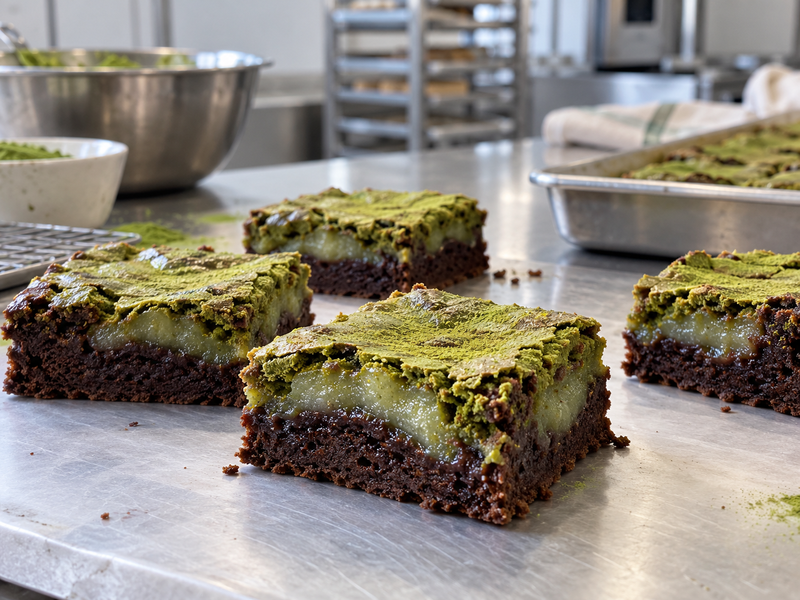
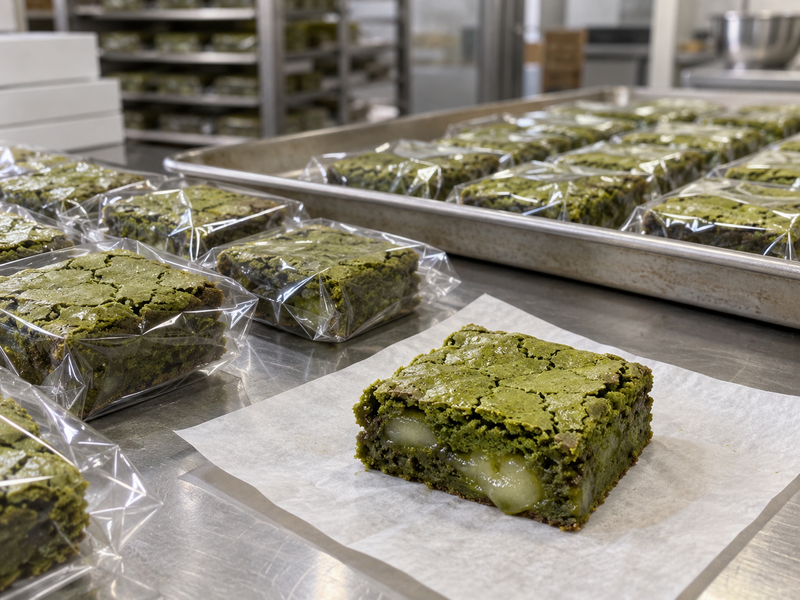
Write a short product target before testing matcha levels. Decide whether a customer should meet fudgy brownie first, a distinct chewy mochi center or alternating bites from two clearly visible layers. Specify portion size, layer thickness, surface finish, expected cut edge and intended serving temperature. The word “chewy” can describe a pleasant elastic mochi layer or an underbaked brownie; a photo and sensory notes help staff recognize the difference. Cut an approved piece through the center and keep that view with the recipe.
The sales channel changes the target. A café may plate a warm piece with sauce, while a packaged dessert brand needs a square that survives cutting, wrapping and transport. Taste the plain piece before adding ice cream or glaze, then test the complete sale format. Sweet toppings can mute matcha and add moisture to the surface. Record the delay between baking, cutting and service. A sample admired straight from the oven offers limited evidence about a product sold later from a display case.
2. Which layer structure fits the sales format?
Choose a layout that can be assembled repeatedly
The bakery can test one rice-flour batter with a mochi-like chew, a brownie base with a mochi top, a buried mochi center or a deliberate swirl. Each route changes cutting behavior and the chance of uneven filling. A top layer makes the chew visible but may pick up condensation inside a pack. A buried layer protects the mochi but needs a clear method for spreading batter above and below it. A swirl may look appealing while giving customers inconsistent bites. Choose one structure for the initial process trial and hold total piece weight constant.
Record the ratio of mochi to brownie by weight, not by an impression from the pan. Compare center and edge pieces because layer thickness can shift during spreading or baking. If a piece breaks where the layers meet, check assembly and cooling before changing the matcha grade. Document whether the item will be cut as a bar, baked in individual cavities or formed as a larger slab. That decision determines filling labor, portion control and packaging.
| Structure | Buyer benefit | Main trial check |
|---|---|---|
| Single rice-flour batter | Chew throughout the brownie | Even center and edge texture |
| Mochi on top | Visible two-layer promise | Surface tack and pack contact |
| Mochi in center | Clear chew in each cut | Continuous layer and clean cut |
| Swirled layers | Varied visual pattern | Consistent bite between pieces |
| Individual molds | Fixed portion size | Fill time and release behavior |
3. How should you choose the brownie base?
Test crumb, sweetness and support
The brownie must carry the mochi layer without turning dry at the edges. Select a base formula and document its fat source, sugar, flour, chocolate or cocoa ingredients, pan depth and mixing method. A dark cocoa brownie can provide strong contrast against green mochi, yet its bitterness may bury a subtle matcha note. A pale matcha brownie shows tea color more clearly but may need different sweetness and bake treatment. Prepare controlled versions rather than changing chocolate, fat and matcha together.
Pay attention to how the base meets the mochi layer. If the brownie is very fluid, the mochi may sink or drift during filling. If it sets too quickly, the layers may separate after cooling. Compare a cut piece after the planned rest as well as the oven surface. Check for dry corners, a dense underbaked seam and crumbs that pull away from the mochi during cutting. Keep the chosen brownie input and formula under revision control; a later chocolate or flour substitution deserves another finished-product trial.
4. What gives the mochi layer a repeatable chew?
Specify the starch system and hydration method
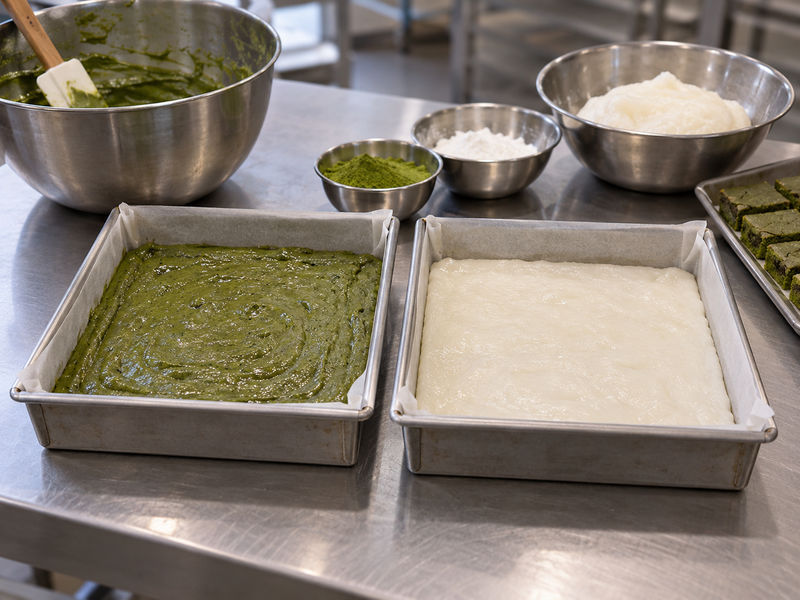
“Mochi” in a product name does not define a formula. A single batter using glutinous rice flour can create chew throughout; other operations make a separate layer or add prepared mochi pieces. These routes differ in mixing, moisture, portioning and holding behavior. Identify the rice flour or prepared ingredient, supplier and lot, liquid base and target mass. If using a purchased component, review its ingredient and allergen information. If preparing a layer in-house, specify the mixing and deposition sequence.
Evaluate the mochi at the serving temperature. A warm sample may stretch well but become firm after chilling; a very wet layer may smear during cutting or soften the brownie. Compare the same piece at defined points after baking and packing. Change one factor at a time, such as layer mass or hydration, and record the observed effect. Texture descriptions should name what staff can feel and see: clean bite, elastic pull, tacky surface or hard center. Those observations are more useful than assuming every glutinous rice flour behaves identically.
| Mochi variable | Record | Finished-piece question |
|---|---|---|
| Rice flour or prepared component | Product and lot | Is the chew repeatable? |
| Liquid and binder | Type and measured mass | Does the layer set as intended? |
| Deposited layer weight | Mass per pan or piece | Is each bite balanced? |
| Holding condition | Time and temperature history | Does the texture change? |
5. Where should matcha go in the two-layer formula?
Keep flavor and color tied to the intended bite
Matcha can be placed in a single rice-flour batter, the brownie layer, the mochi layer or both layers. Test those routes separately. Tea in a dark chocolate base may be difficult to see and harder to taste; tea in a pale mochi layer creates a clearer visual cue but could taste concentrated if its layer is thin. Using matcha in both layers may strengthen the tea character while increasing cost. Decide which sensory result the product needs before assigning dose. Weigh each addition and record the percentage in its own component.
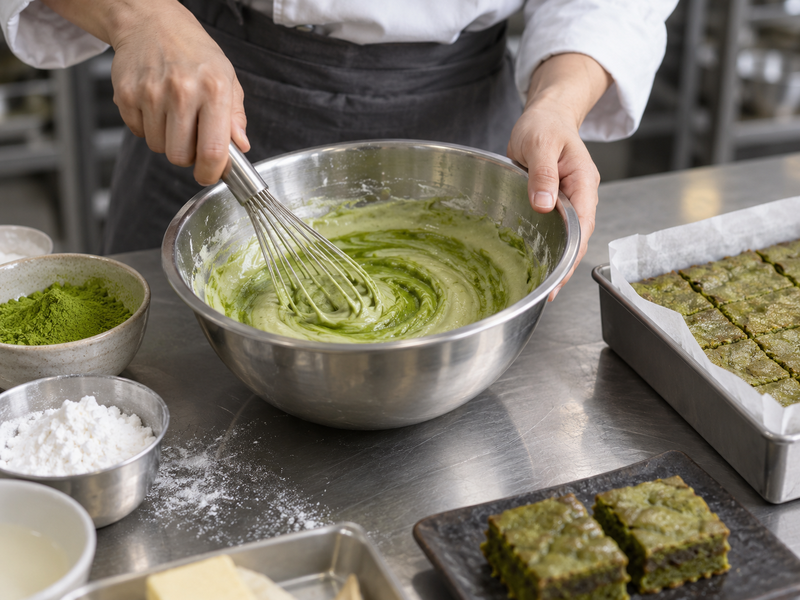
Disperse matcha before it enters a thick batter or mochi mix. A small measured liquid phase can help reveal clumps; the exact method must suit the formula and equipment. Compare top and bottom of the mixing vessel for color and visible specks before deposition. After baking, cut pieces from several pan positions and inspect both layers. Bright green powder in a bowl does not guarantee an attractive baked piece. A candidate should be judged at the planned service point, with the brownie and mochi tasted together.
6. How can you run a fair matcha sample trial?
Compare coded pieces under one process
Request matcha samples for a baked, two-layer dessert and explain which layer will carry the tea. Make coded test pans with the same brownie formula, mochi recipe, pan size, deposited mass and bake sequence. Test the same starting use rate. Let pieces reach the intended cutting and serving conditions before judging color, tea aroma, bitterness and texture. Ask tasters to record what they notice, rather than selecting a preferred supplier name or grade label before tasting.
Then trial any candidate that needs a dose change to meet the target. Compare ingredient cost at the accepted finished result and retain the first equal-dose test as a reference. A stronger tea note may suit an unsauced café bar; a lighter note may work with chocolate glaze. Matcha Village can suggest culinary or other candidates for this use, but the buyer should approve an identified SKU through the actual recipe. Save the sample code, lot, formula revision and a photograph of the accepted cut edge.
| Trial checkpoint | Same for every candidate | Record for decision |
|---|---|---|
| Formula | Both layer recipes and weights | Matcha sample and dose |
| Process | Pan, assembly, bake and rest | Mixing or spread differences |
| Sensory | Plain piece at service point | Tea flavor, sweetness, chew |
| Commercial | Same saleable-yield basis | Cost at accepted flavor |
7. What changes when the recipe moves to batch baking?
Repeat deposition and baking at operating scale
A small pan does not prove that a full sheet will bake or cut the same way. Scale in stages using the intended mixer, deposit tools, pans and oven. Record the time between mixing each layer and filling the final pan. Compare early and late pans for thickness, color and layer position. Check the center and corners of each larger tray after the planned cooling period. If a seam stays soft while the brownie edges dry out, revisit pan depth, filling order or bake process before declaring the matcha unsuitable.
Write visible checkpoints into the line method. Staff can inspect matcha dispersion, deposited masses, pan level and cut quality before more packaging is used. A different trained operator should be able to repeat the approved process. Food safety controls for cooking, cooling and handling need product-specific validation by the business; a home recipe’s time and temperature cannot serve as a commercial rule. Keep reject criteria for broken layers, underfilled pieces and damaged surfaces alongside the production record.
8. How do you calculate cost per saleable piece?
Count the pieces that meet specification
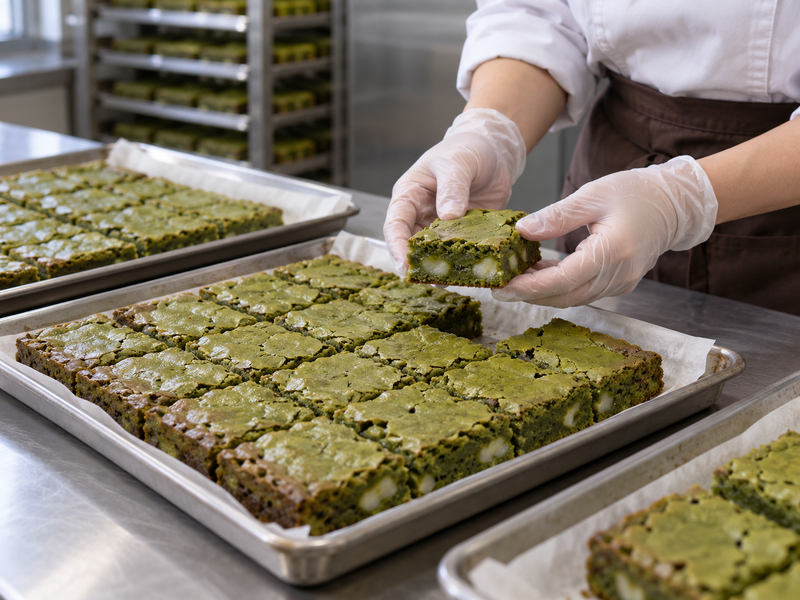
Build a worksheet from actual inputs for brownie, mochi, matcha, topping and packaging. Include production labor and expected losses under the business’s normal costing method. Divide approved batch cost by pieces that can be sold. Theoretical cuts from a tray overstate yield when edges are trimmed, layers separate or pieces break during wrapping. Record those losses by cause so the team can decide whether a formula or a handling step needs work.
Compare matcha candidates at the dose that delivers the approved sensory result. A lower unit price can be offset by a higher use rate or inconsistent color that increases rejects. The same logic applies to prepared mochi versus an in-house layer: ingredient cost alone misses labor and line time. Keep the proposed channel in the calculation. A café piece plated at service, an individually wrapped bar and a retail multipack have different packaging and distribution costs. Treat any margin estimate as the buyer’s own model, not a supplier promise.
| Cost line | Source of number | Common omission |
|---|---|---|
| Matcha | Accepted dose × quoted SKU cost | Dose adjustment after tasting |
| Brownie and mochi | Measured recipe inputs | Batch overuse and waste |
| Packaging | Complete sale format | Inserts and rejected packs |
| Labor | Actual process and packing time | Hand deposition or rework |
| Yield | Released saleable pieces | Edge trim and broken layers |
9. What should packaging and holding trials observe?
Test the complete pack through its sale route
Package the approved piece in its intended wrap, tray or box, then observe it at defined points during the proposed holding route. Look for a mochi surface that sticks to film, condensation, chocolate bloom, crumb drying, color change or a layer that shifts during transport. A clear pack may make small defects more visible than a plated café sample. Assess edge and center pieces separately, and record actual temperature history. Photograph the cut edge at each checkpoint under similar light.
These observations describe eating quality; they do not establish safe shelf life. The operator must validate the finished product under its food safety plan and applicable market requirements. Matcha powder’s dry storage information cannot set a date for a moist brownie-and-mochi dessert. If the product is sold chilled and then warmed, test that full route for texture and approved handling controls. Agree what staff should do when a pack shows separation or an uncertain handling history. Packaging approval belongs with the finished dessert.
10. What belongs in a production and supplier brief?
Tie the approved cut piece to repeat buying
Send the matcha supplier the actual application, target tea strength and color, intended layer placement, expected use rate, market, pack preference and likely order pattern. Request the specification and relevant lot documents for the offered SKU. Discuss sample identity, change notification, packing and delivery terms as part of a quotation. Any certification or destination test requirement needs review for the exact product and scope. Avoid treating a generic grade description as approval for this moist baked dessert.
The internal production brief should identify both layer formulas, ingredient suppliers, deposit weights, mixing order, pan geometry, bake and cooling controls, cut size, sensory reference, pack and release checks. Assign owners for retesting when flour, chocolate, matcha or packaging changes. Matcha Village can help shortlist an ingredient option, while the food business decides whether it performs in the finished piece and fits commercial terms. The next practical step is a coded line trial with recorded texture and saleable yield, followed by a product-specific purchase discussion.
| Brief element | Owner | Evidence before approval |
|---|---|---|
| Finished bite | Product team | Cut-edge photo and sensory notes |
| Two layer formulas | Bakery team | Controlled recipe and batch record |
| Matcha SKU | Purchasing and supplier | Sample code, specification, lot records |
| Pack and holding | Packaging and food safety teams | Product-specific validation |
| Repeat economics | Commercial and purchasing | Saleable-yield worksheet and quote |
FAQ
Q1: Must both layers contain matcha? No. Test matcha in the brownie, the mochi layer and both only if each route supports the intended flavor and cost.
Q2: Can prepared mochi pieces replace an in-house layer? They can be trialed as a different process route. Compare distribution, chew, ingredient records, labor and finished-piece consistency.
Q3: Which matcha grade works best? Select an identified sample in the actual baked product. A grade label alone cannot predict color or flavor after baking and packing.
Q4: Does a good day-one texture establish shelf life? No. The business must validate the complete product and its planned handling conditions.
Q5: What should a matcha sample request include? Share layer placement, base ingredients, target flavor, use-rate range, market, pack format and likely buying pattern.