
A moringa matcha latte can taste muddy when both green powders are added by eye. They have different flavors and wetting behavior, so a buyer needs a defined ratio and a cup-level quality check. This guide covers a practical development sequence for cafés, beverage brands, and private-label teams. The SERP intent reference is Matcha Moringa Latte – Goodies A Volonté; its title and URL establish search context only. The article addresses a blended beverage, while Matcha Village’s moringa-versus-matcha page compares the two ingredients for buying decisions.
1. What should the finished moringa matcha latte taste like?
Set a sensory target before choosing a ratio
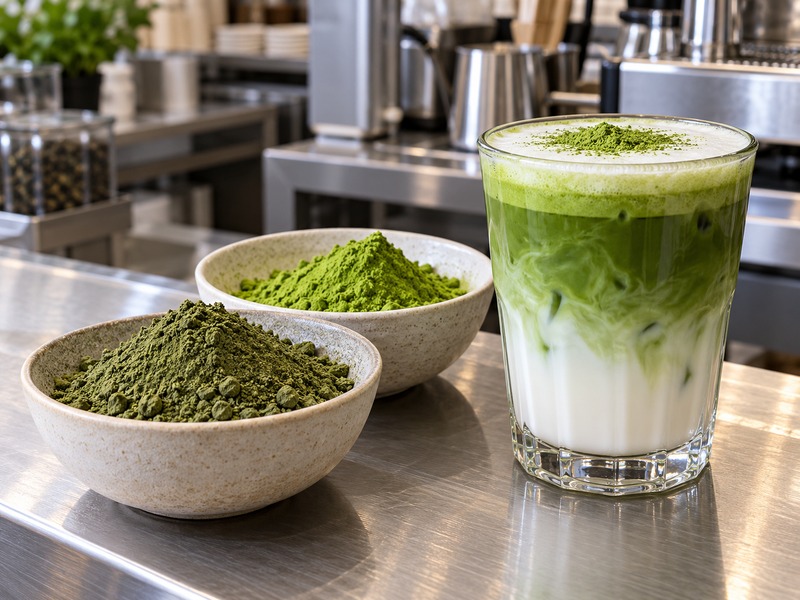
Matcha and moringa can both bring green color and plant notes, but the customer should be able to understand the intended drink after a sip. Decide whether matcha leads with moringa in the background or whether both ingredients should be equally evident. Record the target in plain terms: tea aroma at the start, a controlled vegetal middle, no dusty finish, and a green that remains appealing in milk. This makes supplier samples easier to judge. A drink described only as “green and healthy” gives developers no actionable target and invites unsupported claims. Use a plain milk reference and an unsweetened two-powder sample during development; sweetener can be added after the ingredient balance is clear. Taste the bottom of the cup after it has stood for a normal service interval. A pleasant top sip with a gritty last sip is not a finished café product. For a packaged version, the target also needs to survive its intended shelf life and process.
2. Which moringa ingredient belongs in the buying brief?
Document leaf form and processing
Request a specification that identifies the moringa material and its form, such as leaf powder or an extract with a declared carrier. These forms can differ in color, flavor concentration, particle size, and dispersion. A supplier should provide ingredient and allergen statements, lot traceability, microbiological criteria, contaminant results relevant to the market, and storage guidance. Ask for a representative lot sample rather than a hand-selected demonstration jar. The matcha brief needs comparable detail: grade, sensory range, particle behavior, packaging, and lot information. A buyer should not assume that similar green powders can be handled by the same scoop or the same dispersion process. The product form also affects claims and label wording, which require market-specific review. Moringa has been promoted with many nutrition messages, but this formula guide makes no physiological promise. Its value to a beverage developer is a distinctive flavor and ingredient combination that can be specified and repeated.
| Specification item | Matcha question | Moringa question |
|---|---|---|
| Material identity | Which grade and lot? | Leaf powder or extract? |
| Particle behavior | How readily does it wet? | How much sediment remains? |
| Storage | How is color protected? | How is aroma protected? |
| Label data | What market documents exist? | What carrier or allergen is declared? |
3. How should a developer set the two-powder ratio?
Change one powder at a time
Begin with a matcha latte strength already accepted by the café. Add moringa in small, weighed steps while keeping milk and sweetener fixed. If moringa becomes too prominent, do not correct it by raising both matcha and syrup at once; that obscures the cause and adds cost. Once a moringa level is selected, test a narrow matcha range around the original dose. The table gives one example of a trial composition by mass before serving ice. It is a bench starting point, not a universal recipe or nutritional recommendation. A predispersion water share is included because two dry powders added to milk can create small floating rafts. Weigh a control cup and record its color immediately and after a short stand. If the drink is intended for hot service, trial that separately because warmth changes aroma and the way plant notes are perceived. A dairy and oat version also deserve separate approval.
| Component | Illustrative starting share | Function |
|---|---|---|
| Milk base | 82.0% | Body |
| Water for predispersion | 11.5% | Powder wetting |
| Matcha | 1.2% | Tea flavor and color |
| Moringa ingredient | 0.3% | Secondary plant note |
| Liquid sweetener | 5.0% | Sweetness |
4. What mixing order reduces clumps?
Wet powders under observation
Test each powder in water separately at the chosen temperature. A smooth matcha slurry does not prove that a moringa sample will behave the same way. For a café recipe, wet matcha with measured water and moringa with a separate measured portion, then combine both dispersions before adding milk. Once the ingredients are familiar, the operation may test a joint slurry to shorten service time. Approve the shorter method only if it leaves no dry islands or coarse sediment. A fine screen can help with clumped stored powders, but the cause of clumping still needs review: moisture, long open-pack time, or packaging damage. For a dry mix, test ordinary consumer mixing, not only a high-shear machine. Powders that disperse in a development blender may fail when a café operator uses a spoon. Record mixer speed or whisk method, vessel size, and liquid temperature on the formula sheet. Those are process settings, not optional training details.
5. How can milk and sweetness keep both powders clear?
Avoid masking the ingredient balance
Milk changes the apparent strength of both green ingredients. Dairy may soften rough edges, oat beverages may add cereal sweetness, and soy can introduce its own flavor and foam pattern. Test the exact commercial milk products because formulations vary within each category. Start without extra spice or vanilla so the two-powder ratio can be judged honestly. Then add a measured sweetener dose and check whether tea remains identifiable. A sweetened plant milk may reduce the need for syrup, while an unsweetened base may show more bitter or vegetal notes. The goal is not to make every green note disappear. A menu description promising matcha and moringa should deliver both in a controlled way. If the beverage uses an acidic fruit topping, test it for curdling or color change with the selected milk. Keep that fruit variation as a separate SKU and cost sheet rather than altering the approved base during service.
| Milk base | What to compare | Possible formula adjustment |
|---|---|---|
| Dairy | Tea aroma after milk warming | Matcha dose |
| Oat | Cereal sweetness and body | Syrup dose |
| Soy | Foam and bean aftertaste | Mixing method |
6. Which visual and sediment checks matter most?
Inspect a whole serving
Two green powders can look uniform immediately after mixing while separating into different layers later. Fill a clear cup to a defined mass, photograph it under stable light, and inspect it after a realistic pickup delay. Look for pale foam above a darker liquid, powder flecks on the wall, and a dense deposit at the base. Then taste the final sip. A team should define an acceptable range before launch; otherwise operators may serve cups that look increasingly different across shifts. If a deposit forms, identify which powder contributes by making single-ingredient controls. Changing milk, adding more syrup, or blending harder without that diagnosis can increase cost and leave the original issue unresolved. For an opaque retail pack, the sediment still matters even if it is invisible until the customer opens the product. Shelf-life and process validation are separate requirements for that format. A fresh café standard cannot establish packaged beverage stability by itself.
7. How should a supplier lot change be tested?
Compare against retained references
Keep sealed samples of the approved matcha and moringa lots under the storage conditions specified by suppliers. When a new lot arrives, prepare a reference cup and a new-lot cup with identical milk, water, sweetener, and mixing. Compare powder aroma, final color, tea lead, moringa intensity, sediment, and aftertaste. Log lot codes and approval decisions. If one ingredient changes in a material way, do not adjust both powder doses without recording the reason; the next delivery will become hard to manage. A chain can create a short score sheet with pass/fail observations and a place for comments. A supplier should receive a clear description of a deviation, including photos and retained sample information, rather than a vague report that the latte tastes different. For a large batch blend, sample from more than one part of the mixing run because particle segregation can create cup-to-cup variation even when raw materials pass incoming checks.
| Incoming check | Method | Escalation trigger |
|---|---|---|
| Powder aroma | Compare sealed lot samples | Stale or foreign note |
| Finished color | Same milk and light | Visible shift beyond approval range |
| Dispersion | Same mixing process | New clumps or deposit |
8. What changes for hot, iced, and powdered products?
Approve each channel on its own terms
A hot latte needs a safe milk-warming process and a taste check at service temperature. Its aroma may be more pronounced than the iced version. An iced drink needs a defined liquid mass and separate ice amount, because melting changes concentration during takeaway service. A dry mix must flow during filling, resist caking in its package, and reconstitute with the method printed on the label. It may need a different moringa form or dairy component from a fresh cup. A packaged ready-to-drink product brings further physical and microbiological stability work and a process suitable for its intended shelf life. These products can share a flavor concept without sharing one finished formula. Record channel-specific specifications, packaging, allergen statements, and approval samples. A café pilot should not be presented as proof that a shelf-stable carton will keep its color or remain safe. Product format determines which questions require laboratory and regulatory sign-off.
9. How should the menu and label describe the drink?
State ingredients and sensory character
A concise menu description can say that the drink combines matcha, moringa, milk, and a named sweetener. It may describe a green, vegetal, tea-led flavor if that matches the cup. Avoid general promises about energy, detoxification, immunity, or treatment. Those are health or medical implications that require qualified review and may be unsuitable for the target market. Confirm whether the supplied moringa form and any carriers need special declaration. Confirm the milk or creamer allergens. For a private-label product, nutrition facts and ingredient ordering must come from the final formula and applicable market rules. Staff should be able to explain how the drink tastes without improvising unapproved claims. If a café uses the word “moringa” prominently, its ingredient should be present at a level that meets the company’s own product and sensory brief. A label review is part of launch work, not a task to postpone until packaging is printed.
| Claim area | Safe internal action | Owner |
|---|---|---|
| Ingredient identity | Match label to supplier documents | Quality team |
| Allergens | Review milk and carriers | Regulatory team |
| Health language | Require market-specific substantiation | Legal/regulatory team |
10. What should procurement approve before scaling?
Connect recipe, quality, and cost
Approve a formula by mass, powder specifications, mixing sequence, sensory range, service temperature, and actual packaging. Calculate cost using the doses needed for the accepted cup rather than comparing powder prices alone. Include milk, sweetener, packaging, labor, and likely waste from settled drink or open packs. Ask both powder suppliers for lead times, lot documentation, and substitute options. Any substitution should go through the same cup test. A multi-store trial should record color, sediment, prep time, staff difficulty, and guest returns under ordinary service conditions. Keep a small retained sample from the approved batches for later comparison. A moringa matcha latte is ready for scale when the tea and moringa notes remain deliberate across lots and operators. Matcha Village can provide matcha samples for trials against a buyer’s defined moringa material and milk base.
For distributor or foodservice packs, include a preparation card that states powder mass, liquid mass, mixing order, and intended cup size. A buyer may approve a pleasant development sample, then see weaker cups when customers dilute it by eye. Prepare trial cups using the tools those customers will actually have, such as a small whisk or standard blender. Ask another operator to follow the card without coaching and record any confusing step. That simple transfer check can reveal missing details before a larger pack run is committed.
FAQ
Q1: Can moringa replace matcha in this latte? That would be a different product. This formula needs both ingredients at approved levels.
Q2: Should both powders be mixed dry before service? A dry premix is possible, but test segregation and reconstitution under the intended method.
Q3: Does the drink need syrup? No. An unsweetened version requires its own sensory approval.
Q4: Can the same formula be served hot and iced? Use a common starting point, then approve each temperature and dilution separately.
Q5: May the menu claim health effects? Only after qualified review of the exact claim, formula, evidence, and target market.
Choose the two-powder ratio by cup testing, then control dispersion and lot changes. A clear sensory target gives procurement and café teams a standard they can both use.