
Moringa vs matcha often appears as a comparison of two green powders. A formulator needs a more useful distinction. They come from different plants, have different flavor and caffeine expectations, and can behave differently in a latte, bar, or powder blend. Neither ingredient should be selected because a generic wellness article calls it “better.” A food or beverage brand should define the finished product, test each candidate in that product, and review any nutrition or health language against evidence and destination-market rules.
1. What are the two ingredients botanically?
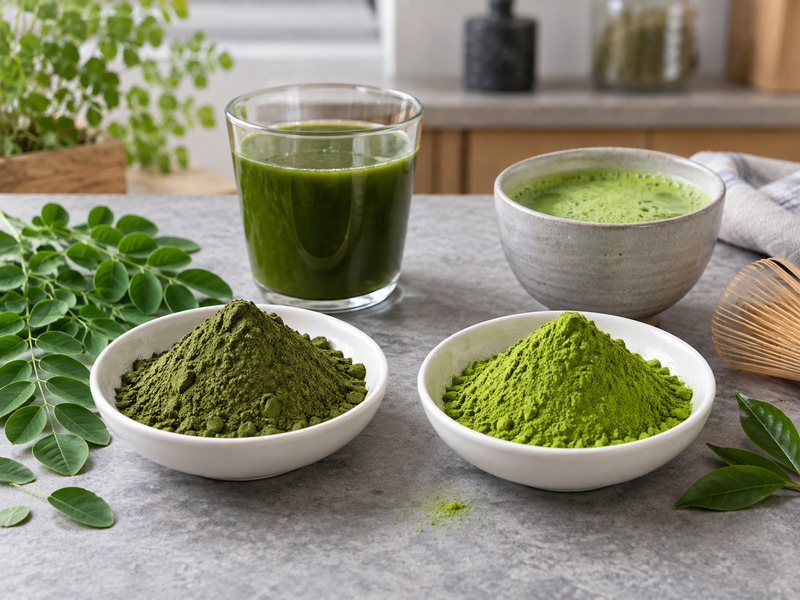
Moringa leaf powder comes from Moringa oleifera, a tree identified by Kew Science. Matcha is a tea product associated with Camellia sinensis and traditionally made by grinding tencha, as described by the Japan Matcha Association. A green color does not make moringa a type of matcha. Product names, ingredient statements, and supplier records should preserve that distinction. A brand selling both can frame them as different botanical ingredients without claiming one replaces the other nutritionally.
Confirm the exact material in the quote
Ask whether the moringa is pure dried leaf powder or a blend containing carriers, flavor, or other botanicals. Ask whether the matcha is pure tea powder or a sweetened latte mix. Request botanical identity, origin, processing description, lot code, and current specification. A buyer who compares pure moringa with a sweetened matcha premix is comparing formats as well as plants. For private label work, keep the technical identity consistent across purchase order, package, and online listing. This simple discipline prevents a marketing team from naming a blended product as though it were a single ingredient.
2. How are the powders made and handled?
Both ingredients involve harvested leaves and drying, but the raw material and processing methods differ. Matcha production has its own cultivation and tea-processing context; moringa powder may be made through different leaf-drying and milling routes. Processing affects particle size, color, aroma, and how a powder wets in liquid. The buyer needs details for the offered product rather than a broad description copied from another supplier. A plant that uses a powder in a dry blend may value flow; a café may care most about smooth dispersion.
Test the input as received
Inspect sealed-pack aroma, visible particles, color under standard light, and any clumping. Measure how much powder remains in a sieve or on mixing equipment. Then prepare each in the target formula. If a moringa supplier offers a fine-milled grade and a coarser grade, test both against the intended mouthfeel; the cheaper one may create sandy sediment. If a matcha product is sold as ready-mix, record every additional ingredient. Store opened powder under the conditions the operation will actually use. A sample from a small foil pouch may not predict performance from a large foodservice bag opened repeatedly.
| Buying detail | Moringa powder | Matcha powder |
|---|---|---|
| Botanical source | Moringa oleifera | Tea plant material |
| Product form | Dried leaf or blend | Tea powder or premix |
| Pilot issue | Leafy texture | Dispersion and tea flavor |
3. Which flavor profile suits the proposed product?
Moringa can bring an herbaceous leafy note; matcha brings a recognizable tea character with its own range of savory, sweet, and bitter impressions. Actual taste varies by lot, processing, and formula. A vanilla latte, citrus drink, protein shake, and baked bar will change the ranking. Do not select from dry-powder aroma alone. The finished product must deliver the flavor that the name and pack promise.
Compare without letting sugar decide
Build a coded trial at the intended serving size. Use the same sweetener level and base within each application, then adjust the ingredient dose to reach a plausible product. Score aroma, body, bitterness, aftertaste, and texture immediately and after the planned hold. If one powder needs considerably more sweetener to be accepted, record that formulation cost and nutrition effect. A panel may prefer matcha in a milk drink and moringa in a savory or fruit matrix. That is a product-positioning result, not a general ranking of the plants. Keep the reference sample so the next lot can be checked against the same target.
4. How should caffeine expectations be handled?
Matcha contributes caffeine; pure moringa leaf is not normally chosen as a caffeine ingredient. But a finished moringa drink may include tea, coffee, or other caffeine sources. The formula, not the green color, decides the claim. A brand should avoid exact caffeine numbers for either product unless the information is supported by product-specific data and the actual serving dose. A retailer’s general comparison chart is insufficient for a package or menu statement.
Review the complete recipe and wording
Map every ingredient that may contribute caffeine. For matcha, use the weighed powder dose and credible lot or product data. For a moringa blend, request the full formulation and check added botanicals. If marketing wants “caffeine-free,” regulatory staff should decide what evidence and wording are permitted in the destination market. If the product is intended as an afternoon alternative, explain the ingredients plainly rather than promising a particular effect on sleep or alertness. Train customer service staff to say what the product contains, not to diagnose what a consumer should drink.
| Product statement | Data question | Risk |
|---|---|---|
| “Contains caffeine” | Which ingredients contribute? | Missing added source |
| Numeric amount | Tested product and dose? | Generic estimate |
| “Caffeine-free” | Formula and claim review? | Unchecked blend ingredient |
5. What can brands say about nutrition or benefits?
Both powders appear in wellness marketing, but a food label needs claims that fit the actual product and market. A few grams of leaf powder do not automatically support a broad benefit statement. Nutrient levels, serving size, processing, and the rest of the formula matter. A sweetened latte mix cannot borrow the properties of pure tea or pure moringa without checking its composition. Avoid disease-treatment language and vague promises of “detox,” “immune repair,” or special energy unless a qualified regulatory review supports the exact claim.
Build a claim-evidence file before artwork
List every proposed front-panel, website, and sales-deck claim. Match it to product-specific composition data and the relevant rule in each destination. Check how much of the powder is present in the stated serving and whether a nutrient claim has a defined threshold. Use a regulatory specialist where needed. If evidence is insufficient, keep the description to botanical identity, flavor, and preparation. This approach can still sell a distinctive drink without presenting a speculative health result. It also prevents a supplier brochure from becoming an unsupported consumer promise. Recheck the file after reformulation or a change in serving size.
6. Which powder works in a café beverage?
A café customer may expect matcha to taste like tea and moringa to taste like a leafy botanical. The bar must decide whether either is mixed into water, milk, fruit, or a blended drink. Wetting, settling, and sweetness balance need real service tests. A barista can make a pleasing sample with a powerful blender that the chain does not own. The recipe should use the ordinary station and a measured dose that staff can repeat.
Run a service trial, not only a tasting
Prepare several consecutive orders with the final cup, milk choice, ice, sweetener, and mixing tool. Record time, clumps, visible sediment, and the final sip after a realistic pickup wait. A coarse moringa powder may remain obvious in a light beverage; a delicate matcha may disappear behind fruit. If staff must pre-mix powder, define how long that mixture can be held and how it is handled safely. A small chain might carry both powders for different menu jobs, but each needs its own recipe card. Do not substitute one for the other when a stockout occurs without a new menu and allergen review.
| Beverage route | Development check | Store check |
|---|---|---|
| Water-based | Flavor and sediment | Mixing speed |
| Milk-based | Powder presence | Sweetness consistency |
| Fruit blend | Balance and color | Equipment cleaning |
7. Which powder works in packaged food?
A nutrition bar, cracker, biscuit, or ice cream creates a different sensory test from a drink. Heat may change color and aroma; fat and sugar may hide flavor; a protein matrix can intensify dry or grassy notes. The powder’s particle size affects texture. Test the ingredient after full manufacturing and after the planned shelf interval. Choosing a powder by a laboratory drink can lead to an expensive mismatch in a baked or frozen product.
Put the ingredient through the intended line
Make a pilot with the actual mixing order, thermal profile, depositor, and package. Compare a control without green powder with one or more inclusion levels. Record color, flavor, texture, reject rate, and any residue on equipment. If the product relies on a green visual, check whether that color survives the route without implying it was achieved solely by the powder if other color ingredients are present. For a product that makes a quantitative nutrition claim, send the final food for the necessary review rather than calculating from raw-ingredient brochures. Cost the dose per accepted finished unit.
8. What sourcing and safety documents should be requested?
Request a current specification, botanical identity, ingredient declaration, origin information, lot traceability, relevant microbiological and contaminant testing, pack details, and shelf-life basis. The exact document set depends on the market, product, and application. A supplier’s certificate may apply to a facility or category rather than the specific lot, so check scope and dates. Matcha Village’s bulk matcha can be screened against a written brief; the buyer still needs the offered lot and current documents.
Check handling after arrival
Inspect seals, labeling, storage instructions, and how opened packs will be managed in the plant or café. Powder that sits open near steam or flavor ingredients may change before its printed date. Establish an incoming comparison against the approved sample and a quarantine route when aroma, color, or flow differs. If buying moringa and matcha from separate suppliers, keep their traceability records separate and prevent mislabeling during batching. Destination-market food rules and any organic or other certification claims should be reviewed by qualified staff before a launch commitment.
| Document | Buyer question | Use |
|---|---|---|
| Specification | Does it match the sample? | Incoming acceptance |
| Lot records | Can supply be traced? | Recall and claims |
| Test records | Are they relevant and current? | Quality review |
9. How should cost and positioning be compared?
Price per kilogram ignores dose, formulation changes, waste, and consumer price. A moringa formula may need more flavor support; a matcha formula may use a more costly powder at a lower inclusion level. Neither result is guaranteed. Cost both finished products at the approved sensory target. Include packaging, labor, shipping, and unsold stock. Then decide which product occupies a clear place in the range. A comparison article can attract search traffic, but a retail range needs distinct reasons for customers to buy each SKU.
Keep the commercial model editable
Write down dose per serving, accepted production yield, pack size, freight, and shelf-life assumptions. If a retailer wants a low-sugar version, formulate and cost that version separately. Do not keep the same margin by quietly lowering powder without another tasting. Pilot demand with accurate names and menu descriptions; record repeat orders rather than relying solely on launch-week curiosity. If two green drinks appeal to the same customer for the same occasion, the business may decide to launch one and keep the other in development. That decision can be revisited when evidence changes.
10. What is a defensible selection decision?
Choose against a specific product brief: expected flavor, caffeine position, preparation route, label, price, and supply needs. Obtain representative samples and test them in finished applications. Review claims and supplier files after sensory work, then run a small commercial pilot. The result may be matcha, moringa, both in distinct roles, or neither in a particular formula. “Better” has meaning only in relation to the product being built.
Preserve what made the pilot succeed
Keep retained samples, approved recipes, sensory forms, process settings, artwork, and commercial assumptions. State what triggers reapproval: new lot, new supplier, changed powder dose, altered base, revised claim, or a new destination market. If later production drifts, compare the finished product with the reference before adjusting the ingredient blindly. For matcha, pure powder options can be considered if the product requires a tea-forward profile. For moringa, request an equally specific offer from its supplier. Each ingredient has to earn its place in the final serving.
| Selection gate | Evidence | Owner |
|---|---|---|
| Ingredient identity | Botanical and composition records | Quality |
| Product fit | Finished-application trial | R&D |
| Claim and supply | Regulatory and cost file | Brand and purchasing |
FAQ
Q1: Is moringa a type of matcha?
No. Moringa comes from Moringa oleifera; matcha is a tea product associated with Camellia sinensis.
Q2: Does moringa have caffeine like matcha?
Pure moringa leaf is not normally used as a caffeine source. Check any finished blend for added tea, coffee, or other sources before making a claim.
Q3: Which powder tastes better in a latte?
That depends on the target flavor and formula. Run coded trials at the intended sweetness and serving temperature.
Q4: Can a brand make health claims from the ingredient name?
No. Claims need support from the actual product, serving size, and destination-market rules.
Q5: What should a buyer compare in supplier offers?
Compare ingredient identity, representative lots, application performance, current documents, pack handling, and cost per accepted serving.