
Matcha latte flavors can fill a café menu quickly, but too many syrups often create slow service, unstable color, and overlapping drinks. Beverage teams need a smaller portfolio built around clear taste roles and shared prep. This guide gives buyers a way to select, test, cost, and retire flavors. The SERP intent reference is 15 flavors that go well with matcha lattes plus food pairings; its title and URL establish the search topic only. This article focuses on a latte-specific product matrix and store execution, unlike Matcha Village’s wider matcha flavor guide.
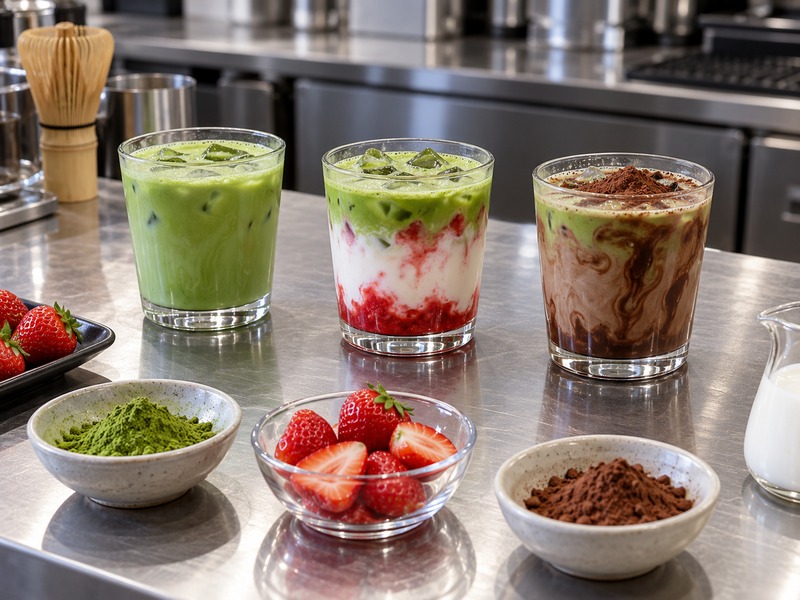
1. What job should each matcha latte flavor do on a menu?
Assign a role before testing syrups
A menu becomes confusing when every flavored latte is sweet, creamy, and visually similar. Give each proposed item a role: an approachable entry drink, a fruit-led seasonal cup, a roasted or nutty option, and perhaps a restrained unsweetened alternative. Then ask whether a new flavor adds a reason to choose the menu rather than another label for the same base. A buyer can map expected service temperature, milk base, sweetness level, garnish, and daypart for each role. This makes overlap visible before ingredients are ordered. Vanilla may serve as a familiar base flavor; citrus can offer a brighter chilled drink; sesame or pistachio may suit a richer profile. Those are development directions, not claims that a particular combination will sell. Keep a plain matcha latte as a control. If a flavored recipe needs so much syrup that tea disappears, decide whether it belongs in the matcha range at all. The product brief should preserve a recognizable tea note.
2. Which flavor families work well with matcha?
Screen by taste and processing behavior
Fruit, floral, spice, nut, roasted, and dessert flavors offer different ways to frame matcha. Fruit purees can add acidity, water, and pulp; they need more compatibility work with dairy than a shelf-stable vanilla syrup. Floral syrups can become perfumed at a small increase in dose. Nut pastes add fat and may be harder to disperse or clean from equipment. Roasted flavors such as sesame or caramel can deepen body while dulling the bright green appearance. A team should screen ingredient form alongside flavor name. Strawberry puree, strawberry syrup, and strawberry cold foam are three different products operationally. Build a short list using consumer fit, ingredient availability, allergen implications, and prep time. Taste each candidate against the same matcha and milk base. Otherwise a better milk or stronger tea dose may be mistaken for a winning flavor. The table below makes the screening questions concrete.
| Flavor family | Typical ingredient form | Screening concern |
|---|---|---|
| Fruit | Puree or syrup | Acidity, pulp, color drift |
| Floral | Infusion or syrup | Overpowering aroma |
| Nut/seed | Paste or syrup | Allergens and separation |
| Roasted | Syrup or paste | Green color loss |
3. How should a café choose matcha for several flavored drinks?
Use one reference powder where possible
A shared matcha grade simplifies training, inventory, and quality control. Select it against the most demanding menu conditions, including milk dilution and the strongest approved syrup. Compare samples by color, aroma, bitterness, and cost per finished cup. A delicate powder may vanish beneath a heavy nut flavor; a harsh one may make a floral latte difficult to balance. One grade may still cover several recipes if doses vary modestly and are documented. If two grades are necessary, make their packs and labels distinct enough to prevent substitution at the bar. Ask suppliers for lot documents and a retained reference sample. A new matcha lot should be tasted in a plain latte and at least one high-flavor recipe before approval. Matcha Village supplies application grades; buyers should submit the intended milk, syrup, service temperature, and price range with their sample request. The powder decision is part of a menu system, not an isolated tea tasting.
4. What tasting matrix prevents random recipe changes?
Change one axis at a time
Set a plain control latte by mass. For each flavor, compare a low, medium, and high inclusion while matcha and milk remain fixed. Record tea visibility, flavor balance, sweetness, color, sediment, and aftertaste. After choosing a flavor level, adjust matcha or milk only if the product brief requires it. Testing multiple variables at once may produce a pleasant drink without showing why it works. Include both immediate tasting and a realistic takeaway delay. A syrup can look uniform at pour and collect at the base later. A fruit layer may separate by design, but the menu should tell the customer what to expect. Use a simple score sheet with a short free-text note; numerical scores alone hide useful judgments such as “tea disappears after a later sip.” A cross-functional panel should include a bar operator and a buyer, because taste and service cost must both pass. Archive rejected versions to avoid repeating them later.
| Trial axis | Keep fixed | Record |
|---|---|---|
| Flavor dose | Tea, milk, cup size | Balance and sweetness |
| Milk base | Tea, flavor dose | Body and separation |
| Service temperature | Approved formula | Aroma and dilution |
5. How do ingredient forms affect texture and color?
Look beyond the flavor name
A clear syrup can sweeten evenly but may thin the drink. A fruit puree adds solids and visible color while increasing the chance of sediment or a dairy interaction. A nut paste may give body but cling to blender walls and create allergen cleaning requirements. A spice powder can settle if it is not prewetted. A cold foam moves flavor to the opening sip while leaving the base latte less altered; its collapse and lid clearance need separate checks. Developers should record each ingredient’s supplier code, viscosity or particle behavior, sugar content, acidity where relevant, and handling instructions. Make the final cup with the equipment stores actually own. A laboratory high-shear mixer may conceal a dispersibility problem that a pump, spoon, or shaker exposes. Check color under the store’s lighting and in the actual cup material. An appetizing green in a clear development beaker can look muted through a tinted takeaway cup.
6. Which flavor combinations create distinct products?
Pair ingredients with separate jobs
A combination is useful when its components contribute different sensations rather than competing for attention. A berry puree can bring acidity and visual contrast while vanilla rounds its sharp edge. A floral note may work at a lower level beside honey, which supplies sweetness and body. A roasted seed paste can deepen texture while a modest salt adjustment sharpens perception. Those examples need bench testing; they are not universal recipes. Avoid naming a drink after two ingredients when only one is noticeable. In the trial sheet, write the job of each component and ask whether removing it changes the cup in a meaningful way. Keep allergen and cost impact visible. A pistachio and white-chocolate concept might appeal on paper but add nut and dairy complexity plus high ingredient cost. A simpler single-flavor latte may give the customer a clearer choice and the store a faster build. The table offers a practical way to assess layered concepts.
| Combination | Intended roles | Risk to test |
|---|---|---|
| Berry + vanilla | Fruit acidity + soft finish | Dairy stability |
| Honey + lavender | Sweetness + aroma | Floral dominance |
| Sesame + light salt | Roasted body + definition | Color and allergen handling |
7. How should a menu handle hot and iced versions?
Approve temperature as part of the SKU
A syrup that smells vivid in warm milk may seem faint over ice. Fruit puree can appear bright in a cold layered cup but look dull or unstable when heated. A nut paste may blend readily in warm liquid and leave streaks when cold. Make separate tasting and process approvals for hot and iced service. Weigh the liquid portion and the serving ice independently so dilution does not quietly change the tea dose. A café may choose to offer a flavor only cold or only hot; that is a valid menu decision, not a failure. Limit the number of temperature permutations if staff need different pumps, pitchers, or allergen controls for each. For delivery, check the drink after a realistic transport delay and with the planned lid. Foam and layers may no longer match the counter photograph. The menu image should depict the product customers can normally receive, not an unrepeatable development cup.
8. What operational limits should shape the portfolio?
Count station touches and storage slots
Each new flavor adds more than an ingredient cost. It may require another pump, refrigerated space, a puree bottle with a short open-pack life, an allergen cleaning step, or a blender rinse. Map the full service sequence for every candidate and time it under ordinary staffing. A flavor that tastes excellent yet doubles preparation time may belong on a limited menu rather than the permanent board. Check whether distributors can supply the ingredient through the same regions and whether substitutions are preapproved. Build recipes around a small shared base where possible, but keep toppings or fruit preparations distinct when they genuinely define the product. A chain should track waste by ingredient and store, not only total beverage sales. Slow-moving specialty syrups can erase margin through disposal. Keep a clear rule for retiring a flavor after a trial, including who decides and what sales, waste, and quality information they review.
| Operational question | Evidence to gather | Decision |
|---|---|---|
| Can staff repeat it? | Time and remake rate | Permanent or limited item |
| Can supply cover stores? | Lead time and pack size | Regional or national launch |
| Does it earn its place? | Sales, margin, waste | Keep, revise, or retire |
9. How can pricing reflect real portion cost?
Cost the accepted cup, not the sample spoon
Calculate a serving with weighed matcha, milk, flavor component, garnish, cup, lid, ice, and expected open-pack loss. Include additional labor or cleaning where a puree or nut paste changes the station flow. Compare margins after the actual approved flavor dose; a premium syrup that needs a small dose may cost less per cup than a cheaper weak product. A flavored latte can carry a higher menu price if it offers a distinct result, but a pricing decision should consider local customer response and channel fees. Keep seasonal promotions out of the base cost sheet. For packaged beverages, add packaging, processing, testing, and distribution to the model. A beverage brand should also review whether color and flavor survive the intended shelf life before assigning a commercial margin. A café tasting cup made fresh cannot answer that question. Document assumptions so a future buyer can update prices without rewriting the whole menu plan.
| Portion cost line | Measure | Watch for |
|---|---|---|
| Matcha | Grams per approved cup | Extra dose needed under strong flavors |
| Flavor component | Grams plus open-pack loss | Short shelf life and weak dosing |
| Service | Packaging and station time | Extra cleaning for pastes or purees |
10. What should be in a flavor launch and review plan?
Approve a small, testable range
Launch with a plain control latte and a few flavored drinks that serve different menu roles. Give each one a mass formula, supplier codes, build order, allergen notes, acceptable visual standard, and a defined service temperature. Train staff using the actual store equipment and ask for photos and defect notes during the opening period. Review sales alongside waste, remake reasons, guest comments, and ingredient availability. A high-selling drink that consistently separates may still need reformulation. Keep a decision log so the team knows why one flavor stayed and another left. A useful matcha latte flavors program offers clear choices and consistent tea character while protecting bar capacity. Matcha Village can provide matcha samples for a buyer’s shared base formula and its shortlisted flavor trials. Use the same tea lot during comparison so flavor decisions remain interpretable.
Review flavors on a schedule rather than responding to a single busy weekend. A launch period should capture sales by size, milk base, and store, together with waste and remake reasons. Compare drinks in similar locations and seasons where possible. A low-volume item may still serve a useful menu role, while a high-volume item may consume too much labor or cause frequent defects. Keep the plain latte as a quality reference during these reviews. It shows whether a complaint concerns the flavor component or the underlying matcha and milk system.
FAQ
Q1: How many flavored matcha lattes should a new café launch? Start with a small set of distinct roles and expand only after service and sales review.
Q2: Can one matcha grade work across the menu? Often, if it passes a plain latte and the strongest approved flavor formula.
Q3: Are syrup and puree interchangeable? No. They differ in water, solids, acidity, texture, handling, and cost.
Q4: Should every flavor have hot and iced versions? Only when each version passes separate taste and service checks.
Q5: When should a flavor be retired? Review weak sales with waste, remakes, supply problems, and margin before deciding.
A manageable flavor range comes from deliberate product roles and measured cups. Keep the tea visible in taste, check how each added ingredient behaves, and remove drinks that burden the bar without earning their place.