
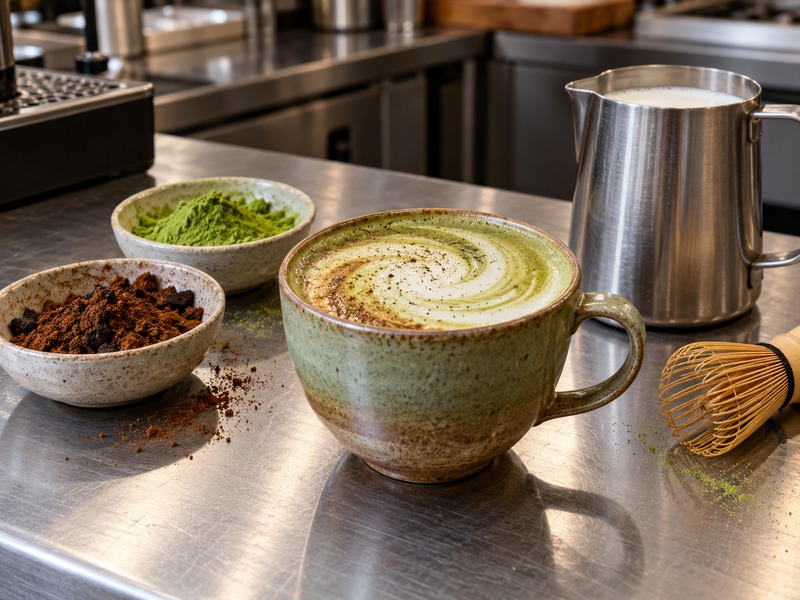
A chaga matcha latte combines two strong-tasting powders, so a café or packaged-drink team needs to control bitterness, earthy notes, sediment, and labeling before launch. This article treats chaga as a food ingredient and makes no health-performance promise. The SERP intent reference is Matcha Ecstacy Chaga Latte; its title and URL indicate search interest, not evidence for a claim. This chaga-specific beverage brief differs from Matcha Village’s general mushroom-matcha blend article by focusing on one declared fungal ingredient and its behavior in milk.
1. What product is meant by a chaga matcha latte?
Write a product definition before requesting samples
The name can describe a prepared café latte, a dry powder mix, or a packaged ready-to-drink beverage. Each format demands a different technical plan. A café can disperse ingredients and serve promptly. A powder brand needs an acceptable dry blend, moisture control, and clear reconstitution directions. A bottled beverage needs a separate validated process for stability and safety. Specify the channel, serving size, milk base, sweetness, and whether a visible chaga note is part of the intended taste. Also specify what “chaga” means in the buying document: the ingredient form, declared species identity, producing material, extraction or processing method, carrier, and any standardized components supplied by the manufacturer. A vague request for mushroom powder invites samples that cannot be compared fairly. The working product brief should state whether a slight brown cast is acceptable. Chaga may shift the green appearance consumers expect from matcha, particularly in a pale milk base.
2. Which chaga documents should a buyer request?
Verify identity and commercial suitability
Ask the supplier for a current specification, ingredient statement, lot traceability, processing description, allergen statement, microbiological limits, and contaminant testing relevant to the intended market. A certificate of analysis belongs to the actual lot used for development, not only a brochure sample. If the chaga ingredient is an extract, ask about extraction solvent, dry carrier, and reconstitution behavior. If it is a milled whole-material powder, inspect particle size and sediment under the actual drink process. These forms should not be treated as interchangeable just because both packages say chaga. Claims and permitted uses vary by country, product category, and exact ingredient; a regulatory reviewer should examine the target market before packaging or advertising is approved. The same review applies to any organic or other certification statement. Marketing copy should describe the ingredients and flavor without implying a medical benefit that the business cannot support.
| Supplier document | Question it answers | When to update |
|---|---|---|
| Identity and process sheet | Which material is supplied? | On supplier or process change |
| Lot certificate of analysis | Did this batch meet specifications? | Each received lot |
| Ingredient/allergen statement | What must be declared? | Before label approval |
| Storage guidance | How is quality protected? | At formulation and scale-up |
3. How should matcha and chaga be balanced?
Keep the flavor trial small and structured
Build a matrix rather than changing every ingredient after each tasting. Fix milk and sweetness, then make one series at a constant matcha dose with stepped chaga levels. Once the earthy note is acceptable, run a matcha dose series. This order clarifies which ingredient drives astringency or bitterness. An illustrative bench formula can start with milk, separate water for powder wetting, matcha, chaga ingredient, and a liquid sweetener. Actual chaga inclusion depends on ingredient form and supplier guidance, so do not publish a universal dose from a single trial. Record each sample by mass and document appearance immediately and after a realistic service delay. A high chaga load may reduce perceived green color, while a low load may not support the product name sensorially. Decide which tradeoff suits the buyer’s channel. A chain selling a green latte may choose a different target from a dark, spiced winter drink.
| Trial stage | Hold constant | Change only |
|---|---|---|
| Chaga screen | Milk, matcha, sweetener | Chaga inclusion |
| Matcha screen | Chosen chaga, milk, sweetener | Matcha inclusion |
| Sweetness screen | Both powders and milk | Sweetener dose |
4. What mixing sequence limits grit and sediment?
Test each powder in water before combining
Prepare a matcha slurry and a chaga dispersion separately so the developer can see each ingredient’s behavior. Matcha may form dry lumps if added over milk; chaga powder or extract may leave its own visible particles. Combine only after both have wetted. A whisk, frother, high-shear mixer, or blender can be compared, but equipment choice must match the product format. A café method can tolerate a short predispersion step; a single-serve sachet must wet through normal consumer stirring. If a supplier claims its chaga extract is instant, verify that in the selected milk at the intended temperature. Observe the bottom of a clear cup after a normal pickup delay and taste the last sip. Sediment that does not bother a developer in one sip may be unacceptable at the end of a drink. Do not hide severe settling under extra foam. Adjust ingredient form or process and recheck the declared composition.
5. Which milk and sweetener choices protect the flavor?
Evaluate the full cup
Dairy, oat, and soy bases bring different background flavors and body. A creamy base may soften earthy notes, but it can also mute matcha. Sweetener selection matters because high sweetness may conceal early off-notes yet leave a heavy finish. Compare the exact brands and specifications that procurement can supply consistently. Vanilla or spice can be useful if it fits the intended menu, but each additional ingredient complicates cost, labeling, and quality control. Keep a plain reference cup alongside any flavored version, so a new syrup does not mask a change in chaga quality. For a hot drink, evaluate aroma after warming the milk through the normal service process. For an iced drink, assess ice dilution and separation after takeaway handling. If using a plant milk, confirm allergen and ingredient information from the supplier. The target is a balanced beverage that customers can identify as matcha with a deliberate chaga note, not an undifferentiated sweet brown drink.
| Base choice | Likely development question | Check in final cup |
|---|---|---|
| Dairy milk | How much does creaminess mute tea? | Matcha finish after warming |
| Oat beverage | Does inherent sweetness alter syrup dose? | Body and cereal aftertaste |
| Soy beverage | Does its protein change foam? | Separation and beany note |
6. How should quality be checked across raw-material lots?
Retain a reference from approval
Approve a matcha lot and a chaga lot against the same formula, then retain labeled samples under defined storage. When a new lot arrives, compare color, aroma, dispersion, sediment, and finished-cup taste side by side. This check is stronger than inspecting powder color alone because the milk and sweetener alter perception. Record lot codes in the bench sheet and in production or store records. For a dry mix, inspect powder flow and visible segregation after handling; two particles with different density can separate during packing and shipping. For a café, confirm that open containers remain dry and sealed between uses. Supplier documents should state storage conditions and shelf life; the buyer should set its own open-pack rules in line with local food-safety practice. If a finished drink drifts, check milk, syrup, water, and mixing equipment before attributing the shift to either powder.
7. What changes when the concept moves to a dry premix?
Design reconstitution from the start
A dry chaga matcha latte mix may contain milk powder or a plant-based creamer, sweetener, matcha, and chaga ingredient. The product must disperse under the conditions printed on its package. A laboratory blender can make a poor consumer mix look good, so test with ordinary spoon stirring and a café machine if both channels matter. Check caking after storage and whether one powder settles during blending or sachet filling. Moisture barrier packaging and seal quality deserve attention because matcha color and dry flow can deteriorate when powder takes up water. Ingredient order on the label, allergen disclosure, and nutrition work must reflect the final composition. A pilot pack should be sampled from the start, middle, and end of a fill run to detect segregation. Include retained samples for later color and flavor comparison. The packaged concept is a separate development project, not a scaled version of a fresh café recipe.
| Format | Main technical risk | Approval test |
|---|---|---|
| Fresh café cup | Sediment during handoff | Clear-cup hold and last sip |
| Dry sachet | Caking or blend separation | Pack sampling and spoon mixing |
| Ready-to-drink | Physical and microbial stability | Validated process and shelf-life work |
8. Which claims should marketing avoid without review?
Separate recipe language from health language
Ingredient names and sensory descriptions can tell a useful story: earthy chaga, grassy matcha, creamy milk, and a chosen level of sweetness. Statements about immunity, disease, energy, detoxification, or other physiological effects require market-specific legal and scientific review. A recipe blog or supplier brochure does not validate a packaged-product claim. The same caution applies to caffeine and nutrition claims, which depend on the actual portion and labelling rules in the destination market. Ask the regulatory team to review the exact chaga material, permitted use, label copy, and advertising before public release. Keep an internal claims register linking each approved phrase to its evidence and market. For cafés, train staff to describe flavor and ingredients rather than improvising medical promises at the counter. This restraint also keeps the menu readable: the buyer can decide from a clear ingredient description rather than an unsupported wellness pitch.
9. How should portion economics be calculated?
Use delivered ingredients and actual yield
Cost a serving with the matcha grade and chaga form selected through sensory trials. Include milk, sweetener, any spice, packaging, and preparation loss. An extract may cost more per kilogram yet require less powder to reach a chosen flavor; a coarse powder may be inexpensive but leave sediment and remakes. Compare finished-cup cost at the approved sensory target. If the drink uses an unusual ingredient, account for minimum order quantities, lead time, and shelf life after opening. A chain should also estimate whether its shops can store and measure chaga safely without slowing the bar. Dry premix economics include blending, sachets, testing, and packaging losses. Do not infer a retail margin from ingredient cost alone. Run a simple sensitivity check for a supplier change and a volume increase, then decide whether the product belongs on a seasonal menu or a standing line.
| Cost line | Quantity basis | Hidden cost to examine |
|---|---|---|
| Matcha and chaga | Approved grams per cup | Remakes from sediment |
| Milk and sweetener | Served mass | Open-pack disposal |
| Special handling | Labor and equipment time | Extra predispersion vessel |
10. What should a buyer approve before launch?
Keep a signed formula and a usable supply plan
Approve the exact chaga specification, matcha grade, milk base, sweetener, serving mass, mixing sequence, sensory standard, and label language. Ask the suppliers for lot documents and realistic replenishment terms. Run a small store or pilot-production trial using the actual equipment and staff. Capture color, sediment, taste, prep time, and waste on one form; follow up on deviations before placing a wider order. Maintain a substitute plan for each critical ingredient, but require a bench equivalence check before substitution. A chaga matcha latte has a credible B2B proposition when the drink remains identifiable and repeatable and when the label describes what is present. Matcha Village can provide matcha application samples for trials against a buyer’s documented chaga ingredient and milk base.
If the buyer plans export, review the exact chaga material in every destination market before a commercial label is printed. A supplier statement prepared for one country may not answer another market’s questions about ingredient status or allowed claims. Keep the regulatory review linked to the ingredient code and production lot family. A later switch from milled powder to extract can change both the formula and the legal review, even if the menu name stays the same. The technical team should flag that switch before sales material or artwork is updated.
FAQ
Q1: Is chaga powder interchangeable with chaga extract? No. Processing, carriers, flavor strength, and sediment can differ; compare supplier specifications.
Q2: Can a café make this as an unsweetened drink? Yes, but approve that formula separately because earthy and bitter notes become more visible.
Q3: Does chaga provide a proven health benefit in this latte? The article makes no such claim; any proposed claim needs qualified review for the target market.
Q4: Can the café formula become a dry sachet? It can be a starting brief, but powder flow, mixing, packaging, and label work need separate validation.
Q5: What signals a poor lot match? Unexpected color, off-aroma, weak dispersion, excess sediment, or a changed finished-cup taste.
Start with ingredient identity and a fixed cup standard. If the drink meets that standard across lots and stores, procurement can scale the formula without asking marketing to invent a health story.