
Fall matcha drinks can pull a café into buying several syrups, purées, toppings, and cups for a short season. The result may taste more like spice and sugar than tea. A better seasonal plan begins with one dependable matcha base and a small number of measured variations that the bar can serve during a rush. Test flavor, ticket time, and waste before printing the menu. Our matcha beverage formulation guide offers a useful framework for comparing new ingredients in finished drinks.
Contents
- 1. What should a fall feature add to the menu?
- 2. Which matcha base should the season use?
- 3. How can pumpkin stay in balance?
- 4. How much spice is enough?
- 5. Should maple or another sweetener be used?
- 6. Which milk choices need separate testing?
- 7. Does a cold-foam version earn its place?
- 8. How should hot and iced recipes differ?
- 9. What does a seasonal drink cost?
- 10. How should the launch be reviewed?
1. What should a fall feature add to the menu?
Choose a customer occasion
A fall feature can give regular customers a warmer flavor, introduce matcha to guests who order seasonal coffee drinks, or provide a limited treat. Decide which purpose matters before creating three nearly identical lattes. Write a brief for the intended cup: recognizable matcha, one leading seasonal note, specified sweetness, and a service time the bar can manage. If the drink is meant for both hot and iced orders, treat those as two versions to test, not an automatic toggle.
Observe the existing menu. If the shop already sells vanilla matcha, a fall drink should do more than add a cinnamon dusting and a new name. A small feature set may include one pumpkin-forward latte and one simpler maple or spice variation, but only if each earns distinct orders. DōMatcha’s fall drink ideas show several flavor directions; a café still needs to measure portions, ingredient overlap, and guest response in its own market.
2. Which matcha base should the season use?
Start from an approved house recipe
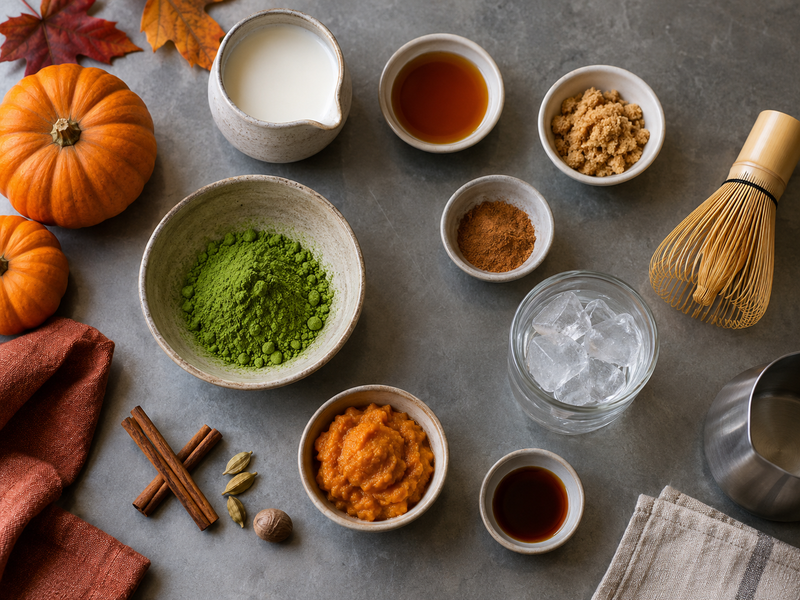
Prepare the café’s standard matcha latte before adding pumpkin, spice, or maple. It gives the team a control cup for judging whether seasonal ingredients improve the drink or simply hide weak tea. Use the same weighed matcha mass, mixing method, and cup in early trials. If a seasonal ingredient makes matcha disappear, first test a smaller flavor portion. Increasing tea can raise cost and caffeine contribution, so it should be an intentional, documented change.
Check whether the base is pure matcha with separate sweetener or a premixed latte powder. A sweetened blend may leave little room for maple syrup or sweetened pumpkin sauce. Read its ingredient statement before writing “less sweet” or “unsweetened” menu options. Select the powder by tasting the finished seasonal drink, and keep the lot and product record with the recipe. A new matcha shipment should be compared with the approved cup before a high-volume feature begins.
| Base variable | Hold fixed in trial | Reason |
|---|---|---|
| Matcha mass | Same powder lot | Compare flavor additions |
| Milk volume | Same cup and fill | Avoid dilution drift |
| Sweetener | Known baseline | Reveal added sweetness |
3. How can pumpkin stay in balance?
Identify which pumpkin product is used
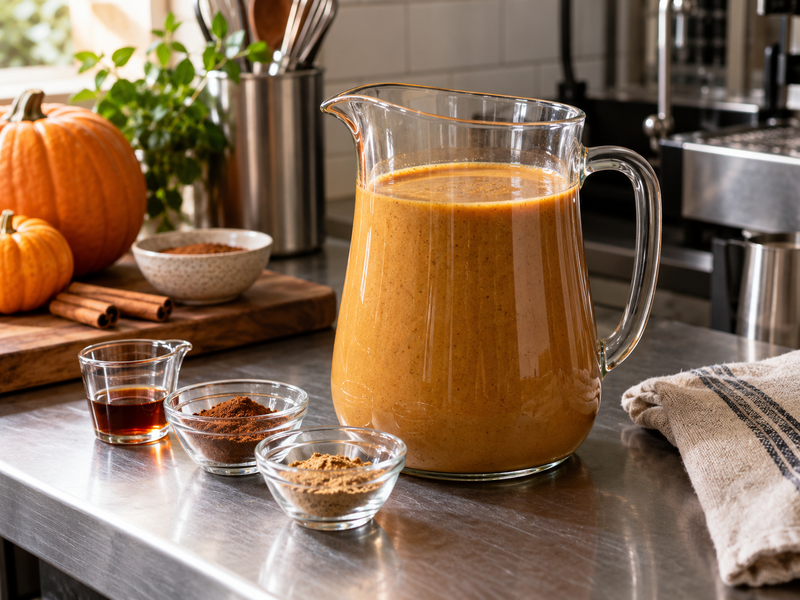
Plain pumpkin purée, sweetened sauce, and flavored syrup are different recipe inputs. Taste and read the exact product before setting a portion. A purée adds body and may settle; a syrup may add most of the drink’s sweetness without much pumpkin texture. Prepare a few measured versions against one matcha base, then taste after stirring and after a short wait. If the cup leaves pumpkin sediment, the mix sequence or product may need to change.
Try the drink in the real serving cup and test the steam or cold build separately. Pumpkin can make a hot latte feel heavy and an iced latte difficult to stir. Staff need a defined way to mix the ingredient evenly rather than squeezing an uncertain ribbon around the cup. If the feature requires a perishable prepared sauce, have the food-safety lead set its handling and labeling plan. A product that tastes good in a tasting spoon but slows every ticket may be better used in a smaller, simpler feature.
4. How much spice is enough?
Treat spice as a recipe variable
Cinnamon, ginger, cardamom, clove, and nutmeg can support matcha, but a mixed spice dose that looks tiny can dominate aroma. Start with one spice direction, then test measured increments with pumpkin or milk held constant. Taste the fully stirred drink, because spice may collect at the top and give a misleading first sip. A powder sprinkled on a foam cap is a different experience from spice dispersed through a syrup or base.
Record the exact spice product and delivery method. A house mix should have weighed component proportions and a batch code; a commercial syrup needs its ingredient statement and calibrated pump. Avoid changing both spice level and sweetness in one trial. Ask tasters whether they still identify tea after the spice note. If not, reduce the spice or simplify the flavor. The seasonal cup should have its own character without forcing matcha to serve only as a green color behind familiar autumn aromatics.
| Spice approach | Benefit | Check |
|---|---|---|
| Dry powder | Simple inventory | Floating particles |
| House syrup | Even mixing | Batch consistency |
| Commercial sauce | Fast service | Sweetness and label |
5. Should maple or another sweetener be used?
Count sweetness from every component
Maple can provide a recognizable fall note, but it is still a sweetener in the cup. Pumpkin sauce, sweetened milk, premixed matcha, and cold foam may already contribute sugar. Build an unsweetened control where possible, then add the selected maple product in measured amounts. Taste immediately and after the drink cools or ice starts melting. A syrup that seems subtle in a hot sample may feel more prominent in a cold version with a larger portion.
Specify whether the café uses pure maple syrup, a maple-flavored syrup, or another product. Those are not equal by volume, price, or ingredient statement. Do not let staff use a generic “two pumps” without checking pump output and the approved bottle. Offer a reduced-sweetness option only if the complete recipe can be adjusted as promised. A seasonal drink whose sweetness can be described accurately is easier to sell to repeat guests than one that changes with every shift.
6. Which milk choices need separate testing?
Taste the seasonal recipe in each offered milk
Dairy and plant-based milks can change body, sweetness, and how spice or pumpkin appears. Use the same matcha and flavor portions to compare the finished drinks, then approve any necessary alternate build. Do not assume a substitution that works in a plain latte remains balanced when a thick purée is added. Check steamed texture in hot drinks and separation in iced drinks. Record the exact brand and product so a later procurement switch triggers review.
Ingredient and cross-contact questions also matter. A plant-based milk order may still be made with shared pitchers or tools unless the shop has a separate controlled process. Train staff to explain the actual handling method rather than promising that a drink is suitable for everyone with an allergy. If a milk option repeatedly weakens matcha, either write a tested adjustment or limit the seasonal feature to the combinations that work. A short menu with dependable options can be better than a long list of unpredictable swaps.
| Milk trial | Flavor check | Service check |
|---|---|---|
| Dairy | Matcha against pumpkin | Steam and foam |
| Oat or other plant milk | Added sweetness | Separation and handling |
| Alternate product | Same recipe version | Supply substitution |
7. Does a cold-foam version earn its place?
Test the whole drink and extra work
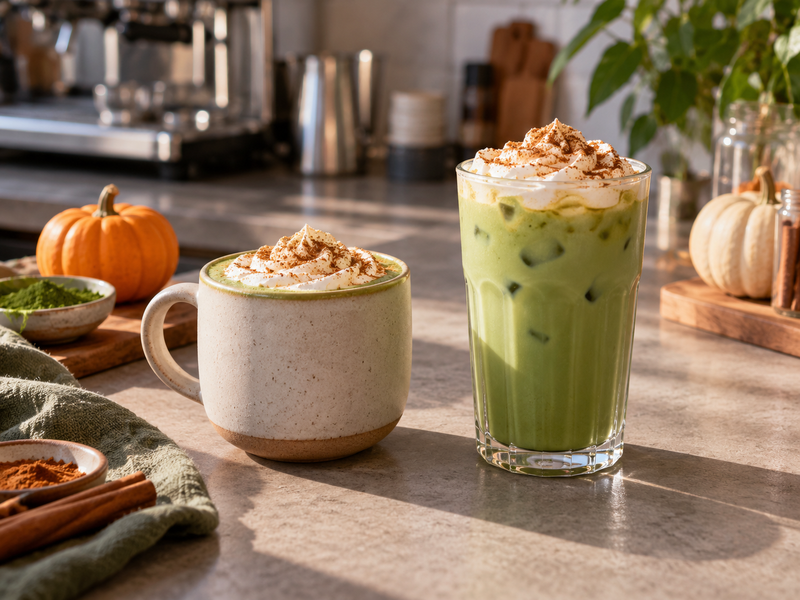
A spiced matcha cold foam can make an iced seasonal drink distinctive, but it adds another ingredient batch, tool, portion, and chilled handling route. Compare an iced latte with and without the topping. Taste through the lid or straw the guest will use and after a few minutes of travel. The foam may dissolve into the drink, increase sweetness, or block the intended tea flavor. A photo of the first pour does not settle the decision.
Measure saleable topping yield from a real batch, including leftover foam and oversized portions. Time preparation and cleanup during a mock rush. Have the site lead set storage and discard rules for the complete foam under local requirements. The FDA Food Code is a model reference in the United States, not a universal limit for this recipe. If the topping cannot remain attractive and manageable during service, use a simpler finish or a limited-hours feature.
8. How should hot and iced recipes differ?
Write two saleable builds
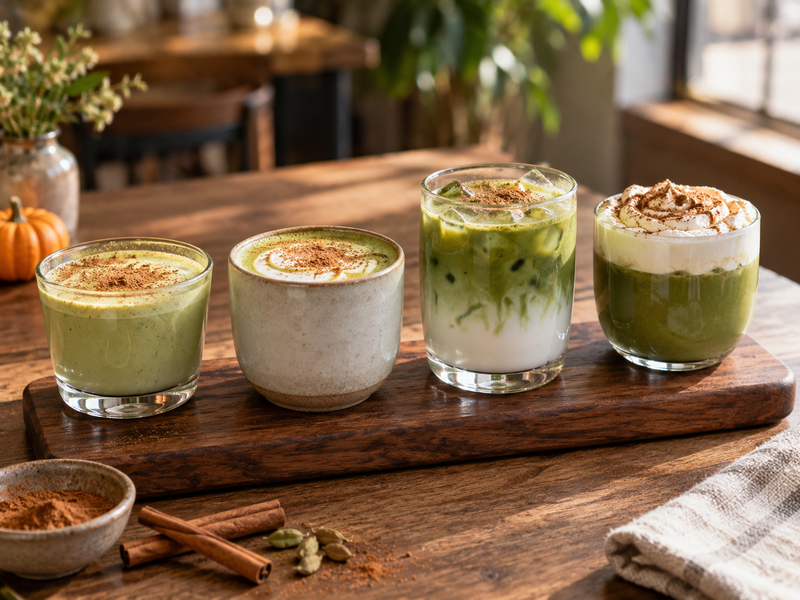
The same named drink can need different assembly. A hot latte mixes matcha, flavor, and steamed milk; an iced version must account for cold milk, measured ice, and slower syrup dispersion. Test the iced cup immediately and after melting begins. A matcha base made with too much warm water can make the drink dilute quickly; too little water may leave dry tea. Define base water, milk, flavor, and ice separately for each size.
Make sure the point-of-sale system prints the correct hot or iced recipe. If a feature is offered only one way because the other does not taste good, say that on the menu instead of forcing a weak variation. Check cup headspace when a foam or garnish is included. Cost the versions separately, because ice, packaging, and topping portions differ. The goal is a recognizable seasonal flavor in both, not identical measurements imposed on two different drinking experiences.
| Build | Main variable | Passing test |
|---|---|---|
| Hot | Milk and spice integration | Balanced after stir |
| Iced | Ice dilution and syrup | Balanced after wait |
| Iced with foam | Topping stability | Flavor through lid |
9. What does a seasonal drink cost?
Include short-season waste
Calculate matcha, milk, pumpkin product, spice, syrup, topping, cup, and lid per saleable serving. Add the portion lost in prep and the leftover seasonal ingredient likely to remain after the promotion. A syrup bottle used only for one drink can cost more per cup than its nominal portion suggests when demand is low. Record package sizes and the number of drinks needed to use them within the approved handling and quality window.
Time a series of orders and include extra tool cleaning or foam preparation in the operating review. If two seasonal drinks share most ingredients, purchasing becomes simpler, but they still need to taste distinct. Track sales and waste by version, not only total fall promotion revenue. A drink with attractive gross sales may be difficult to justify if it generates many remakes or unused purée. Use current supplier prices and actual yielded portions to decide the selling price.
10. How should the launch be reviewed?
Run a small, measurable feature
Train each shift with recipe cards, ingredient products, hot and iced builds, and passing-cup photos. Start with a short trial rather than a permanent seasonal lineup. Watch ticket times, customer questions, sweetness modifications, waste, and repeat orders. A frequent “less sweet” request may mean the house portion is too high; a frequent “can I taste the matcha?” comment suggests the spice or pumpkin is crowding the base. Log these as specific observations tied to recipe versions.
Review the feature after the first busy periods and again before placing a large repeat order. Change one factor at a time and retaste the complete cup. Keep the approved formula, sales, and waste notes for the next season, while checking that any new powder or syrup still produces the same drink. A fall feature should make the café feel attentive to the season without making the bar less reliable. Retire the version that adds complexity without clear guest value.
| Launch signal | Likely question | Next test |
|---|---|---|
| Weak tea comments | Too much flavoring? | Reduce pumpkin or spice |
| Slow tickets | Too many steps? | Simplify finish |
| High leftovers | Too many variants? | Narrow menu or batch |
FAQ
Q1. How many fall matcha drinks should a café offer? Begin with a small set of distinct, tested drinks that fit the station and ingredient plan. Expand only from observed demand.
Q2. Can pumpkin spice be added to an existing latte? Yes, but measure the pumpkin and spice, test the full cup, and confirm the preparation remains workable at peak time.
Q3. Does a fall drink need cold foam? No. Use it only if the topping improves the drink enough to justify its batch handling, cost, and ticket time.
Q4. Should hot and iced versions share one recipe? They can share ingredients, but ice and temperature call for separate builds and taste checks.
Q5. Can the menu say the drink is unsweetened? Only if every ingredient supports that wording. Sweetened purées, syrups, and latte mixes can make “no added syrup” a more accurate option.
Keep matcha visible through the season
The useful fall feature pairs a recognizable tea base with a measured seasonal note. Test pumpkin, spice, milk, and foam in the served cup, then weigh the cost and work they add. Customers should leave remembering both the fall flavor and the matcha they ordered.