
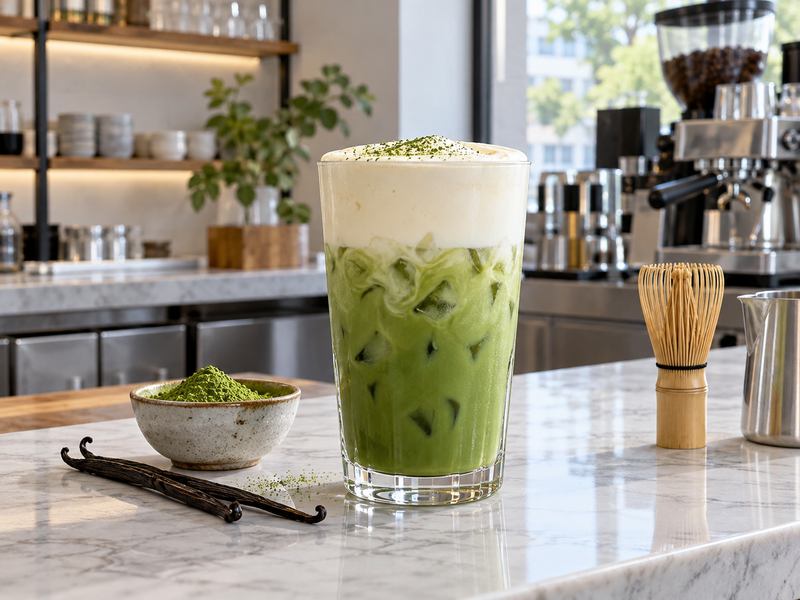
Matcha with vanilla cold foam can make an ordinary iced drink feel like a signature item. Yet the pale topping can collapse, run down the cup, or bury the tea flavor before a customer takes the first sip. A café buyer needs a recipe that baristas can repeat and a cost model that includes the topping’s labor and waste. This guide covers ingredient selection, build order, foam performance, and launch checks from a commercial matcha supplier’s application perspective.
1. What is matcha with vanilla cold foam?
It is usually an iced matcha beverage finished with a separately aerated, vanilla-flavored foam. The lower drink may contain water and milk, a plant-based base, or only water; the upper layer may contain dairy cream, milk, a non-dairy preparation, vanilla syrup, or another flavor source. Those choices affect sweetness, texture, allergens, and how the drink looks after several minutes. The foam is part of the formula, not a decorative afterthought.
Define the product in one sentence before buying ingredients. Is the goal a tea-forward iced latte with a light vanilla top, or a dessert drink with a thick sweet cap? A clear answer sets the matcha dose and foam volume. The words “cold foam” do not specify a standard composition or holding time. Write down the actual ingredients, target serving size, cup, ice quantity, and time from assembly to customer handoff. That simple brief prevents a supplier, recipe developer, and store trainer from each imagining a different drink.
2. Which matcha works beneath a sweet foam?
Choose matcha in the finished drink, not from a dry-powder color chart. Vanilla and dairy can soften the tea’s bitter edge, but they can also hide its aroma. Compare candidates at equal grams per cup with the same milk, ice, and foam. A green powder that tastes impressive in hot water may seem faint below a rich topping. Another grade with a more assertive tea note might perform better at a lower dose. Record sensory results after the foam has mixed into the drink as well as before stirring.
Ask for a specified sample lot, storage guidance, and documents relevant to your market. Check dispersion in the actual service method: whisked slurry, shaker, or electric mixer. Visible clumps at the bottom will not be fixed by an attractive foam cap. Keep one approved matcha sample as a reference for later lots. If a supplier proposes a blend or pre-sweetened powder, obtain the full ingredient statement; added sugar or milk powder changes the calculation for the vanilla topping.
| Check | Prepare consistently | Decision |
|---|---|---|
| Tea strength | Same grams and drink base | Does matcha survive the foam? |
| Color | Same cup, ice, and light | Is the green visible at sale? |
| Dispersion | Same mixing tool and time | Are there clumps or grit? |
| Lot repeat | Same recipe with a second lot | Is the range acceptable? |
3. What belongs in a testable vanilla cold foam formula?
Start with a weighed base, a measured vanilla source, and a fixed mixing method. A dairy foam can use milk or cream in proportions chosen for the desired body; a non-dairy foam needs its own formulation and test. Vanilla syrup adds liquid and sugar, while vanilla flavor or extract can deliver a different sweetness profile. Keep these inputs distinct on the recipe sheet. “Two pumps of vanilla” tells the development team little unless the pump’s output and syrup composition are known.
Test foam volume and texture after aeration. It should pour or spoon onto the matcha at the intended speed and stay pleasant after a few sips. A very stiff cap can make the first sip entirely foam. A loose one may vanish before a delivery customer opens the lid. Make three batches, weigh the portion placed on each cup, and record the unused remainder. If the foam requires a long preparation step, that labor belongs in the recipe decision. The target is a consistent top layer that suits the tea, not the highest foam possible.
4. What assembly order protects the layers?
Prepare matcha as a measured slurry before adding the cold base when the chosen powder and equipment call for it. Mix until the cup is free of visible dry specks. Add the planned ice and milk or water, leaving space for a measured foam portion. Aerate the topping separately, then add it with a controlled pour or spoon. The exact order can change with cup shape and foam density, so develop it in the final serving cup rather than a laboratory beaker.
Have a second barista follow the written build card without coaching. If the foam sinks immediately, review density, temperature, and pour technique before blaming matcha quality. If the green base washes up through the foam, check turbulence from late ice additions or an overly forceful pour. Photograph the drink at handoff and after a realistic wait. Finally, stir it and taste it. A layered drink is still one beverage, and customers often mix it after the first look.
| Step | Measure | Failure to watch |
|---|---|---|
| Matcha slurry | Powder, water, mixing time | Clumps and weak tea |
| Drink base | Milk or water and ice | Variable dilution |
| Foam | Base, vanilla, aeration time | Overly stiff or loose texture |
| Finish | Foam grams and cup headspace | Overflow or sinking |
5. How long should the foam remain attractive?
Set a performance target based on the sales channel. A drink handed across a counter can be judged after a few minutes; a delivery drink needs a longer test that includes transport. Foam can lose air, blend into the matcha, or leave an uneven ring on the cup. Ice melt changes the lower layer at the same time. Neither a beautiful assembly photo nor a quick spoon test establishes performance after a normal customer wait.
Run a timed hold with the actual lid, straw opening, and cup. Record appearance at assembly and at intervals chosen for your service model. Taste both the foam and mixed drink at the end. If a topping degrades quickly, reduce the stated handoff window, adjust the formula, or reserve the item for in-store service. Do not claim a fixed holding time across stores without testing their equipment and ingredients. Temperature of the foam base, cleanliness of the aeration tool, and portion size can all affect what the customer receives.
6. How do dairy and non-dairy choices change the brief?
Dairy cream and milk can give the topping body, but they bring a milk allergen and storage requirements. A plant-based foam may suit a different customer group, yet its protein and fat system may aerate or separate differently. Substituting one base for another in the same build card is a new recipe trial. The lower matcha drink matters too: oat, dairy, and other bases alter sweetness, green color, and tea intensity.
Ask the ingredient vendor for the complete statement of any prepared foam base and vanilla syrup. A product described as “non-dairy” can still require careful allergen review depending on its ingredients and market. Have qualified staff check menu and packaged-product language. For stores, use the manufacturer’s handling instructions and the chain’s food safety plan for opened packs and prepared foam. Do not guess a holding period from the unopened pack date. Keep separate tools or cleaning steps if the operation needs to manage allergen cross-contact.
| Base | Test in the cup | Operational check |
|---|---|---|
| Dairy milk or cream | Body and matcha visibility | Milk allergen and cold handling |
| Plant-based foam | Aeration and separation | Full ingredient and allergen review |
| Prepared foam mix | Sweetness and vanilla intensity | Composition and change control |
| Whipped service topping | First sip and mixing | Dispense consistency |
7. What makes the drink practical during a rush?
Time the full process, including retrieval, aeration, assembly, cleaning, and resetting the station. A countertop trial with every ingredient already measured will understate real service time. Decide whether staff can prepare a foam batch ahead under approved handling rules or whether each cup needs its own mix. If a batch is used, note how texture changes from the first portion to the last. Some foams need gentle remixing; others lose structure when repeatedly handled.
Run a mock rush with two baristas and at least ten orders. Include one drink made with a permitted milk substitution and one less-sweet request if your menu allows them. Count remakes, spills, and cups with uneven foam. If substitutions produce poor results, create separate recipes or limit the option rather than asking staff to improvise. A build card should state grams or calibrated pump volumes, equipment, foam portion, and the approved cup. It should also say what to do when the foam fails, so a weak topping is not hidden under extra vanilla syrup.
8. How should buyers price matcha with vanilla cold foam?
Cost the finished sellable cup. Include matcha at the accepted dose, base milk, foam ingredients, vanilla, ice, cup, lid, and labor. Add waste from unused foam or a bottle that expires before the store can use it. A topping may look inexpensive per liter but become costly when staff make more than the shift sells. If the product is positioned as a premium signature drink, compare its margin with the standard iced matcha already on the menu.
Measure portion drift. Weigh ten servings of foam from the intended tool and ten matcha portions from the bar’s usual scoop or dispenser. Inconsistent topping size changes both margin and the customer’s first sip. If a supplier offers a lower-cost matcha, repeat the sensory test at equal finished-drink strength. Needing more grams to remain noticeable under the vanilla cap can erase the quote advantage. Put price, dose, labor, and waste on one sheet so purchasing and operations discuss the same product.
| Line | Measure | Common omission |
|---|---|---|
| Matcha | Grams per approved cup | Overportioning |
| Vanilla foam | Ingredients and grams served | Unused prepared foam |
| Base and pack | Milk, ice, cup, lid | Substitution cost |
| Labor | Prep, service, cleaning | Remakes during rush |
9. Can the same recipe work for delivery or retail?
Test delivery as a separate channel. Lids can flatten foam, transport can mix the layers, and a long wait lets ice dilute the matcha. Run the intended route in the actual cup and packaging, then assess appearance and taste at the customer’s likely opening time. A separate sealed foam container may preserve presentation, but it adds packaging, instructions, and cost. If the drink does not travel well, sell it for immediate service rather than promising the same experience in every channel.
A packaged beverage with a foam layer is a different development project. Processing, microbiological safety, shelf life, physical stability, and packaging need validation for the exact product. A café foam that survives twenty minutes cannot be assumed suitable for days in retail distribution. Decide whether a commercial pack should be a uniform vanilla-matcha drink, a shake-to-mix product, or a separate topping kit. Each has different manufacturing and labeling requirements. Keep the café recipe as a sensory brief, not a finished factory specification.
10. What should the launch pilot prove?
Approve the drink only after a pilot shows consistent tea flavor, acceptable foam appearance at handoff, manageable preparation time, and the target per-cup margin. Select stores with the real equipment and expected order volume. Give staff a measured build card and the exact ingredient packs. Photograph a sample of finished drinks under ordinary counter light; polished marketing lighting can hide a weak layer. Record waste and customer comments about sweetness, vanilla, and matcha strength.
Keep the accepted matcha lot, foam recipe, approved cup, and menu description under one version. A change in milk, vanilla syrup, or matcha grade should trigger a focused retest. The menu should identify dairy and other allergens accurately, without unsupported wellness claims. Matcha Village can discuss matcha samples for the chosen base and service method; buyers should bring the finished-drink brief to that conversation. Matcha with vanilla cold foam earns a place on the menu when the cup served on a busy shift matches the one approved in development.
| Gate | Evidence | Owner |
|---|---|---|
| Flavor | Blind cup trial after mixing | Product development |
| Foam | Timed hold in final cup | Operations |
| Economics | Per-cup cost and waste | Purchasing / finance |
| Customer copy | Approved ingredient and allergen language | Brand / regulatory |
Frequently asked questions
Q1: Is vanilla cold foam the same as whipped cream?
No. The composition and aeration method can differ; specify the actual topping used.
Q2: Will a sweet foam hide weak matcha?
It may. Taste matcha at the finished serving dose before and after the layers mix.
Q3: Can stores prepare cold foam ahead?
Only under their approved handling rules, with texture and waste checked through the service period.
Q4: Does a plant-based foam use the same recipe?
Usually it needs a separate trial for aeration, flavor, storage, and allergen wording.
Q5: Is the café recipe ready for bottled retail sale?
No. A packaged product needs its own process, safety, stability, and shelf-life validation.
Send your drink base, foam formula, and target serving size to Matcha Village when requesting matcha samples. Test the candidate powder in the complete drink before committing to a menu launch.