
Matcha with coconut milk is a green tea drink made with a coconut-based liquid instead of dairy milk. That description hides a purchasing decision: canned coconut milk, light coconut milk and ready-to-drink coconut beverages behave differently in a cup. A recipe developed with one can separate, taste thin or foam poorly when a shop switches to another. This guide helps café buyers specify the actual base, compare tea in it and approve a service method for the finished drink.
1. What does matcha with coconut milk need from the base?
Name the base precisely
“Coconut milk” can refer to a rich canned culinary product, a light canned version or a refrigerated or shelf-stable beverage formulated for drinking. Their fat, solids, sweetness and stabilizer systems vary by brand. A high-fat canned product can give body and a strong coconut note; a diluted beverage may pour more like milk and taste less coconut-forward. The café should choose a stock code and write that product into the recipe, rather than letting each store interpret the category. The label and menu description should match what goes into the cup. If the team intends a coconut beverage, do not develop with canned milk simply because the can was convenient in a test kitchen.
Define the customer promise
Decide whether coconut should be a prominent flavor or mainly a dairy-free style base for matcha. A rich coconut note can obscure delicate tea, while a thin drink can make matcha taste more astringent. Set a target for body, tea aroma, sweetness, color and visible uniformity in the proposed serving. Taste a fresh cup and one after the expected customer wait. If the menu uses “dairy-free” or “vegan,” check the complete ingredient set and the operation’s claim rules, including toppings and shared equipment. The coconut carton alone cannot support a claim about the whole drink.
2. Which menu format suits this base?
Separate iced and hot decisions
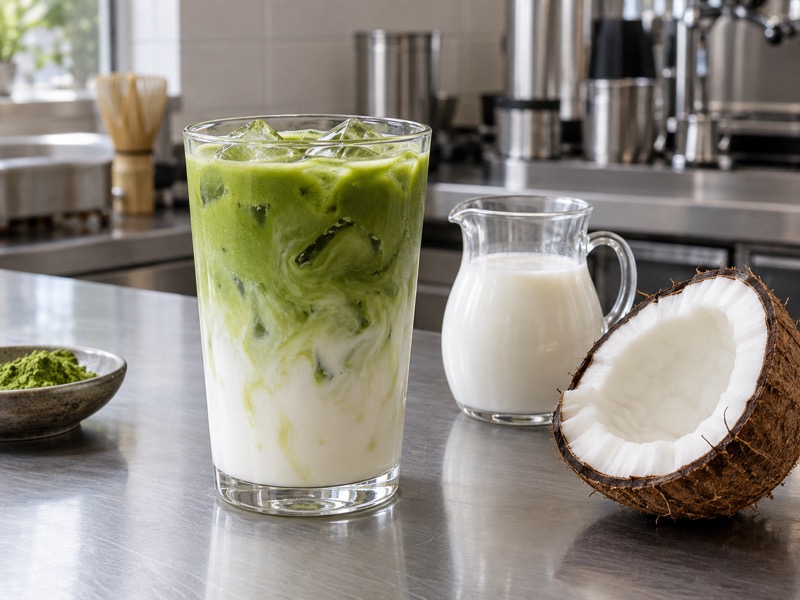
An iced coconut matcha latte may show a pale coconut layer below green tea; a hot version may call for a fully integrated texture. The same base can behave differently when chilled or heated. Rich fat can feel heavy when cold, while a beverage built for steaming may foam more predictably. Test only the formats the café plans to sell, using the exact cups, lids and equipment. A layered iced sample should also be tasted after stirring, since most customers will mix the components. Record the flavor after ice melt and the appearance after a takeaway walk.
Do not infer packaged stability
A made-to-order café cup and a sealed packaged drink require different development. For café service, the business needs an approved handling plan for opened coconut product, matcha dispersion and finished cups. A ready-to-drink product requires process and shelf-life validation for the exact formula and pack. The fact that a shelf-stable coconut beverage keeps unopened does not confer that status on a mixed matcha drink. If delivery is offered, test the finished cup after its expected route, especially where rich coconut fat or matcha sediment might collect.
| Intended offer | Base decision | Observation |
|---|---|---|
| Iced café cup | Selected coconut product and ice | Separation after carrying |
| Hot café cup | Product suited to hot service | Foam, body and tea aroma |
| Packaged product | Formula and process designed for pack | Validated shelf life |
3. How should buyers compare coconut bases?
Read more than the front label
Collect ingredient lists and nutrition panels for each candidate. Compare fat, sugar and any added emulsifiers or stabilizers, while remembering that the label is only a starting point. A canned full-fat product can separate in the container and may need a controlled mixing step before portioning. A light canned product has less fat but may still bring substantial coconut flavor. A ready-to-drink carton can include water, sugar or other ingredients chosen for pouring and frothing. Trial the products at equal finished drink volume with the same matcha lot. Check their taste and texture instead of treating one category as interchangeable with another.
Sample tea in the chosen base
Coconut fat and aroma can change the apparent strength of matcha. Compare identified tea lots at equal weighed mass in each shortlisted coconut product. Taste at handoff and after a normal wait; the cup may shift as fat rises or powder settles. A tea that is excellent in water may disappear in a rich coconut base. A strongly flavored matcha may overwhelm a light carton. Select the pairing that gives the intended tea note without relying on excess sweetener. Keep one variable fixed per trial, otherwise a better result cannot be traced to tea or coconut.
4. What should the formula sheet specify?
Measure coconut product and tea by weight
List matcha, dispersion liquid, coconut product, any added water or sweetener and ice in grams per serving. Record the intended finished yield and cup size. Specify the exact coconut supplier code and whether staff must shake or mix the pack before dispensing. A “splash” of coconut milk can change fat content, cost and appearance from cup to cup. A spoonful of matcha has the same problem. If a recipe uses both canned coconut milk and water to reach a desired body, write both quantities. If a drinking carton is used, avoid silently adding the water from a can-based trial.
Document variants rather than ad hoc swaps
A sweetened coconut beverage may need less syrup than an unsweetened one. A barista-grade carton may foam differently from a standard drinking product. Create a separate approved card for any variant the café wants to sell, including hot and iced versions. Log tea lot, coconut lot, operator and observations for each trial. Record the first and last sips as well as the mixed cup, particularly if the design is layered. Update purchasing and training together when a base changes; the cup can alter even when the menu title stays the same.
| Recipe field | Required detail | Customer effect |
|---|---|---|
| Coconut product | Exact code and grams | Body, flavor and fat level |
| Matcha dispersion | Tea and liquid grams, method | Smoothness and tea strength |
| Sweetener and ice | Product and grams | Sweetness and dilution |
5. How should staff combine matcha and coconut?
Prepare each component deliberately
Disperse matcha with a measured liquid using the café’s approved whisk or mixer before adding it to a full cold cup. Check for dry clumps and powder caught under the rim. Handle the coconut product according to its supplier instructions. A canned product that separates in storage may need consistent mixing before portioning; scooping from an unmixed can can give early cups more fat than later ones. A carton may need shaking, but the required method should come from the selected product and a café trial. Keep utensils and measuring vessels suited to the volume of normal service.
Control temperature and sequence
For an iced cup, decide whether coconut goes over ice before the tea or whether the two are blended. A layer may photograph well and still leave a weak top sip or a heavy coconut bottom. For a hot cup, check the coconut product’s behavior with the actual heating equipment and stop at the café’s approved serving method. Avoid assuming that a dairy steaming routine produces the same foam. Watch a barista make several cups in succession, then taste them without knowing the order. That exposes pack mixing and measuring variation that a single supervised sample may hide.
6. Which defects reveal a poor pairing?
Look at top, middle and bottom
A ring of fat near the surface, watery liquid below ice or green sediment at the bottom all affect how a guest experiences the drink. Taste the cup at handoff and after the planned wait. Compare the top and bottom before stirring, then assess the stirred drink. If coconut aroma masks tea, test a lighter-flavored base or a different tea before adding more powder. If the cup feels thin, examine the product choice and dilution rather than assuming sweetener will restore body. A gritty finish may come from matcha clumps even when the coconut looks smooth.
Make defects traceable
Record product code, lot, opening condition, build order and operator for each failed trial. Visible separation after a short wait may point to the coconut base, to a poorly mixed can or to the way matcha was added. Poor foam may reflect the product’s composition or the heating and frothing method. Compare one change at a time. Do not make a food-safety judgment from a visual ring; route safety and storage questions through the qualified process. A small, specific defect log is more useful than a general verdict that “coconut milk does not work.”
| Defect | Inspect | Trial comparison |
|---|---|---|
| Fat ring | Product and pack mixing | Same tea in another base |
| Weak tea aroma | Coconut intensity | Fixed base with two tea lots |
| Sediment | Matcha dispersion | Bottom sip after normal wait |
7. How should opened product and cups be held?
Follow the selected supplier instructions
Unopened shelf-stable cartons, refrigerated beverages and opened cans have different handling requirements. Use the exact supplier’s label and the café’s approved food-safety plan for opening, transfer, cold holding and discard. Label any transferred coconut product so staff can trace its source and opening time under that plan. If a prepared matcha base is used, give it its own handling rules. A home recipe’s serving method provides no validated commercial hold time. Do not extend an open-pack life because another brand with a similar name carries a longer label statement.
Check the customer window
Make the final cup with normal ice, lid and carry conditions. Inspect flavor, fat distribution, tea sediment and temperature after the time a guest would reasonably wait. If the product is sold through delivery, include that route in the test. Foam can collapse and a layered cup can mix during transport; this may be acceptable if the flavor still meets the product brief. A packaged version needs a separate, validated process and shelf-life study. The café should not label a sealed trial bottle for retail based on a fresh-cup tasting alone.
8. What claims and supplier records need review?
Check the complete ingredient chain
Keep the matcha lot and specification with the coconut product declaration, sweetener, toppings and any other components. A “dairy-free” description may be affected by a milk-containing foam or shared equipment practice. A vegan claim may depend on the full recipe and local claim rules. Have the business’s responsible team review those statements before publication. The product file should also identify whether the coconut base contains added sugar, since customers may assume all coconut milk is unsweetened. Keep front-of-house wording specific: “made with [the selected coconut beverage]” is clearer than a vague promise of creaminess.
Control purchasing changes
If a distributor substitutes a light can for a full-fat can, the drink can change in body and fat separation. If a café replaces a carton with a new brand, even a similar nutrition panel may hide a different flavor or foam response. Require a finished-cup trial before approving a new stock code. Save the old and new labels, tasting notes and recipe version. The linked home recipe below gives consumer context for an iced coconut matcha drink, but a buyer should build specifications from the actual commercial ingredients, equipment and service route.
| Record | Keep with the recipe | Review when |
|---|---|---|
| Coconut declaration | Fat, sugar and ingredient details | Brand or format changes |
| Matcha lot record | Identified approved tea | New lot or supplier |
| Claim review | Full recipe and service context | Topping or base changes |
9. What drives unit cost and waste?
Cost the exact coconut format
Price a full serving using the chosen coconut stock code, not a generic “plant milk” average. Include matcha, sweetener, water, ice, cup, lid and any topping. For cans, account for transfer, mixing, unused remainder and discard under the approved plan. For cartons, count the actual open-pack loss and any foam waste. A richer product may use fewer grams but cost more per unit; a thinner drink may need a larger pour. Compare cost only after sensory quality and the formula have been fixed.
Measure labor and remakes
Time the build with ordinary staff. A can that requires frequent remixing may create slower service than a ready-to-drink carton. A base that separates in the cup can cause remakes even when its purchase price looks attractive. Track waste and returns for several shifts in a limited trial. If a dairy-free variant requires separate tools or a special topping, include that operational work. Review actual usage against the written gram weights after launch; variance can reveal overpouring or an impractical recipe card.
10. What pilot would support a launch?
Run the selected stock through real shifts
Choose a coconut product and matcha lot, then issue a draft card. Have several baristas make cups with the normal equipment during a representative shift. Include a newly opened pack and a pack used later under the approved handling plan, especially for a product prone to separation. Weigh a few servings and compare them with the target. Taste blind at handoff and after carrying. Examine foam if the hot drink is on the menu, and inspect the bottom of an iced cup for tea sediment. Record build time and any steps staff skip.
Approve the product customers can receive
Set pass criteria for recognizable matcha, intended coconut flavor, acceptable texture, repeatable appearance and accurate claims. If the drink passes only when a development cook shakes every can for an unusually long time, adjust the method or choose a different base. Release the accepted stock code, recipe, staff instruction and menu description as one version. Recheck after the first reorder to catch a lot or supplier shift. Buyers comparing tea profiles can use the matcha flavors guide before testing candidates in the approved coconut base.
| Pilot sample | Record | Release question |
|---|---|---|
| Early and later pack use | Body and fat distribution | Does portioning stay consistent? |
| Iced or hot cup | Flavor, sediment or foam | Does the format meet its brief? |
| Peak service build | Weights, time and remakes | Can staff repeat it? |
FAQ
Q1: Are canned coconut milk and coconut beverage interchangeable? No. Their fat, solids, sweetness and handling can differ. Specify and test the exact product.
Q2: Does higher fat always make better matcha? No. Rich coconut can add body but may hide tea or separate. Judge the full drink.
Q3: Can a café call the drink dairy-free? Review the entire recipe, toppings and service practice under the business’s claim rules before using that description.
Q4: Why is there green sediment at the bottom? Matcha is suspended powder. Check dispersion, dose and the intended customer wait in the selected coconut base.
Q5: Can an iced café formula be bottled? A sealed product needs separate processing and shelf-life validation for its exact formulation and pack.
Reference: Iced Coconut Matcha Latte. This home drink is category background, not an approved café formula.