
A matcha chai latte brings powdered green tea into a milk drink flavored with chai spices and, sometimes, brewed black tea. The attractive idea has a practical trap: a strong sweet concentrate can erase matcha while a heavy matcha dose can make the finish bitter. Café developers need to name the chai component, balance both tea and spice, and write separate hot and iced instructions. The guidance below describes a development process rather than a tested recipe.
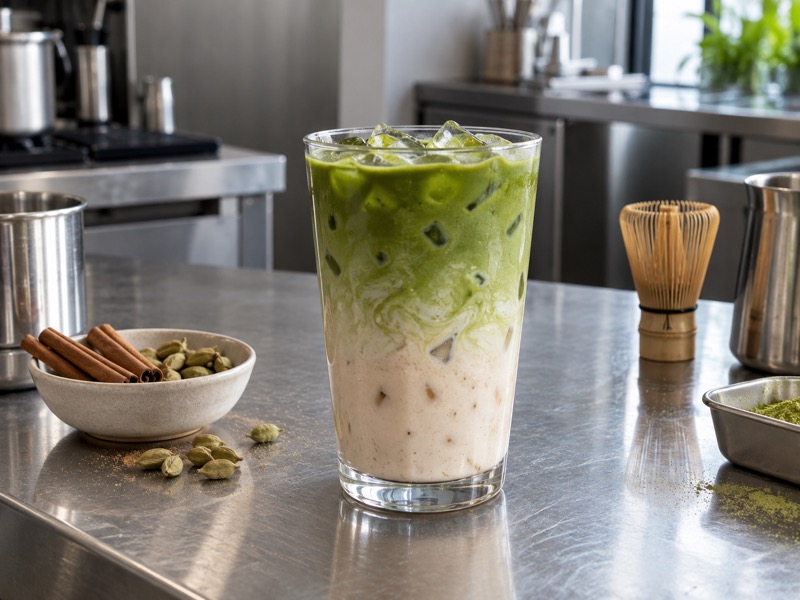
1. What exactly does the café mean by chai?
Identify the chai component
“Chai” on a purchase order can mean brewed black tea with spices, a sweet tea concentrate, a spice-only syrup or a powder. These products do different jobs in a matcha chai latte. A tea concentrate adds another tea flavor and may add caffeine. A spice syrup may supply sweetness and fragrance without brewed tea. A powder may add body and sediment. Read the ingredient declaration and write a plain description for staff and customers. If the menu calls the drink “two teas,” confirm that the chai component actually contains tea. If it does not, describe matcha with chai-style spices instead of asking customers to infer a second brewed tea.
Set a flavor hierarchy
Decide whether the drink should open with matcha and finish with spice, or lead with warm spice while keeping matcha visible. Either choice can work; a vague “balanced” target cannot guide a supplier comparison. Name the target spices if they matter. Cinnamon and cardamom can read sweet and aromatic, while ginger or pepper can bring heat. Clove can dominate a small cup quickly. Score these impressions in the full milk drink, not in a spoonful of concentrate. A barista should be able to describe the approved cup without promising a flavor the formula does not deliver.
2. Should the drink be hot, iced or both?
Develop each temperature on its own
A hot matcha chai latte and an iced one do not share the same sensory balance automatically. Warmth carries spice aroma; ice and cold milk can mute it. A hot drink may also expose a gritty spice powder that seems less obvious over ice. Make both versions at their actual serving sizes. Note whether the chai component is mixed into milk, poured over dispersed matcha or added as a separate layer. The sequence affects appearance and the strength of the first sip. If the café will sell only an iced version, avoid spending the pilot budget perfecting a hot sample that never reaches the menu.
Match the route and equipment
The iced cup needs a defined ice charge, cup and lid. The hot cup needs a heating method and final serving temperature under the café’s standard practice. A premixed concentrate may suit a fast counter, while house-brewed spiced tea creates prep, straining and holding tasks. Test through the same station where the drink will be made. A sealed ready-to-drink version is a separate project with processing and shelf-life requirements for the complete formula; a café service card cannot establish them. Record how the drink changes during the expected customer wait.
| Format | Main variable | Check before release |
|---|---|---|
| Hot café cup | Spice aroma and heating | Flavor and texture at drinking temperature |
| Iced café cup | Ice dilution and mix order | Flavor after carrying and stirring |
| Packaged product | Full formulation and process | Validated stability and shelf life |
3. How should matcha be chosen against the spices?
Sample tea inside the finished formula
A bright matcha sample in water may lose its identity beside sweet cinnamon syrup. Hold milk, chai ingredient and finished volume fixed, then compare identified matcha lots at the same weighed dose. Taste the cup soon after making it and again after the intended wait. Note the tea aroma, vegetal note, bitter finish, spice heat and sweetness separately. If matcha disappears, try reducing chai intensity or sugar before adding more tea. If the cup becomes coarse, check whether spice solids or matcha dispersion cause the texture. A supplier grade name alone does not answer these questions.
Compare chai products at matched sweetness
Two concentrates can differ sharply in sugar, spice and brewed-tea strength. If one product is sweeter, a straight side-by-side comparison may reward sugar rather than the spice profile. Set a reasonable finished sweetness target and adjust added sweetener so the cups can be judged fairly. Keep the milk base fixed. A house spice syrup may let a developer change cardamom or ginger independently, but it adds preparation work and needs a controlled recipe. A purchased concentrate offers repeatability only if the supplier specification and ordering code stay fixed.
4. What belongs on the formula and claim sheet?
Record tea, chai and sugar sources
List matcha mass, dispersion liquid, chai component, milk or plant base, added sweetener and ice per finished serving. Include the chai supplier product code and whether it contains black tea. Record the sugar contribution from syrup or concentrate using supplier information, then account for any sweetened milk base. The card should give a measured liquid yield and cup size. A “pump” may vary by dispenser, and a heaped matcha spoon varies by operator. Weights make trials comparable across shifts and sites. Note the visual standard only after the mixed flavor has been approved.
Make menu language traceable
If the menu says “spiced with cardamom and ginger,” check the ingredient specification and sensory result. If the chai includes black tea, the caffeine story differs from a spice-only syrup. Matcha itself contains caffeine, so a “caffeine-free chai” component does not make the completed drink caffeine-free. Keep any quantitative caffeine claim tied to the actual recipe and defensible data. Ingredient and allergen statements must reflect the milk, topping and concentrate used in the approved serving, including changes for a plant-base variant.
| Formula record | What to write | Why it matters |
|---|---|---|
| Matcha | Lot and grams | Tea flavor and consistency |
| Chai component | Code, grams and tea status | Spice, sugar and menu language |
| Base and ice | Product and grams | Texture, dilution and allergens |
5. How should the barista mix matcha and chai?
Disperse powder before final assembly
Matcha powder should be dispersed by the approved station method before it meets a full cup of cold milk. Check the result with the intended whisk, frother or mixer. A small development whisk can make a smooth sample that a crowded bar cannot repeat. If the chai ingredient contains ground spices, inspect the bottom of a finished cup for grit. If a house-brewed spice component is used and the intended drink should be smooth, define a straining step and the acceptable appearance. Do not assume that a syrup bottle without visible solids will remain identical after a supplier change.
Write a sequence for each menu version
For iced service, specify whether the chai enters the milk before or after the matcha base and how the cup is stirred. For hot service, write a method that heats the milk base under the café’s rules and combines components without leaving dry matcha on the surface. A layered look can be tested, but spice and tea should still make sense in a stirred cup. Put the sequence on a concise station card with measured ingredients and a target finished yield. Watch an ordinary barista use it without verbal coaching; the moments of hesitation show where the instructions need work.
6. Which defects identify an unbalanced recipe?
Taste beyond the opening sip
A cinnamon-heavy first sip may initially seem pleasant yet leave no matcha by the end. A sweet concentrate can also cover clove or pepper until the cup cools. Taste the drink at its intended handoff temperature and later in the customer window. Stir an iced cup and examine the bottom for tea or spice sediment. In hot service, note whether a powder ring remains on the cup wall. Ask tasters to describe what they detect before showing them the formula; the test is whether the product communicates its promised ingredients without prompting.
Change the cause, not every ingredient
If spice masks tea, lower chai dose or compare a different concentrate before raising matcha. If a bitter tail appears, identify whether it comes from matcha, black tea in the chai or strong spice extraction. If the cup is too sweet, inspect sweetened concentrate and base before removing all added syrup. A gritty finish may call for a different chai format or straining step. Keep a simple defect log linked to recipe version and operator so the team can tell a formulation problem from a missed mixing step.
| Observed defect | Likely source to inspect | Controlled retest |
|---|---|---|
| Matcha disappears | Chai strength or sweetness | Fixed tea, lower chai dose |
| Bitter finish | Tea or spice extraction | Separate component tasting |
| Grit at bottom | Matcha or ground spice | Compare dispersion and straining |
7. How should chai ingredients be held?
Base the plan on the actual product
A purchased syrup, opened tea concentrate, house-brewed infusion and prepared matcha base need their own handling instructions. Follow supplier labels and the café’s approved food-safety plan. Document who prepares or opens each component, how it is labelled and when it is discarded under that plan. A home recipe’s suggested refrigerator life does not validate a commercial batch, especially when the sugar level or spice extraction differs. Milk and plant beverages bring additional handling and allergen questions. Train staff to use only the approved component for the menu item.
Observe the completed cup
The finished drink is usually made for prompt café service. Test it through a real pickup delay, including a lidded hot cup or an iced cup carried away from the counter. Look for sediment, separation, foam loss and a spice profile that changes as the drink cools or ice melts. If a business wants to bottle the recipe, commission product-specific processing and shelf-life work. Packaging, acidity, sugar and dairy choices all affect that design. Do not present a fresh-cup sensory observation as proof of longer storage performance.
8. Which documents should buyers request?
Keep a complete ingredient file
The purchasing file should identify matcha grade and lot, chai product and ingredient declaration, milk or plant base, sweetener and any topping. Request normal commercial quality and allergen documents for the relevant ingredients. A chai supplier might change a spice blend while retaining a familiar product name; use versioned specifications rather than memory. Link the approved recipe to the actual stock codes so replenishment staff buy what development tested. If a house blend is used, document spice sources, extraction method and filtration instead of treating “house chai” as a single unexplained input.
Review claims after substitution
Swapping a tea concentrate for spice syrup changes the meaning of “chai tea.” A dairy-free request may require a different topping or cleaning procedure. Any caffeine number needs a basis reflecting matcha and, where present, black tea. Keep the menu description and staff answers short and factual. The consumer recipe linked below illustrates a spice-syrup approach; it is useful category context, but its home preparation and hold advice should not become the café’s standard. A sample from a new supplier needs a comparison in the full drink before the purchasing file changes.
| Document | Owner | Revision trigger |
|---|---|---|
| Matcha specification | Tea buyer | New lot or grade |
| Chai declaration | Beverage buyer | New supplier or blend |
| Menu and allergen copy | Product owner | Base, topping or tea change |
9. How should a café calculate unit cost?
Account for two flavor systems
Matcha and chai can both be costly ingredients. Cost the actual grams in the finished cup along with milk, sweetener, ice, cup and lid. A house-brewed chai component adds spice, preparation time, straining loss and unused batch discard. A ready concentrate may reduce prep but can add sugar that forces recipe changes. Measure the volume left in bottles or pitchers at the approved discard point. Include remakes caused by inaccurate pumping or clumped tea. A tasting sample made with a generous unmeasured pour will not predict a viable margin.
Compare operational alternatives
Price the chosen hot and iced builds separately if their ingredient weights or labor differ. If the iced drink needs a decorative layer but the hot drink does not, that step has a cost. Time builds during a normal shift with the intended tools. A simpler spice syrup may outperform a complex house infusion when service volume is high, but the sensory test must still pass. After launch, compare stock use and sales with the planned cost card. Variance may signal overpouring, spoilage or a recipe staff find difficult to follow.
10. What pilot can approve a matcha chai latte?
Build a small sensory matrix
Before locking the formula, compare a few controlled combinations of matcha lot or dose and chai intensity at a consistent sweetness target. Serve coded samples in the actual base and temperature. Ask tasters for matcha recognition, spice identity, sweetness, grit and aftertaste. Select a candidate, then have ordinary staff make it using the planned station card. Sample the first and last cups of a short run, record build time and check a cup after the normal wait. A development chef’s best cup is not evidence that the café can repeat it.
Release the recipe and training together
Approve a version only when matcha and spice remain identifiable, texture is acceptable and the menu accurately describes the chai ingredient. Assign owners for purchasing, training and later change reviews. Keep a reference sample record and a short defect list so staff can report “spice too strong” or “grit in bottom” consistently. Review waste and customer comments after the first operating cycle, then adjust with a documented trial. For broader tea selection, the matcha flavors guide can help frame candidate profiles before testing them in this spiced cup.
| Pilot checkpoint | Evidence | Approval question |
|---|---|---|
| Coded tasting | Tea, spice and sweetness notes | Is the flavor brief met? |
| Staff build | Time and formula adherence | Can the line repeat it? |
| Customer wait | Texture and flavor change | Does the cup hold up? |
FAQ
Q1: Does a matcha chai latte always contain black tea? No. Some chai components are spiced tea concentrates, while others are spice syrups. Read the ingredient declaration and describe the drink accordingly.
Q2: Which spice should lead? Set a product target and taste it in the full drink. Cinnamon, cardamom, ginger and clove can play different roles.
Q3: Can one recipe serve hot and iced? Use related formulas if desired, but approve separate build instructions and sensory checks for each temperature.
Q4: Why does the bottom taste gritty? The source may be poorly dispersed matcha or ground spice. Compare the components and check the intended mixing and straining steps.
Q5: Can staff quote a caffeine number? Only when the number has a defensible basis for the actual matcha dose and any tea contained in the chai component.
Reference: Iced Matcha Chai Latte. This home syrup example is background on a spiced approach, not a commercial process specification.