
Matcha wholesale for hotels requires coordination across outlets that use different recipes and service formats. One powder or pack may not fit every department. Matcha Village supports Chinese matcha and application supply for B2B buyers. Map the food and beverage program, test proposed products and assign approvals before placing a property-wide order.
Table of contents
- Which hotel outlets should enter the buying brief?
- How many products does the property need?
- What should a lobby service trial establish?
- How should breakfast and banquet demand be forecast?
- What changes for room-service and guest packs?
- Which packaging choices reduce outlet confusion?
- How should staff describe the product to guests?
- What belongs in a property purchasing specification?
- How can receiving and outlet transfers stay traceable?
- What should a hotel enquiry ask the supplier?
1. Which hotel outlets should enter the buying brief?
Map edible applications and their service owners
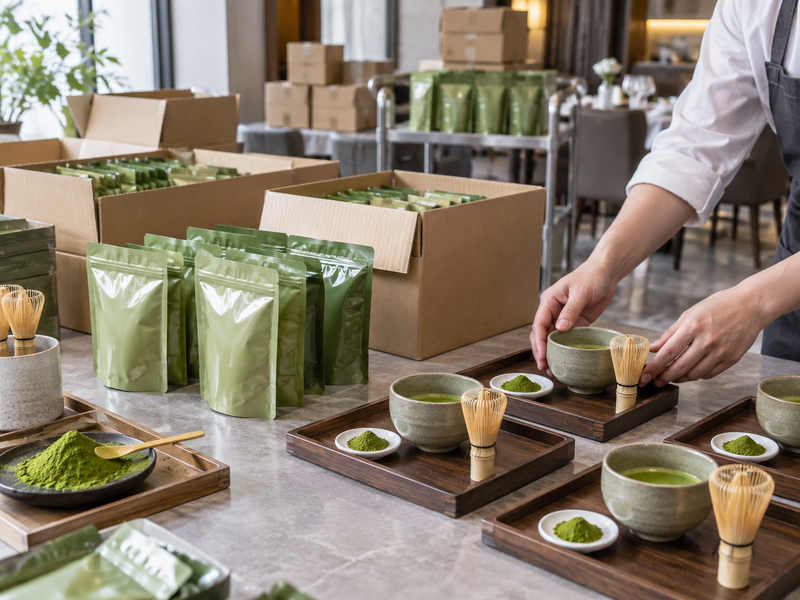
List each food and beverage outlet considering matcha, including the lobby bar, breakfast restaurant, pastry kitchen, banquet operation and room service. A spa lounge may also request a beverage, but food ingredient purchasing should remain within the property’s food and beverage review. This guide does not recommend topical treatments or make wellness claims.
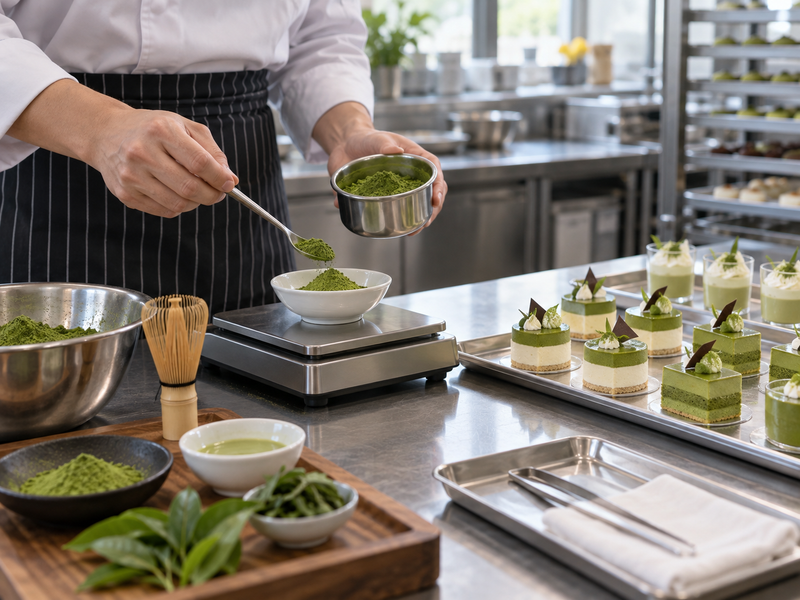
For each outlet, record the finished item, intended service, equipment and person responsible. Matcha wholesale for hotels can become unclear when a property submits one combined quantity without identifying uses. The pastry chef may need a product for a baked dessert while the lobby team wants an unsweetened tea. Ask those teams for application briefs before requesting samples.
Include any guest pack or retail tin as a separate project because packaging and label decisions extend beyond bulk ingredient selection. Matcha Village supplies Chinese matcha and application products; the actual offered SKU and origin wording should remain explicit throughout the hotel brief. Distinguish a proposed concept from an approved menu item. Suppliers can help discuss options, but the property should decide which services it can operate with available staff and space.
2. How many products does the property need?
Balance outlet fit with purchasing complexity
Ask whether one offered product can meet the property’s approved applications, then test that proposition. A common SKU can simplify receiving and transfers, but the lobby tea and a sweetened pastry need separate evaluations. If another product gives a better result in a specific application, record why the property accepts an additional stock item.
Differentiate plain matcha from a formulated latte powder and review the latter’s full ingredient composition. Grade names provide an initial way to discuss applications, but ceremonial grade does not create a universal regulated specification. Ask what the supplier’s actual SKU was selected for. Do not approve multiple grades merely because a catalogue presents a hierarchy. Every additional item creates storage, identification and training work.
For matcha wholesale for hotels, department heads should agree which product belongs at each outlet. If the same tin shape will hold different powders, physical resemblance can create confusion. Review labels or internal identification through your operation’s normal process. Keep product approval tied to its permitted applications so a kitchen cannot replace lobby tea with another powder without a documented review.
| Outlet | Product trial | Stock decision |
|---|---|---|
| Lobby bar | Unsweetened tea and planned drinks | Approved service SKU |
| Breakfast | Intended beverage recipe | Common or separate product |
| Pastry | Finished dessert after processing | Application-specific approval |
| Guest retail | Intended consumer preparation | Separate pack and claim review |
3. What should a lobby service trial establish?
Test the cup, tools and guest presentation together
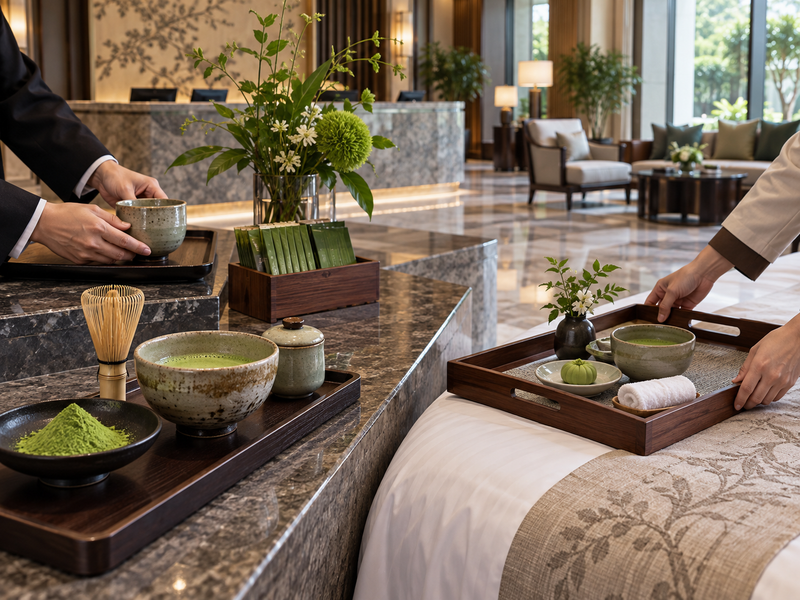
Run the trial in the proposed service area using the intended cup, whisk or mixer and recipe. A lobby demonstration can be visually appealing while taking more counter space than the outlet can spare. Observe weighing, mixing, pouring and cleaning alongside taste. Ask another trained staff member to follow the written preparation instruction. Their result helps identify whether the service depends on one specialist.
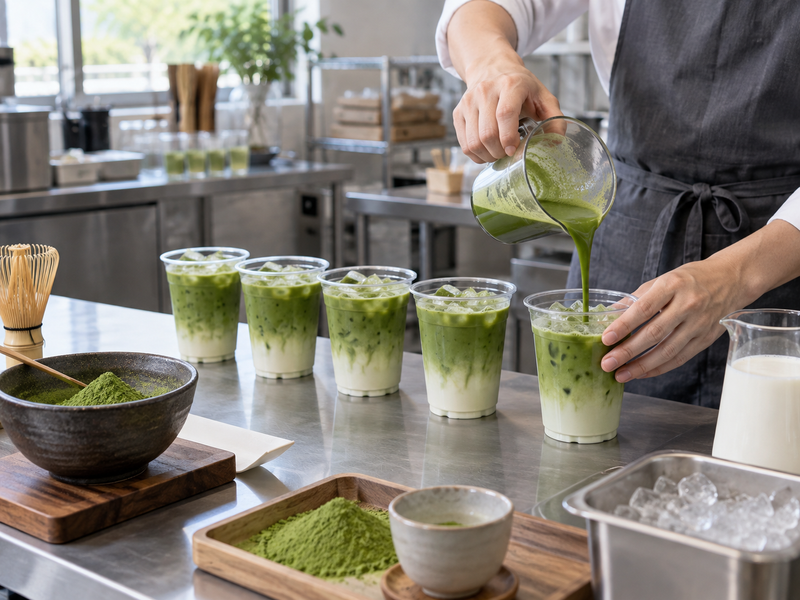
If the property offers both straight tea and a milk drink, keep separate recipe and tasting records. Powder that suits one may produce an unwanted flavor in the other. Record sample code, product identity and the approved guest description. Avoid treating photographs as evidence of sensory quality or origin.
For a tableside service, consider the property’s own training and food-safety procedures rather than adopting an unvalidated preparation process from a supplier article. Matcha wholesale for hotels should support the service the property can repeat, including quieter shifts and handovers. Ask how the selected sample connects with commercial supply and what review applies if the proposed product changes before the launch. Save that relationship in the approval file.
4. How should breakfast and banquet demand be forecast?
Use your property’s service plan rather than room count alone
Estimate demand from the menu and operating plan. Room count does not tell purchasing how many guests will order a matcha drink, attend a banquet or choose a particular dessert. Use your property’s own sales assumptions and approved recipe portions, then label estimates clearly. For a banquet, the scheduled event quantity may create a firm near-term requirement.
For breakfast, usage may remain uncertain until the new item has sales history. Keep those demand types separate. Review whether several outlets draw from one central store or hold their own sealed stock. Count released inventory and any product already allocated to events before proposing another order.
AKI MATCHA’s hospitality article discusses its own hotel concepts and supply positioning. Its property volumes, costs, health statements and domestic fulfilment arrangements should not be adopted as Matcha Village data. Use the article to identify possible service questions, then base the purchasing forecast on your operation. Give suppliers a demand range where appropriate and distinguish that range from a confirmed purchase commitment. Review the forecast after the menu launch provides actual usage records.
| Demand source | Planning input | Purchasing treatment |
|---|---|---|
| Lobby orders | Approved portion and expected sales | Forecast pending usage history |
| Banquet | Confirmed event menu and covers | Event-specific requirement |
| Breakfast | Service plan and observed take-up | Updated recurring forecast |
| Pastry | Production schedule | Kitchen allocation |
5. What changes for room-service and guest packs?
Review the complete format guests will receive
Room-service drinks need a trial that follows the property’s actual preparation and delivery process. A drink assessed at the counter may change before it reaches the room, so the service team should evaluate the delivered item through its own established procedures. Record vessel, presentation and recipe as part of that review. Guest packs create another set of decisions. Identify whether the guest receives a sealed ingredient pouch, a retail tin or a formulated product. Review required information, origin wording and any organic claim for the exact supplied format with a qualified adviser.
A bulk powder approval does not automatically approve a finished guest pack. If accessories form part of the proposal, review the complete kit rather than evaluating only its photograph. Matcha Village supports OEM and packing discussions, with specific formats and terms determined by the actual project. The private label guide gives more context for that work. Separate complimentary amenity stock from resale stock in the property’s planning where their requirements differ. Keep the approved pack reference and instructions together before ordering printed materials.
6. Which packaging choices reduce outlet confusion?
Preserve identity from central stores to daily service
Ask for offered unit sizes and identification arrangements, then compare them with each outlet’s usage. A central store may receive cartons while departments handle individual packs. Each level needs enough product information to avoid mixing approved SKUs. If outlets transfer powder into service containers, follow the property’s process for lot identity, cleaning and storage.
Keep the supplier’s instructions for the actual product available to those staff. Large packs may suit the pastry kitchen, while a lower-volume lobby service may need smaller sealed units. Evaluate availability and cost rather than assuming every size can be supplied at the same minimum. Matcha wholesale for hotels should also account for where opened containers will sit.
A bar shelf, pastry station and room-service area may expose stock to different handling conditions. Do not adopt a competitor’s shelf-life claim for the offered product. Test pouring, closure and storage fit with physical samples. If custom outlet packs are proposed, confirm artwork, material and component minimums separately. The final packing choice should appear in the property specification so departments do not order a convenient but unapproved format.
| Packing level | Identity needed | Outlet check |
|---|---|---|
| Central carton | SKU and lot reference | Allocation records |
| Sealed unit | Product and unit size | Consumption after opening |
| Service container | Traceable transferred product | Closure and handling |
| Guest pack | Approved product and artwork | Complete format review |
7. How should staff describe the product to guests?
Give service teams a reviewed description
Provide a short description drawn from verified product information and the actual preparation. Staff can explain whether the guest receives straight matcha, a latte or a dessert and describe the house service. They should not add unverified origin, certification or health statements. Matcha Village is Chinese; Japanese-themed service presentation does not establish Japanese product origin.
If the property requires a specific origin story, request supporting records for the supplied SKU before using that wording. Organic claims also need appropriate coverage review for the actual product and destination. Avoid asking staff to interpret laboratory reports or explain clinical benefits. Guest questions outside the approved description should go to a designated manager who can refer to reviewed information. Train staff on product identity and the recipe differences between outlets.
A formulated latte powder may contain ingredients that plain matcha does not, so the property’s existing ingredient and allergen communication process remains relevant. Keep the approved description beside the recipe version. When the supplier or formulation changes, update both before service. Matcha wholesale for hotels should produce a clear guest offering that staff can describe without inventing claims to fill an information gap.

8. What belongs in a property purchasing specification?
Put departmental approvals in one current file
For each selected SKU, record ingredient identity, stated origin, approved applications, pack format and supplier handling information. Add documentary requirements defined by the property’s qualified reviewer. Laboratory reports should connect with the relevant product and sample, and any questions about scope or interpretation should go to the appropriate quality professional. Keep tasting approval separate from those records. A successful lobby trial cannot approve an organic claim or a lot’s analytical results. Record who reviews proposed changes and which department owns the final product decision.
Purchasing also needs a dated quote with quantity, currency, delivery scope and packing terms. Separate an ingredient minimum from a custom guest-pack minimum. The supplier selection article can help organize these commercial and document questions. A hotel group should identify whether the specification applies to one property or several. Another property may have different outlets and receiving arrangements even when the approved powder remains the same. Share the current specification with departments and remove obsolete versions from routine ordering so a staff handover does not revive an old product code.
| Specification field | Responsible reviewer | Retained record |
|---|---|---|
| Application approval | Outlet head | Recipe trial |
| Product and claims | Quality or compliance | Reviewed specification |
| Packing | Stores and service teams | Approved format |
| Commercial scope | Purchasing | Dated quotation |
9. How can receiving and outlet transfers stay traceable?
Record movement as well as arrival
Central receiving should check the purchase order against product identity, quantity, lot references and visible packing condition. Give staff a contact for unresolved questions before the delivery arrives. Keep stock status clear if documents or quality approval remain pending. Physical arrival does not automatically mean departments may use the product. Once released, record which units move to each outlet through the property’s inventory process.
If a discrepancy arises, those transfer records help identify the departments holding the affected lot. Service containers should retain enough identity after powder leaves its original pack. Staff need a process for this step rather than relying on the central carton label. Store the offered product according to its instructions and consider the actual location of sealed stock and daily-use containers.
Record observations such as damaged seals or an unfamiliar unit size, then ask the supplier about the identified product. A vague complaint about “hotel stock” will create more follow-up work than a product code and lot reference. Save the resolution with the receiving record so purchasing can determine whether the next order needs another packing or communication arrangement.
10. What should a hotel enquiry ask the supplier?
Submit outlet needs as a coordinated purchasing brief
Send a list of applications, proposed quantities, destination and requested formats. Identify which uses are approved and which still need trials. Ask for offered product codes, sample options, specifications and available documentary support. Include the property’s origin and claim requirements so the supplier does not guess from a hotel brand description. For guest packs, request a separate packaging proposal with material, artwork and component quantity questions. For bulk ingredients, state how stores will allocate stock to outlets.
Matcha Village can discuss matcha wholesale for hotels through its Chinese manufacturing and application supply business. Ask for the actual dispatch and delivery proposal rather than inheriting another supplier’s domestic fulfilment claim. Return specific outlet trial results and identify who will approve each unresolved point. Once the property chooses products, request a dated quote matching the approved specification. Attach the accepted offer to the purchase order and give receiving staff the same product references. Review usage after launch so the next order reflects actual outlet demand, confirmed events and released inventory.
| Enquiry input | Detail | Supplier response |
|---|---|---|
| Outlet map | Drinks, pastry and guest formats | Proposed SKUs |
| Trial plan | Actual service conditions | Coded samples |
| Purchasing | Quantity and destination | Defined quotation scope |
| Guest pack | Format and claim requirements | Separate project proposal |
FAQ
Q1: Can one product cover the whole property?
Test every intended application. Approve one SKU when it fits the outlets, or document separate products and their permitted uses.
Q2: Does room count predict powder demand?
Use your menu, approved portions, event commitments and observed sales. Room count alone cannot determine consumption.
Q3: Are guest packs covered by bulk ingredient approval?
Review the complete guest format, artwork and claims separately. A bulk specification does not settle finished-pack requirements.
Q4: Should spa beverages include health promises?
Give staff a reviewed food and beverage description. Avoid unverified health statements and keep topical treatment questions outside this purchasing guide.
Q5: What should outlet transfer records show?
Record which approved product and lot moved to each outlet, and preserve identity when powder enters service containers.