
Matcha whoopie pies pair two soft cake rounds with a creamy filling, so a bakery has two textures to control before it can sell a reliable sandwich. A shell may look attractive on the tray yet split when filled. A smooth cream may squeeze out during the first bite. Build the product around that bite, then check how the same pieces behave during assembly, packing and service. The following trials help a bakery team develop a specification with its own equipment and ingredients.
Contents: Product | Powder | Batter | Depositing | Baking | Filling | Assembly | Holding | Cost | Approval
1. What should matcha whoopie pies look and feel like?
Set a soft cake target
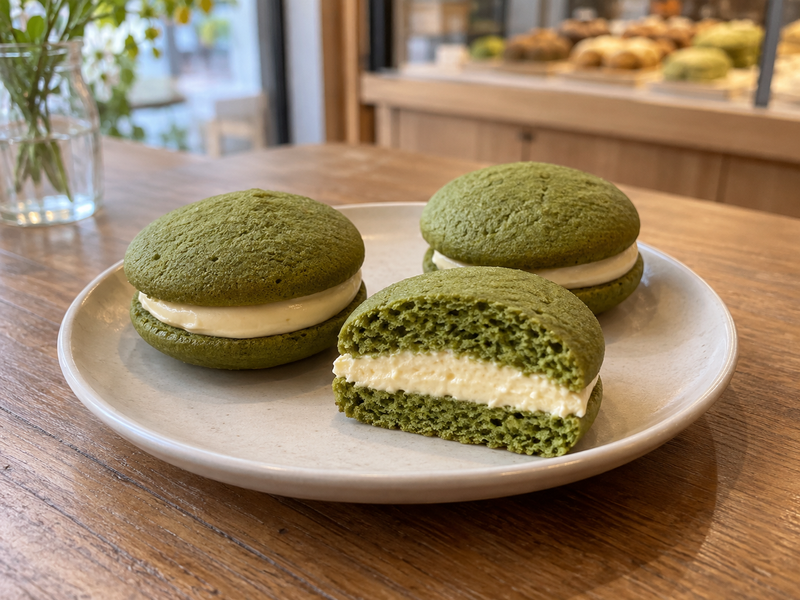
A whoopie pie needs two gently domed cake rounds with flat inner faces. The shell should yield when a customer bites through it, while the filling stays mostly between the cakes. A crisp biscuit requires a different bite and can force a soft center outward. Give the bakery team a cut sample as well as a whole one when discussing the intended texture.
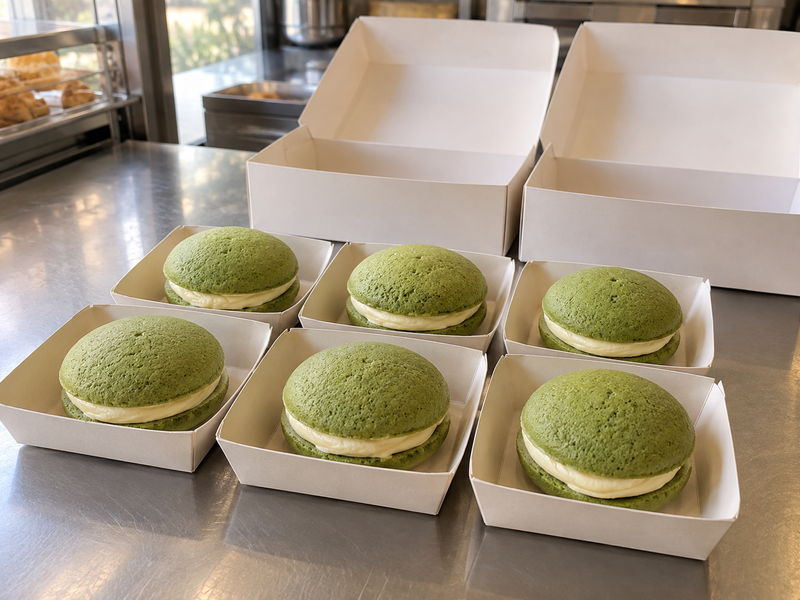
For a first product brief, describe an even green crumb, a thin browned base and a visible pale filling band. Decide whether the portion should suit a coffee break or a larger plated dessert. That choice affects shell diameter, filling weight, packaging and the price customers will accept. Photograph the approved sample beside its actual tray so later batches have a physical comparison.
| Feature | Sample to approve | Rejection to record |
|---|---|---|
| Cake shell | Soft, even dome | Hard edge or wet center |
| Filling | Smooth, contained band | Leakage at light pressure |
| Pairing | Similar shell diameters | Large overhang on one side |
2. Where should the matcha flavor come from?
Evaluate shell and filling separately
Tea can sit in the cake, in the filling, or in both. Start with one location so the team can identify what changed. Green shells with a pale vanilla filling make the cake flavor easy to assess and give a clear visual contrast. Putting tea in both components creates another variable before the shell process is understood.
Ask for plain matcha with a clear ingredient declaration and lot identification. A sweetened drink blend brings extra solids and sugar into the batter. Its behavior cannot be predicted from the word matcha on the front of a pouch. The Matcha Village ingredient buying guide offers a useful basis for a supplier brief that names the bakery application.
Taste each powder in a baked shell and in a completed sandwich. A filling can soften a drying tea finish, but it can also conceal a weak shell flavor. Keep the filling weight fixed during this comparison. Otherwise, a generous center may make one powder appear less bitter simply because the customer eats more sugar and fat with it.
3. How can you plan a small shell batter trial?
Change tea dose against a known base
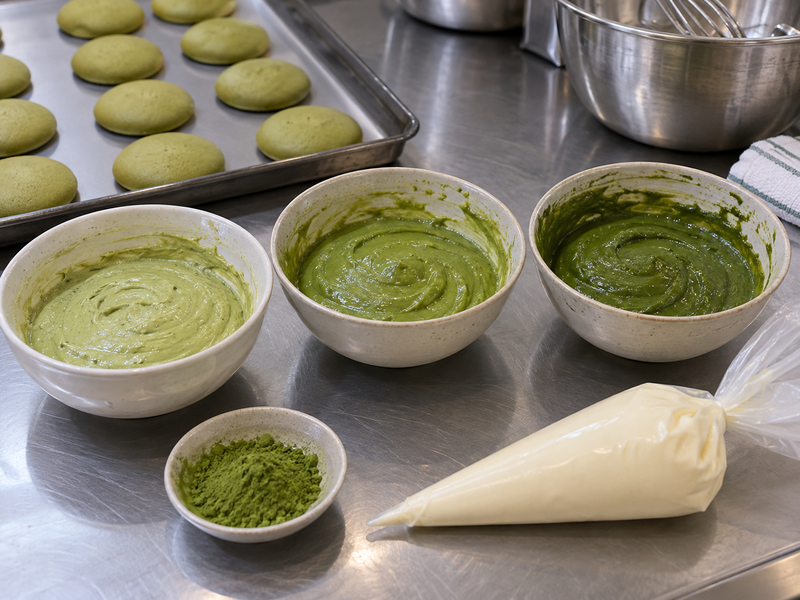
Use a vanilla cake-round formula that already behaves well in your bakery as the control. For an initial development exercise, compare tea additions equivalent to 3, 6 and 9 grams per 300 grams of flour. These are proposed screening levels, not a tested recipe or a recommended commercial specification. Keep the underlying flour, sugar, fat, egg, milk and leavening system unchanged during this first comparison.
| Trial | Matcha per 300 g flour | Question to answer |
|---|---|---|
| Control | 0 g | Does the base make suitable shells? |
| A | 3 g | Is tea recognizable after filling? |
| B | 6 g | Does flavor improve without dryness? |
| C | 9 g | Does bitterness or texture limit use? |
The dose comparison adds different amounts of dry material. If a promising sample needs a texture adjustment, make that adjustment in a separate round and document it. Changing liquid and tea together makes the cause of spread or density harder to interpret.
Matcha.com’s own whoopie pie recipe demonstrates green cake shells with a marshmallow-style center. It also identifies eggs in its dairy-free version. That distinction helps prevent an unsupported vegan description when a bakery adapts a product idea.
4. How do you control the size of each cake round?
Weigh deposits before comparing baked spread
A piping bag or portion scoop can both produce usable rounds. Choose the method that operators can repeat during a normal shift, then check deposit mass on a scale. A scoop number describes a tool, but actual batter pickup also depends on how it is filled and released. Record the measured result instead of assuming every scoop is identical.
Use a consistent tray surface and spacing for the comparison. Warm pans, changed liners and crowded deposits can complicate the result. Map several positions across one tray so the team can see whether the edge pieces spread differently from those in the middle. Measure diameter after cooling, when shells are ready to be paired.
The Hershey Foodservice commercial whoopie pie method uses portion scoops for batter and filling. Its chocolate formula provides a production example, not a direct matcha conversion. The bakery still needs its own deposit and bake settings.
If batter stands while trays are filled, compare the first deposits with the last. Record changes in flow or dome height before setting the depositing window.
5. When are the shells ready for filling?
Separate baking approval from cooling approval
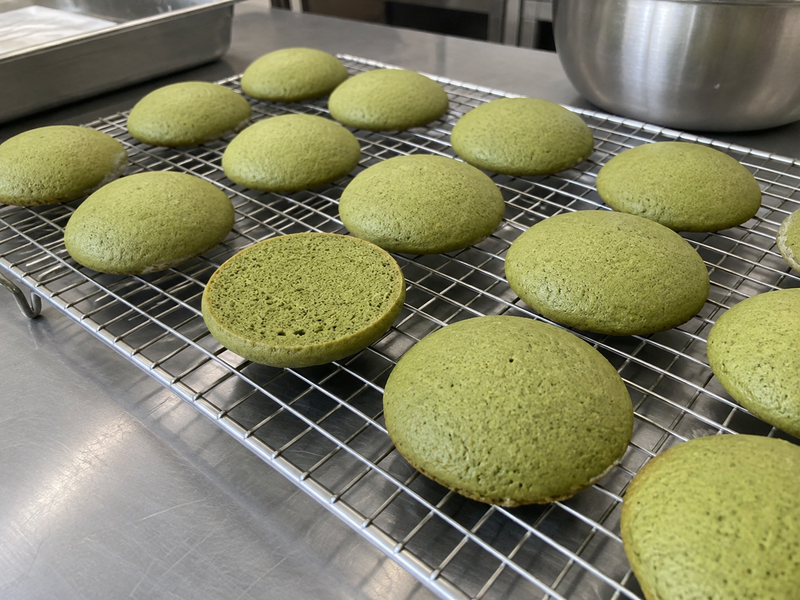
Judge the center as well as the surface. A shell can look dry while its middle still has an unsuitable texture. Split samples from different tray positions after cooling and compare crumb, base color and resilience. Record the oven program, loading pattern and deposit mass together; a time value on its own cannot explain the result.
| Checkpoint | Observation | Production response |
|---|---|---|
| Oven release | Set cake structure | Investigate wet or collapsed centers |
| Rack cooling | Stable, handleable shell | Avoid crushing soft warm rounds |
| Before assembly | No residual warmth affecting cream | Continue controlled cooling if needed |
Transfer shells carefully onto a suitable cooling arrangement and keep their flat faces clean. Piling warm rounds can deform them or leave contact marks. Allow enough rack capacity for the intended batch rather than forcing cooling to fit a crowded bench.
King Arthur Baking’s mocha whoopie pie method cools its cake rounds fully before filling. The same assembly concern is worth checking in a matcha trial: residual warmth can change the filling consistency and weaken the sandwich during handling.
Write a cooling acceptance check that operators can perform consistently. Do not approve a shell merely because the timer has expired. Compare its condition with the sample used to establish the assembly process.
6. Which filling suits the bakery’s service format?
Compare firmness at the intended eating temperature
A buttercream, cream cheese filling and marshmallow-style filling give different sweetness, acidity and handling. Choose a base that the bakery already knows how to produce and manage safely, then evaluate it with the green shells. A filling that pipes neatly when cold may feel too firm when a customer bites the pie directly from a refrigerated display.
Make a small set with equal filling weights and taste the complete sandwiches under the planned service conditions. Check whether cream moves sideways before the cake breaks, whether the shell sticks to the palate and whether the tea remains recognizable after swallowing. Use separate notes for flavor and mechanical behavior. A pleasant taste does not resolve a leaking center.
Avoid using extra matcha as an informal thickener. Adding powder changes flavor and introduces another solid without explaining why the original filling was loose. Review the base recipe, mixing and handling first. If the chosen filling contains dairy or egg, obtain the ingredient details and have the storage and service procedure assessed for that product.
A supplier’s finished filling may save preparation work, but request its specification and handling instructions. Verify how it behaves after piping into your shells; performance in a supplier’s demonstration cup does not establish performance in a cake sandwich.
7. How should matcha whoopie pies be assembled?
Match shells before piping
Lay out cooled shells in similar-size pairs with their flat faces upward. This makes irregular pieces visible before filling is spent on them. Keep the more attractive dome for the top, provided both shells meet the texture requirement. A decorative top cannot compensate for a hard or damaged lower shell.
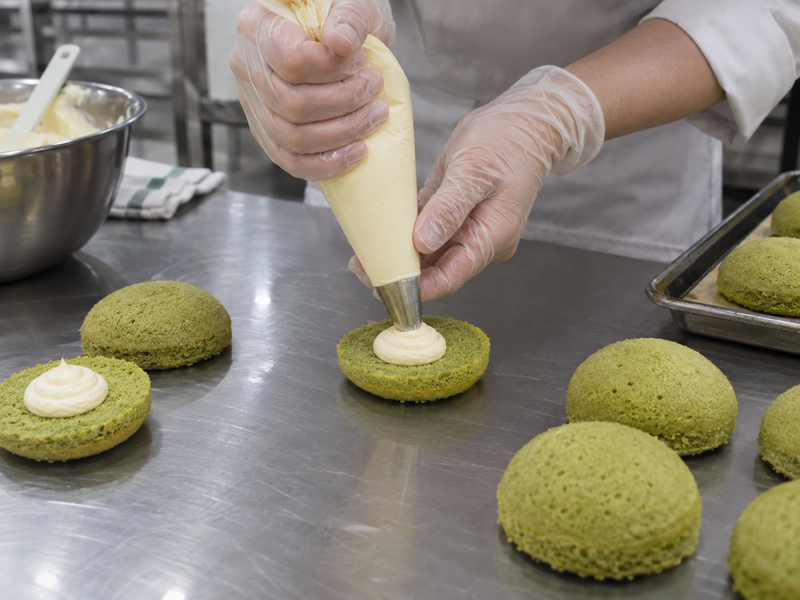
Pipe a measured center onto one flat face. Leave enough space for gentle compression when the second shell is added. Establish that space from the actual filling spread rather than a fixed visual gap copied from another product. Weigh several completed pieces to check that the operator’s piping rhythm stays consistent.
| Assembly issue | Check first | Useful next trial |
|---|---|---|
| Filling escapes | Deposit weight and firmness | Reduce one variable at a time |
| Top sits crooked | Shell pairing and pressure | Pair equal diameters |
| Shell cracks | Cake texture and handling | Compare cooled shells before filling |
Press straight down with light, even pressure until the sandwich reaches its approved height. Twisting the top can smear the filling across the edge. For training, place a finished reference piece beside the assembly station and compare several operators’ first samples.
Keep damaged shells in a separate counted tray. That count belongs in yield calculations even if the bakery later finds another use for the scraps.
8. What changes during holding and transport?
Evaluate the packed sandwich
Filling and cake remain in contact after assembly. Over time, the bite may become softer, stickier or less distinct. Compare a newly assembled sample with samples held under the proposed storage and service conditions. This is a quality trial; it does not establish microbiological safety or justify a printed shelf life.
Use the intended tray or wrapper during evaluation. A tight wrap may mark a soft dome. A loose box may let pieces slide into each other. Look at the underside as well as the visible top, because handling pressure often appears as compressed cake or cream smeared onto the support.
For delivery sales, send a controlled sample through a representative route with the required temperature management. Inspect it on arrival and record the journey conditions. An upright box carried carefully across the kitchen does not represent a courier trip with vibration, movement and waiting.
Agree on storage instructions only after the recipe, packaging and distribution process have been assessed together. Do not transfer a home recipe’s leftover guidance to a commercial product. If the bakery changes its filling, pack or portion size, review the holding study rather than assuming the previous result still applies.
Keep appearance and eating quality as separate entries so a clean-looking sandwich with a poor bite does not pass unnoticed.
9. How do you cost the finished sandwich?
Count matched pairs and saleable units
Two shells produce one finished whoopie pie, so shell count can overstate output. Begin with the number of usable matched pairs, subtract assembly rejects and then count packed units. Include filling left in the piping bag, batter retained in equipment and pieces set aside for inspection when reconciling the batch.
| Cost entry | Quantity to record | Why it affects the quote |
|---|---|---|
| Cake ingredients | Actual batch use | Includes shell rejects |
| Filling | Issued minus usable return | Captures piping losses |
| Packaging | Tray, wrap and box | Changes with sales channel |
| Labor | Mixing through packing | Pairing and filling take time |
For a demonstration calculation, a batch costing 48 currency units and yielding 24 saleable pies has a direct batch cost of 2 per pie. If only 20 qualify, that figure becomes 2.40. These figures are illustrative arithmetic, not a market price or a factory quotation.
Calculate tea cost using the actual chosen dose and purchase price, but compare it with total saleable yield. A cheaper powder may require more tea to deliver the same flavor, while a more expensive sample may offer no visible benefit after baking.
Test whether a smaller portion reduces waste or merely adds more assembly labor. Price the format your team can make consistently, with the packing and service method already included.
10. What should the production brief record?
Give purchasing and production the same sample
The brief should identify the approved tea lot, shell formula, filling formula and portion targets. Attach photographs of the shell cross section and completed sandwich, plus the acceptance limits established during trials. Include tray type, depositing method, oven settings, cooling check and assembly procedure so another shift can reproduce the work.
Purchasing needs the ingredient declaration, pack size, traceability information and required supplier documents. Production needs a sample linked to those records. Asking only for a green powder with a culinary grade description leaves too much unresolved when the next delivery arrives.
Assign the remaining packing, storage and output checks to named staff. A taste session alone does not approve commercial distribution.
Once the first batch meets the agreed targets, repeat it on a different production day with the same written method. Compare shell yield, filling use and packed appearance. Use any differences to correct the brief before committing to a larger ingredient order.
Send the supplier a concise request stating the bakery application, preferred sample pack and planned trial date, then reserve enough bench and rack capacity to complete that trial.
FAQ
Q1: Are matcha whoopie pies cookies or cakes?
They use soft cake rounds assembled like a sandwich cookie. Specify a tender cake bite when discussing the product with a bakery, because a crisp cookie shell behaves differently with a soft filling.
Q2: Can matcha go only in the filling?
Yes, that is a possible development route. Compare it separately from green-shell versions and assess the complete sandwich. Changing both components together makes the source of bitterness or weak flavor harder to identify.
Q3: Can a bakery use a premixed matcha latte powder?
It can run a separate trial, but the added sugar and other ingredients must be accounted for. Plain matcha provides a clearer starting point for comparing tea dose without also changing the base formulation.
Q4: Does a dairy-free filling make the whole pie vegan?
No. Check the shells and every filling ingredient, including eggs and processing aids where relevant. A dietary claim needs support for the complete product and its production controls.
Q5: Can these pies be assigned a shelf life from an online recipe?
No. Commercial storage instructions need evidence for the specific recipe, packaging and distribution conditions. Sensory holding trials help assess quality, but they do not replace the necessary food safety evaluation.