
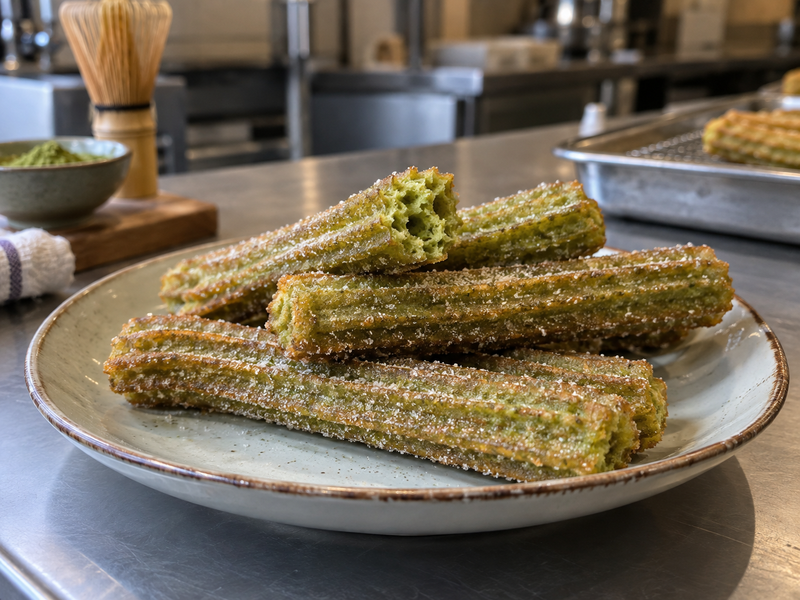
Matcha churros need a crisp ridged surface, a cooked center and enough tea flavor to remain clear after sugar and sauce enter the bite. A cafe also needs a frying sequence that works during service. A beautiful development plate can become a slow, inconsistent menu item if piping and fryer recovery are ignored. Build the product around a reliable churro base, then compare tea in the dough, finishing sugar and dipping sauce as separate choices.
Contents: Tea placement | Ingredients | Trial | Piping | Frying | Sugar | Sauce | Service | Cost | Approval
1. Where should matcha churros carry the tea?
Choose the flavor route before the dose
Tea in the dough produces a green interior. Tea in finishing sugar sits directly on the tongue, while tea in a sauce adds another serving component. Combining all three can make it difficult to identify which one creates a bitter finish. Start with one placement and a plain churro control.
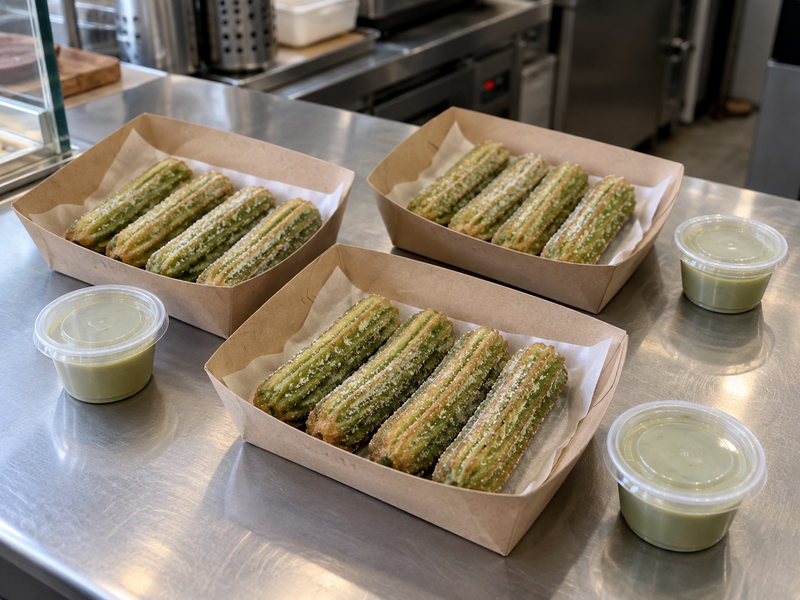
Matcha.com’s churro recipe illustrates tea in dough and a sugar finish alongside white chocolate sauce. It provides a public product example, not a validated service process for another kitchen. Decide whether your cafe needs a strongly green center or whether a clear tea finish on a familiar fried dough is enough.
| Tea location | Sensory effect to test | Operational effect |
|---|---|---|
| Dough | Tea inside the cooked center | Changes dough solids |
| Sugar finish | Immediate tea impression | Requires even dry blending |
| Sauce | Tea with a creamy dip | Adds portioning and holding |
Keep the same sauce during the first dough comparison, or omit it for diagnosis. Approve the complete serving only after each component has been evaluated separately.
2. What should you specify for the dough and tea?
Start with one established churro style
Churro recipes differ, including whether they contain egg and how the dough is prepared. Choose one base method the kitchen can repeat. Do not combine steps from several recipes simply because each mentions churros. Flour, liquid, fat and egg proportions need to work as one formula.
King Arthur Baking’s churro recipe provides another primary recipe reference, with cooked dough piped through a star tip and fried. Use a complete base recipe for initial kitchen work and adapt it through controlled trials. Its equipment and serving scale should not be assumed to match a commercial fryer.
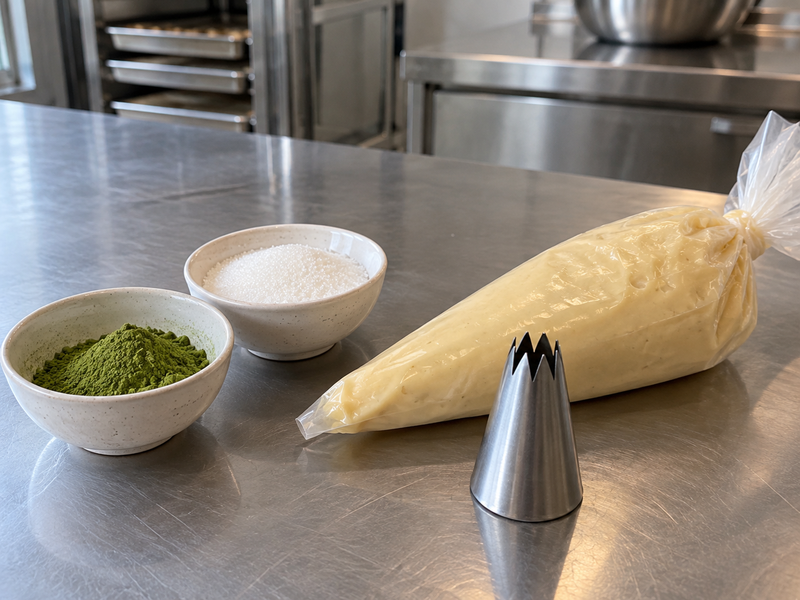
Request plain matcha with a traceable product code. The Matcha Village powder application guide can support the ingredient enquiry. Explain whether tea will enter hot dough or remain in a dry finish. Ask for samples suited to the chosen route, then judge them in that route. A powder that works in sugar may not provide the desired flavor after frying inside the dough.
3. How can you run a small tea-placement trial?
Compare placements without stacking them
Use the kitchen’s reliable plain churro base. As a proposed screen, test matcha added at 2 grams per 100 grams of flour in one dough batch. For a separate finish trial, blend 2 grams of matcha with 50 grams of sugar and apply it to plain churros. These are untested development levels, not a complete validated formula. Keep the base, portion geometry and frying process fixed.
| Proposed sample | Dough | Finish | What it tests |
|---|---|---|---|
| Control | Plain | Plain sugar | Base cooking quality |
| A | Tea addition | Plain sugar | Flavor after frying |
| B | Plain | Tea sugar | Surface tea intensity |
| C, later trial | Preferred tea dough | Preferred tea sugar | Combined balance |
Delay the combined version until samples A and B have been assessed. Weigh the finish that adheres to a representative portion. The same sugar blend can taste different when one operator applies twice as much.
Record total batter weight and finished piece count. If tea makes piping harder, measure that effect before adding more liquid. A new hydration level belongs in a separately identified trial.
4. How do you prepare dough for consistent piping?
Keep the preparation sequence intact
Follow the established base method for cooking the flour mixture and, where applicable, incorporating egg. Record the condition at each stage rather than relying on a single timer. A larger pan can evaporate liquid differently from a small saucepan. Scaling the ingredient weights alone does not reproduce the same dough.
Blend tea with the dry ingredients for a dough trial unless another method has been approved. Scrape the vessel and inspect for dry green pockets. If the recipe includes egg added after the cooked mixture cools, follow its process and the kitchen’s food safety controls. Weigh egg so the formula can be repeated across different shell-egg sizes.
Use a sturdy food-service piping bag and an appropriate star nozzle. Record nozzle dimensions, piped length and raw piece weight. Remove large trapped air pockets while loading the bag. Keep dough under approved holding conditions and compare the first and last pieces piped. A change in piping resistance across the run may require a revised preparation sequence or smaller working batches before the recipe can support busy service.
5. What should the fryer trial measure?
Include recovery between orders
Use suitable commercial frying equipment and the kitchen’s established hot-oil procedures. Record oil condition, working temperature, batch load and recovery before the next load. Keep water away from hot oil and use the approved loading method. Staff should not improvise a new process around a full fryer during development.
| Frying variable | Record | Product observation |
|---|---|---|
| Piece geometry | Raw weight and diameter | Center cooking consistency |
| Load | Pieces per batch | Temperature recovery |
| Cooking process | Validated time and conditions | Crust and center |
| Drain step | Tool and duration | Surface oil and sugar pickup |
Cut representative pieces to inspect the center as part of the bakery’s validated cooking assessment. Browning alone cannot establish that the interior is adequately cooked. Compare pieces from different positions and loading times.
Test consecutive service loads, not only one batch in fully recovered oil. If the later batch differs, reduce load or revise scheduling through another controlled test. The acceptable menu capacity is the number of portions the fryer can repeatedly produce under the approved process, including recovery and staff handling.
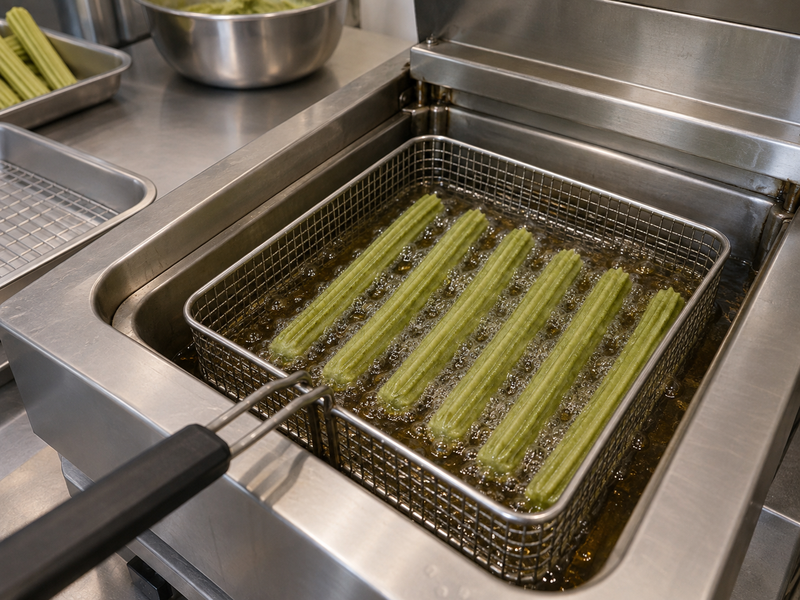
Keep the raw piece specification visible at the fryer station. A nozzle change, a longer piped strip or a thicker end can alter cooking behavior while leaving the menu name unchanged. During development, weigh several pieces from the beginning, middle and end of the piping bag. Note whether the operator creates a heavy tail when stopping each deposit. Correct that geometry through technique and an approved cutting method, then repeat the cooking check. Do not compensate for larger pieces by relying on surface color or an improvised extension of frying time.
6. How do you control the matcha sugar finish?
Measure the blend and what sticks
Sift tea before blending it with sugar. Use a sugar granulation that gives the intended surface and mix until color appears even. Prepare only the amount suited to the approved working procedure. Keep the finishing station separate from splashes and steam that can make the blend clump.
Weigh a representative churro portion before and after coating to estimate pickup. Record the draining and finishing sequence because surface oil and warmth affect how much sugar adheres. A heavier finish changes sweetness, tea dose and ingredient cost at once. Train the application motion so a rushed operator does not turn a light dusting into a thick coating.
If cinnamon is part of the brief, add it in a separate flavor comparison. It can mask the tea even at a dose that works well on plain churros. Ask tasters to evaluate the finish left in the mouth, not only the first bite. Set an approved handling and replacement procedure for working sugar that contacts food. Do not assume all leftovers can return to a clean master container.
7. How should a dipping sauce be developed?
Choose the sauce after the churro works
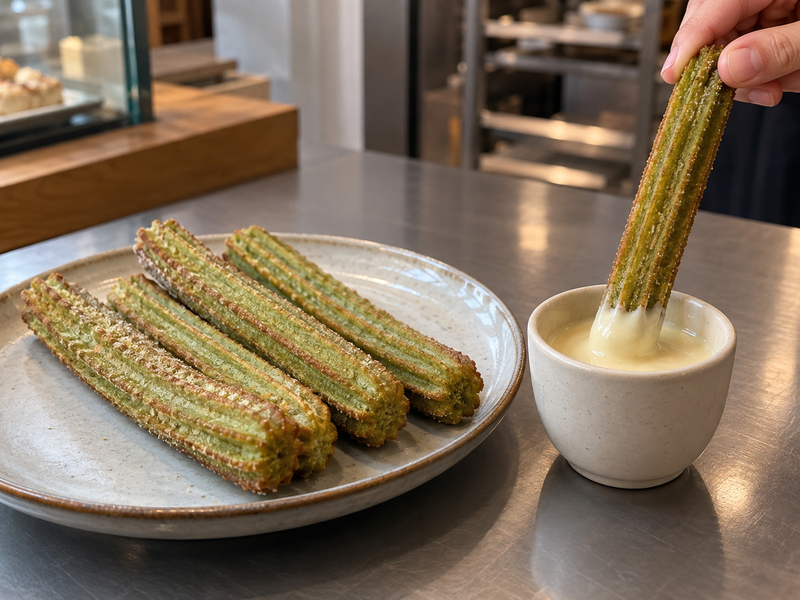
A white chocolate sauce can add sweetness and dairy notes, while another sauce can compete with tea differently. Develop one route at a time and measure the serving portion. Test a plain churro and the selected tea churro in the same sauce to identify whether it improves the product or merely hides a harsh tea dose.
| Sauce decision | Trial measurement | Service consequence |
|---|---|---|
| Thickness | Cling on one dipped piece | Drips and portion usage |
| Sweetness | Whole-bite tasting | Tea visibility |
| Serving mass | Weighed cup | Cost and waste |
| Handling | Approved holding procedure | Station capacity |
For an exploratory portion test, offer 15, 20 and 25 grams of the same sauce with a fixed churro serving. These are proposed comparison quantities. Record leftover sauce and customer-style dipping behavior before choosing the cup.
The sauce needs its own food safety assessment, particularly when it contains cream or other perishable ingredients. The fried dough’s handling procedure does not cover a dairy dip. Include the sauce’s preparation, storage, service and discard instructions in the complete menu specification.
8. How do you design a realistic service sequence?
Time the complete order
Measure order entry, loading, frying, draining, finishing and handoff. Include sauce portioning and packaging. A process that appears quick when ingredients are arranged for a demonstration can slow down when staff also serve drinks. Test the item during a simulated run of consecutive orders with the normal number of operators.
Choose a service format that protects crispness during the actual customer journey. Compare a plated portion with the proposed takeaway pack. Look for condensation, sugar loss and softened ridges. Keep the test under the kitchen’s approved service controls; texture observations alone do not authorize a longer holding window.
If production is centralized or pieces will be frozen, develop and validate that route separately. Do not transfer a fresh-fried result to a frozen supply program without evaluating storage, transport and final cooking. The raw or prepared starting condition affects both handling and the cooking process. Give staff a clear product identity and procedure so they cannot confuse a fresh dough trial with a different prepared format during service.
9. How do you cost a portion with sauce?
Include fryer and finishing losses
Weigh dough prepared, accepted fried pieces and any rejected portions. Record finishing sugar used, sauce dispensed and unused service portions. Include the frying oil cost according to the business’s established accounting method. A menu price based only on flour and tea ignores much of the operation.
| Cost area | Measurement | Common omission |
|---|---|---|
| Dough | Accepted portions | Piping bag residue |
| Frying | Labor and oil allocation | Recovery time |
| Finish | Blend consumed | Sugar left in working tray |
| Sauce | Actual grams served | Overfilled cups |
| Packaging | Complete takeaway set | Dip lid and napkin |
Use the accepted piece count to set a portion standard. If three pieces form the menu item, check their combined mass rather than assuming identical length means identical weight. Nozzle pressure and dough condition can change thickness.
Show the cafe manager both ingredient cost and achievable portions per service interval. A profitable-looking recipe can occupy equipment needed for another item. Use the timed order trial to decide whether churros fit the existing station or need a dedicated production slot.
Observe waste at the end of a service simulation. Count prepared dough portions, finished unsold servings, sugar remaining in the working tray and opened sauce cups. Apply the kitchen’s approved handling and discard rules when recording usable remainder. A quiet-period trial can suggest a lower practical batch size than a busy-period trial. Compare both before setting a daily preparation quantity. The cafe needs enough product to serve orders without turning every uncertain sales forecast into extra dough, sauce and finishing mixture that cannot be used within the approved operating plan.
10. What should be approved before menu launch?
Write one complete service instruction
The approved record should include the base recipe, matcha placement and dose, nozzle, raw piece geometry and validated frying process. Add draining, sugar pickup, sauce portion and packaging. Use photographs of an acceptable center and finished serving. Record how staff handle prepared dough and each sauce under the food safety plan.
Review declarations for the full serving, including sugar blends, sauce and decorations. Ingredient substitutions need a new review if they change allergens, handling or the product description. A switch in sauce supplier can alter the menu item even when the churro recipe stays unchanged.
Send Matcha Village the application route and selected dose with the sample code used in development. Request the matching commercial specification and pack proposal. Run a final service simulation with the actual staff, fryer and takeaway materials. Have the manager record order time, accepted portions and finishing consistency before setting the launch quantity and releasing the ingredient order.
Frequently asked questions
Q1: Must tea be added to the dough?
No. A matcha sugar finish or sauce can carry the flavor. Compare placements before combining them.
Q2: Can a round nozzle replace the star nozzle?
Do not substitute nozzle geometry without testing and validating the cooking process. Piece shape affects frying behavior.
Q3: Why does one batch absorb more finishing sugar?
Check draining, surface condition, finishing timing and application motion. Measure pickup rather than judging by color.
Q4: Can the cafe promise a takeaway holding time from a tasting?
A tasting measures quality. Establish the service and safety limits for the actual recipe and pack separately.
Q5: What determines useful fryer capacity?
Measure consecutive approved loads, including recovery, draining and finishing. One isolated batch can overstate service capacity.