
Matcha opera cake needs thin, level layers that cut cleanly and taste balanced in one forkful. A strong tea sponge cannot rescue a filling that overwhelms it, and a flawless whole slab may still produce costly trimming losses. Develop the cake as a set of measured components, then approve the assembled slice. The process below helps a pastry team control tea placement, sheet thickness, syrup, filling and chilled service without claiming that an untested combination is ready for production.
Contents: Design | Tea | Trials | Sponge | Syrup | Filling | Assembly | Cutting | Cost | Release
1. What layer design should matcha opera cake use?
Draw the cross section before baking
Decide how many sponge and filling layers belong in the product and which component carries the tea. A thin cafe rectangle, a tall celebration slice and a plated dessert can share ingredients while requiring different assembly and packaging. Set the target height and portion dimensions before calculating sheet sizes.
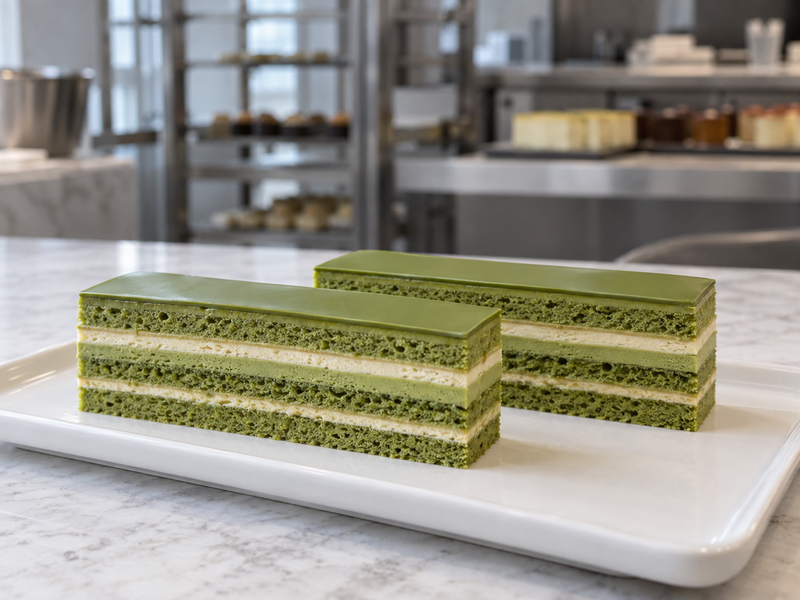
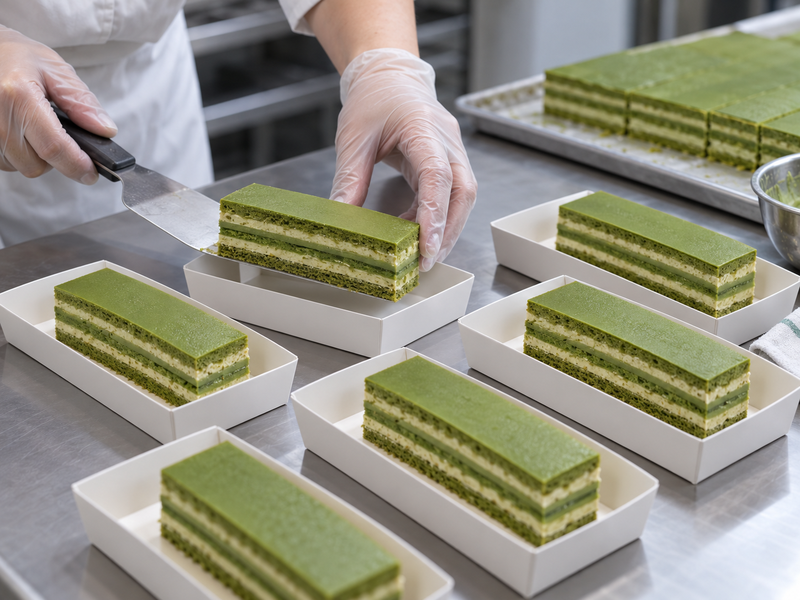
Taste of Artisan’s matcha opera cake combines matcha sponge, pistachio buttercream and matcha ganache, with a citrus syrup. It shows one possible flavor architecture. A commercial team can choose a simpler version, but should make that choice explicit rather than mixing components from unrelated recipes.
| Component | Job in the slice | Define before trials |
|---|---|---|
| Sponge | Structure and a soft bite | Thickness and tea placement |
| Syrup | Flavor and moistness | Dose per sheet |
| Filling | Creamy layers and balance | Type and thickness |
| Finish | Top appearance and cutting | Glaze or thin coating |
Keep an assembly sketch beside the development record. Number the layers from the base upward so every operator follows the same order and the costing sheet reflects the cake that is actually built.
2. How should you select matcha for sponge and filling?
Judge each exposure separately
Tea baked into an almond sponge experiences a different process from tea dispersed into a ganache. Compare candidate powders in both components before deciding whether one code can serve the entire cake. A sample that remains distinct after baking may taste too forceful in a lightly heated filling. Another may suit the filling but become difficult to detect in the sponge.
Request plain matcha with a traceable sample and a clear ingredient specification. Keep the chocolate, almond ingredient and buttercream flavor fixed during the first tea comparison. Otherwise, a change in nut roast or chocolate sweetness can be mistaken for a change in matcha quality.
Use the Matcha Village ingredient buying guide to organize the enquiry. Describe each application and the desired whole-slice taste. Ask for sufficient sample to make repeated components and a complete slab. Retain the powder code on every bowl and tray during development; two green components prepared on the same bench are easy to confuse once their original packs are put away.
3. How can you test tea without rebuilding every component?
Change one layer while the others stay fixed
Use existing reliable sponge, syrup and filling recipes as the base. A proposed development round could compare three tea additions to 500 grams of the same ganache base: 3, 5 and 7 grams. Keep sponge, syrup and buttercream identical. These are untested screening levels, not a validated ganache formula. The base itself must already work with the chosen chocolate and cream.
| Trial | Fixed ganache base | Added matcha | Compare in a complete bite |
|---|---|---|---|
| A | 500 g | 3 g | Mild tea recognition |
| B | 500 g | 5 g | Balance with sponge and cream |
| C | 500 g | 7 g | Bitterness and dry finish |
Build small sample stacks using weighed layers rather than three full cakes. Keep their proportions representative of the intended slice. This saves labor while preserving the effect of the other components on tea perception.
After selecting a direction, run a separate sponge-dose trial. Changing tea in both sponge and ganache at once makes it difficult to identify which component caused an improvement or a bitter finish. Record total tea per assembled slab for the eventual specification.
4. How do you produce even sponge sheets?
Control deposited mass per tray area
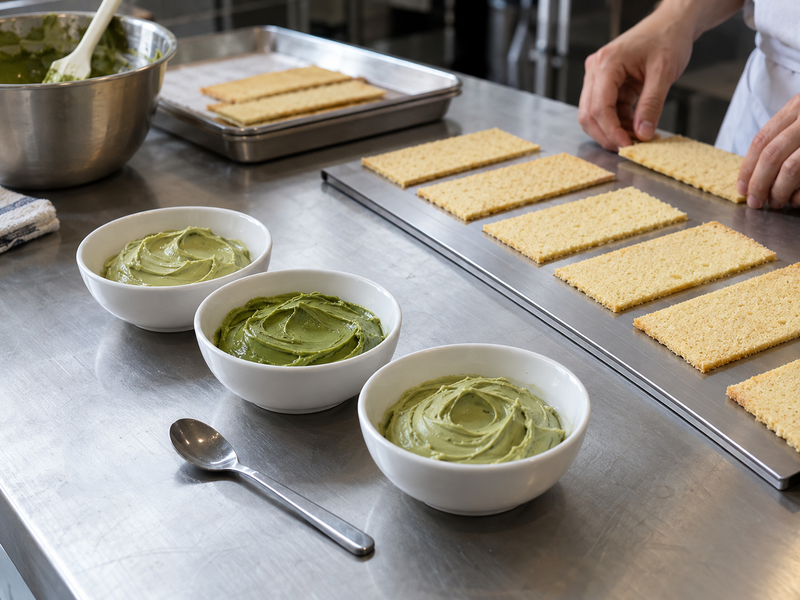
Use the bakery’s established sponge method and record the ingredient product codes, mixing sequence and finished batter condition. If the recipe relies on an egg foam, preserve that process while adding tea through a controlled dry blend. Sift matcha with the appropriate dry ingredients to reduce concentrated green pockets that would demand extra folding.
Measure the tray’s internal area and weigh the batter deposited. Spread to a consistent thickness, including the corners. A thin edge can dry while the center remains softer, leaving a large trim margin later. Record tray position and oven load during the bake. Confirm the cooking process for the actual sheet rather than choosing the endpoint by green color alone.
Inspect cooled sheets before assembly. Measure thickness in several places and note tears, dry edges or compressed patches. Keep sheets supported during transfer because a fragile corner can become a hidden defect inside the cake. Establish a size and handling standard that leaves enough trim allowance without relying on the decorator to conceal major sheet variation under thicker filling.
5. How should syrup be portioned between layers?
Weigh the application
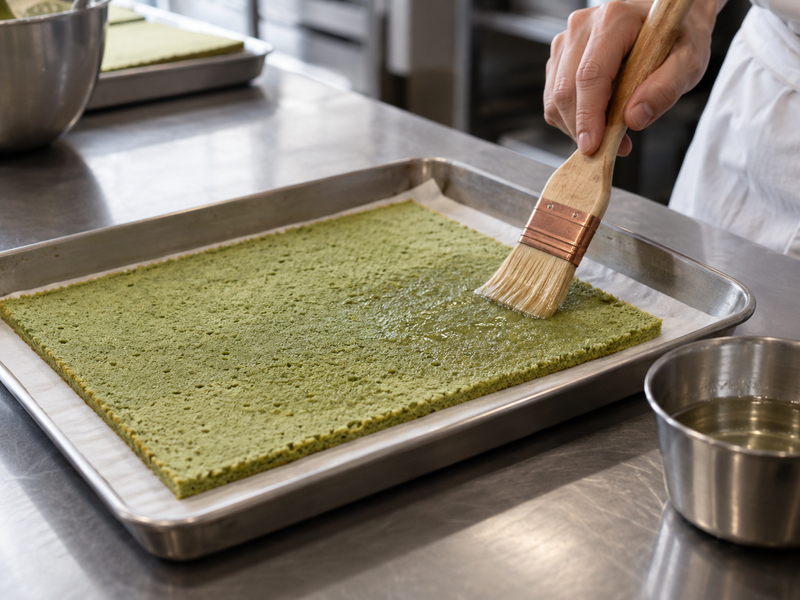
A brush dipped by eye can deliver different syrup amounts to each sheet. Weigh the syrup container before and after application or use another repeatable portioning method. Record the sheet area and applied mass. The relevant comparison is how much syrup enters a layer, not how much remains in the bowl.
| Syrup variable | Record | Inspect in the slice |
|---|---|---|
| Flavor | Exact ingredients | Tea compatibility |
| Dose | Mass per sheet area | Wet bands or dryness |
| Application | Brush or dispensing method | Edge-to-center variation |
| Assembly condition | Component state | Sliding or compression |
For a proposed quality trial, compare a modestly lower and higher dose around the bakery’s current successful application. Keep all other layers constant. Inspect after the approved assembly and holding process. Syrup can change the way layers cut as well as the taste.
If citrus or alcohol is included, specify it in the product brief and ingredient declaration. Strong acidity or aroma can distract from tea. Taste the syrup inside the cake rather than approving it alone. Do not treat alcohol in syrup as a substitute for a validated storage process.
6. How do you balance ganache and buttercream?
Match flavor and working consistency
Choose each filling for the whole slice. A sweet white chocolate ganache and rich buttercream can make a large portion feel heavy, even if each tastes pleasant separately. Compare thinner and thicker filling layers by weight per area. Keep the sponge dimensions constant so the trial changes the filling proportion rather than the serving size.
Callebaut’s chocolate guidance distinguishes melting chocolate for flavor components from tempering for applications that need a set chocolate structure. Follow the selected chocolate supplier’s instructions for your filling. A ganache is not made reliable by applying an unrelated bar-tempering curve.
Establish a compatible working condition for ganache, buttercream and sponge. A filling that is too soft may squeeze out under the next sheet; one that is too firm can tear the sponge during spreading. For egg-based buttercream, use an approved process with appropriate egg handling and validation. The presence of hot syrup alone is not a basis for inventing a safety claim. Record the actual method and keep it attached to the finished cake specification.
7. How do you build a level slab?
Weigh layers as the cake grows
Prepare the frame, base board and components before starting. Number the sponge sheets according to the assembly sketch. Apply syrup and filling at the approved weights, then check coverage before adding the next sheet. A thick corner becomes harder to correct once several layers sit above it.
| Assembly check | How to record it | Defect it helps trace |
|---|---|---|
| Filling mass | Bowl weight difference | Unequal layer thickness |
| Corner height | Consistent measuring method | Sloping top |
| Sheet alignment | Edge photograph | Excess trim |
| Layer order | Assembly record | Flavor imbalance |
Use light, consistent pressure to bring layers into contact. Excess force can push filling beyond the frame or compress a syrup-heavy sheet. Check the side profile where visible. Do not rely on the final glaze to correct a sloping stack.
Follow the approved chilling and holding procedure for the complete cake. Different components can require different preparation schedules, so label them clearly. The assembly plan should show when each component is made, how it is held and when it enters the slab. That prevents a last-minute substitution made only because one bowl is ready sooner.
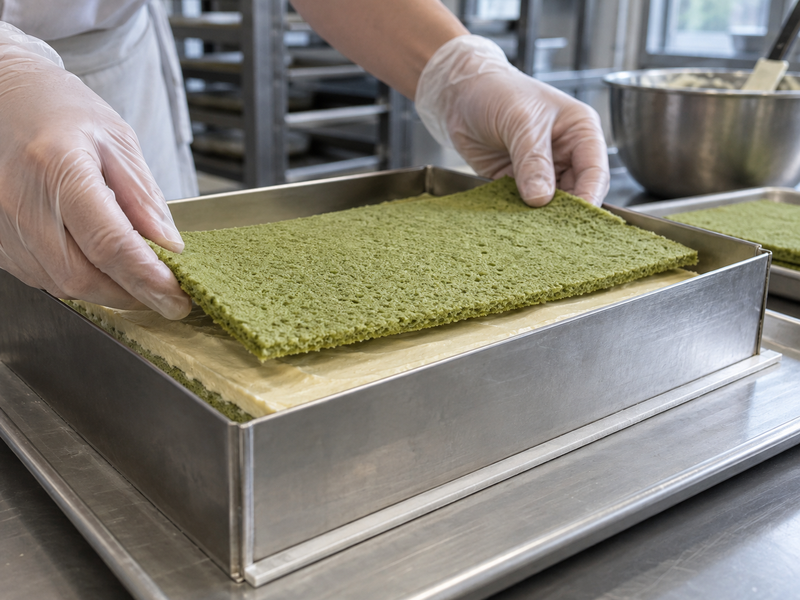
Use area-based component weights when moving between frame sizes. If the approved slab area doubles while layer thickness stays constant, the theoretical mass of each layer doubles as a starting calculation. Actual losses during spreading and trimming still need measurement. Recheck the assembly method because a larger sheet may be harder to lift without stretching or breaking. A frame change can also exceed the reach of the spreading tool, leaving a thicker center. Run one unglazed practice assembly if necessary so the team can inspect those handling differences before spending time on decoration.
8. How do you cut and serve clean portions?
Test the cut at the intended condition
Establish a cutting condition that supports the layers without making them fracture. Use a measured grid and a blade method suited to the chosen finish. Clean the blade consistently so one dark streak does not drag across every green layer. If a warmed blade is used, keep it dry and follow the kitchen’s approved procedure.
Measure the trimmed rectangle before dividing portions. Weigh representative pieces and inspect the ends as well as the center. A slice from the middle can look balanced while end portions contain more filling or syrup. Keep the edge samples visible during approval rather than discarding every imperfect piece before the review.
Evaluate the cake at the actual service condition, using the complete approved cold-chain procedure. Ask whether a fork passes cleanly through the finish and whether the layers slide apart. Test the takeaway tray and lid with the same portion. A tall garnish or high top layer may touch the lid even though the cake fits within the base dimensions. Establish commercial shelf life separately from a visual or tasting review.
9. How do you calculate layer and trim costs?
Cost the saleable rectangle
Record each component’s prepared mass, used mass and remainder. Include sponge trimming, filling left in piping bags or bowls and glaze that cannot enter accepted portions. Apply the bakery’s approved rework policy; do not assume all leftovers can be reused in another cake. Track the labor of component preparation separately from assembly and cutting.
| Cost item | Record | Commercial decision |
|---|---|---|
| Sponge | Usable sheet area | Tray and portion layout |
| Fillings | Applied mass per layer | Taste and cost balance |
| Syrup and finish | Actual usage | Overapplication control |
| Trimming | Accepted slab area | Yield expectation |
| Packing | Accepted portions | Service format |
For an illustrative geometry calculation, a 30 by 20 centimeter slab trimmed to 28 by 18 centimeters retains 504 of its original 600 square centimeters, or 84% of the area. This does not equal the exact mass yield if layer thickness varies, so weigh the accepted portions as well.
Show the pastry manager both component cost and accepted slice cost. A smaller slice may fit the desired richness while producing a more efficient cutting layout. Test its appearance in the actual box before finalizing the selling portion.
Plan component production around the cake schedule rather than making every component in one oversized batch. Record the number of usable sponge sheets and the actual filling mass needed for the accepted frame count. Keep surplus components identified under their approved holding procedures. If one component repeatedly remains while another runs short, review spreading weights and trim before increasing all recipe quantities. That imbalance can reveal a process drift, such as thicker buttercream at the edges, that would otherwise appear only as an unexplained rise in ingredient cost.
10. What should the bakery approve before production?
Release the complete cake specification
Approve component recipes, product codes, batch weights and the assembly sketch together. Add sheet dimensions, syrup dose, filling mass, chilling controls, cutting method and portion size. Include photographs of the complete slab and an accepted cross section. Operators need to see layer thickness and alignment, not only a decorated top.
Review ingredient declarations for nuts, dairy, eggs, flour, chocolate and every decoration used in the actual recipe. Confirm the intended product name and market requirements. Any supplier substitution that changes texture or declaration should trigger a component check and an assembled-slice review.
Send Matcha Village the chosen applications, tea doses and sample codes, along with planned monthly use. Request corresponding commercial specifications and available lot documents. Schedule a confirmation slab made by the normal pastry team using the intended frame and packaging. Have the production lead sign off layer weights, accepted slice yield and service performance before the buyer places the first full order.
Frequently asked questions
Q1: Must matcha opera cake contain pistachio?
No. It is one possible filling flavor. Choose the layer design deliberately and test the complete slice.
Q2: Can one tea powder work in sponge and ganache?
Yes, if it performs in both. Evaluate the baked sponge and filling separately before approving the combined cake.
Q3: Why do layers slide when cut?
Check filling condition, syrup dose, assembly pressure and cutting condition. Compare the recorded layer weights before changing recipes.
Q4: Can glaze hide an uneven slab?
It may conceal the top temporarily, but it cannot correct uneven internal layers or unpredictable portion yield.
Q5: Which sample should purchasing approve?
Approve a complete cake produced with traceable component ingredients, then retain its recipe, cross-section photographs and accepted yield record.