
Ceremonial matcha wholesale buyers need a powder that performs in their actual tea service. Grade names alone leave taste and handling uncertain. Matcha Village offers ceremonial matcha within its Chinese product range and supports application selection. Compare coded samples under your service conditions, then agree product specifications, packing and supply terms.
Table of contents
- What does ceremonial mean in a wholesale offer?
- Which service should your sample represent?
- How can you run a useful tasting comparison?
- What should a sensory specification describe?
- How do preparation tools affect selection?
- Which pack size fits your tea counter?
- How should you calculate service cost?
- What evidence supports origin and product claims?
- How can repeat shipments preserve the service?
- What should your sample request contain?
1. What does ceremonial mean in a wholesale offer?
Ask the supplier to define its own product
Ask each ceremonial matcha wholesale supplier for the specification and intended use of its offered SKU. Two suppliers can use the term for powders with different flavors, origins, packing arrangements and intended preparations. Ask what the offered SKU was selected to do. A tea counter serving whisked matcha in water needs different evidence from a retail brand buying powder for mixed drinks.
Keep origin separate from grade wording. Matcha Village is a Chinese manufacturer; its ceremonial offering should be evaluated as the actual product described in its quotation. A ceremonial label does not establish Japanese origin. Ask for the ingredient description and a sample of the proposed product rather than requesting the “highest grade” without further detail.
Describe your service, the audience and the flavor profile you want. A quiet tasting session may reveal astringency that becomes less noticeable in milk. Conversely, a product selected for an unsweetened bowl may exceed the cost budget for a sweetened beverage. Agree how the sample will be judged before comparing catalogues so grade labels do not make the purchasing decision for your team.
2. Which service should your sample represent?
Specify the cup your guests will receive
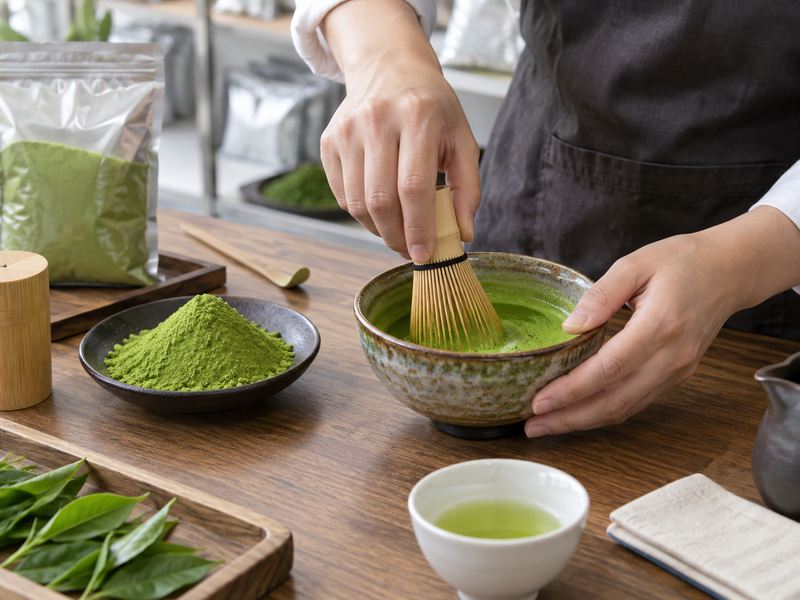
Describe your proposed ceremonial matcha wholesale service in measurable preparation terms. Record the powder amount, water amount, serving vessel and temperature conditions your team intends to use. These are your service choices, not a universal recipe for every grade. If the menu includes both a thin whisked tea and a concentrated preparation, ask whether the same offered product suits both. Keep those trials separate. A retail tasting station might serve small samples several times each day, while a tea house prepares a full bowl for each order.
Both operations need powder that tastes suitable, but their handling and staff requirements differ. Include any paired food because sweetness and fat can change how guests perceive the tea. Have the person responsible for service participate in the sample review. They can identify whether weighing, sifting or cleaning fits the counter’s workflow. Record the observed preparation time as an internal trial result instead of adopting a supplier’s general claim. If you plan to explain the product’s origin to guests, request the exact origin wording alongside the sample and keep that wording subject to documentary review.
| Service | Trial conditions | Purchasing question |
|---|---|---|
| Whisked water service | House powder and water quantities | Does the finish suit unsweetened drinking? |
| Concentrated tea | Separate preparation trial | Is this SKU suitable for that service? |
| Retail tasting | Repeated small portions | Can staff reproduce the cup? |
| Dessert pairing | Tea with the intended food | Does the flavor remain balanced? |
3. How can you run a useful tasting comparison?
Keep sample identity outside the tasting judgment
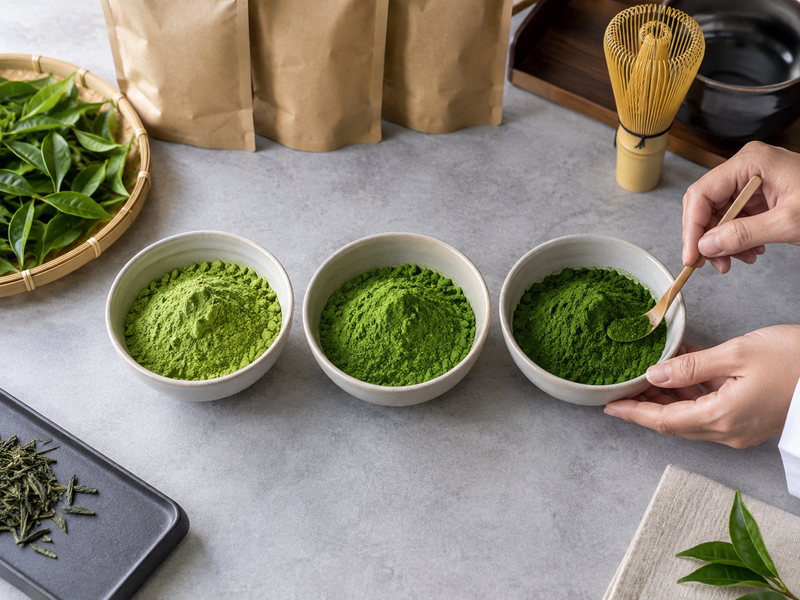
Code samples so tasters can describe the cup before reading marketing details. Prepare them with the same agreed conditions and record aroma, flavor, astringency, texture and finish. Avoid asking people to pick a winner from photographs. A camera and screen can change apparent green color, and neither can show how the powder drinks.
Give tasters plain descriptive choices or space for short notes. “Dry finish after swallowing” provides more purchasing information than “luxurious.” Repeat any uncertain preparation so an uneven whisking attempt does not disqualify a suitable product. Keep the offered product code, sample reference and tasting date together. Ask the supplier whether commercial supply will follow the same specification and how it will communicate a proposed change.
Use a retained sample only under an agreed comparison process, since stored samples also change. A useful decision records both strengths and limitations. One product might suit a slow tea service but require handling that your busy counter cannot support. Another might provide a more practical service result. These observations describe the sample and preparation tested; review later lots through the agreed purchasing process.
4. What should a sensory specification describe?
Turn tasting observations into reviewable requirements
Translate the selected sample into a specification your supplier and service team can understand. Describe the intended preparation and the sensory features that led to selection. If the panel preferred a restrained bitterness or a particular finish, state that observation without promising a chemical composition you did not measure. Separate measured product characteristics from subjective preferences.
Ask what physical or analytical information the supplier can provide for the offered SKU and let your quality team decide how those records fit purchasing requirements. Include the ingredient identity, origin statement, pack format and handling instructions. Establish how each party will review a difference between the retained reference and a new shipment. Photographs can supplement a record, but they need controlled lighting and should not become the sole acceptance criterion.
For ceremonial matcha wholesale, the service trial remains central because consumers encounter the prepared drink. Avoid writing “always sweet” or “never bitter” into product copy. Preparation and individual perception affect those judgments. A precise specification supports discussion when a future sample tastes different and gives your team a reasoned basis for accepting, questioning or declining it.
| Specification item | Useful wording approach | Avoid |
|---|---|---|
| Intended service | Name the preparation tested | Unexplained grade ranking |
| Flavor | Record panel descriptions | Universal taste promises |
| Appearance | State comparison conditions | Screen-only judgments |
| Product identity | Link SKU and origin evidence | Inferring origin from grade |
5. How do preparation tools affect selection?
Trial the equipment your staff will use
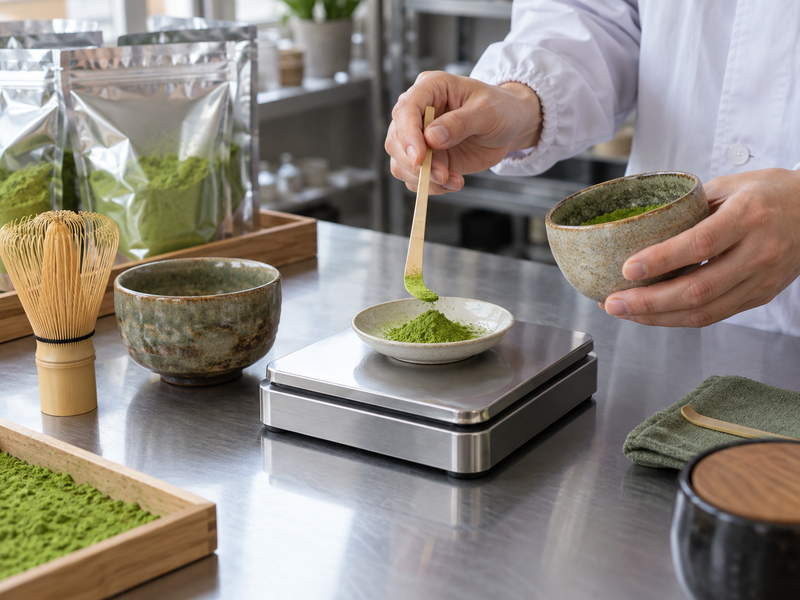
Use the actual whisk, bowl, sifter or mixer intended for service. A supplier’s demonstration can show an attractive preparation, but your counter may use another vessel shape or have less room for equipment. During trials, check whether staff can reach the full bowl surface, measure powder accurately and clean tools between orders. Observe clumps and powder left around the vessel without attributing every issue to grade.
Some problems arise from handling or equipment rather than the selected product. Compare samples after the preparation method has become repeatable. If a new product requires a service change, document the change and test it with the staff responsible for busy periods. A tasting-led shop may accept a longer preparation because guests expect that service. A hotel breakfast counter may need a different format or product.
Keep the test focused on suitability rather than assuming ceremonial matcha wholesale works identically in every workflow. Matcha Village can discuss application selection, while your operational trial determines whether the proposed powder and tools fit the menu. Include spare tools and cleaning arrangements in the launch plan so service does not depend on one demonstration setup.
6. Which pack size fits your tea counter?
Balance sealed inventory with daily use
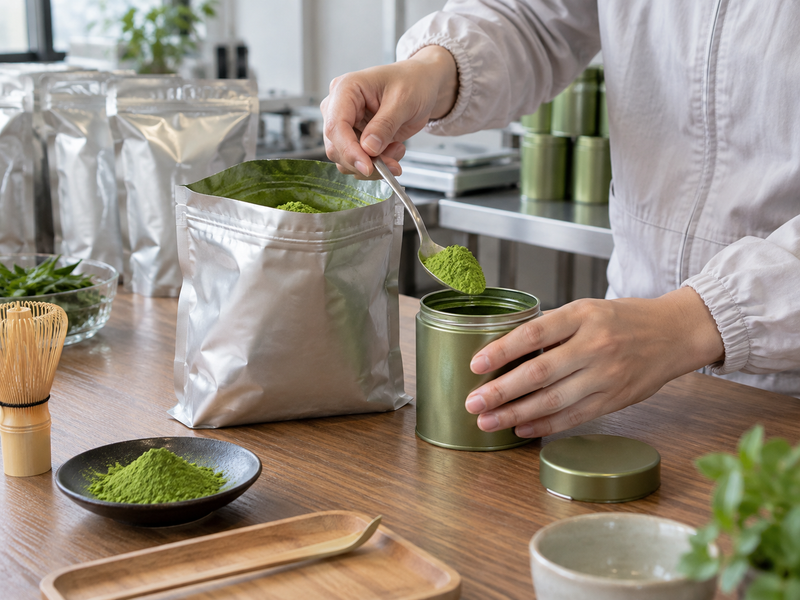
Compare the proposed pack size with expected usage after opening. Large bags may reduce packaging cost per kilogram, but a small tea counter can take longer to consume them. Ask for available formats and storage instructions for the offered ceremonial product. Decide whether sealed smaller packs and a separate daily-use container suit your service better.
Transfer records should preserve lot identity when powder moves into another container. Avoid topping up an old container with a new lot before your team has addressed identification and cleaning requirements. Ask how packs are sealed and how the supplier marks each unit. If you buy retail tins alongside bulk powder, confirm whether both formats contain the same SKU and follow the same specification.
A beautiful tin cannot establish powder identity. Test the lid and closure with staff under the intended service conditions. Record whether powder spills during pouring and whether the container fits the shelf. Shelf-life statements should come from the offered product’s documentation. Do not carry a duration from a competing supplier’s article into your own purchasing terms.
| Format | Suitable purchasing question | Operational check |
|---|---|---|
| Sealed small pouches | What sizes are offered? | Opening frequency |
| Bulk bag | How fast will it be consumed? | Pouring and identification |
| Daily-use tin | How will lots remain traceable? | Closure and cleaning |
| Retail tin | Does it contain the approved SKU? | Product and artwork match |
7. How should you calculate service cost?
Use accepted portions rather than headline prices
Calculate powder cost from the quoted net quantity and your approved portion size. Then account for handling losses observed in your own trial. Keep sample shipping, custom packaging and delivery charges visible where they apply. A lower kilogram quote may create a higher service cost if the product requires more powder to meet your menu’s flavor target. Test that proposition rather than assuming it.
Use the same accepted drink when comparing offers so a strong tea and a lightly flavored cup do not appear financially interchangeable. Add staff preparation and equipment costs through your business’s own costing process. Ceremonial matcha wholesale suppliers can quote powder, but they cannot determine your menu margin without your operational information.
UnD’s wholesale article describes its own grade range, sample formats and commercial arrangements. Those examples show possible quotation fields; its prices, minimums and delivery promises do not apply to Matcha Village. Request a dated offer for your chosen SKU, format and destination. Ask how quantity tiers work and whether each tier requires a firm purchase commitment or another commercial arrangement.
8. What evidence supports origin and product claims?
Keep guest descriptions aligned with supplied records
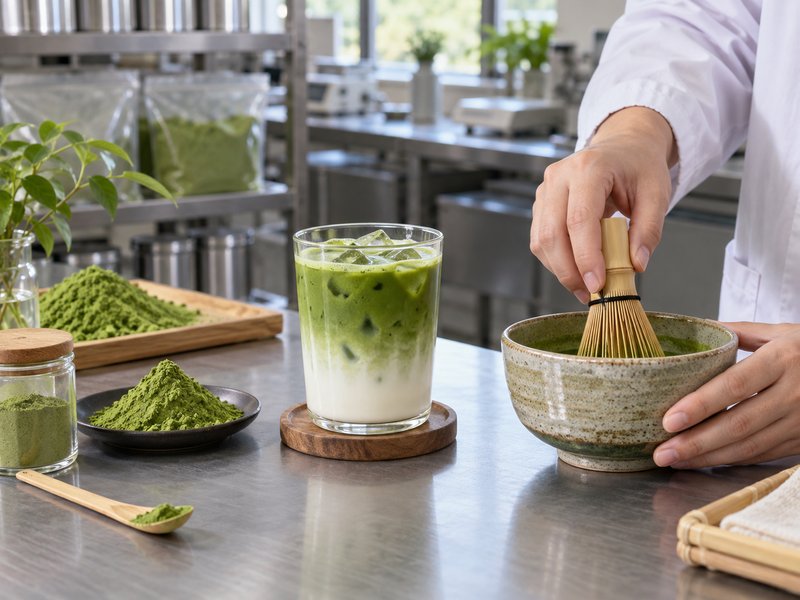
Request support for any origin, cultivar, harvest or organic wording you intend to use. A supplier may describe a product in general terms while your menu needs a specific claim. Confirm the wording for the actual offered SKU before printing menus or packaging. Matcha Village’s Chinese manufacturing identity should remain clear; ceremonial terminology does not justify a Japanese origin story. If your brief requires Japanese-origin tea, state that requirement explicitly and check the offered product against it.
Ask your qualified reviewer what documentation the intended destination and claim need. Laboratory reports require their own review of sample identity, scope, methods and reporting conditions. A sensory tasting cannot establish contaminant results, and an organic certificate cannot describe every property of the cup. For more context on choosing an offered grade, use the ceremonial supplier guide. Give staff a short approved product description based on verified information. They can explain how the tea is served and where the supplied product comes from without adding invented awards, cultural expertise or health benefits.
| Proposed statement | Evidence to request | Publication control |
|---|---|---|
| Origin | Product-specific origin documentation | Match menu wording |
| Organic | Applicable SKU and activity coverage | Qualified claim review |
| Cultivar or harvest | Supplier records for the offered product | Avoid inference from taste |
| Testing | Relevant lot and laboratory scope | Use precise report language |
9. How can repeat shipments preserve the service?
Agree how the supplier communicates product changes
Place repeat orders against the approved product code and current packing specification. Ask how the supplier will communicate changes affecting taste, appearance, origin statement or production arrangements. A busy purchasing team may overlook a substitution if the purchase order only says ceremonial matcha. Give receiving staff the product identity they need and keep unfamiliar items separate while a reviewer checks them.
Schedule any necessary comparison tasting before a new shipment enters normal service. Use the house preparation method so staff can evaluate the cup under familiar conditions. If the new lot differs, record the observation and ask the supplier for a response rather than describing the whole shipment as defective without a review. Forecasting also supports continuity.
Share planned menu changes and likely usage with the supplier, then distinguish forecasts from confirmed orders. A seasonal tasting event can require more powder than routine service and may justify different packing. The supplier selection article offers a broader framework for documenting supply and commercial requirements. Keep a current approval file so product knowledge survives a change of buyer or tea counter manager.
10. What should your sample request contain?
Describe service, volume and the decision process
Send the supplier your intended preparation, flavor preference, destination and proposed pack format. Explain whether the product will be served straight, paired with food or sold as a retail tin. Include the expected trial scale and purchasing cadence so the supplier can discuss an appropriate sample plan. Ask for the offered SKU, ingredient identity, origin statement and available documentation at the same time.
A sample with no product code creates unnecessary work when your team later asks for a quotation. State who will approve taste, documents and commercial terms. If several locations will serve the tea, include their operating constraints rather than submitting only the flagship shop’s preferences. Request written confirmation of any sample-to-order relationship.
Matcha Village can discuss ceremonial matcha wholesale within its Chinese manufacturing range and help compare products for the intended application. Return specific tasting and handling observations after the trial. If the cup meets your target but the pack does not, request another format before approving the order. Agree the final product and document requirements in the purchase record your receiving team will use.
| Sample request field | Detail to provide | Result sought |
|---|---|---|
| Preparation | House tea service conditions | Relevant product selection |
| Flavor target | Concrete sensory preference | Comparable tasting notes |
| Packing | Bulk and service needs | Practical handling trial |
| Order plan | Destination and expected cadence | Dated commercial offer |
FAQ
Q1: How should buyers compare ceremonial grade descriptions?
Request each supplier’s offered SKU specification and test its intended preparation. Compare the product records and application trials.
Q2: Does ceremonial wording prove Japanese origin?
Origin requires product-specific evidence. Grade wording alone cannot establish where the tea was grown or processed.
Q3: Can one sample suit every preparation?
Trial each intended service. Straight tea, concentrated tea and milk drinks can produce different purchasing judgments.
Q4: Should the cheapest kilogram quote win?
Compare accepted service portions, packing and delivery scope. Use your own trial observations when calculating usable cost.
Q5: What should staff tell guests?
Give staff an approved description based on supplied records and the actual preparation. Keep unverified origin and health claims out of service explanations.