
Matcha white chocolate cookies combine the bitterness and green color of powdered tea with sweet white chocolate in a baked cookie. The pairing can be strong, but it is easy to let the chocolate carry all the flavor while matcha supplies only color. Dough temperature, bake time and chocolate distribution can also make one tray look and taste different from the next. Cooking Therapy’s brown-butter white chocolate matcha cookies show a home-baking version. A bakery needs a measured formula, a stable bake and a shelf test for the product it will actually sell.
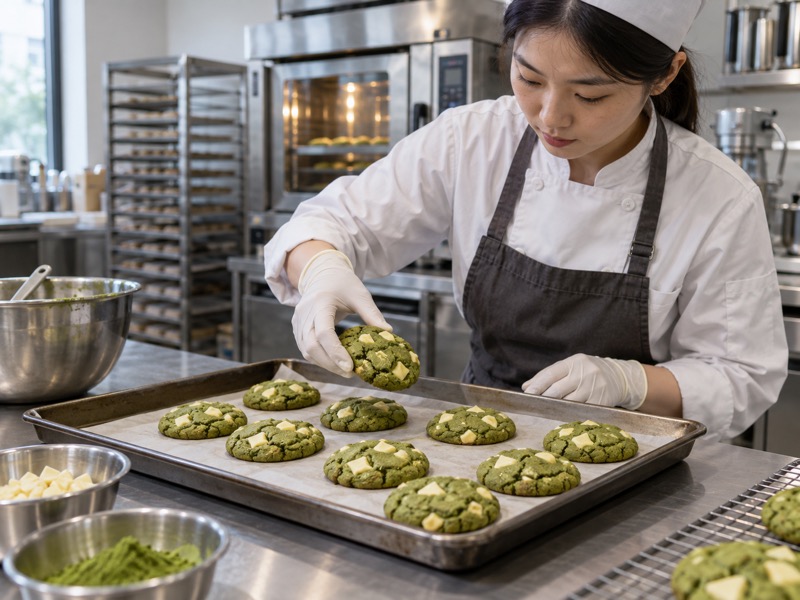
For: bakeries, café commissaries, packaged-cookie brands and ingredient buyers. Decision: whether the cookie keeps a clear tea note, attractive appearance and repeatable texture at production scale.
1. What should the finished cookie be like?
Choose texture and tea strength first
Decide whether the cookie should be thick and soft, thin and crisp, or somewhere between. Define its size, chocolate load, tea intensity and acceptable color after baking. A green cookie with a weak tea taste may disappoint a matcha buyer. A heavy tea dose can give a dry or bitter finish. Write a sensory target before changing ingredients: for example, “soft center, lightly crisp edge, white chocolate in every bite, and a clear tea finish.” That target can be checked across trays.
Taste a full cookie. One bite with a chocolate chunk may seem sweet, while a bite without chocolate may taste harsh. Cut several cookies and assess distribution, not only the best-looking sample. Taste fresh and after the intended display period. A product that passes warm from the oven can become dry or stale in a retail pack. The approved standard should represent the cookie at sale, not just at the baker’s first tasting.
| Product choice | Target | Check |
|---|---|---|
| Texture | Soft, crisp or hybrid | Fresh and held bite |
| Tea | Recognizable finish | Full-cookie tasting |
| Chocolate | Even sweetness | Cut-face inspection |
2. Which matcha should go into the dough?
Test after baking
Compare identified matcha samples at equal grams per kilogram of finished dough. Taste the baked cookie at its normal serving temperature. A delicate tea that is excellent in water may be lost after butter, sugar and heat. A more forceful tea may survive baking but make bites without chocolate unpleasant. Judge color, aroma, bitterness and cost per accepted cookie. Dry-powder brightness alone is not a reliable predictor of the baked result.
Keep a supplier standard. Request ingredient specification, lot traceability, pack size, storage guidance and change notice. Retain a reference powder sample and a reference baked cookie description. When a new tea lot arrives, run a small test bake before using it for a full production day. White chocolate can mask moderate tea variation, so compare carefully with a coded taste panel rather than relying only on color.
3. How should white chocolate be chosen?
Compare sweetness and behavior
White chocolate products differ in cocoa butter content, sweetness, flavor and how they hold their shape in a cookie. Select the actual ingredient the bakery can buy consistently, then compare it in the same base dough. A very sweet chip can obscure tea; a richer piece may give a smoother contrast. Check the supplier’s ingredient and allergen statements, pack format and storage guidance. If the product is described as white chocolate, confirm that the chosen ingredient supports that description under local rules.
Test distribution. Use a measured chocolate mass per kilogram of dough and check a tray of normal portions. If large pieces gather in a few cookies, the product will vary. Smaller pieces may distribute evenly but melt into the dough and reduce visible contrast. A mix of sizes can work, but it should be tested and costed. Record how the ingredient is folded into the dough and whether handling breaks the pieces during scale-up.
| Chocolate choice | Potential gain | Risk to test |
|---|---|---|
| Small chips | More even distribution | Less visual contrast |
| Large chunks | Distinct sweet bites | Uneven portioning |
| Mixed size | Texture variety | Added process control |
4. How should the tea enter the dough?
Prevent green streaks and dry pockets
Matcha powder can clump when added unevenly to dough. Sift it with a dry ingredient or use another validated mixing method that distributes it without overworking the dough. Keep the mixing order and time consistent. In a pilot, divide the dough into samples from different points in the mixer and bake them separately. Compare color and tea intensity. A single green dough ball can look uniform while darker tea pockets appear after baking.
Protect texture. Adding more powder changes the dry ingredient balance, so a higher tea dose may affect spread and mouthfeel. If the formula is adjusted, retest the cookie’s diameter, thickness and bite rather than assuming flavor is the only variable. A small bench mixer and a production mixer may distribute powder differently. Record the batch size at which the formula was approved and make a scale-up trial before selling large volumes.
5. What bake setting preserves the intended result?
Use the actual oven and tray
Oven type, load, tray material, dough temperature and portion size all affect spread and surface color. Bake a controlled matrix that changes one factor at a time. Photograph cookies under fixed light after cooling, not while hot. Matcha can look different on a browned edge than in the center. The goal is a cookie that is fully baked according to the bakery’s food-safety process and still matches the desired appearance and texture.
Check across the oven. Sample front, back, top and bottom positions if the equipment shows variation. Measure weight, diameter and height from several cookies per tray. If the edge browns before the center reaches the target texture, consider portion size, dough temperature or oven settings within approved operation. Do not underbake merely to retain a greener photograph. The bakery must validate both safety and eating quality.
| Bake observation | First check | Evidence |
|---|---|---|
| Dark edges | Oven position and time | Tray map |
| Uneven spread | Dough temperature | Portion measurements |
| Pale center | Actual doneness | Approved quality test |
6. How should dough handling be controlled?
Standardize portion and rest
Weigh individual dough portions or use a dispenser that produces a tested range. Variability changes baking and cost. If the dough is rested or chilled, define the time and condition rather than leaving it to shift habits. A longer rest can change hydration and spread; a warmer dough can spread more quickly. Trial the realistic range of holding times that production will encounter. If the product is frozen as dough, validate baking from that state separately.
Observe the line. Check whether chocolate settles in the mixer, whether late portions contain fewer pieces and whether tea color changes during a long holding period. A dough that performs well in the first tray but drifts by the last tray needs a tighter process or smaller batch. Keep a simple record of mix time, dough temperature by the bakery’s method, portion weight and bake start. The record should help an operator find the cause of a poor tray, not merely fill a binder.
7. How should allergens and claims be handled?
Review the complete formula
White chocolate commonly brings milk ingredients, and the cookie base may include wheat, egg or other allergens. Check exact supplier statements and shared equipment controls. If a plant-based white confection is used, do not assume it can be named or labeled the same as conventional white chocolate. Have the responsible team review ingredient names, allergen statements and any vegan, organic or origin claim for the selling market. A matcha supplier’s claim does not automatically apply to the finished cookie.
Train staff on substitutions. A last-minute chocolate or flour change can alter taste, allergens, label wording and bake behavior. Define approved alternate ingredients and retest them. For café display, staff should know what is in the sold cookie. For retail packs, the commercial formula and pack label must match. A recipe card is useful only if it is the current approved version.
8. What shelf and pack tests are needed?
Judge the cookie when it is sold
Pack a normal cooled cookie in the intended bag, tray or box and test it through the expected display or distribution period. Check texture, aroma, color, chocolate appearance and breakage. A soft cookie can dry out; a crisp one can absorb moisture. Packaging must suit the product and route. Do not assign a retail shelf date from a home recipe or from a plain cookie with different ingredients. Use the bakery’s quality and food-safety program to set it.
Include handling. Stack and transport packs as they will move to stores. A large visible chunk can break a cookie if the pack is tight. A clear window may show color but also exposes appearance changes. If the cookie is sold warm in a café, write that as a separate service route rather than assuming it will remain identical after packaging. Customers judge the product they receive, not the freshly baked reference tray.
| Route | Main risk | Trial |
|---|---|---|
| Café display | Drying or softening | Timed bite test |
| Retail bag | Texture and color change | Shelf study |
| Distribution | Breakage | Packed transport test |
9. What is the cost per sellable cookie?
Include actual yield
Calculate tea, chocolate, dough, packaging, labor, energy and expected loss per accepted cookie. White chocolate may be the largest ingredient cost even when matcha draws attention on the label. A high tea dose can also raise cost without improving taste if chocolate overwhelms it. Weigh normal portions and count rejects from shape, color, breakage and uneven chocolate. Divide the full batch cost by saleable pieces, not theoretical dough portions.
Compare supply options fairly. A tea with higher price per kilogram may work at a lower dose and keep a clearer flavor. A chocolate format with less waste may save labor. Ask suppliers for pack sizes that suit production volume and storage. Model a quiet week as well as a busy one; slow turnover can harm ingredient quality after opening. Pricing should support the cookie the bakery can consistently make.
10. What pilot proves the cookie is ready?
Bake through a real run
Use the production mixer, oven, trays and packaging planned for sale. Sample early, middle and late dough portions, and cookies from different oven positions. Record weight, spread, color, tea flavor, chocolate distribution, texture and rejects. Taste fresh and after the normal sale interval. Let ordinary operators follow the written method. If a formula only works when the developer adjusts it by eye, it is not ready for a production shift.
Approve the complete route. Keep matcha and chocolate codes, dough formula, mixing order, portion weight, bake cues, cooling, pack and retest triggers together. The next action is a controlled production pilot with sensory and yield review. Matcha white chocolate cookies earn a place in the line when both flavors remain clear and every tray looks and eats like the accepted sample.
| Pilot checkpoint | Pass question | Evidence |
|---|---|---|
| Dough | Is tea and chocolate uniform? | Multi-point samples |
| Bake | Is spread consistent? | Tray map |
| Shelf | Does bite remain acceptable? | Timed tasting |
| Yield | Are rejects controlled? | Saleable count |
Keep a baked reference sample from the approved trial and compare the next production run at the same age after baking. A cookie that looks green when warm may shift color in the display case. Note both taste and appearance before accepting a larger tea order.
The matcha white chocolate guide covers the broader ingredient pairing.
Reference: Brown Butter White Chocolate Matcha Cookies is a home-recipe reference. The bakery production checks above are independent.
FAQ
Q1: Can any matcha be used in cookies? Candidate teas should be compared after baking; dry color or grade names do not guarantee the finished flavor.
Q2: Why are some cookies darker than others? Check oven position, dough temperature, bake time and tea distribution.
Q3: Why does the tea taste disappear? A high chocolate load or sweet base can mask it; test the complete cookie and adjust measured ingredients.
Q4: Can the dough be frozen? It may be possible, but baking and quality from frozen dough need a separate trial.
Q5: What should a buyer cost? Accepted tea and chocolate doses, saleable yield, labor, pack and rejects per cookie.