
A matcha whisk replacement schedule should tell café staff when a chasen can no longer do its job. A date alone cannot account for drink volume, rough bowls, cleaning, or storage. Replace too early and the program wastes money; wait for a broken tine and the next drink may have to be remade. This guide turns visible wear and drink performance into a simple inspection and reorder plan. Use the tool maker’s care advice, your service records, and local food-handling requirements when setting the final rule.
Contents
- 1. Why is a fixed calendar interval unreliable?
- 2. Which signs mean a whisk must be removed?
- 3. How does drink quality reveal wear?
- 4. What should staff inspect each shift?
- 5. How can a café record actual service life?
- 6. Which handling habits shorten service life?
- 7. How should replacement stock be calculated?
- 8. When should a whole supplier lot be reviewed?
- 9. What belongs in a replacement cost comparison?
- 10. How should the schedule become a staff rule?
1. Why is a fixed calendar interval unreliable?
Count use and condition rather than months alone
Two identical whisks can enter service on the same day and finish with very different wear. One might prepare a few bowls during a quiet afternoon; another might work through a busy latte line. Bowl contact, cleaning motion, wet storage, transport, and the individual bamboo head all affect condition. A “replace every three months” note can therefore remove a sound tool or leave a damaged one in use. Use a calendar reminder for inspection and ordering, not as the only test for whether a whisk stays on the station.
Ippodo’s answer about chasen lifespan discusses wear in relation to use and condition rather than promising one duration for everyone. The Luna Matcha chasen guide also treats care and replacement as connected. For a café, turn that into two decisions: remove a tool as soon as it fails an inspection, then reorder before the spare pool runs low. Those decisions can be made with simple evidence from staff. A calendar still helps prompt a manager to review the log and forecast the next purchase.
2. Which signs mean a whisk must be removed?
Give staff an unambiguous stop list
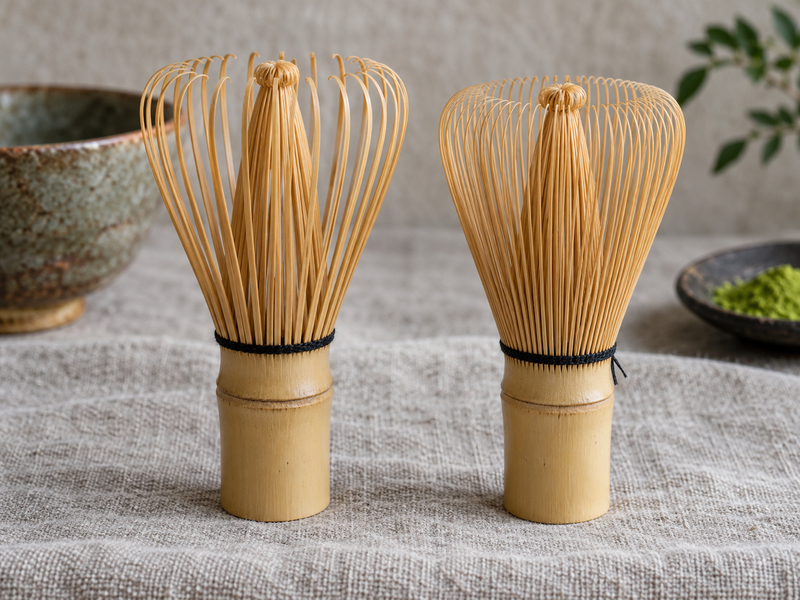
A broken or split tine, a loose binding, unstable handle, or persistent residue after the approved cleaning process should take a whisk out of service. A head bent so far that it strikes the bowl or cannot perform its normal stroke also warrants removal. Inspect under good light without forcibly bending dry bamboo to “test” strength. If a tine breaks during preparation, stop, set aside the tool, and follow the café’s process for assessing the drink. Do not trim the broken end and quietly put the whisk back on the station.
Not every change in appearance calls for automatic disposal. A used chasen may open into a different shape after preparation. Compare it with an approved reference and test the resulting drink. If staff disagree about an uncertain whisk, place it in a labeled hold area for the supervisor instead of returning it to the clean reserve. The rule should be stricter when integrity or cleanliness is in doubt. Photograph repeat defects so a manager can distinguish normal change from a batch quality problem or a training issue.
| Observation | Immediate response | Follow-up record |
|---|---|---|
| Broken or split tine | Remove from service | Photo and date |
| Loose binding or handle | Remove from service | Model and lot |
| Persistent residue | Hold and review cleaning | Method and staff note |
| Changed shape, no damage | Compare and test result | Supervisor decision |
3. How does drink quality reveal wear?
Compare against the approved preparation
Whisk wear can appear in a drink before someone notices a dramatic break. A barista may need a longer stroke to disperse the same powder, or the bowl may show repeated dry pockets after the normal method. The surface may change, but foam height alone is too noisy to use as a rejection test. Matcha lot, dose, water, bowl, and operator can all affect the outcome. Compare a suspect whisk with an approved spare in the same recipe session, and keep the preparation conditions as close as practical.
Record what the staff actually saw: more clumps after the usual mixing time, a scratchy feel against the bowl, or a finished latte with uneven color. If both whisks behave poorly, inspect the recipe, powder, and water before blaming the older tool. If only the suspect whisk fails and its head has visibly changed, remove it. This approach connects replacement to the drink sold to customers. It also helps a buyer explain why one model stayed in service longer than another without inventing a universal whisk lifespan.

4. What should staff inspect each shift?
Make a short opening and closing check
At opening, check the active whisk and every ready spare for sound tines, visible cleanliness, stable binding, and correct storage. Check the holder and bowl at the same time. A rough bowl can damage a good whisk repeatedly; a dirty holder can undermine a clean tool. At closing, inspect again after cleaning and before storage. Note any damage discovered midshift so the next team does not find a questionable tool among clean stock. A simple pass, hold, or retire mark is usually enough for daily work.
Train staff with photographs from real service stock rather than a generic diagram. Show an approved used whisk alongside examples of split tines and a loose binding. Tell staff where a rejected tool goes and where a spare can be found. The Ippodo care guidance gives a reference for careful rinsing and storage, but your exact procedure must match the whisk maker and applicable local rules. The inspection should take little time and prevent a doubtful tool from being used because nobody knew who could remove it.
| Shift point | Check | Record only if |
|---|---|---|
| Opening | Active whisk and spare condition | Tool fails or is missing |
| During service | Breakage or performance change | Drink or tool affected |
| Closing | Cleanliness, shape and storage | Tool held or retired |
| Weekly review | Trends by model and lot | Pattern needs action |
5. How can a café record actual service life?
Keep a small tool card, not an elaborate database
Give each whisk or batch a simple identifier. Record arrival date, first service date, station, supplier model, and the date and reason it leaves use. If individual labels would interfere with hygiene or handling, use a holder slot or small stock card instead. The count of drinks prepared can be estimated from station orders if staff cannot tally each use. Be honest about the approximation. A log of ten whisks with clear removal reasons is more useful than a detailed form nobody completes.
After several replacement cycles, review the range of service life and the causes. If tools fail in the first week, look at shipment defects, the bowl, or transport. If most last until shape gradually changes, replenishment can follow ordinary use. Keep returned or damaged samples separate from clean stock. A purchaser should be able to connect a complaint to a model and lot. The log helps set a reorder trigger based on observed consumption and supplier lead time, while the daily inspection still decides whether today’s whisk is safe and usable.

6. Which handling habits shorten service life?
Check the work around the whisk
Forceful contact against a bowl wall, twisting the head into a narrow cup, or pressing tines against a sink can cause avoidable damage. So can a holder that does not fit, a crowded utensil drawer, or packing a damp whisk into a closed case. Review each step where the head touches another surface. Staff should follow the maker’s recommendations for preparing, rinsing, and drying bamboo. Do not assume harder whisking solves a poor recipe; check powder dose, water, vessel width, and technique first.
Observe the station during a real rush. A careful training demonstration may not reveal the way a whisk gets placed between tickets. If repeated splits occur on one side, inspect the bowl for a rough patch and watch the normal stroke. If handles crack in transport, change the case or padding. Share findings with staff as a specific correction, not a vague warning to “be careful.” The cost of better storage may be lower than a steady stream of early replacements, but confirm the result in the next few service cycles.
| Wear source | What to observe | Trial change |
|---|---|---|
| Bowl impact | Repeated side contact | Wider working area or technique |
| Tight storage | Bent heads after close | Fitted holders with clearance |
| Wet enclosure | Moisture when unpacked | Dry before protected packing |
| Rushed rinsing | Tines struck on sink | Adjust cleaning station layout |
7. How should replacement stock be calculated?
Cover lead time and a realistic failure surge
Begin with the number of simultaneous service positions and the spares each needs. Add typical removals during the supplier’s replenishment lead time, then a buffer for damaged arrivals or a short spike in use. For example, if a two-station café normally removes about two whisks during a replenishment period, an order point should cover those expected removals plus protected spares and a chosen buffer. These are planning inputs, not a claim that every café consumes two whisks. Use your own log as soon as enough data exists.
Separate service-ready stock from a shipment awaiting inspection. A box on a shelf is not a usable reserve until staff check it against the approved sample. Watch for seasonal changes, events, and new menu drinks that affect use. If a supplier changes the model or packaging, sample before a full reorder. A purchase agreement should specify the model, head geometry where measurable, packaging protection, and defect handling. A whisk described only as “100 prongs” may not match the tool that passed your trial.
8. When should a whole supplier lot be reviewed?
Look for repeated defects with the same signature
One broken whisk might result from accidental handling. Several new whisks with the same split, loose binding, or crushed head deserve a lot-level review. Hold unopened units from that delivery and compare them with the approved sample. Record photographs, lot identifiers if available, package condition, and the point when the defect appeared. Tell the supplier what was observed rather than claiming a cause you have not established. If damage happened during inbound shipping, the packaging may need adjustment even if the whisk construction is sound.
Do not use defective units to meet a busy day’s demand. Move to inspected reserve stock, then ask the supplier for its replacement or credit process. If the lot differs in shape or feel despite the same catalog description, run a short drink trial before approving it. A purchaser can also request representative samples from more than one carton where order size justifies it. The schedule becomes more reliable when arrivals are checked early; otherwise, a shortage may appear only after the last approved spare breaks.
| Pattern | Possible question | Buyer action |
|---|---|---|
| Defects at unboxing | Packaging or construction? | Hold samples and document |
| Damage after one shift | Bowl or technique? | Observe service and compare stock |
| Changed head shape across cartons | Model change? | Compare approved sample |
| Cleaning failures across tools | SOP fit? | Review method and station |
9. What belongs in a replacement cost comparison?
Measure usable service, not package price
The cheapest unit may need frequent replacement, while a dearer one could have slower cleaning or more arrival defects. Compare the purchase price, usable service cycles, cleaning time, replacement frequency, damaged-arrival rate, and any drink remakes associated with tool failure. Use observed values from your station. Avoid turning a handful of trials into a universal cost-per-drink claim. If recipes or staff changed during the comparison, note that before drawing a purchasing conclusion.
The comparison should also include the bowl and holder that each whisk needs. A model that requires replacing every bowl may cost more than its unit price suggests. Conversely, a tool that fits existing station equipment may be practical even if its initial price is higher. Keep quality criteria fixed: the finished drink and hygienic use must pass before cost decides. If performance is equivalent, a dependable supplier and a readily available spare may be worth more than a small unit-price saving. Record the choice so a future buyer understands the reason behind the approved SKU.

10. How should the schedule become a staff rule?
Combine daily inspection with a reorder trigger
Write a concise rule for staff: inspect at opening, remove specified defects immediately, check performance concerns against an approved spare, inspect and dry at close, and record every retirement. Keep a photograph of pass and fail examples beside the card. Add a manager review interval for logs and stock. Name the person who can approve a doubtful tool, and make clear that staff can stop using a visibly damaged one without waiting for that approval. The rule should work during a rush, not require a committee meeting.
Set a reorder point using observed withdrawals and supplier lead time. Review it after a volume change or a different whisk model enters service. Share the approved sample with purchasing and retain the maker’s care sheet. If Matcha Village is involved in a matcha powder or utensil bundle, confirm the actual whisk source and product specification separately; do not infer that the powder supplier made the accessory. Ask suppliers for samples and clear defect terms, then use your own service records to keep a suitable reserve.
| Rule element | Staff action | Manager action |
|---|---|---|
| Daily condition | Pass, hold or retire | Review holds |
| Drink performance | Compare suspect tool | Approve replacement |
| Stock | Take inspected spare | Reorder at trigger |
| Repeat defect | Photograph and log | Contact supplier or retrain |
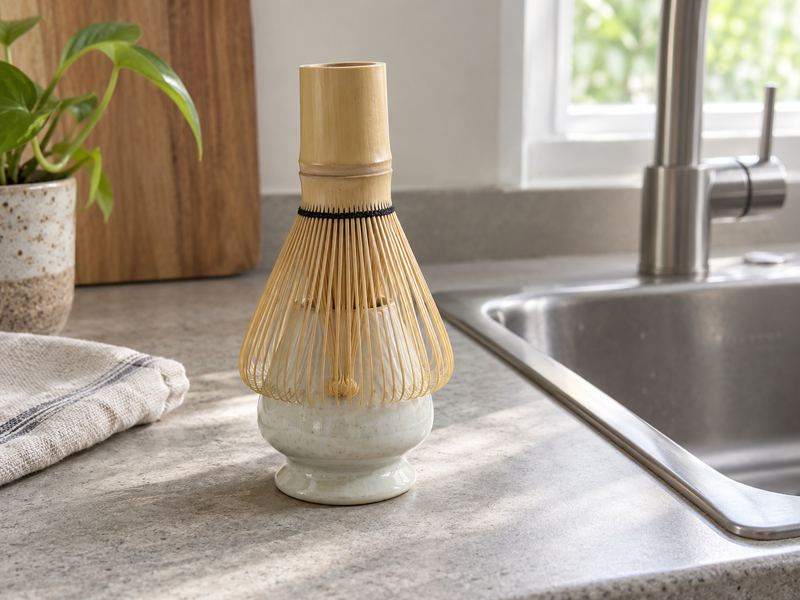
Compare matcha whisk holder designs when testing whether storage is contributing to tine wear.
FAQ
Q1. How often should a café replace a bamboo matcha whisk? Inspect it daily and remove it when integrity, cleanliness, or approved drink performance fails. Use service records to forecast orders.
Q2. Is a changed tine shape always a reason to discard it? Not automatically. Compare it with the approved sample and test the normal recipe, unless damage or cleaning failure is evident.
Q3. Can staff keep using a whisk with one broken tine? Remove it and follow the café’s incident process for any affected drink. Do not normalize broken tines during service.
Q4. What should be logged when a whisk is retired? Record model, first-use date if known, removal date, reason, station, and a photograph for unusual or repeated defects.
Q5. How many backups should a café hold? Cover simultaneous service, supplier lead time, typical withdrawals, and a sensible buffer based on your own history.
Replace from evidence, then reorder before a shortage
Use the matcha whisk replacement schedule as two connected routines: condition checks decide what can serve today, and a stock trigger keeps inspected spares available tomorrow. Review the log after several cycles. It will show whether the next improvement belongs in buying, handling, storage, or the drink recipe.