
Matcha whisk hygiene for cafes becomes difficult when several drinks share one preparation station. Residue hides among fine tines, a wet tool can be parked in a closed container, and a damaged whisk may stay in rotation during a rush. This guide sets out observable checks from opening to closing so staff can prepare drinks with a clean, sound tool. Apply the utensil maker’s care instructions and the food-handling rules in your location when writing your final procedure. The steps below are a training framework, not a substitute for those requirements.
Contents
- 1. What hygiene risks belong in a whisk SOP?
- 2. What should staff check before service?
- 3. How should a new bamboo whisk be prepared?
- 4. What is the between-drink cleaning step?
- 5. How should different ingredients be separated?
- 6. Where should a rinsed whisk dry?
- 7. When should a whisk leave service?
- 8. How should managers verify the procedure?
- 9. What changes for events and shared stations?
- 10. How can a café write a usable SOP card?
1. What hygiene risks belong in a whisk SOP?
Name the failure points staff can see
A bamboo chasen has many narrow spaces where matcha paste can remain after a quick splash of water. Other risks are simpler: placing a clean whisk on a used counter, leaving one soaking in leftover drink, or putting a damp head inside a closed retail tube. Broken tines create a quality problem and a reason to inspect the prepared drink. A café procedure should name these events and give a clear response. It should also distinguish cleaning between drinks from cleaning and inspection at close.
The TeaTach guide for café whisk use describes preparation and care as part of a repeatable café routine. Translate that idea into your own work area rather than copying a location-specific rule. Map where a whisk sits when it is clean, in use, awaiting cleaning, drying, or removed from service. If those states share one shelf, staff can confuse them. A small, labeled layout can prevent the kind of mistake that a long policy document misses. Review it with actual staff who work the busiest shift.
2. What should staff check before service?
Start with dry, sound tools and a clear station
At opening, inspect each whisk under good light. Look for powder or residue caught between tines, split or missing bamboo, an unstable binding, and a damp storage area. Check the holder and bowl too; a spotless whisk placed on a dirty holder will not remain clean. Set aside suspect tools and replace them with inspected spares. Do not trim damaged tines in the service area and then return the whisk without a documented assessment. Record recurring defects so purchasing and training can address their cause.
Then confirm that staff can reach clean water, approved cleaning supplies, and a place for used tools without crossing the dry powder zone. The water vessel used to prepare drinks should not become a general rinse cup. Put clean and used cloths in separate positions. Make the opening inspection a short signed step rather than a vague instruction to “check utensils.” A new team member should identify a service-ready chasen from a photograph and a rejected example.
| Opening check | Acceptable observation | Action when it fails |
|---|---|---|
| Tines | Intact, visibly clean | Remove tool for inspection |
| Binding and handle | Stable and clean | Use approved spare |
| Holder | Clean and dry enough for its role | Clean or replace holder |
| Station | Clean water and clear utensil zones | Reset before service |
3. How should a new bamboo whisk be prepared?
Follow the maker’s preparation guidance
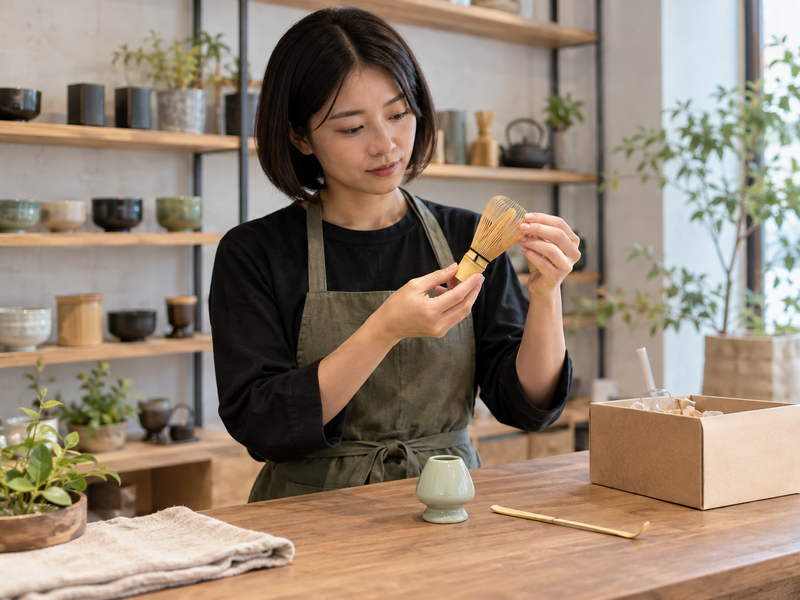
New bamboo tines are often curled tightly. A brief soak or rinse in appropriate warm water before use can help prepare them, but staff should follow the specific maker’s directions for time and temperature. Do not assume that a process shown for one chasen is appropriate for every material or decorative finish. Inspect the head before wetting it and again before its first drink. If fibers are loose, a tine is split, or packaging debris remains, remove the tool rather than hoping the first service will flush it out.
The Ippodo chasen care guide explains preparation, rinsing, and drying for bamboo whisks. Use it as background while giving staff the approved supplier’s instructions. Store the original care sheet with the purchasing record. A café that changes whisk models should review its SOP because head shape, packaging, and care advice may change. Teach new staff that preparation water and cleaning water serve different purposes. The goal is a whisk that is ready for the recipe and free of visible debris, with no unnecessary soaking in a shared vessel.
4. What is the between-drink cleaning step?
Make the reset visible and repeatable
After a drink, move the whisk to the designated cleaning point. Rinse according to the maker’s instructions and your applicable food-service procedure, checking between outer and inner tines for remaining powder. Do not leave it in a bowl of prepared matcha while taking other orders. Shake off excess water carefully without striking the head on a sink or counter. Put the tool in its assigned clean position so it cannot touch a used towel or the next drink’s ingredients by accident.
Write the step so it works during the busiest fifteen minutes, not only at closing. If cleaning cannot keep up, add an inspected spare or adjust the station workflow. Do not shorten the reset to a symbolic dip in murky water. Staff should know who cleans when one worker whisks and another assembles the drink. Observe several cycles and ask whether residue remains under the lighting available in normal service. A café should validate its exact procedure against its local regulatory requirements, the utensil material, and any approved cleaning products. Avoid improvising chemical treatments on bamboo.
| Step | Staff action | Supervisor checks |
|---|---|---|
| Transfer | Take used whisk to cleaning zone | No contact with clean stock |
| Rinse or clean | Follow approved method | No visible matcha residue |
| Inspect | Look across inner and outer tines | No new damage |
| Reset | Place in assigned position | No pooling or dirty contact |
5. How should different ingredients be separated?
Treat the whole drink path as a system
The whisk may touch plain matcha and water in one recipe, then a flavored powder or other ingredients in another. Decide which recipes may share a tool under your allergen and sanitation procedures. A rinse that removes visible green powder does not automatically establish that a utensil is suitable for a customer with an allergy. Follow the local rules and your business’s validated allergen controls. Use clearly identified utensils where separation is required, and train staff to stop and ask rather than promise a drink is free from contact.
Inspect bowls, strainers, scoops, worktops, and towels along with the whisk. A dedicated chasen does little if a shared scoop or bowl carries ingredients across recipes. Record the actual path each ingredient takes. If staff move from a sweetened blend to pure matcha, determine whether their hands, containers, and cleaning station support that change. Keep allergy information in the point-of-sale and training process as well as on the station card. The practical test is whether a new employee can follow the defined route without relying on memory or a senior barista standing beside them.
6. Where should a rinsed whisk dry?
Allow airflow without damaging the head
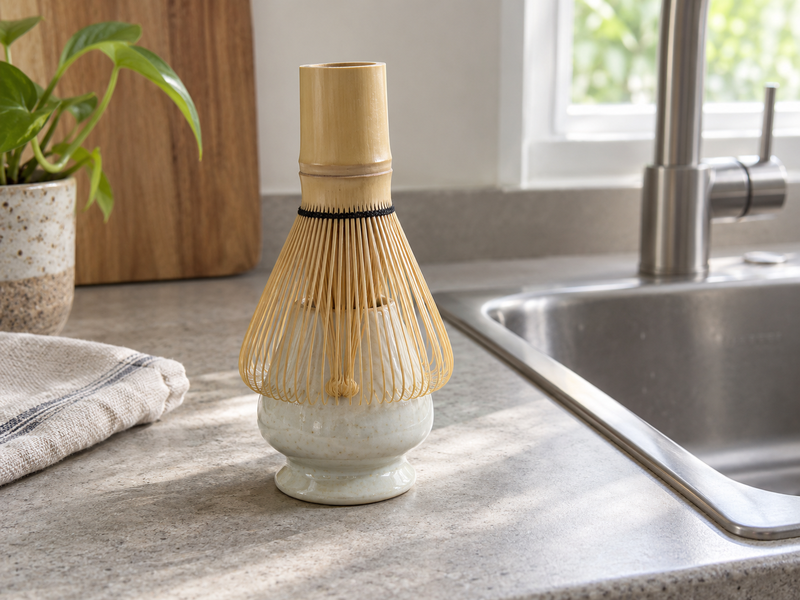
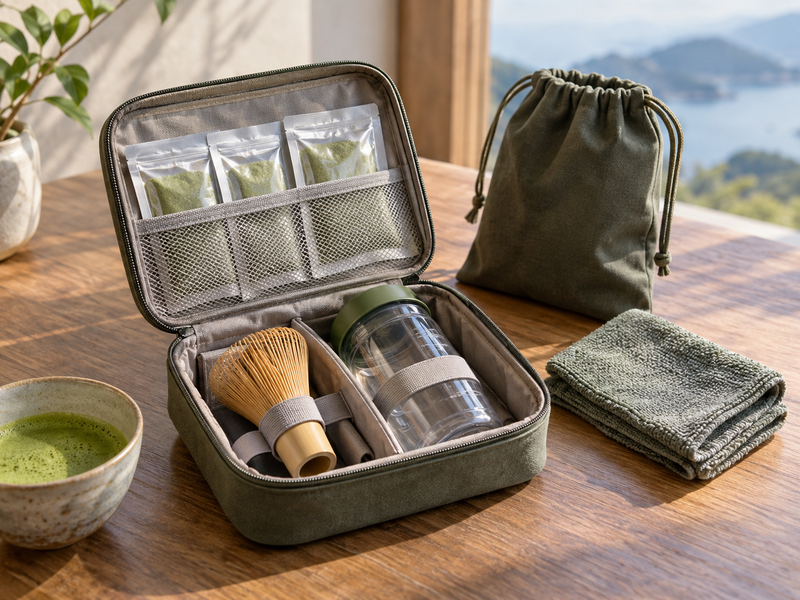
A rinsed bamboo whisk needs an appropriate place to dry. Many makers recommend a whisk holder that supports the head’s shape while allowing air around the tines; use one that fits the actual model. Do not force a broad whisk onto a narrow holder or jam wet tines into a closed shipping tube. Keep the drying position away from dirty dishes, splashes, and powder storage. If a café has several whisks in rotation, give each enough clearance so heads do not press against one another.
Check drying at close, when the next shift will not handle the tool for several hours. A container that hides residual moisture can undermine an otherwise careful rinse. The Ippodo care guidance cautions against improper storage and describes a holder as a way to preserve shape. Translate that into the actual counter: what is the whisk touching, can air circulate, and can staff distinguish a drying tool from a ready spare? If your local procedure requires a different utensil handling method, it takes precedence. Do not place a visibly wet tool into retail packaging for convenience.
| Storage position | Advantage | Check before use |
|---|---|---|
| Fitted whisk holder | Supports head shape | Holder cleanliness and fit |
| Approved open drying area | Allows separation | Contact surfaces and splash |
| Closed travel tube | Protects dry tool in transit | Never close around wet head |
| Shared utensil cup | Takes little space | Contact and pooled water risks |
7. When should a whisk leave service?
Use visible rejection criteria
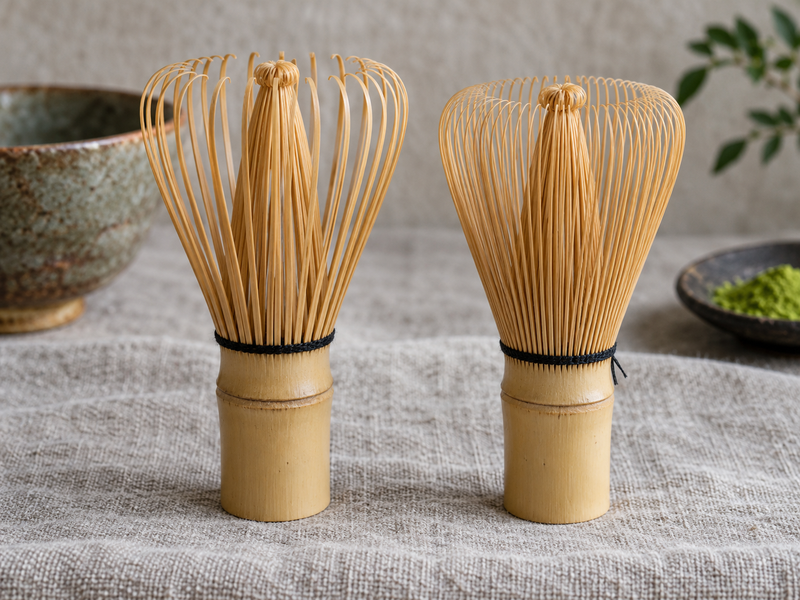
Remove a whisk when a tine breaks, splits, or changes shape enough to affect normal use; when residue cannot be removed under the approved procedure; or when the binding or handle becomes unstable. Discoloration alone may need assessment rather than an automatic verdict, but unexplained odor, persistent debris, or signs of inappropriate storage call for removal and review. A tool should also leave service if staff cannot confirm its clean status after it was mixed with used utensils. Make the decision easy: a clearly labeled hold container is better than a verbal request to “watch this one.”
Inspect the latest drink if damage was found during preparation, following your incident process. Retain photographs of recurring defects and note the date a whisk entered service. This helps identify a damaged shipment, an abrasive bowl, or poor storage. A calendar replacement interval can support purchasing, but condition determines whether today’s tool is suitable. Do not keep a damaged whisk in a drawer where it might be pulled back out during a rush. Record disposal or return so the inventory count stays real.
8. How should managers verify the procedure?
Watch a complete cycle and check records
Training is not complete when staff sign a page. Observe one worker from opening inspection through a prepared drink, cleaning, and tool storage. Ask another worker to repeat the sequence under normal order pressure. Check whether the SOP’s required supplies exist where the card says they do. If the sink is inaccessible or the holder has been moved, fix the station before treating an omission as an individual failure. Staff should be able to explain why a whisk was rejected without consulting a manager.
Use a brief log for tools removed, replacement stock, and repeated cleaning problems. A manager can review the log weekly while checking the station in person. The FDA Food Code 2026 is a model code used as a reference in the United States; it is not itself every locality’s enforceable rule. Confirm the law and approved methods where your café operates. For sites outside the United States, use the relevant local authority. Keep regulatory interpretation with a qualified local adviser rather than asking a blog post to settle it.
| Verification item | Evidence | Review point |
|---|---|---|
| Opening inspection | Completed short checklist | Each shift |
| Between-drink reset | Observed clean cycle | During training and spot checks |
| Rejected tools | Hold log and photographs | Weekly pattern review |
| Supplies | Water, holders and spares present | Before busy periods |
9. What changes for events and shared stations?
Design the cleaning path before opening the booth
A pop-up may have a smaller sink, longer line, and limited drying space. Before service, map clean water, used utensil collection, approved washing or rinsing access, and protected drying. Check the venue’s food-handling requirements. Bring enough inspected spares for the expected workload and a protected container for tools removed from service. Do not assume a bottle of water and a towel replace a proper cleaning arrangement. If the required setup cannot be provided, change the menu or preparation method before selling drinks.
At shared stations, assign ownership. One worker may use the whisk while another handles cleanup; both need the same handoff rule. Identify which bowls and utensils belong to matcha and which are used for other ingredients. A marked tray can help keep tools separated while a booth is being restocked, but it does not replace washing. After the event, count used and clean tools separately. Transport only tools that have been cleaned and dried under the approved procedure, with their heads protected. An event checklist should cover the return trip as carefully as the outward setup.
10. How can a café write a usable SOP card?
Describe decisions, not slogans
Write the card around five moments: before service, before each drink, after each drink, when damage appears, and at close. For each, use a short verb-led instruction and a photograph where staff might disagree about what “clean” or “damaged” means. Include the exact whisk model and the maker’s care reference. Name the person who owns spares and the person who reviews the hold log. Leave space for location-specific cleaning and allergen rules approved by your operator. Put a revision date on the card so old copies can be removed.
Trial the card with a new staff member. If they cannot follow it at normal pace, reduce ambiguity or change the station. Check that its steps align with equipment actually on site. A procurement team can support the SOP by ordering consistent whisk models, holders that fit, and clear care information. Matcha Village can discuss matcha and tea powder supply and relevant utensil or gift-set bundles; ask for product details before representing the origin or manufacture of any whisk. The useful outcome is a station that produces the same drink with a verified clean tool across shifts.
| Moment | Card instruction | Escalation |
|---|---|---|
| Open | Inspect clean, dry whisk and holder | Replace suspect tool |
| Make drink | Use approved recipe and utensil route | Stop for allergen query |
| Reset | Clean, inspect, and park correctly | Use spare if cleaning fails |
| Close | Inspect, clean, dry, and count | Log damaged stock |
The matcha whisk holder guide helps specify where a clean whisk dries between uses.
FAQ
Q1. Can a bamboo whisk be left in water between orders? Follow the maker and local procedure. Leaving it in a cup of old matcha is not a sound substitute for a defined cleaning and storage step.
Q2. Does a quick rinse remove allergen contact? Do not make that assumption. Use your validated allergen controls and local rules for shared utensils.
Q3. Should staff use soap on a chasen? Follow the utensil maker’s instructions and the cleaning method approved for your operation. Do not improvise a chemical process on bamboo.
Q4. What if one tine breaks during preparation? Stop using the whisk, handle the drink under the café’s incident process, and record the tool removal.
Q5. Is the FDA Food Code binding on every café? No. It is a model code; local authorities decide applicable requirements in their jurisdictions.
Make the next shift’s clean tool obvious
Give every whisk a known status and position. Inspect before use, clean after use, dry correctly, and remove damaged tools promptly. Then watch staff run the card during a real rush. If the process cannot be followed at service speed, change the station or staffing so hygiene does not depend on a quiet afternoon.