
Matcha biscotti need enough tea flavor to survive two oven passes, plus a crumb that slices without breaking apart. For a bakery, the useful result is a repeatable number of saleable pieces. Develop the powder dose, log shape, slicing window and drying step together, then test the finished pack.
Published recipes provide a starting method. Your flour, oven load and package still need their own trials. The quantities and comparisons below are proposed development work, not a validated commercial formula or shelf-life claim.
Contents
- 1. What should matcha biscotti taste and feel like?
- 2. Which matcha powder should a bakery compare?
- 3. How can you set a useful powder trial?
- 4. How should staff mix and shape the logs?
- 5. What should you record during the initial bake?
- 6. How can you reduce losses during slicing?
- 7. How do you control the drying bake?
- 8. Should you add nuts, chocolate or a glaze?
- 9. How should you pack and cost each batch?
- 10. What belongs in a supplier and production brief?
1. What should matcha biscotti taste and feel like?
Write a bite specification
Decide whether customers will eat the biscuit dry or dip it into a drink. A long, dense piece can suit dipping yet feel tiring on its own. A shorter, more tender version may suit an individually wrapped cafe snack. Taste the intended portion, including any coating, before approving either format.
Set plain acceptance notes that different staff can use. Describe tea aroma after breaking the biscuit, sweetness during chewing and bitterness after swallowing. For texture, record whether it breaks cleanly, sheds large shards or leaves a soft band through its center.
| Intended sale | Proposed product target | Practical check |
|---|---|---|
| Coffee accompaniment | Narrow piece with a firm bite | Fits the cup and serving plate |
| Wrapped cafe snack | Comfortable bite without dipping | Eat a whole portion dry |
| Gift assortment | Consistent length and clean edges | Compare pieces inside the insert |
Choose an acceptable color range using finished samples under fixed lighting. Matcha biscotti can have browned edges and a greener interior. A powder photograph cannot predict that balance after baking. Keep color, taste and breakage as separate observations so an attractive sample does not hide an awkward bite.
2. Which matcha powder should a bakery compare?
Judge the powder in the biscuit
Request two or three powder samples for matcha biscotti. Tell the supplier your flour base, fat source, approximate powder dose and whether tea also appears in a topping. Ask for samples identified by product code and lot, with corresponding ingredient information and current specifications.
Evaluate each powder at the same starting dose. Use the same flour bag, sugar, tray and bake schedule. Give the cooled pieces blind codes. A powder with a striking raw color may taste muted beside butter or chocolate. A less expensive sample may need a higher dose that removes its apparent saving.
Measure cost at the selected dose after tasting. Also examine how the powder passes through your sieve and disperses in the dry mix. Record visible green specks separately from general crumb color.
An existing matcha shortbread cookie program can help organize bakery purchasing, but approve its powder again in biscotti. Different fat levels, thicknesses and oven exposure can change the finished result. Keep one retained powder sample and a photograph of the approved biscuit with each development record.
3. How can you set a useful powder trial?
Change one ingredient at a time
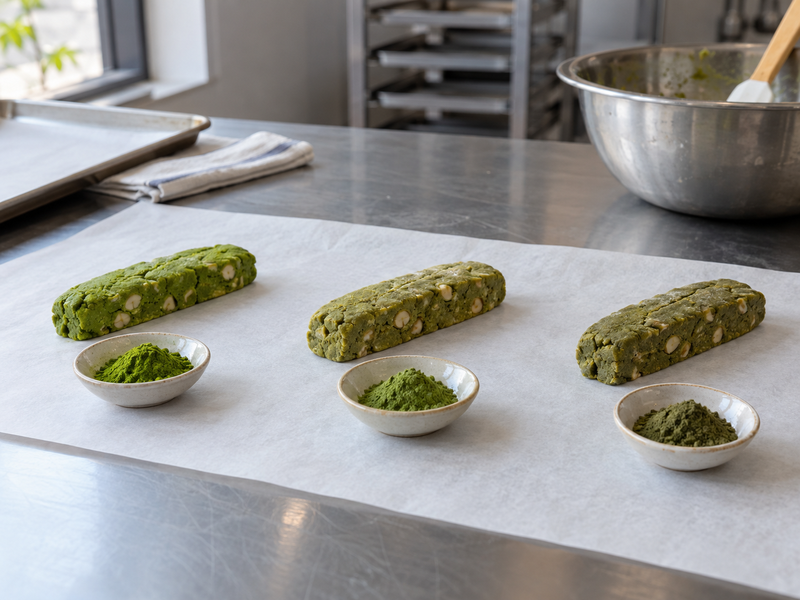
Develop matcha biscotti from a plain formula your bakery already handles reliably. Remove strong spices during screening so tasters can identify the tea. Weigh matcha separately and blend it through the dry ingredients before mixing the dough.
The following is a proposed screening series. Each batch uses 500 g flour with matcha added separately. These are trial doses, not a finished recipe; other ingredients follow your existing base formula.
| Trial | Flour | Added matcha | Matcha relative to flour |
|---|---|---|---|
| A | 500 g | 10 g | 2% |
| B | 500 g | 15 g | 3% |
| C | 500 g | 20 g | 4% |
Keep egg, fat, sugar and leavening unchanged during this screen. Record total dough mass because adding powder changes the batch weight. If the preferred sample becomes too dry or difficult to shape, run a separate formula adjustment afterward.
Taste plain pieces before testing a drizzle. For each coded sample, ask whether tea remains recognizable and whether the finish encourages another bite. Choose the lowest dose that meets your written flavor target. Repeat that candidate in another batch before calculating purchasing volumes.
4. How should staff mix and shape the logs?
Give every log the same geometry
Record ingredient temperatures and mixing order when developing the base. Break up powder clumps before they enter the wet dough. Scrape the bowl so dry pockets at its base do not become pale or heavily green sections within a log.
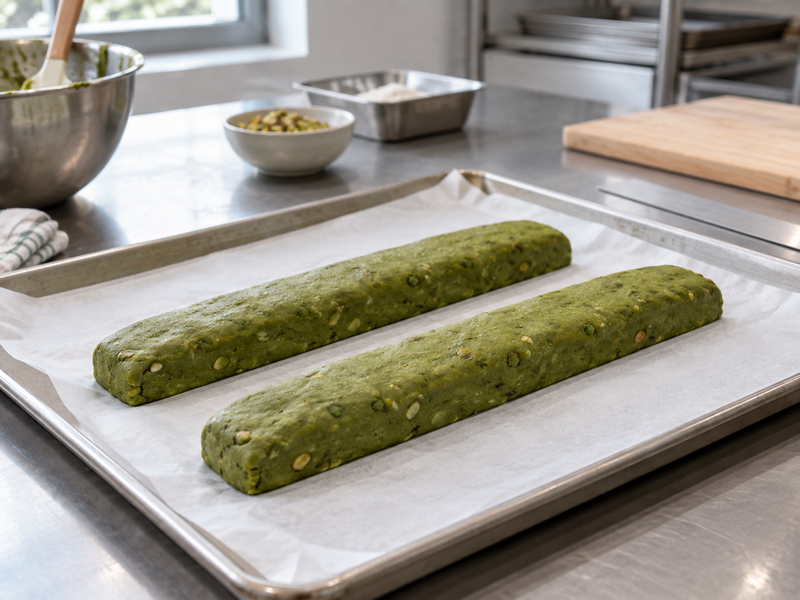
Divide dough by weight, then shape each portion against a simple length and width guide. Log mass alone cannot control slice size. Two equal portions can become a short, thick log and a long, shallow one, producing different baking and portioning results.
Use a consistent amount of bench flour if the dough sticks. Repeated dusting can alter the outside of later logs. Record any flour used rather than letting staff add it without limits.
Keep ends square enough to reduce trim, but avoid compressing one end more firmly than the other. Photograph the raw logs beside a ruler. Note pan material, liner and spacing. When a batch spreads too far, those details help distinguish a shaping problem from a formula change. Check several logs from the same bowl before expanding the batch size.
5. What should you record during the initial bake?
Track structure before color
The initial bake sets the log for cutting. Select a schedule suited to your base formula and confirm it in your oven. Record loading temperature, tray position, fan setting and actual elapsed time. Include whether staff rotate trays.
King Arthur Baking’s vanilla biscotti recipe uses a log bake followed by slicing and a lower-temperature bake. Its schedule belongs to that formula. Use the sequence as a reference while developing matcha dough, rather than treating its minutes as a production specification.
| Record | What to note | Why retain it |
|---|---|---|
| Raw geometry | Log mass, length and width | Connects shape with portion size |
| Oven loading | Tray count and shelf position | Reveals variation across the load |
| Baked log | Spread, cracks and center structure | Helps explain slicing behavior |
| Cooling interval | Time before cutting begins | Makes later trials comparable |
For matcha biscotti, green dough can make visual browning harder to judge. Examine the underside and a sacrificial center slice as well. A browned surface does not describe the center’s condition. If logs differ across a tray, map their positions before changing the whole recipe. Keep oven observations beside the slicing results from those same logs.
6. How can you reduce losses during slicing?
Test the cutting window
Choose a cooling interval that lets staff handle the log and produce clean slices. Cutting too early may compress a soft center; cutting a very firm log may produce more fragments. Compare intervals on matched logs instead of changing knife, thickness and cooling time together.
Use a sharp blade suited to the dough and inclusions. Support the log close to the cut and keep the blade vertical. A sloping blade creates a wedge whose thin end dries differently from its thick end. Mark a trial thickness on a cutting guide and measure several slices with a ruler.
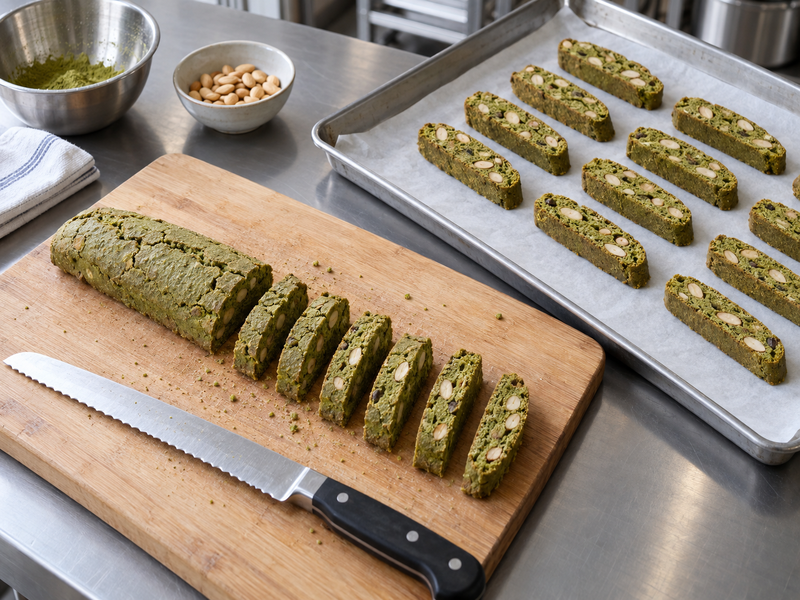
Collect crumbs, broken slices and end trims in separate containers. Weigh each category against the baked log mass. Fracture loss points toward cutting or crumb problems; regular end trim may be a shape or portioning decision.
Keep long diagonal cuts as a separate product trial. They create a different length and packing requirement from straight cuts. When training staff, show an acceptable slice beside a wedge and a broken sample. Written dimensions then have a visible reference.
7. How do you control the drying bake?
Judge cooled pieces from across the tray
Arrange slices with consistent spacing and orientation. Decide whether they stand upright or lie on a cut face, then keep that arrangement fixed during comparison. If staff turn slices, include the timing in the work instruction.
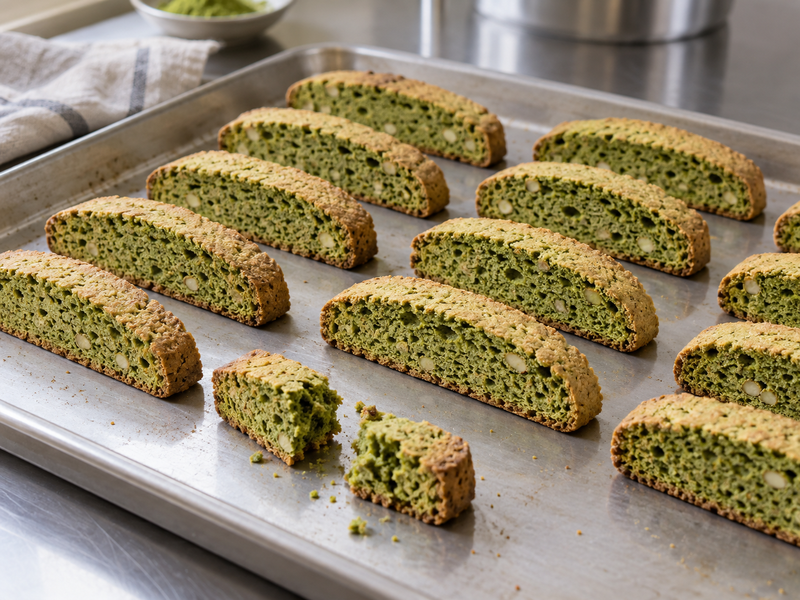
Use the drying schedule from your base formula as a trial starting point. Check pieces from the middle and corners of the load. Let comparison samples cool for the same period before tasting. Warm pieces and cooled pieces should not share one texture score.
| Observation after cooling | Next proposed check | Keep unchanged |
|---|---|---|
| Soft band through the center | Compare slightly thinner slices | Powder dose and log formula |
| Hard edges with a softer center | Compare a gentler, longer drying step | Slice thickness |
| Uneven texture across a tray | Check loading and air circulation | Dough batch |
| Many shards during handling | Review thickness and earlier cutting losses | Coating choice |
Write the actual observations before assigning a cause. A brittle piece may reflect formulation, thickness or handling. Increasing drying time automatically can make the next batch less pleasant to eat. Any changed schedule must still fit your established food safety process; a tasting exercise does not validate that process.
8. Should you add nuts, chocolate or a glaze?
Price the extra handling
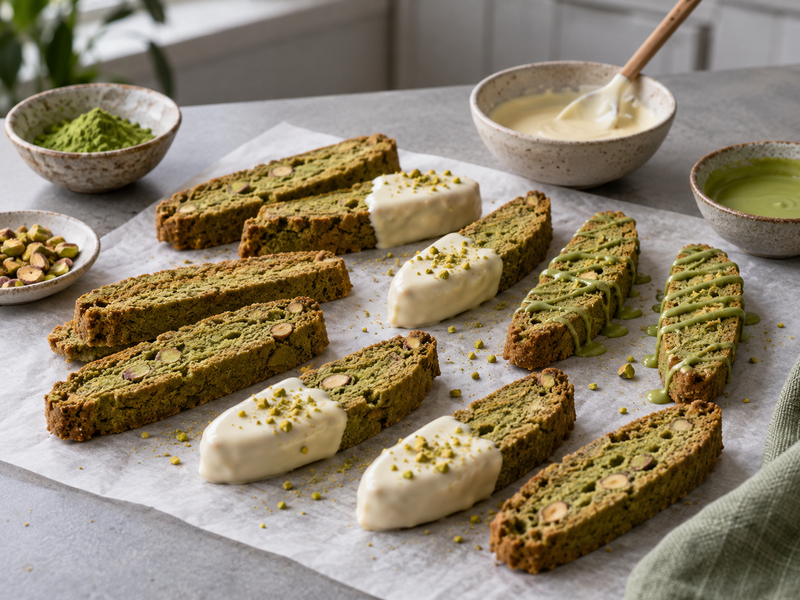
Approve plain matcha biscotti before adding another flavor. Nuts change the cutting path. Large pieces can catch the blade or leave gaps when they pull free. Compare a defined inclusion size and weight, then inspect the broken-slice container after cutting.
Chocolate and glaze also change the customer’s impression of sweetness. The Wanderlust Kitchen’s matcha biscotti recipe puts matcha in a glaze over the baked biscuit. That provides a reference for a surface application. A biscuit with tea in its dough needs its own topping balance.
For a proposed coating trial, weigh pieces before and after application. Set a target pickup per biscuit and compare a narrow drizzle with a dipped end. Record setting time, rack space and marks left on the wrapper. Include the coating’s ingredients in your product and allergen review.
A topping that tastes good immediately may behave differently inside a sealed pack. Keep coated and plain samples in separate trials. Inspect sticking, smearing and changes in the underlying bite under the storage conditions your product developer selects.
9. How should you pack and cost each batch?
Count saleable pieces after handling
Cool matcha biscotti before packing according to your process. Check that the chosen bag, tray or insert supports the finished length. Leave enough clearance that sealing jaws and closures cannot pinch the ends. For wholesale orders, trial the complete outer carton and its intended handling route.
Use actual accepted units for costing. The example below illustrates arithmetic only; it does not represent Matcha Village pricing or a measured production result.
| Illustrative cost item | Batch amount | Cost per accepted piece at 80 pieces |
|---|---|---|
| Ingredients | $18.00 | $0.225 |
| Direct labor | $20.00 | $0.250 |
| Packaging | $8.00 | $0.100 |
| Listed subtotal | $46.00 | $0.575 |
If the same listed costs yield 72 accepted pieces, the subtotal becomes about $0.639 each. Add energy, overhead, distribution and other business costs separately. Keep crumbs credited for another approved use distinct from whole-piece yield.
Packing trials also need a storage study suited to the recipe, coating and market. Ask a qualified food professional to define the necessary checks. Crispness on packing day cannot establish shelf life. Record seal condition, breakage and sensory changes alongside the study’s required measurements.
10. What belongs in a supplier and production brief?
Send the approved application details
Give your matcha supplier the selected powder code, dose relative to flour and finished product target. Include photographs of the cut interior under consistent light. Describe any bitterness limit in ordinary tasting terms, with an agreed reference sample where practical.
For a Matcha Village ingredient inquiry, specify your expected trial quantity, later order scale, destination market and packaging needs. Ask which product samples and documentation fit that request. Keep requirements for organic status or other claims tied to the exact product and current supporting records.
The bakery instruction should identify its flour, fat, egg format, mixing method, log dimensions and two bake stages. Add cutting thickness, cooling interval, acceptable trim and pack format. Record the person responsible for approving substitutions.
Repeat the selected formula with a different operator and a representative oven load. Compare saleable yield, bite and packing losses against the development batch. Resolve differences before placing a large powder order. Retain the approved recipe revision, supplier lot and production records together so the next delivery can be checked against the same biscuit.
FAQ
Q1: Can matcha biscotti use tea only in the glaze?
Yes. Treat the glazed version as its own product. Check topping pickup, sweetness, setting behavior and wrapper contact. A dough containing matcha requires a separate flavor comparison.
Q2: Which slice thickness should a bakery use?
Choose thickness through cutting, drying and eating trials. Keep it measurable and consistent. The right choice depends on log structure, inclusions and whether customers dip the biscuit.
Q3: Can broken pieces be excluded from the cost calculation?
The cost of producing them still belongs to the batch. Divide production costs by accepted saleable units, then record any approved recovery value separately.
Q4: Does a stronger green color mean better flavor?
Color and flavor need separate checks. Compare cooled biscuits blind, then review their appearance under the same lighting. Choose a powder at the dose that meets both targets.
Q5: How should a bakery set the storage period?
Arrange validation for the finished formula and actual packaging with a qualified food professional. Include intended distribution conditions and any coating. Approve the storage statement from those results.