
A matcha financier needs recognizable tea flavor inside a moist almond crumb, with enough structure to release cleanly from its mold. For bakeries, three measurements deserve close attention: recovered brown butter, batter temperature and deposited weight. Record those before adjusting the tea dose or oven schedule.
This guide develops a cafe or wholesale trial from a reliable financier base. All trial quantities and costing figures are proposals or illustrations. They do not represent tested Matcha Village formulas, production results or a validated storage period.
Contents
- 1. What should a matcha financier deliver?
- 2. How should you specify the dry ingredients?
- 3. How can you control brown butter yield?
- 4. What should staff control during batter mixing?
- 5. How much matcha should a pilot batch contain?
- 6. How do mold shape and deposit weight interact?
- 7. How should you develop the baking schedule?
- 8. What should you check after cooling and packing?
- 9. How do you cost a saleable financier?
- 10. What should a buyer send to the ingredient supplier?
1. What should a matcha financier deliver?
Define the portion and eating texture
Financiers are small almond cakes. Ai Willis’s matcha financier recipe combines almond flour, cake flour, egg whites, browned butter and matcha. It provides a recipe reference for that style of cake. A commercial version still needs approval in your chosen mold and serving format.
Write a target that covers the whole portion. Tea should remain identifiable alongside almond and toasted butter. Describe the desired center as moist, tender or firm using an agreed sample. Record edge texture separately because customers encounter the exterior and center in the same bite.
| Product format | Proposed target | Check during development |
|---|---|---|
| Cafe cake | Tender center with defined edges | Taste at intended service time |
| Mini accompaniment | Consistent bite-size portion | Compare deposited and baked weights |
| Wrapped wholesale cake | Clean release and tidy surface | Inspect after handling and packing |
Choose whether the surface will stay plain or carry sliced almonds, seeds or another decoration. Approve the plain cake before adding that variable. Keep photographs of its top, base and cut center under the same lighting. A bright surface alone does not describe the crumb or tea finish.
2. How should you specify the dry ingredients?
Keep almond flour consistent
Record the almond flour supplier, product code and ingredient declaration. Note whether it contains skin and how its particle size compares with the approved sample. A visible change in the ground almonds deserves an application check before staff compensate with more liquid or a longer mixing time.
Use the same wheat flour specification throughout the powder trial. If your base calls for cake flour, replacing it with another flour creates a separate formula question. Keep sugar type and any starch in a sugar blend documented too.
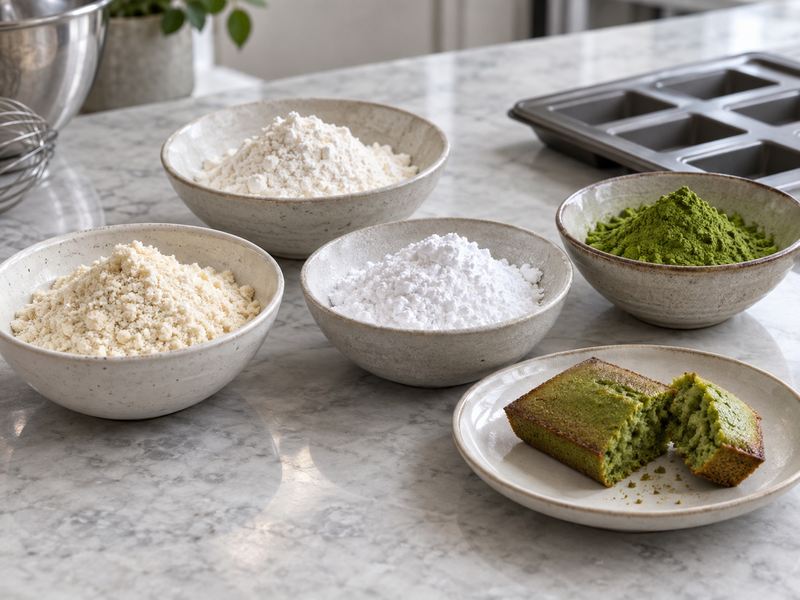
Ask the matcha supplier for application samples identified by code and lot. Describe the almond base and brown butter flavor so sample selection has a clear purpose. Sift the matcha and inspect whether clumps break up readily before mixing the dry ingredients.
Taste the finished matcha financier before comparing powder prices. A stronger dose can increase ingredient cost while changing batter handling. For businesses already making brown butter matcha cookies, a shared powder may simplify purchasing. Approve it again in financier batter and compare its flavor at the cake’s intended serving temperature.
3. How can you control brown butter yield?
Weigh what enters the batter
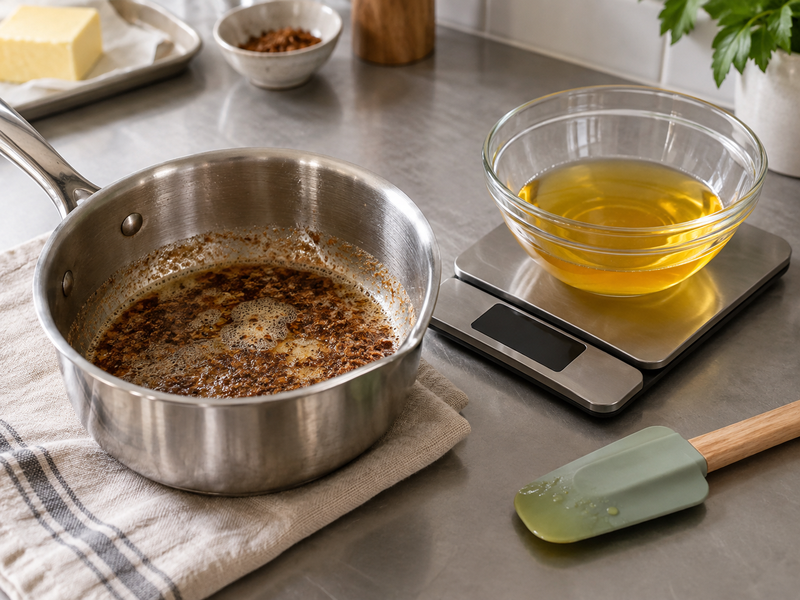
King Arthur Baking’s brown butter guide explains that heating evaporates water while the milk solids brown. Starting butter weight and recovered browned butter weight describe different stages. Write both on the production sheet.
Standardize the pan, starting load and endpoint used in your trial. Decide how staff transfer the browned solids into the receiving container. A different amount left behind can change the portion of solids entering the batter, even when the final weighed dose matches.
| Illustrative batch record | Example amount | Interpretation |
|---|---|---|
| Butter before browning | 500 g | Starting input |
| Browned butter recovered | 420 g | Amount transferred and weighed |
| Recovery | 84% | Recovered mass divided by input |
| Difference | 80 g | Evaporation plus handling losses |
These numbers illustrate bookkeeping, not an expected yield. The difference cannot be assigned entirely to water without further measurement. Record your own recovery over repeated batches.
Specify whether your formula’s butter line means starting butter or recovered brown butter. If it calls for a recovered amount, weigh that amount into the batter. Validate any liquid adjustment separately. Adding extra brown butter also changes the fat contribution, so a weight correction can become a formula change.
4. What should staff control during batter mixing?
Track ingredient condition and order
Weigh egg whites rather than counting eggs. Identify whether the bakery uses separated whites or a prepared egg-white ingredient. A change in format belongs in a new trial with the relevant product instructions and your established handling procedure.
Record the temperature of browned butter when it enters the bowl. The same recipe can reach the depositor at different temperatures if one operator waits longer or uses a larger batch. Note the finished batter temperature so a change in flow has a traceable record.
Follow your base formula’s mixing order during the matcha financier trial. Keep the dry blend uniform and scrape the bowl bottom and sides. Examine a small smear of batter for dry pockets or concentrated green streaks before filling molds.
Set a mixing endpoint that staff can recognize and repeat. Record mixing tool and duration alongside that description. If the trial includes a batter rest, define the container, covered storage conditions and elapsed time under your process. Compare rested and freshly mixed batter as separate runs. Keep repeated stirring and unrecorded top-ups out of the pilot so its results remain useful.
5. How much matcha should a pilot batch contain?
Screen the powder before changing the base
Use an established plain financier recipe and keep its egg whites, sugar and recovered butter dose fixed. Remove optional flavorings that would make the tea harder to judge. Divide the development work into matched small batches with individually weighed ingredients.
The proposed screen below assumes 200 g almond flour plus 100 g wheat flour in each batch. Matcha is added separately. This table specifies a comparison, not a complete or validated recipe.
| Trial | Combined almond and wheat flour | Added matcha | Matcha relative to that dry base |
|---|---|---|---|
| A | 300 g | 6 g | 2% |
| B | 300 g | 9 g | 3% |
| C | 300 g | 12 g | 4% |
Record the added powder in total batter weight. Keep the deposit and oven load consistent so the comparison focuses on dose. Taste coded cakes after the same cooling interval and again at the intended service time.
Select for tea identity, sweetness and finish. Record whether the crumb also changes. Once a dose looks promising, repeat it before adjusting other ingredients. A higher tea dose and a new sugar level should have separate records so staff can identify which change improved the cake.
6. How do mold shape and deposit weight interact?
Measure each cavity format separately
Record cavity length, width, depth and material. Two trays sold as financier molds may create different portions. Rectangular and round formats also need separate packing checks. Use the cavity measurements with deposited mass when describing the product to another bakery or co-manufacturer.
Check several deposits across a tray and across the filling run. For a proposed small-cake trial, compare 25 g and 30 g deposits only if both fit your mold. These are screening amounts, not universal fill weights. Keep the chosen weight unchanged while testing the bake.
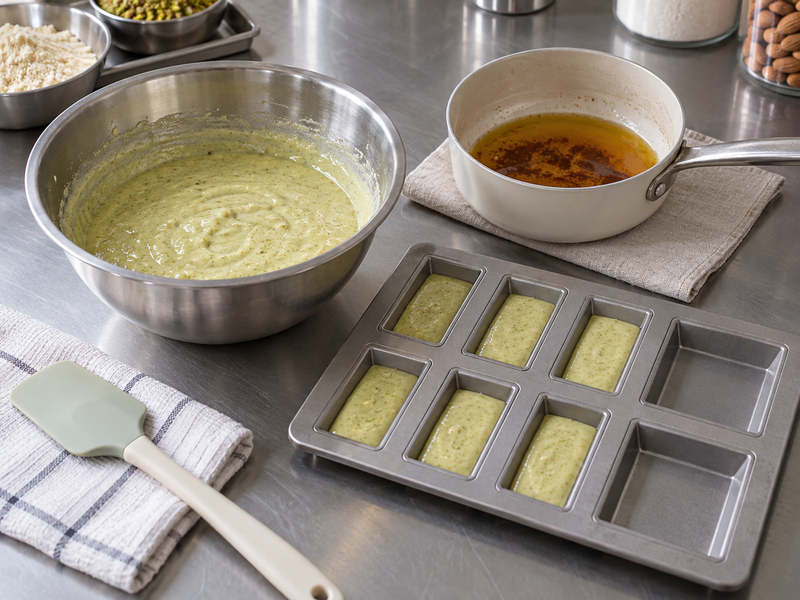
For hand piping, check early, middle and late deposits. A changing bag angle or squeeze can alter portion size. For a depositor, check delivered mass after pauses and refills as well.
Apply the same mold preparation across the comparison. Record greasing method and inspect release marks after baking. A cake with a torn corner should count as a release loss even if its weight is acceptable. Include cavity position in the notes when failures cluster in one part of the tray.
7. How should you develop the baking schedule?
Compare the center and perimeter
Begin with the schedule from your base recipe, then test it in the actual mold and oven. Record the set temperature, fan mode, tray position and load size. Use your established food safety process while developing the sensory endpoint; appearance alone cannot validate it.
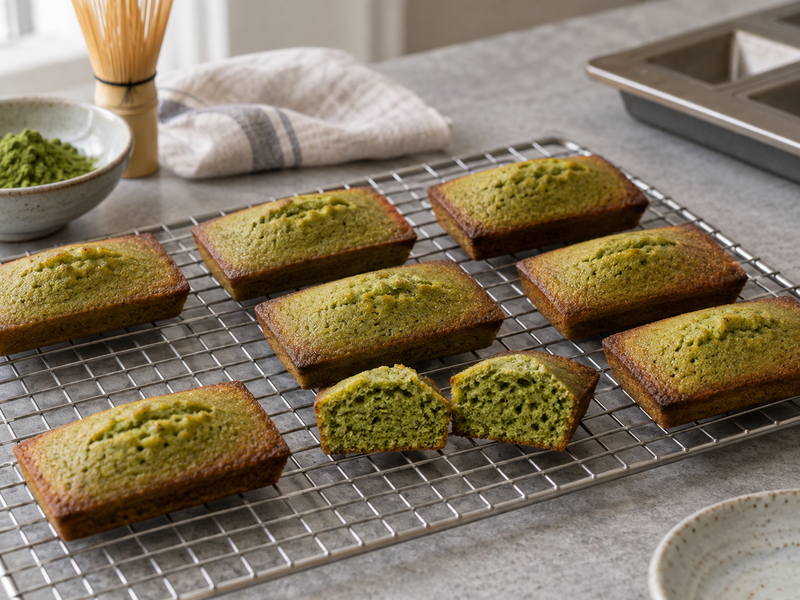
Check matcha financier samples from several tray positions after an equal cooling period. Cut through the center and compare moisture, crumb structure and base color. Taste the perimeter separately when deciding whether stronger browning hides the tea.
| Observation | Next proposed check | Variable to hold fixed |
|---|---|---|
| Dark base with acceptable top | Pan and shelf position | Batter formula and deposit |
| Different results across cavities | Oven loading pattern | Trial batter |
| Wet-looking band in the center | Deposit and bake schedule | Powder dose |
| Dry perimeter before center sets | Gentler schedule comparison | Cavity shape |
Treat each observation as a reason for another controlled trial. A darker base can come from several causes, so avoid changing the flour and oven together. Keep one accepted bake as the comparison point. Photograph the cut samples and attach the oven record, deposit checks and tasting notes to the same trial number.
8. What should you check after cooling and packing?
Test the cake in its actual sales format
Define when staff release the cakes from their molds and where they cool. Compare intact corners, sticking and surface marks. Use consistent handling during the trial so damage from a hurried release does not get mistaken for a formula fault.
Taste at the time your customer is likely to eat the cake. A cafe may serve it during the same shift; a wholesale buyer may receive it after transport. Record the exact interval and conditions instead of describing every sample as fresh.
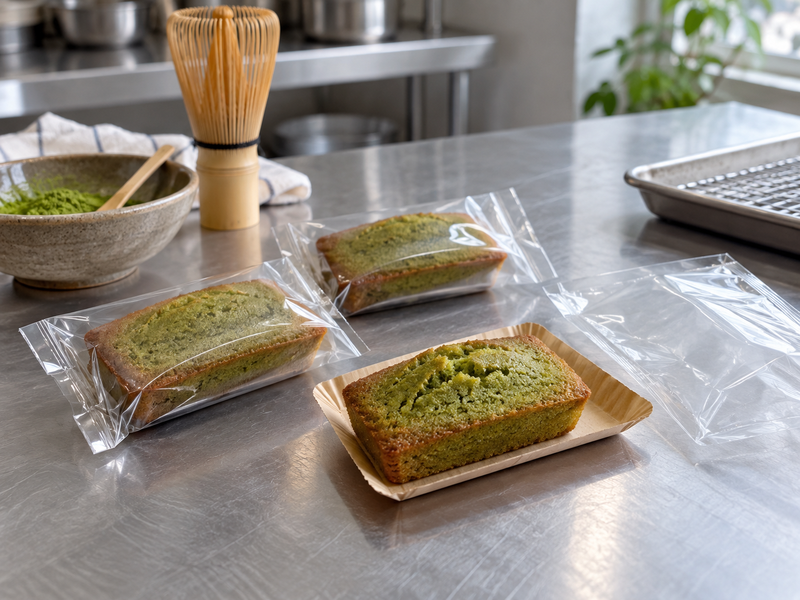
Trial the intended wrapper, tray or carton. Inspect grease marks, adhesion, crushed corners and visible condensation. Check whether staff can place the cake in its pack without squeezing its sides. Include the full outer carton when evaluating distribution handling.
Let a qualified food professional design any storage validation needed for the formula and market. Almond, egg and butter ingredients also need a product-specific allergen review. Keep sensory observations separate from the evidence used to approve a storage statement. A pleasant same-day crumb does not establish a commercial shelf life or justify copying another recipe’s storage advice.
9. How do you cost a saleable financier?
Include butter recovery and rejected cakes
For matcha financier costing, include the starting butter required to supply your recipe’s recovered amount. Using only the butter weighed into batter can understate purchasing cost. Track the almond flour, tea powder and packaging independently because different trial choices may change them at different rates.
The table below is an illustrative batch calculation. It uses invented amounts solely to show the method and makes no claim about actual supplier prices or bakery performance.
| Illustrative cost item | Batch cost | Cost per accepted cake at 100 cakes |
|---|---|---|
| Ingredients including butter input | $30.00 | $0.30 |
| Direct labor | $24.00 | $0.24 |
| Packaging | $12.00 | $0.12 |
| Listed subtotal | $66.00 | $0.66 |
At 90 accepted cakes, the same listed subtotal becomes about $0.733 per cake. Add energy, overhead, transport and other business costs before setting a sales price.
Separate rejects caused by deposit weight, bake variation, release damage and packing. Each requires a different correction. If an expensive powder permits a lower accepted dose, calculate its cost using that dose. Compare finished-product yield alongside tea flavor rather than choosing solely from the price per kilogram.
10. What should a buyer send to the ingredient supplier?
Describe the cake the powder must survive
Send the intended product format, flour base, brown butter profile and current matcha dose. Include photographs of the surface and cut center, plus tasting notes after the intended service interval. State whether the cake will be sold plain, decorated or individually wrapped.
For a Matcha Village inquiry, list the trial quantity, expected purchasing scale and destination market. Request suitable powder samples and documentation for the exact product under discussion. Identify any organic or other claim requirements before treating a sample as approved for purchase.
Keep your production brief separate but linked to the ingredient record. It should include starting and recovered butter weights, egg-white format, batter temperature, deposit mass, mold identification and oven schedule. Assign a person to approve ingredient substitutions and recipe revisions.
Repeat the chosen matcha financier with another operator at a representative load. Compare accepted piece count, crumb and release losses with the development batch. Retain the approved powder code and recipe version with those results. Give the supplier feedback from that controlled application before confirming the next order quantity.
FAQ
Q1: Must a matcha financier use a rectangular mold?
A rectangular mold gives a familiar presentation, but another small cavity can be tested. Set its own deposit weight, baking schedule and packing dimensions before production.
Q2: Can regular melted butter replace brown butter directly?
Treat that as a formula change. Brown butter has undergone evaporation and browning. Record the basis of the butter quantity and test crumb, flavor and batter handling again.
Q3: Should staff count egg whites or weigh them?
Use weight for production consistency. Record the ingredient format and supplier, then keep the same format during matcha powder screening.
Q4: Can a green surface confirm the cake is ready?
Color is only one observation. Check the defined bake endpoint, center structure and cooled texture under your approved process. Compare several cavity positions.
Q5: What should happen after a successful small trial?
Repeat it with a representative oven load and another operator. Confirm deposits, butter recovery, accepted yield and packed appearance before approving the recipe and ingredient order.