
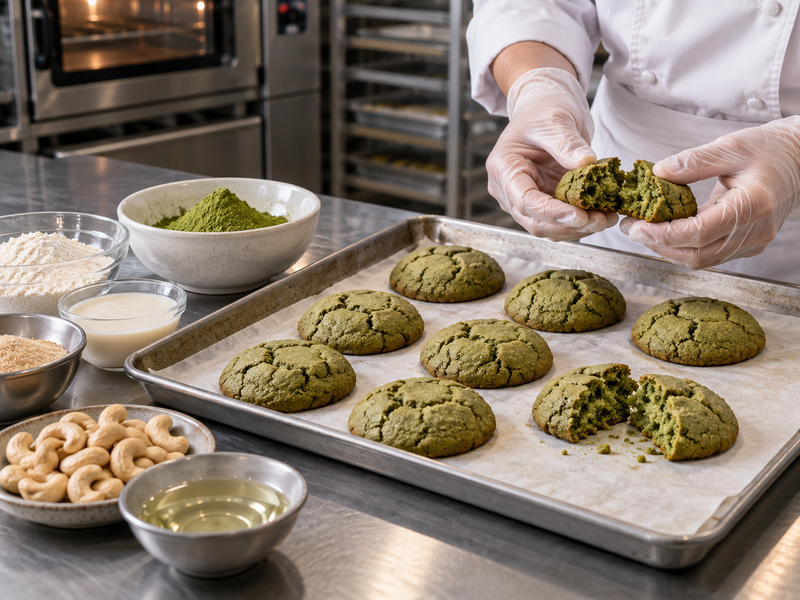
Removing butter and eggs from a matcha cookie changes spread, chew and color. The dough can look green and manageable yet bake into a dry cookie that breaks in transit. A plant-based bakery should choose the intended bite, then test a cooled, packed cookie.
Contents
- 1. What should matcha vegan cookies promise in a finished portion?
- 2. Which matcha survives this pastry process?
- 3. How should the dough, cream or layers be set?
- 4. Which production steps change color or texture?
- 5. How does the complete serving taste?
- 6. What happens through the sale window?
- 7. Can the box protect the finished product?
- 8. How many saleable portions does a pilot make?
- 9. Which ingredient records and allergen checks apply?
- 10. What sample should guide the next production run?
1. What should matcha vegan cookies promise in a finished portion?
Define the product before approving a sample
Define the promised texture before changing ingredients. A crisp biscuit and a soft café cookie need different fat and moisture systems. Calling the product vegan says nothing about whether its tea flavor or bite will satisfy the buyer.
The word vegan describes an ingredient choice, not the texture customers expect. Specify whether the cookie should be crisp at the edge, chewy throughout or soft like a café bake. State portion weight and intended pack. That brief guides fat and binder selection. A raw dough that holds together can still bake into a dry, fragile cookie, so the finished cooled piece must set the standard.
For baked goods and pastries, the target must include cut face, texture and portion yield. Surface color alone is a weak release standard.
2. Which matcha survives this pastry process?
Choose powder against the finished application
Test matcha in the complete plant-based dough. Coconut, oat and nut ingredients can each shift perceived sweetness and color. Compare a small powder-dose ladder after baking and cooling, not only in raw batter.
Keep the plant fat, binder and flour system fixed while screening three matcha doses. Portion dough to the same weight, then compare spread, color and tea flavor after complete cooling. A darker raw dough may not bake greener. If the strongest tea sample becomes dry or bitter, change the base's sweetness or water balance before deciding that vegan matcha cookies need an even more expensive powder.
Heat, fat and sugar can change matcha perception. Compare powders in the cooled pastry, not only as a straight-water cup.
For a related production decision, see our matcha cookie production guide.
| Candidate | Specific check | Keep if |
|---|---|---|
| Powder | Test matcha in the complete plant-based dough | Tea fits the finished application |
| Formula | Choose a binder and fat system that matches the desired spread | Dose stays practical |
| Tasting | Taste a cookie on bake day and later in the intended pack | Flavor remains clear |
3. How should the dough, cream or layers be set?
Change one variable at a time
Choose a binder and fat system that matches the desired spread. Record dough temperature and portion weight. If the cookie spreads too far, changing matcha dose alone will not fix the structure.
Hold flour and plant fat constant while testing matcha doses. Then adjust the binder or resting time if spread changes. If every variable moves at once, no one can tell whether tea made the cookie dry. Bake equal dough portions on the commercial sheet and note tray position. Some plant fats melt differently from butter, so a familiar non-vegan recipe cannot simply lose egg and dairy without a new process test.
Keep portion or pan weights constant during trials. Otherwise one test may seem richer simply because it contains more filling or dough.
4. Which production steps change color or texture?
Write a method another operator can repeat
Bake test trays at the front, middle and back of the oven. Matcha color can darken unevenly where heat exposure differs. Cut cooled cookies to check center texture and moisture rather than judging the top.
Bake trays in ordinary oven positions and map each result. Measure diameter, thickness and broken pieces after cooling. If the back tray browns more, adjust the oven or rotation rule before changing matcha. Ask a second baker to mix a batch from the recipe card. Their dough temperature and resting time can expose steps the developer performed unconsciously during the bench test.
A production instruction should name mixing endpoint, product temperature and finishing sequence. Bakery time alone rarely describes the result.
| Process point | Specific check | Record |
|---|---|---|
| Preparation | Choose a binder and fat system that matches the desired spread | Tool and dose |
| Production | Bake test trays at the front, middle and back of the oven | Start and end samples |
| Finished unit | Taste a cookie on bake day and later in the intended pack | Sensory result |
5. How does the complete serving taste?
Taste the portion a customer receives
Taste a cookie on bake day and later in the intended pack. A tea note that is clear while warm may flatten after fat crystallizes and the cookie dries. Check sweetness before adding more matcha.
Taste a fully cooled cookie from its center and edge. The center may keep a clear tea note while the edge tastes toasted or bitter. Repeat after the planned pack hold. A cookie can smell good fresh from the oven and taste flat after the fat sets. Check sweetness against the tea note rather than adding matcha until the dough is vividly green.
Taste a normal serving after cooling. Hot samples can make sweetness and aroma seem different from a product sold hours later.
6. What happens through the sale window?
Use the real shelf or counter conditions
Compare texture and color over the proposed shelf period with the actual barrier pack. A soft cookie can dry; a crisp one can soften. Define which change makes the product unsaleable.
Pack cooled cookies in the proposed pouch and run a short handling trial. Taste at the planned sale points, checking whether the bite turns dry or soft and whether tea fades under plant fat. Open a pack from the bottom of the carton as well as one from the top. A nice display sample cannot represent broken cookies or loose crumbs collected during distribution.
Display, refrigeration and travel can alter crumb, cream or crust in different ways. Test the selling routine rather than a quiet bench.
| Observation | Specific check | Action |
|---|---|---|
| Storage | Compare texture and color over the proposed shelf period with the actual barrier pack | Compare with control |
| Pack | Test pack fill and stacking | Inspect opened unit |
| Customer portion | Taste a cookie on bake day and later in the intended pack | Taste again |
7. Can the box protect the finished product?
Test the actual selling format
Test pack fill and stacking. A tender vegan cookie may fracture during distribution. Use the intended carton and count broken sale units after a representative handling trial.
A tender plant-based cookie may need a tray or tighter count per pouch to survive delivery. Pack cooled pieces at the intended fill weight, move cartons as they will travel and count broken units. Compare a clear window with a barrier pouch for color and texture protection. The label should reflect the exact plant fat, binder and any shared-line controls behind the vegan claim.
The box needs to protect the tallest or most fragile part of the pastry. Inspect a sample after the customer's likely trip.
8. How many saleable portions does a pilot make?
Measure yield and repeatability
Record saleable yield, dough loss and baking shrinkage. A lower tea dose that reduces bitterness may be better even if the powder looks less vivid. Price per sellable cookie, not per mixing bowl.
Cost each accepted cookie using weighed dough issue, bake loss, breakage and pack rejects. A small reduction in matcha may improve chew and reduce waste more than it lowers ingredient spend. If the menu calls the cookie vegan, verify the formula and the production controls that support that description; a plant-based recipe alone does not settle shared-line or label questions.
Count slices or units a store can actually sell. Trim, breakage and late-day waste belong in recipe cost.
| Pilot measure | Specific check | Commercial use |
|---|---|---|
| Yield | Record saleable yield, dough loss and baking shrinkage | Cost per saleable unit |
| Loss | Compare texture and color over the proposed shelf period with the actual barrier pack | Set acceptance limit |
| Supply | Review ingredient declarations and shared-line controls | Confirm lot evidence |
9. Which ingredient records and allergen checks apply?
Link claims and batches to documents
Review ingredient declarations and shared-line controls. Vegan formulation does not automatically mean free from milk, egg, wheat, soy or nuts in every facility. Keep the matcha specification and lot code with the recipe.
File a current specification, complete ingredient statement, lot-linked test results and origin support for any origin wording. Ask the supplier to explain how a material change will be communicated. The buyer should be able to connect a finished product batch back to the ingredient lot without relying on a salesperson's memory. Check the label for the actual sales market and the complete formula, including carriers and processing aids where relevant.
The full bakery ingredient list may bring milk, egg, wheat, soy or nuts into label review. Track matcha and base lots together.
10. What sample should guide the next production run?
Release against a written reference
Approve a production run only when ordinary staff can reproduce spread, color and texture. Save a cooled cookie and a packed reference, because warm bench samples are poor launch standards.
Make the launch decision with a physical reference and a short written standard. State the approved formula, supplier code, acceptable sensory range, process limits, pack, selling window and person who can release a later lot. Keep a failed example too; it makes training more concrete than a perfect photograph alone. A small controlled launch can show whether operators and customers experience the product as the development team expected.
Save a cooled and packed reference with a cut photograph. Later shifts can compare their product with an approved slice or unit.
| Release item | Specific check | Owner |
|---|---|---|
| Formula | Approve a production run only when ordinary staff can reproduce spread, color and texture | Development |
| Supplier | Review ingredient declarations and shared-line controls | Purchasing |
| Pack | Test pack fill and stacking | Quality |
A final production check
Pack a batch made by ordinary bakery staff, then open one pouch from the top and one from the bottom of a handled carton. Compare breakage, chew, tea flavor and color with the approved cooled cookie. If the product is sold as vegan, confirm the exact ingredients and line controls behind the wording. A shelf photograph and a raw dough note are not enough to approve the finished snack.
Further reading
Use ISO/TR 21380:2022 on matcha identity to frame matcha identity, FDA food allergen labeling guidance for the exact ingredient system, and FDA water activity technical guide when the product's validated shelf-life work depends on moisture.
FAQ
Q1: What is matcha vegan cookies in a commercial product?
Define the promised texture before changing ingredients. A crisp biscuit and a soft café cookie need different fat and moisture systems.
Q2: How should a buyer compare matcha for this use?
Test matcha in the complete plant-based dough. Coconut, oat and nut ingredients can each shift perceived sweetness and color.
Q3: What usually causes the first quality failure?
Compare texture and color over the proposed shelf period with the actual barrier pack. A soft cookie can dry; a crisp one can soften.
Q4: Which documents should the supplier provide?
Review ingredient declarations and shared-line controls. Vegan formulation does not automatically mean free from milk, egg, wheat, soy or nuts in every facility.
Q5: When should the formula be approved?
Approve a production run only when ordinary staff can reproduce spread, color and texture. Save a cooled cookie and a packed reference, because warm bench samples are poor launch standards.