
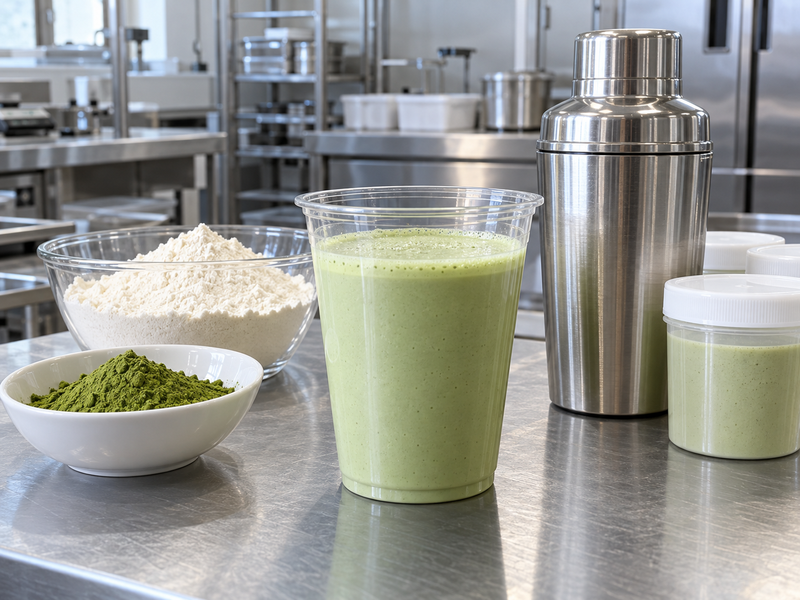
Adding protein to matcha creates a useful new beverage, but it also changes almost everything customers notice: color, thickness, sweetness, foam, and aftertaste. A small shaker cup may look fine while a bottled version sediments or tastes chalky a week later. A food brand or café chain should choose its protein system and matcha together, then test the finished drink under the way it will be made and sold.
Contents
- 1. Who is the protein matcha drink for?
- 2. Which protein source fits matcha?
- 3. How should matcha powder be chosen?
- 4. What mixing sequence reduces clumps?
- 5. How do you balance sweetness and tea flavor?
- 6. What changes when the drink is packaged?
- 7. How should protein and caffeine be measured for the label?
- 8. What supplier controls protect repeatability?
- 9. How should a buyer calculate cost?
- 10. What belongs in the final approval brief?
1. Who is the protein matcha drink for?
Define the serving occasion
A café recovery drink, a ready-to-drink breakfast bottle, and a dry powder sachet have different jobs. Write down the target serving size, protein level, sweetness, tea intensity, texture, temperature, and channel. A customer who wants a light iced matcha may reject a thick high-protein shake even if its nutrition profile looks attractive. A protein buyer may tolerate more body but still expect a clear tea note. Decide which compromise the product is making.
Build two reference cups with the same matcha dose and different protein levels. Taste them without revealing which has more protein. Let texture speak. If panelists prefer the lower-protein cup, that does not mean the concept has failed; it means the target must be justified against the sensory cost. Record why the finished drink is worth its menu or shelf space. Matcha Village can supply matcha samples, while the development team must validate the complete formula.
| Product format | Preparation test | Main risk |
|---|---|---|
| Café cup | Barista method | Lumps and service time |
| Ready-to-drink | Production process | Sediment and shelf life |
| Dry mix | Consumer instructions | Dispersion |
| Frozen blend | Blender and thaw test | Foam and texture |
2. Which protein source fits matcha?
Screen the base before flavoring
Whey, milk protein, soy, pea, and other plant proteins differ in flavor, solubility, mouthfeel, and allergen status. There is no universal best choice. Obtain a specification, ingredient statement, and lot-linked documentation for each candidate. Make an unflavored control with the protein and base liquid before adding tea. If it already tastes chalky or bitter, matcha may make the problem more obvious rather than hide it.
Next, add a fixed matcha dose and compare the same protein candidates. Record body, foam, sediment, sweetness needs, and tea recognition. Taste after standing. A protein that disperses when shaken can settle or thicken later. If a heat process is planned, screen that process early because protein behavior can change. Do not decide the source from grams per kilogram alone; compare cost and performance per saleable drink.
3. How should matcha powder be chosen?
Test against the protein system
A delicate matcha can disappear behind a flavored protein base. A more assertive powder may be easier to taste but introduce a rough finish. Request product code, ingredient statement, specification, lot-linked analysis, pack size, and change-notification terms. Confirm whether it is straight tea or a blend. For a protein drink, keep control of sweeteners and added flavors during the first comparison.
Prepare each matcha candidate in the same protein base, at the same dose and with the intended mixing tool. Evaluate immediately and after the realistic service or storage interval. Check the unflavored version. A vanilla-heavy prototype may make every powder seem acceptable while masking the reason to buy matcha. Select a candidate that gives the desired green tea character with a manageable dose, then assess whether a second lot behaves the same way.
| Matcha test | Why it matters | Acceptance note |
|---|---|---|
| Dry identity | Pure tea or blend | Label accuracy |
| Mixed color | Brand appearance | Fixed-light comparison |
| Flavor in protein | Tea recognition | Blind tasting |
| Sediment | Drinking experience | End-of-cup check |
4. What mixing sequence reduces clumps?
Separate dispersion steps
Matcha and protein can each form clumps, especially in cold liquid. Test whether a matcha premix and a protein premix should be made separately before combining. The right answer depends on ingredient form and equipment. A café shaker, high-shear mixer, and bottle line will produce different results. Record powder addition order, liquid temperature, mixing energy, and total time. A lab blender can conceal problems that a customer using a spoon will see immediately.
Take samples from the top and bottom of a batch and from the first and last units filled. Look under the foam. A smooth surface can hide dense residue below. If the drink needs a stabilizer or emulsifier, document its role and label effect and compare it with simpler process changes first. Avoid extending mixing until excess foam or heat becomes a new quality problem. The written method should work for the operator and scale that will actually make the drink.
5. How do you balance sweetness and tea flavor?
Use a small sensory matrix
Protein ingredients can bring cereal, dairy, beany, or bitter notes. Matcha adds its own vegetal and bitter profile. Sweeteners may soften both, but too much turns the drink into a dessert. Hold protein level and matcha dose constant while comparing a narrow sweetness range. Then test vanilla, cocoa, or fruit only if the concept calls for them. A flavor should support the tea, not bury it.
Include the finished serving temperature and any ice dilution in the tasting. A cold drink can seem less sweet at first and more cloying as it warms. Taste the final third. Sediment and foam often change the last sips most. Ask panelists to describe tea intensity, protein note, sweetness, aftertaste, and mouthfeel separately. Those notes reveal whether the next adjustment belongs to matcha, protein source, sweetener, or process.
| Sensory issue | Possible cause to test | First controlled change |
|---|---|---|
| Chalky finish | Protein source or mixing | Compare source |
| Weak tea | Matcha dose or flavor masking | Dose ladder |
| Bitter finish | Both powders | Separate control cups |
| Thick texture | Protein solids | Reduce solids or revise base |
6. What changes when the drink is packaged?
Validate the actual process
A fresh café drink is not a ready-to-drink shelf-life result. Filling, heat treatment, pressure processing, homogenization, oxygen exposure, and storage can change color, protein stability, and tea flavor. Build pilot packs with the intended process and packaging. The quality team should design microbiological and sensory shelf-life work for the exact formula. Do not extrapolate from a plain matcha beverage or a protein shake without tea.
Inspect phase separation, sediment, viscosity, foam, color, and aroma at defined points. Include storage and transport conditions likely in the target channel. Shake only if the label says to. If the customer must shake to restore the drink, test how well that actually works after aging. If the product cannot recover, consider a different protein system or format. Record whether a clear bottle exposes unattractive settling that an opaque pack would hide, then decide honestly whether the underlying product is acceptable.
7. How should protein and caffeine be measured for the label?
Use the finished serving
Calculate nutrition and protein from the exact formula and verify with an appropriate method for the destination market. Ingredient specifications can support development, but final label values must represent the saleable product and its serving size. Matcha contributes naturally occurring caffeine; check the actual tea dose and any other caffeine sources in the formula. The FDA's Nutrition Facts resources describe current U.S. packaged-food labeling, while other markets have their own rules.
A protein claim may have a defined regulatory meaning. Check the wording before printing. “High protein,” “supports recovery,” and “steady energy” are different statements with different evidence and legal implications. The U.S. FTC health-products guidance explains the need to support express and implied health claims. Have a qualified reviewer approve the finished package, website, and sales sheet together.
8. What supplier controls protect repeatability?
Qualify both powders
Approve matcha and protein separately, then approve the combination. Request product codes, lot-linked analysis, ingredient and allergen statements, manufacturing and packaging specifications, lead times, and change-notification terms. If a protein supplier changes its source or processing, a previously stable drink may behave differently. A new matcha lot may also shift color or flavor. Build a small requalification test into the purchasing plan.
Keep retained samples and a benchmark finished drink. Trace both ingredients. A complaint about clumps should lead back to the exact production lots and mixing record. If the formula includes milk, soy, nuts, or another major allergen, review cross-contact in the manufacturing plant and café station. The goal is to find the cause of a change before the next shipment or menu run, not to debate which supplier is responsible after customers complain.
| Supplier file | Matcha | Protein |
|---|---|---|
| Exact product code | Required | Required |
| Ingredient/allergen statement | Required | Required |
| Lot-linked analysis | Required | Required |
| Change notification | Required | Required |
9. How should a buyer calculate cost?
Count saleable servings
Calculate the cost of matcha and protein at the approved grams per serving, then add base liquid, sweetener, flavors, packaging, labor, processing, testing, freight, and waste. Compare alternatives that meet the same sensory and label target. A cheaper protein that forces an extra flavor mask or stabilizer may not lower the finished cost. A matcha that needs a higher dose to remain visible in a protein base can change the economics quickly.
For café service, include the time to premix, clean equipment, and discard unused concentrate under the approved holding policy. For packaged drinks, include rejected units and cold-chain or shelf-stable processing. Price the approved cup. Do not use a quote from an early formula that had less protein or a smaller serving. Keep the model next to the formula revision history.
10. What belongs in the final approval brief?
Make the formula reproducible
Record the target customer and channel, exact formula, supplier product codes, ingredient and allergen files, mixing order, process, packaging, serving size, nutrition method, sensory standard, and shelf-life evidence. Attach a cost sheet and at least one realistic production trial. Include failed tests, such as a protein source that left chalky sediment or a matcha lot that vanished behind vanilla. These notes help the next team avoid the same dead end.
Define requalification triggers for ingredient source, powder processing, sweetener, package, heat process, or serving size. Prepare a retail unit as instructed. The product should match the approved sensory target when made by a normal customer or operator. A protein matcha drink is ready when its tea flavor, protein content, preparation, and cost all survive that ordinary use.
Check the last sip
Prepare the protein matcha using the customer's likely shaker or blender, then let it stand for the time between preparation and drinking. Taste the first and final sips separately. Protein sediment, tea particles, or foam can make the last sip much thicker or more bitter than the first. Test with the actual milk or water base and serving temperature, not a laboratory substitute. If “shake again” is necessary, verify that ordinary shaking restores acceptable texture. Record the powder and protein lots used. A product that passes only under continuous agitation is not ready for a single-serve bottle or café counter.
| Drink point | Texture | Tea flavor |
|---|---|---|
| First sip | Smooth? | Recognizable? |
| Midpoint | Foam or sediment? | Balanced? |
| Last sip | Thick residue? | Bitter? |
Keep the approved preparation card beside the retained sensory sample so the next lot can be checked the same way.
FAQ
Q1. Can matcha be mixed with protein powder?
Yes, but the powders need a tested mixing method. Compare protein sources and preparation tools in the exact liquid and serving format.
Q2. Why does a protein matcha drink taste chalky?
The protein ingredient, mixing process, solids level, or storage may be responsible. Use unflavored control cups to identify the cause before changing matcha.
Q3. Is protein matcha automatically a high-protein product?
No. The claim depends on the finished serving and the rules of the destination market. Review the exact formula and label with qualified specialists.
Q4. Can a café formula be bottled unchanged?
A packaged drink needs its own process, packaging, shelf-life, and label validation. A fresh café cup is only an early sensory test.
Q5. What should buyers ask matcha and protein suppliers for?
Request exact product identity, ingredient and allergen statements, specifications, lot-linked analysis, packaging, lead times, and change-notification terms for both materials.