
A matcha tray can organize preparation, carry a finished drink or display a retail set. Those jobs demand different surfaces and dimensions. A tray styled beautifully for a photograph may slip on a wet counter or make staff carry a hot bowl awkwardly. Define its role, load it with the real pieces and test a complete service cycle. Our matcha tea accessories guide covers the broader tool assortment. Wabi Sabi Decor’s styling article addresses home presentation; wholesale buyers need handling and maintenance evidence as well.
Contents
- 1. What job should the tray do?
- 2. How much usable space is needed?
- 3. Which shape supports safe carrying?
- 4. What surface works with spills and steam?
- 5. How should tools sit during preparation?
- 6. Can the tray improve the customer handoff?
- 7. How should a display tray merchandise a kit?
- 8. What cleaning and wear checks are needed?
- 9. How should trays be packed and replenished?
- 10. When should a tray be approved for rollout?
1. What job should the tray do?
Assign one primary function
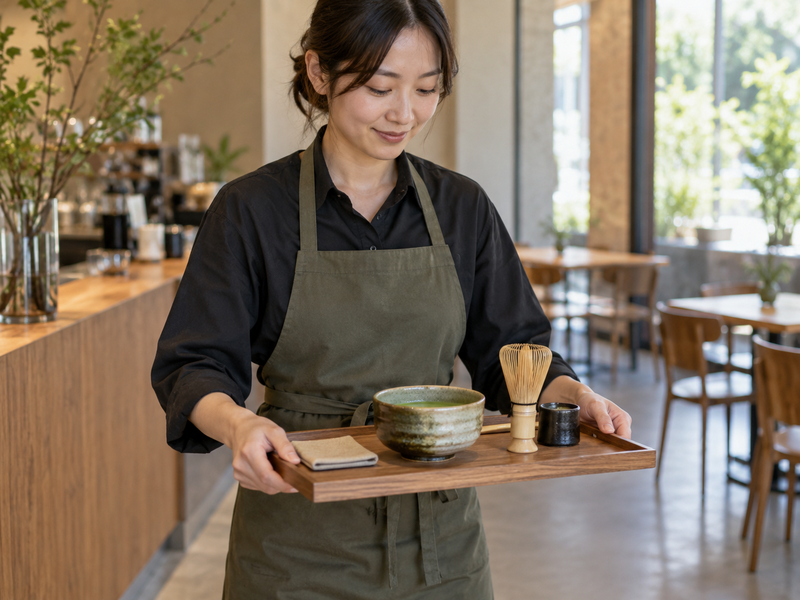
A preparation tray keeps utensils within reach. A serving tray carries a bowl or cup to a guest. A retail tray presents products on a shelf. One model may handle more than one task, but its main job should guide selection. A high rim helps contain objects in transit yet may obstruct a whisking hand. A heavy stone display can look polished while being impractical for repeated carrying.
Write the route before choosing a finish. Mark where the tray begins, which items sit on it and whether it moves during service. If it carries liquids, include a normal spill in the trial. If it stays on a counter, check whether staff can lift it for cleaning. For a retail bundle, identify which items are actually included and which are display props. The same set can be arranged attractively without asking customers to buy a tray that fails its day-to-day purpose. A clear function narrows material, size and price decisions.
In a menu with both straight matcha and lattes, the tray may carry different loads. Put each full service combination on the candidate: bowl, water vessel and cloth for one route; cup, milk pitcher and perhaps a spoon for another. Record which items actually move together. A tray sized for the larger arrangement may crowd the counter during the smaller one. That evidence can support one shared tray, two sizes or a decision to use trays only for table service.
2. How much usable space is needed?
Measure the loaded arrangement
Use the actual bowl, whisk, scoop, cup and any water vessel planned for the station. Measure each footprint and the clearance required to lift it without touching another object. The tray’s outside dimensions can overstate usable space when its rim curves inward. Test a wet bowl and a dry tool holder together; the arrangement should leave room for hands, not just objects.
Make a paper layout. Trace the tray interior and place component outlines on it before ordering samples. Then compare that drawing with a real loaded trial. Record overhang, crowding and whether the heaviest item sits near a carrying hand. For a display, allow room for a price card without hiding the product. Avoid adopting a generic tray size from a home-styling article; your ceramics and cups may differ. Include the allowable size range in the supplier specification so a later production run does not shrink useful space while keeping the same outside label.
| Measurement | Why it matters | Test |
|---|---|---|
| Interior area | Fits actual pieces | Loaded mock-up |
| Rim height | Access and containment | Lift each item |
| Total footprint | Fits counter or shelf | Site placement |
3. Which shape supports safe carrying?
Observe hands and balance
Round, rectangular and handled trays change how a person carries weight. Put the intended bowl and cup on each candidate and ask staff to walk a normal route, turn a corner and set it down. Watch whether the load slides when the carrier stops. Test with a partially full vessel because real service rarely uses an empty display piece.
Record the awkward moments. Can a server grip the edge while opening a door? Does a handle place a thumb too close to hot ceramic? Does the rim catch the underside of a wide bowl? These are site-specific observations, not universal shape rankings. Check the tray’s own mass against the load and the length of the route. A good shape allows a steady two-hand carry without requiring staff to cradle an unstable object. If the tray will never move, prioritize footprint and access instead of carrying ergonomics.
4. What surface works with spills and steam?
Test the finish with actual use
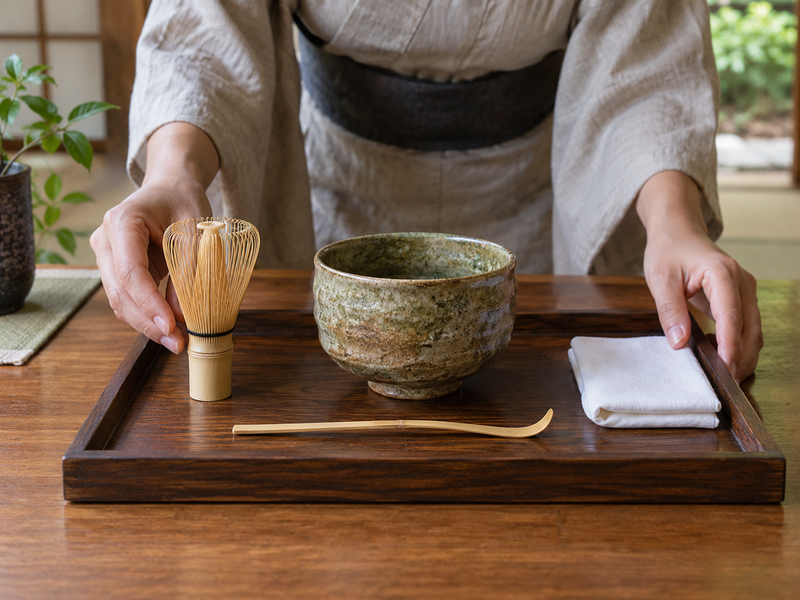
Matcha service brings powder, water and sometimes milk onto a tray. Compare candidate finishes after a controlled spill, normal wiping and repeated contact with a warm bowl. Ask the maker for care limits for its specific coating or material. Unfinished wood, woven fibers, lacquer and ceramic surfaces require different handling. Do not assume a material name predicts performance without the actual finish.
Use a small maintenance trial. Apply a measured amount of the drink, wipe as staff normally would and inspect for residue, color change or swelling. Repeat after several cycles. Check whether the surface becomes slippery while damp. If a liner is proposed, test whether it can be removed and washed and whether its edges curl. The tray should support the venue’s cleaning procedure without requiring a special ritual between every drink. Keep photos and a retained sample as reference for receiving inspections.
| Surface issue | Trial observation | Buyer response |
|---|---|---|
| Stain | Wipe after matcha spill | Confirm care method |
| Slip | Move loaded tray damp | Add grip or reject |
| Heat mark | Rest warm bowl | Use protective base |
5. How should tools sit during preparation?
Place work items in order
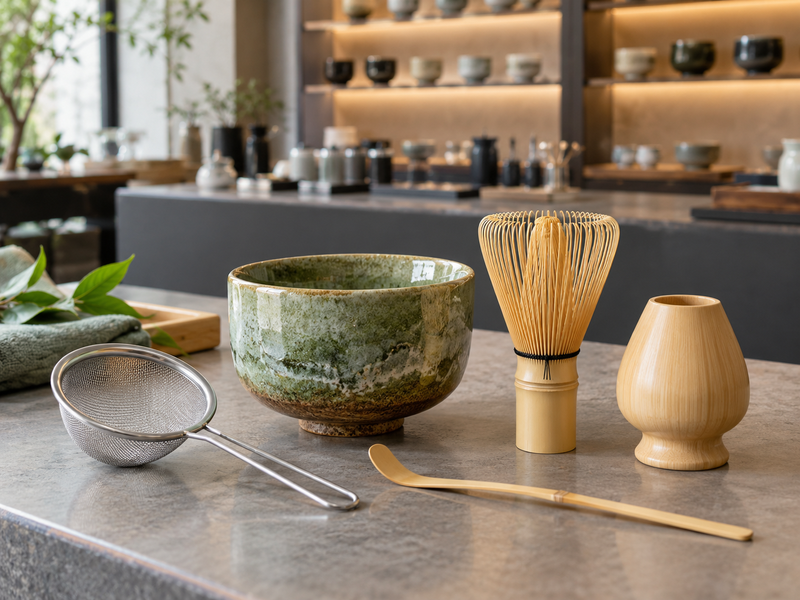
A preparation tray should mirror the operator’s sequence: powder vessel, scoop, bowl, whisk and clean water. Keep wet and dry zones apart so powder containers do not sit beside rinse water. Test whether a whisk stand or spoon rest occupies more room than expected. A crowded tray can push staff to place utensils on the surrounding counter, defeating the reason for the tray.
Watch a full preparation. Ask a new employee to make one serving while the tray is in its intended location. Record every time they move a component out of the way. If a decorative item blocks a working tool, remove it. Traditional tea practice includes many utensils for specific roles, as Urasenke’s guide shows; a café should select only those its service method uses. The preparation layout should make the next action obvious and leave enough open surface for a finished bowl to rest briefly.
6. Can the tray improve the customer handoff?
Test delivery and pickup
The guest should know which item to take and where to place a used bowl if the venue collects it. A tray can frame the service, but it should not make the customer reach across a hot vessel or move a loose whisk. Test the handoff at the actual counter height and table layout. Watch both a standing customer and a seated one where those experiences differ.
Remove unnecessary motion. If staff must transfer the bowl off the tray before serving, the tray may be better used as a preparation surface. If the guest receives the full tray, check its stability on the table and whether it occupies shared dining space. Decide whether a small instruction card belongs on it and whether the card stays legible after spills. A handoff trial can reveal that a narrower tray, a coaster or no tray at all works better. The tool should earn its place through smoother service, not through appearance alone.
| Handoff point | Observe | Decision |
|---|---|---|
| Counter | Reach and grip | Serve on or off tray |
| Table | Stability and space | Size choice |
| Return | Used-item route | Collection method |
7. How should a display tray merchandise a kit?
Show contents truthfully
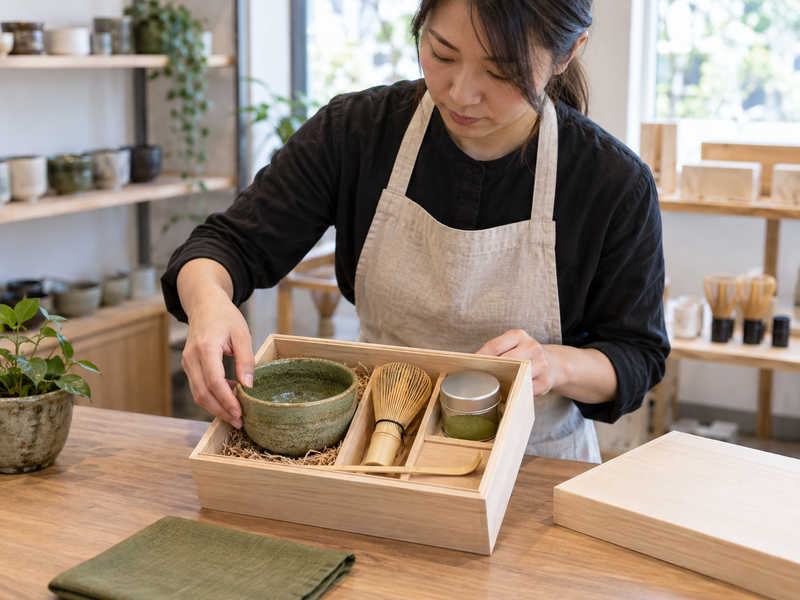
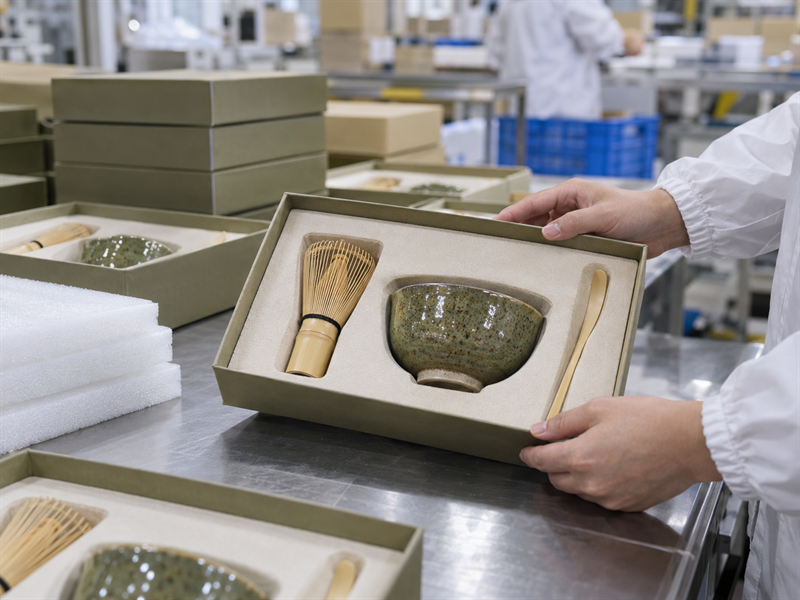
A display can help customers see how a bowl, whisk and scoop belong together. Label what is included in the retail box and what is merely staging. Photograph the display from the aisle distance rather than only a close-up. If several colorways are sold, test whether one tray finish makes product colors hard to distinguish under store lighting.
Protect the saleable pieces. A display whisk handled repeatedly may bend; a bowl may chip against a hard tray. Use a dedicated sample set and replace it when worn. Keep packaged inventory separate from open display components so a customer does not receive a handled demonstration piece as new. Ask stores how much shelf space the setup can actually use. A tray that looks sparse in a studio can be too large for a crowded shelf. The display should communicate the kit’s real contents and fit the retailer’s planogram.
8. What cleaning and wear checks are needed?
Build an inspection routine
Staff should know what condition takes a tray out of service: splintering, cracked glaze, delamination, loose handles or a surface that no longer cleans properly. Define the checks for the chosen material. Ask the maker whether the tray can be washed, wiped only or placed in a dishwasher. Test the exact cleaning chemical and method your operation uses if compatibility is uncertain.
Track wear during a pilot. Number sample trays and record daily use, washing and visible changes. Inspect the underside as well as the top; moisture can collect where staff do not look. A tray used only for a retail display may need dusting rather than washdown, while a serving tray faces frequent spills. Keep these use cases separate in the purchase file. The aim is a practical life-cycle cost based on your workload, not a broad promise that a material is “durable.”
| Defect | Check frequency | Action |
|---|---|---|
| Loose handle | Before carry use | Remove from service |
| Damaged finish | Routine cleaning | Repair or replace |
| Wobble | At setup | Reject unit |
9. How should trays be packed and replenished?
Check the shipping unit
Stacking can save freight but damage rims or coatings if separators are poor. Ask for carton dimensions, units per carton, individual protection and pallet method. Order a representative packed sample, then inspect several trays after transit. A display prototype hand-delivered to your office cannot establish how a bulk shipment will arrive.
Plan for replacement by site. Record how many trays each café or retailer needs plus a small service reserve based on pilot wear. Ask whether the supplier can send a matching replacement later if finish or dimensions change. Keep a signed sample and color reference. For a branded tray, test logo legibility after washing and avoid a design that encourages staff to use a non-food-contact area for ingredients. A simple replenishment route can be more valuable than a one-time discount on a hard-to-match decorative finish.
10. When should a tray be approved for rollout?
Bring service and buying evidence together
Approve a specific material, finish, interior size, weight and care method. Attach the loaded service trial, cleaning result, packed-shipment check and photographs of accepted production samples. If a tray is bundled with matcha and utensils, specify each component separately. Matcha Village’s company materials mention tea and gift-set combinations; ask for current bundle contents and accessory sourcing before making a claim about a particular set.
Write the change rule. The supplier should notify you before changing coating, handle construction, dimensions or packing. Decide which change needs another service or washing trial. Purchasing should compare landed cost with expected replacement and cleaning labor, not only the tray’s unit price. The selection is ready when staff can carry or use it confidently and retailers can display it without confusing customers about what they are buying.
| Gate | Evidence | Owner |
|---|---|---|
| Service | Loaded trial | Operations |
| Material | Care and wear check | Quality |
| Supply | Packed sample and terms | Procurement |
A short site pilot should include the busiest service period, not only a calm morning setup. Count how often a tray must be moved for cleaning or access to another station item. Record any near spill and whether staff remove the tray when queues build. If they do, revisit its footprint or role. Retail displays deserve a separate store trial because a stable service tray can still block a shelf label or neighboring product.
FAQ
Q1. Does every matcha set need a tray? No. Use one when it improves preparation, service or display in a defined setting.
Q2. What dimension matters most? Measure usable interior space with the actual bowl and tools.
Q3. Is a wooden tray suitable for café use? Test its finish under your spill and cleaning routine.
Q4. Should a display tray be included in a retail kit? State exactly what the customer receives; display props must be identified.
Q5. What should stores check on arrival? Inspect finish, wobble, rim damage, handles and carton protection.
Send suppliers a loaded layout, use route and cleaning method. Request production samples, then trial them through an ordinary shift and shipment. A good matcha tray makes the work clearer and the customer handoff easier without becoming another fragile item to manage.