
Matcha tea accessories are the tools used to measure, sift, mix, serve, and care for powdered tea. A retail gift kit may need a bamboo whisk and ceramic bowl; a busy café may also need a gram scale, washable mixing vessel, and replacement tools. Buying by appearance alone can leave staff with splintering whisk tines or customers with a bowl too narrow to use. Consumer roundups such as The Spruce Eats accessory guide help identify familiar categories. B2B buyers need additional checks for food-contact suitability, daily cleaning, shipping survival, unit cost, and replenishment.
1. Which matcha tea accessories are actually needed?
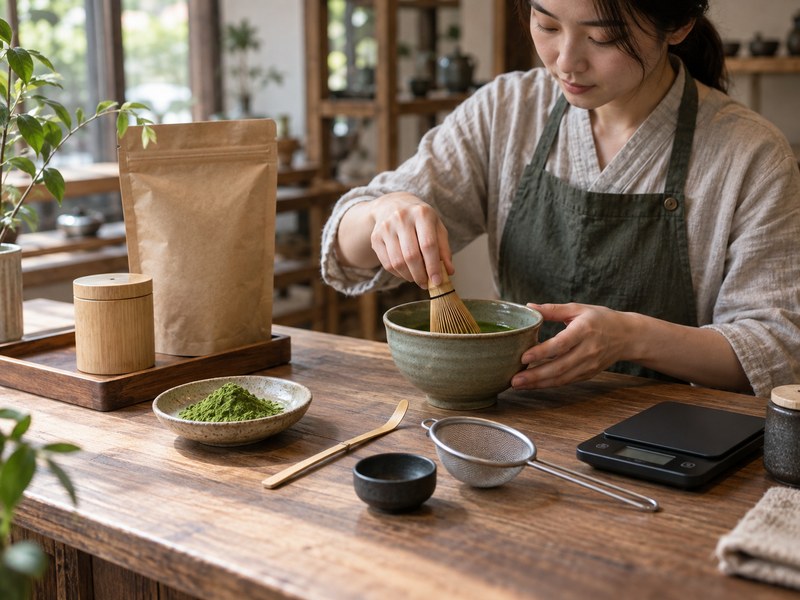
The familiar preparation set includes a bowl, bamboo whisk, and scoop. A fine sifter helps break lumps, while a scale gives a repeatable powder dose. A whisk stand can help a washed bamboo whisk keep its shape while drying, but it does not replace correct cleaning. A café using a powered mixer may have a different tool list from a retail kit designed for home whisking. Start with the product experience you intend to deliver, then select accessories that make it possible.
How do you avoid overfilling a kit?
Give a new user everything required for the promised first cup, including a clear measuring method and care card. Do not add fragile pieces solely to make a box look generous. If a kit contains a scoop but no scale, write instructions that acknowledge the scoop is approximate. If the instruction card calls for a sifter, include one or give a workable alternate method. A café buyer should map each tool to a station task and a cleaning method. Tools without an owner tend to disappear, break, or remain dirty between shifts.
| Accessory | Main job | Retail kit | Café station |
|---|---|---|---|
| Bowl | Room for whisking | Often useful | Depends on service |
| Whisk | Disperse powder | Common choice | Test durability |
| Scoop | Transfer powder | Convenient | Approximate dose only |
| Scale | Measure dose | Optional | Strongly useful |
| Sifter | Break lumps | Useful | Useful for some powders |
2. How should a buyer evaluate a bamboo whisk?
A bamboo whisk should feel sound in the hand and have tines that suit the bowl and preparation style. Tine count alone does not prove quality. Check finish, symmetry, splinters, and how the whisk behaves after wetting and repeated use. A very delicate whisk may make a fine demonstration tool yet struggle in a high-volume station. Inspect samples from the actual offered production batch, not only a showroom piece. Ask about packing, breakage allowance, and availability of replacements.
What is a useful whisk durability test?
Have several trained users whisk a fixed recipe repeatedly over a defined trial period. Wash and dry the whisk as the care card directs. Record broken tines, shape loss, odor, and any fragments found in the bowl. Do not force bamboo through a dishwasher unless the supplier specifically supports that use. A retail brand should also run an unboxing test: can a novice identify the working end, prepare the whisk, and store it without damage? If the whisk requires a stand to preserve shape, decide whether the kit includes one or whether instructions explain another safe drying position.
| Whisk check | What to inspect | Rejection signal |
|---|---|---|
| Before use | Tine finish and handle | Splinters or loose pieces |
| During use | Fit with bowl | Scraping or awkward angle |
| After cleaning | Drying and shape | Persistent odor or collapse |
3. What makes a bowl practical rather than merely attractive?
The bowl needs enough width and depth for whisk movement without frequent spills. A stable base matters on a wet counter, and an easy-to-grip shape matters when staff handle many hot or cold drinks. Ceramic glazing and decoration should be suitable for food contact in the destination market; request the supplier’s relevant evidence rather than inferring safety from appearance. Heavy bowls may feel substantial in a retail kit but raise freight cost and breakage risk. A beautifully glazed bowl with a narrow opening can frustrate the person who tries to use it.
How should bowls be tested for a kit?
Prepare the intended recipe in each candidate bowl with the included whisk. Watch novices as well as experienced users. Check spill rate, grip, pouring, cleaning, and whether the bowl sits flat. Pack several sample kits in the intended inner tray and outer carton, then run a transport trial through the route or test protocol you expect to use. Inspect rims, handles if present, and glaze after arrival. Confirm dimensions and weights in the purchase specification. A substitute bowl that looks similar in a catalog can change both whisking room and shipping cost.
4. Is a bamboo scoop accurate enough for commercial dosing?
A scoop, often called a chashaku in traditional contexts, transfers powder elegantly but does not guarantee a fixed gram weight. Powder density, humidity, and how the scoop is filled affect the dose. For a café or production line, weigh matcha in grams. A scoop can remain part of visible service, but staff should know its approximate relationship to the approved recipe. For retail kits, give a clear starting measure and encourage customers who want repeatability to use a scale.
How can a buyer test dose variation?
Ask five people to take what they consider one level scoop, then weigh each portion. Repeat with the actual matcha powder intended for the kit. The spread will show whether your instruction card is too confident. If a particular scoop shape repeatedly spills powder, choose another design or adjust the bowl and pouch opening. Check food-contact finish and cleaning directions. A café should use one documented scoop only for transfer, then confirm dose on the scale. Guessing at dose changes taste, caffeine amount, and ingredient cost together.
| Measuring method | Strength | Limitation |
|---|---|---|
| Bamboo scoop | Familiar ritual and handling | Variable mass |
| Teaspoon | Widely available | Variable packing |
| Digital scale | Repeatable grams | Needs care and batteries |
5. When does a sifter help?
Matcha can form small lumps after storage or handling. A sifter breaks them before whisking and may shorten mixing time, especially for a plain bowl where clumps are obvious. Mesh size, bowl fit, and cleanability matter more than decoration. A tiny sifter may be acceptable in a home kit but slow a café station. Powder caught in seams or a damp mesh can create hygiene and waste problems. Test the sifter with the actual powder and amount, not an empty accessory sample.
What should a café measure in a sifter trial?
Time how long it takes to sift a normal dose and clean the tool after ten drinks. Check whether powder bridges over the mesh and whether the utensil sheds material. Compare a sifted cup with a well-shaken unsifted cup; some preparation methods may make a separate sifter unnecessary. If a kit includes one, show its use on the instruction card and explain that it must dry fully before storage. A product that turns a one-minute preparation into a five-minute cleanup may not deserve space in the box or on the bar.
6. Which other accessories improve café service?
A reliable scale, timer, thermometer, water measure, and washable mixing vessel can matter more to daily consistency than a decorative whisk stand. Select equipment around the exact recipe. If a café serves iced matcha tea, a sealed shaker may disperse powder quickly. A plain bowl service may call for a whisk and bowl. High-volume milk drinks may use a powered mixer if its cleaning cycle fits the station. These choices affect speed, texture, cross-contact control, and training.
How should tools be laid out on the bar?
Run a timed service trial with the scale, powder, water, and cleaning supplies in their proposed positions. Watch staff reach, spill, and queue. A wet scale can give unreliable readings or fail; protect it without hiding it away. Give each tool a storage place and a cleaning owner. Keep spare whisk and shaker parts available where failure would stop the line. A kit for a single customer and a station for fifty daily orders should not share one purchasing checklist merely because both make matcha.
| Café tool | Operating value | Maintenance question |
|---|---|---|
| Scale | Exact powder dose | Calibration and batteries |
| Thermometer | Repeatable hot preparation | Cleaning and accuracy |
| Shaker | Cold dispersion | Seal and wash cycle |
| Powered mixer | High-volume mixing | Parts and cross-contact |
7. How do you assess cleaning and food-contact suitability?
Ask what materials contact food, how each item is cleaned, and whether the supplier can provide evidence suitable for the destination market. A wooden or bamboo tool may need different care from glazed ceramic or stainless steel. Cleaning claims should match real use: a brush that cannot reach a narrow seam or a whisk that stays damp inside a closed box can fail in practice. For a café, include tool care in staff training and written procedures. For a retail kit, make the care card short enough that buyers will read it.
What does a useful care trial look like?
Use the accessories for several preparation cycles, then clean them exactly as instructed. Inspect for retained powder, staining, odor, cracks, loose bristles or tines, and trapped moisture. Have a second person follow the care card without verbal help. If they damage the tool, revise the instructions or the item. Obtain applicable food-contact declarations and test documentation before making compliance claims. Requirements vary by product material and market, so a buyer’s compliance team should review the final claim and evidence for each sales region.
8. What should a retail matcha kit include and explain?
A starter kit should let a customer prepare a satisfying first bowl without a separate equipment search. It may include a modest sealed powder pack, usable bowl, sound whisk, measuring method, and simple guide. A sifter and whisk stand may improve the experience if the box size and cost allow. The powder and tools should fit each other: a large recipe needs a bowl with room to whisk, and a scoop instruction must reflect its actual size. Keep the kit’s country-of-origin statements precise for each component.
How can a brand test the entire kit?
Send unopened boxes to novice users. Ask them to make a bowl from the printed instructions while you watch silently. Note where they hesitate and whether the powder remains usable after opening. Run a shipping trial and record ceramic breakage, whisk damage, and scuffed packaging. Check whether the kit has a refill path: can a customer buy matching powder after the first pack is empty? If the box uses Matcha Village’s matcha and accessories or any other source, approve the physical components and current ingredient documents against one written kit brief.
| Kit element | Minimum acceptance test |
|---|---|
| Powder | Clear lot and storage directions |
| Bowl and whisk | Novice can make the recipe |
| Inner packaging | Components survive shipping |
| Guide | Dose, method, cleaning, reorder path |
9. How should a buyer compare accessory suppliers?
Request dimensions, materials, finish details, food-contact evidence where applicable, care instructions, packing configuration, minimum order, lead time, and replacement terms. For a mixed kit, ask who is responsible for final assembly and damage claims. Compare samples from the actual production method. A lower unit price may disappear once freight weight, breakage, and customer service cost are added. Photograph accepted samples and keep them as references for future deliveries.
What should the purchase order define?
List each component’s material, color, dimensions, weight tolerance, packaging, logo position if any, and inspection criteria. Define acceptable cosmetic variation separately from functional defects. For a bamboo whisk, functional defects include broken or sharp tines; for a bowl, chips and unstable bases matter. Specify carton count and protective packaging. Ask how substitutions are communicated before shipment. If a supplier also sells matcha powder, keep powder specifications and accessory specifications distinct even when they travel in one box.
| Quotation line | Compare beyond price |
|---|---|
| Bowl | Weight, breakage, glaze evidence |
| Whisk | Defect rate and replacement |
| Packaging | Protection and carton cube |
| Assembly | Inspection and labeling responsibility |
10. How can a business approve the final tool set?
Approve tools by using them in the exact service or retail format planned for sale. A café should run timed preparation and cleaning trials across a busy shift. A retail brand should run novice use and shipping trials. Keep a sample set, drawings or specifications, care instructions, food-contact evidence, costed bill of materials, and defect criteria. Review the set whenever a manufacturer changes material, glaze, dimensions, or packing. Accessory quality is visible the moment a customer opens a kit or a barista reaches for a whisk.
What is the final buyer checklist?
Confirm that every tool has a defined job, fits the other components, can be cleaned, and survives normal handling. Verify that the powder dose can be measured and that the kit’s instructions work without a salesperson beside the customer. For a café, check spare parts and reorder timing. For private-label kits, align artwork, origin, ingredient labels, and component claims with documents before printing. Ask suppliers for a pilot set and revise it from observed use. A small kit with a sound whisk and clear instructions will serve customers better than a crowded box of fragile props.
| Approval area | Keep on file |
|---|---|
| Function | Preparation trial notes |
| Safety and care | Material evidence and instructions |
| Shipping | Damage test record |
| Supply | Approved sample and reorder terms |
FAQs
Q1. What are the basic matcha tea accessories? A bowl, whisk, and measuring tool form a practical start; a sifter and scale improve repeatability.
Q2. Does a higher whisk tine count guarantee quality? No. Inspect finish, fit, durability, and how it behaves after cleaning.
Q3. Can a scoop replace a scale in a café? A scoop transfers powder, but a scale controls the dose more reliably.
Q4. Should a starter kit include a whisk stand? It can help with drying and shape, but a sound whisk, suitable bowl, and clear care instructions come first.
Q5. What should a buyer ask an accessory supplier for? Physical samples, dimensions, materials, care directions, applicable food-contact evidence, packing details, and replacement terms.