
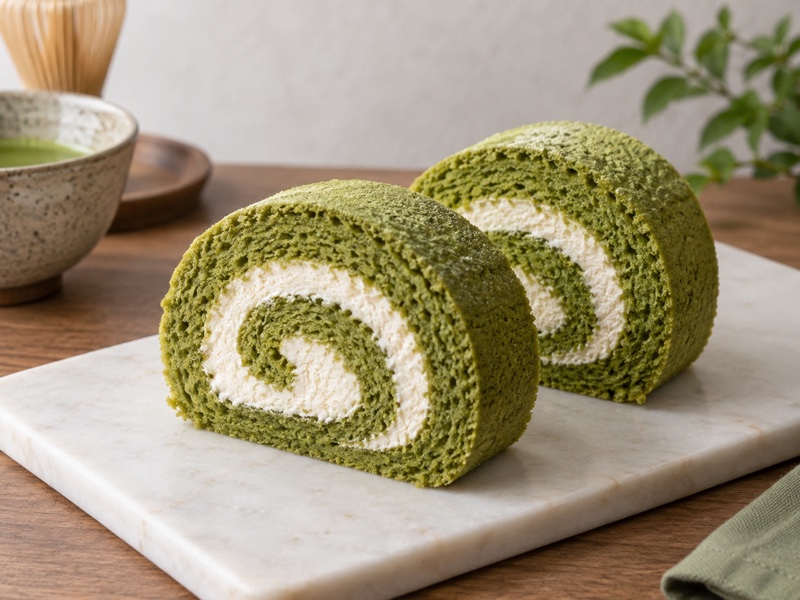
Matcha roll cake exposes small production errors. A sheet that bakes slightly dry can crack; a soft filling can squeeze out; a bright green slice can turn dull in a display case. Bakery buyers need a process that survives slicing and chilled sale, not only a beautiful test bake. The matcha Swiss roll from Teak & Thyme shows the consumer format. This guide turns that format into ten bakery checks, from tea selection and sponge flexibility to portion yield and distribution.
1. What should a finished roll deliver?
Write a product specification before changing the batter. A good slice should show a clear spiral, a flexible tea sponge, and filling that remains in place when lifted with a fork. Tea should be recognizable after the cream arrives, without an abrasive bitter finish. The product must also fit its channel: a whole roll for a bakery counter, pre-cut slices for a café, or packaged portions for chilled distribution. Each format creates a different stress on the seam and filling. Photograph an approved cross-section beside a ruler so production and quality teams can judge the same target.
Separate appearance from bite
A tight spiral can look impressive while compressing the filling into a thin smear. A thick filling can taste rich but make the roll slump after a few hours. Have tasters score sponge flexibility, tea strength, filling sweetness, and ease of eating separately. Check slices both fresh and at the planned end of sale. If the product will be thawed from frozen, include the thawed condition in the initial target; a fresh-only standard cannot validate frozen distribution.
| Attribute | Acceptance question | Test point |
|---|---|---|
| Spiral | Are layers distinct and centered? | First and middle slices |
| Sponge | Does it bend without cracking? | During rolling and at sale |
| Filling | Does it hold after cutting? | Chilled display |
| Tea | Can tasters identify matcha? | Finished slice, not dry powder |
2. Which matcha works in a baked sponge?
A premium drinking tea is not automatically the right bakery ingredient. Heat, eggs, sugar, and cream can hide delicate notes. Compare candidate powders in the same batter at a fixed dose. Record batter color, baked color, tea aroma, bitterness, and cost per sheet. If the powder looks vivid before baking but turns muddy afterward, more powder may deepen bitterness without fixing color. Test another grade or the baking process before raising dose. Use samples tied to actual lots, since a grade name alone cannot guarantee the same performance.
Request the right supplier information
Ask for a specification, sample, and any destination-market documents needed for the finished food. Matcha Village’s pure matcha page is a relevant route for comparing food-use grades. Confirm the exact product offered rather than assuming every certification or test applies to every shipment. Mix a control sheet with the currently approved lot alongside a proposed replacement. Assess both at the same bake and holding point. A lower price per kilogram matters only if the finished sheet still meets color and flavor targets.
3. How should the bakery test sponge flexibility?
Use a controlled sheet thickness, pan size, and batter weight. Record bake time, oven setting, sheet weight before and after baking, and cooling conditions. Bake loss helps compare moisture removal between trials; it is not a universal target because recipes and ovens differ. Once the sheet reaches the chosen rolling condition, bend a trimmed strip around the same diameter guide each time. Note cracks, surface peeling, and springback. Repeat after the sheet has cooled further to find the practical rolling window.
Change one cause at a time
Dry, cracked sheets may reflect overbaking, thin edges, insufficient moisture, or rough handling. A wet sheet can roll easily but taste gummy and cling to paper. If a sheet cracks, do not change flour, oven temperature, and cream at once. Adjust the likely cause, run a control, and compare center and edge pieces. Production ovens often have hot zones. Map sheet color by corner and rotate pans only if the method can be repeated at full throughput.
| Trial | Hold constant | Record |
|---|---|---|
| Thickness | Formula and oven | Pan deposit, edge-to-center depth |
| Bake endpoint | Deposit and oven | Loss, color, flex test |
| Cooling | Bake endpoint | Roll window and condensation |
| Powder grade | All process settings | Baked flavor and color |
4. When should the sponge be rolled?
A warm sponge often bends more readily, but a hot sheet can create condensation or melt a temperature-sensitive filling. Some production methods pre-roll the unfilled sheet to set its curve. Others cool it under a cover before filling. Test the chosen method with actual sheet dimensions and a timer. Record the sheet temperature at rolling and filling, whether parchment is removed cleanly, and how long the seam stays closed. Do not rely on “roll while warm” as a production instruction; staff need a usable window and visible cues.
Check the outer skin
The exposed face can peel onto paper or cloth. Decide which side should be outside and make that decision part of the work instruction. If powdered sugar or a surface coating is used to prevent sticking, include its flavor, appearance, and label effect in the trial. A seam that looks tidy immediately may open after filling or during transport. Hold a whole roll and a cut slice under intended conditions before accepting the method. The correct rolling point is the one that survives the actual service format.
5. What filling can hold a clean spiral?
Whipped cream, stabilized dairy filling, cream cheese, and plant-based alternatives differ in flavor, water release, and handling. Choose filling for the product channel. A soft whipped cream may be lovely in a same-day bakery slice but lose shape in a packaged roll that travels. Spread a measured mass over the same sheet area, leaving a documented margin at the final seam. Roll, chill, and slice after a fixed time. Record squeeze-out and whether the filling migrates into the sponge.
Test sweetener and tea together
Cream can mute matcha. Tasting the sponge alone may lead to an underpowered finished cake. Evaluate full slices at sale temperature, then adjust tea or filling sweetness only after the structural formula works. If adding fruit or another filling, test water migration and color bleeding. A fruit layer that makes a fresh photograph striking can soften the sponge after an overnight hold. Any stabilizer should be evaluated for mouthfeel and ingredient declaration as well as strength.
| Filling option | Main benefit | Main trial risk |
|---|---|---|
| Plain whipped cream | Light bite | Weeping and collapse |
| Stabilized dairy cream | Better slice definition | Heavy or gummy texture |
| Cream cheese blend | Tang and body | Tea masking |
| Plant-based filling | Dairy-free concept | Oiliness or water separation |
6. How can slicing reveal process problems?
Cut the roll only after a defined chill. Use the knife, blade temperature, cleaning interval, and portion width planned for production. A soft roll can flatten under a dull blade; a firm filling can pull the sponge apart if the blade drags. Photograph the first, middle, and last slice. Count unsaleable end pieces in yield calculations rather than hiding them as “samples.” A cross-section shows filling spread, seam position, air holes, and sponge compression more clearly than the whole roll does.
Measure saleable yield
Weigh the filled roll before trimming, the saleable slices, and the offcuts. Compare the real yield with the margin sheet. If the bakery sells whole rolls, test whether the customer can cut them cleanly after transport. If slices go into clamshells, test how the spiral looks against the package wall and whether condensation forms. Slicing defects often trace back to fill mass or chilling rather than knife technique alone. Correct the upstream variable before purchasing a new cutter.
7. How long can the cake hold chilled?
A cream-filled roll generally calls for refrigerated handling and a validated date based on its ingredients, process, and package. The FDA Food Code is a US model for retail food safety and describes cold-holding controls for time/temperature-control foods. Local rules and the actual product determine the applicable procedure. Do not print a shelf life from a recipe blog or from another bakery’s roll. Run microbiological review where required and sensory checks at the start, middle, and end of the proposed holding period.
Watch texture as closely as safety
Cold storage can firm the sponge, draw moisture into it, or dry exposed edges. A filling can weep even while the product remains within a safety limit. Inspect appearance and eat a slice at the same temperature customers will. Test the exact wrap or tray: packaging may prevent drying while trapping condensation. Record store display temperature and time out of refrigeration during slicing or packing. A product can pass a laboratory assessment yet disappoint buyers if its spiral collapses before the printed date.
| Holding observation | Possible cause | Next test |
|---|---|---|
| Cracked exterior | Dry sponge or handling | Bake loss and rolling window |
| Wet stripe at filling | Moisture migration | Filling and barrier trial |
| Green fades | Light or formula change | Package/light study |
| Spiral opens | Fill mass or seam position | Roll geometry trial |
8. Can freezing support distribution?
Freeze-thaw performance needs its own trial. Prepare identical rolls, freeze them in the proposed package, and thaw by the intended route. Check sponge cracking, cream grain, water release, and slice appearance. A cream that holds chilled may separate after thawing. A sponge that feels soft fresh may dry after frozen storage. Label each sample with freeze date, thaw start, and tasting time. Do not add a freezer recommendation to a sales sheet until it has been tested in the full product.
Include transit stress
A roll can shift in its tray and press against a lid during refrigerated or frozen delivery. Pack a case in the planned orientation, move it through a realistic route, then inspect both whole rolls and pre-cut portions. If slices are individually packed, test whether cream adheres to film. If a distribution partner will thaw product at a store, write explicit time and temperature instructions and check that their equipment can follow them. The best distribution format may differ from the prettiest bakery-counter version.
9. What do allergens and labels require?
A conventional sponge may contain egg, wheat, and milk; fillings can add other allergens. The exact formula and destination market control the final declaration. In the US, the FDA’s food-allergy labeling guidance explains major-allergen identification and controls against cross-contact. Check flavor pastes, stabilizers, and decorations too. A switch from dairy cream to a plant-based product can introduce soy or tree nuts. Avoid calling the cake gluten-free merely because the tea powder itself contains no wheat.
Review net weight, ingredient order, storage statement, nutrition, and any product claims before printing retail labels. Provide staff with an allergen matrix for the exact approved recipe. A bakery operating several cream cakes should use documented cleaning and utensil controls, especially if a variant adds nuts. Label review is part of recipe approval, not a final clerical step after packaging is ordered.
| Cost item | Measure in the full-size run | Why it changes margin |
|---|---|---|
| Sponge | Batter and bake loss | Saleable sheet mass |
| Filling | Actual spread mass | Cost and roll shape |
| Trim | End cuts and damaged slices | Saleable yield |
| Cold chain | Package and transport | Delivered cost |
10. What should a scale-up gate include?
The production card should specify sheet deposit, mixing order, bake endpoint, cooling and rolling window, fill weight, chill time, cut width, package, and holding limits. Give staff one approved cross-section photo and clear defect criteria. Require a full-size run rather than scaling directly from a home pan. Oven loading, mixer shear, and roll length change at commercial scale. Retain a control slice from the first approved batch so later tea or cream substitutions can be compared fairly.
Calculate cost per saleable slice, including ends and damaged portions. A tea grade with stronger finished flavor may justify its price if it works at a lower dose, but test it. Ask procurement to record approved lots and alternatives. If a bakery wants a green roll for a seasonal campaign, schedule shelf-life and packaging trials before promotional photography sets an unrealistic color promise. A clean spiral is a production outcome with measurable inputs, not a styling trick.
FAQ
Q1: Why does matcha roll cake crack? A dry or uneven sheet, late rolling, and rough handling are common causes. Test them separately.
Q2: Should the sponge be rolled while hot? The right window depends on the formula. Measure flexibility, condensation, and filling behavior at several temperatures.
Q3: Can a bakery use any matcha grade? Test each candidate in the baked sponge and finished cream-filled slice; dry powder appearance is insufficient.
Q4: Is whipped cream suitable for distribution? It may be, but chilled or frozen holding, weeping, and transit must be validated for the exact filling.
Q5: What matters most in slice costing? Use the saleable slice yield after trimming and damage, then include ingredient, labor, package, and cold-chain costs.
Start with one full-size control roll and record its bake loss, rolling window, fill weight, and saleable slices. When the spiral, bite, and tea flavor remain acceptable at the intended point of sale, the bakery has a product worth scaling.