
A matcha travel set sounds useful until a whisk snaps in a suitcase or an opened powder pouch spills across clean clothes. Portability is more than a small bowl. A working set must handle the way you travel, the water and cleaning facilities you can access, and the drink you intend to make. Matcha Guide’s travel article offers a starting point for lighter packing. This matcha travel set guide starts with the trip itself: a hotel stay, a daily commute, and a long flight call for different packing choices.
This guide adds a full preparation-and-cleanup test for individual travelers, brands building portable retail kits, and teams running tastings away from their usual bar. Pack only what earns its space, then try the set before leaving. Our matcha travel kit packing checks cover the wider travel format when a compact set is only one part of the plan.
Contents
- 1. What trip and drink are you planning for?
- 2. Which pieces deserve space in the bag?
- 3. Should the bowl be ceramic or another material?
- 4. How can a whisk be protected?
- 5. How should matcha powder be packed?
- 6. What will you do about water and temperature?
- 7. Can you make your usual drink in a hotel room?
- 8. How will you wash and dry the tools?
- 9. What changes for flights and cross-border travel?
- 10. How should a brand test a travel kit?
1. What trip and drink are you planning for?
Define the situation before packing
A one-night work trip, a long holiday, and a mobile buyer tasting have different constraints. Write down the length, bag size, likely access to a sink and kettle, and whether you will make straight matcha or a latte. If the drink requires chilled milk, find out where you will buy or store it. A travel kit can carry powder and tools; it cannot guarantee a refrigerator.
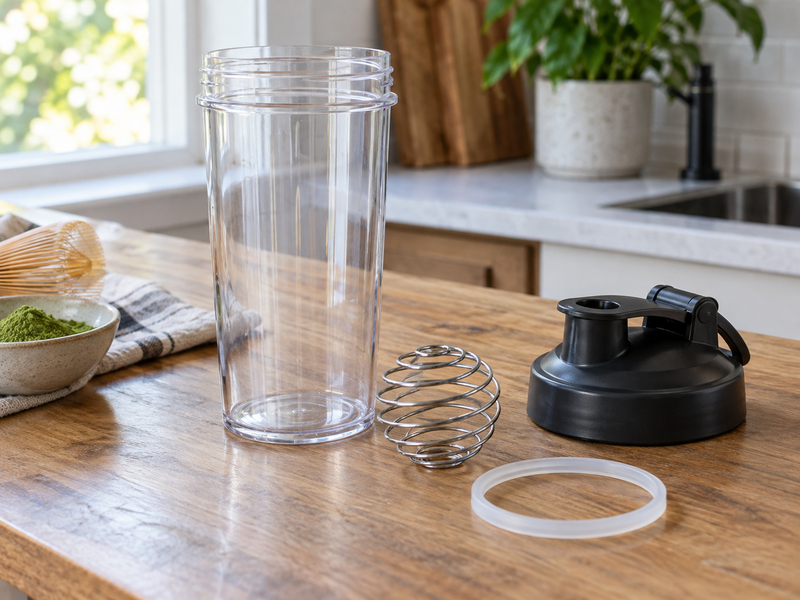
A person who only drinks iced matcha may prefer a compact mixing bottle or another tested method, while someone who enjoys a hand-whisked bowl may accept a protected bamboo whisk. For a brand, do not label one arrangement “travel ready” without naming its intended trip. Ask testers to pack it in the kind of bag customers actually use. That small exercise quickly exposes bulky containers, loose powder, and fragile pieces.
| Trip type | Likely constraint | Design response |
|---|---|---|
| Short work trip | Limited counter and wash space | Fewer, easy-clean pieces |
| Holiday rental | Variable kitchen tools | Clear list of items to supply |
| Outdoor day trip | Water access and pack weight | Stable sealed portions |
| Mobile tasting | Consistent service for several people | Measured samples and cleanup plan |
2. Which pieces deserve space in the bag?
Pack a complete process, not a miniature display
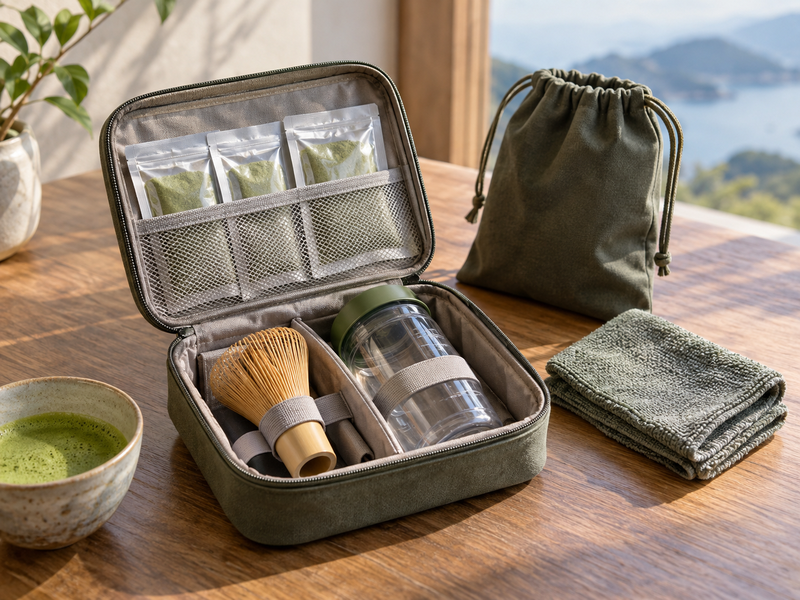
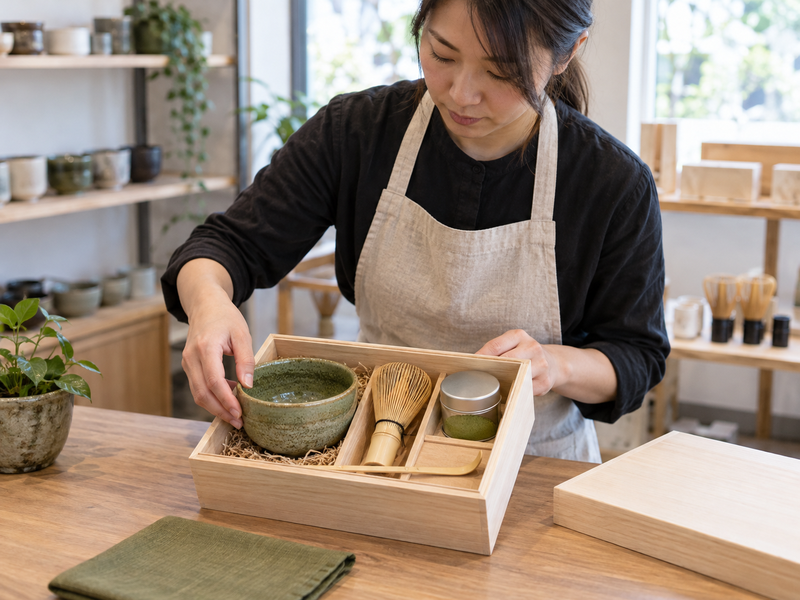
Start with matcha, a vessel, a mixing tool, a way to portion tea, and any container needed for the finished drink. A scoop is small but a gram scale may be preferable when a buyer compares samples. A sifter earns a place only if the powder and preparation test show it improves texture enough to justify cleaning its mesh on the road. A whisk holder may protect bamboo tines, but it should fit inside a rigid or padded case. Leave decorative objects out unless they have a real service role.
Lay every piece on a table and walk through the recipe from opening the tea to putting dry tools away. If you must borrow a cup, spoon, towel, or kettle, list that dependence. Retail travel sets should disclose what they contain and what the traveler must provide, instead of relying on a photograph of a complete café scene.
3. Should the bowl be ceramic or another material?
Balance drinking pleasure against handling risk
Ceramic can feel satisfying for hand-whisking and serving, but it adds weight and breakage risk. A lightweight metal or durable food-contact vessel may travel more easily, though material, shape, and cleaning details still need checking. Do not assume a collapsible cup is suitable for whisking simply because it packs flat. It must remain stable when filled and offer enough interior room for the chosen tool. Test whether the vessel pours cleanly if you plan a latte. Check the rim for comfortable drinking if it doubles as the final cup.
A protective sleeve should prevent knocks without trapping moisture after use. For a premium travel gift, ceramic may be worth carrying; specify how it is protected. For frequent commercial travel, a practical mixing vessel may save weight and reduce replacement costs.
| Vessel option | Advantage | Test before choosing |
|---|---|---|
| Ceramic chawan | Familiar bowl experience | Packed impact and weight |
| Metal mixing cup | Durable for frequent use | Rim comfort and tool contact |
| Durable polymer vessel | Low weight | Food-contact and heat instructions |
| Collapsible cup | Small packed size | Stability during whisking |
4. How can a whisk be protected?
Keep tines free from pressure
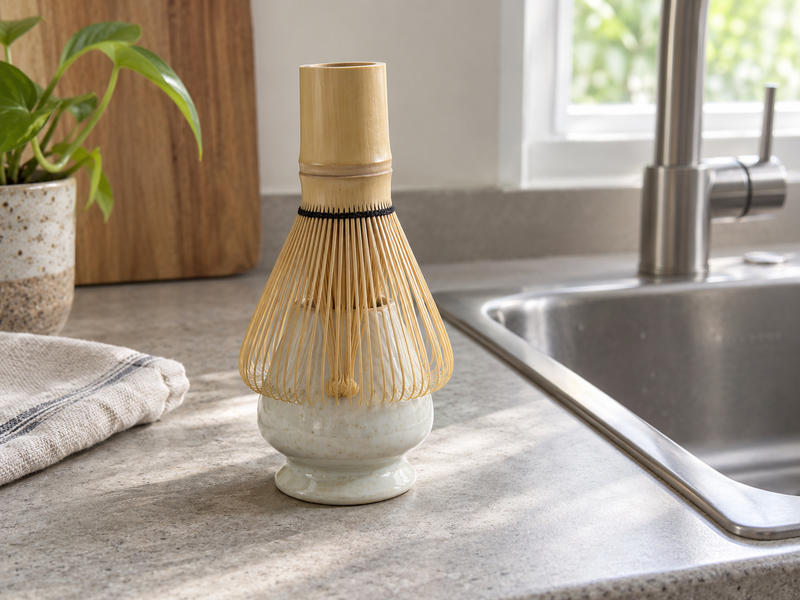
Bamboo whisk tines can be bent or broken by the weight of other items. A shaped holder may help the whisk keep its form between uses, but a holder alone does not stop a laptop or suitcase wall pressing on it. Use a case that protects against compression, and test the case in a fully packed bag. Let the whisk dry under its care instructions before closing the case for a long period; a damp bamboo tool stored in a sealed container is a poor travel routine.
If you use an electric frother instead, protect the head and check power or battery requirements for the trip. A powered tool can be convenient, yet it still needs a vessel deep enough to avoid splashing. Include replacement information for either style. Travel exposes weak parts quickly, so a kit without a repair path may become unusable far from home.
5. How should matcha powder be packed?
Treat food packaging as part of the kit
Powder must stay contained, dry, and identifiable. An unopened, sealed portion can reduce mess on a short trip; a larger pouch may make sense when several cups are planned. Check the food label, lot and best-before details, storage directions, and whether a partially used pack closes securely. Avoid transferring tea into an unmarked container when doing so would lose useful product information. If a brand creates travel sachets, approve actual barrier, seal, and fill performance for the intended shelf life.
Pack powder where it will not be crushed under a ceramic bowl. For a mobile tasting, keep samples coded and separate so the buyer can compare them fairly. Do not promise freshness simply because a packet looks airtight; packaging and storage claims need evidence from the actual product specification.
| Powder format | Useful for | Buyer check |
|---|---|---|
| Sealed single portions | Short trips and one-cup convenience | Accurate fill and clear label |
| Resealable pouch | Several servings | Seal after repeated opening |
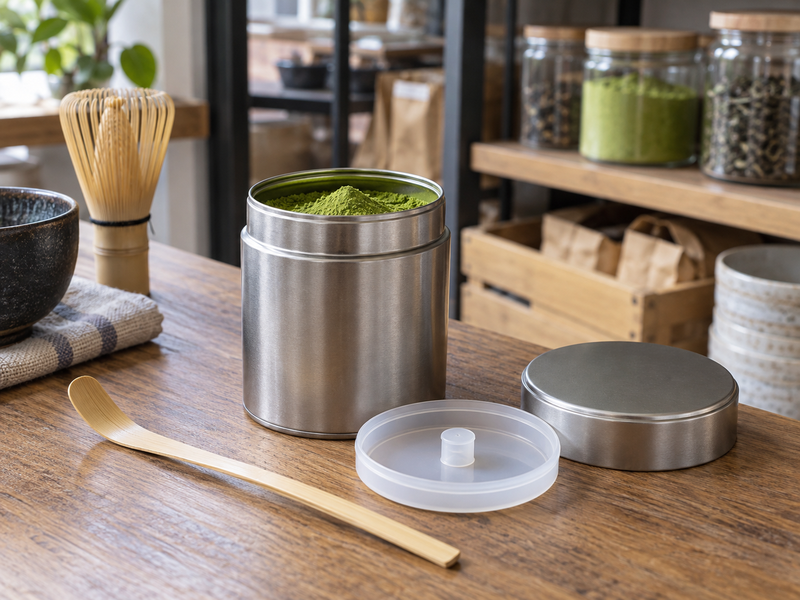
| Small tin | Protection in a bag | Closure and internal food pack |
| Coded tasting samples | Side-by-side evaluation | Lot and sample identity |
6. What will you do about water and temperature?
Plan for the water you can actually access
Hotels, offices, and event spaces may provide different kettles, taps, and cups. Check what is available before a trip if the recipe depends on a particular water volume and temperature. For a personal kit, carry a small measuring aid or use a marked vessel so your ratio stays roughly consistent. Avoid pouring very hot water into a container whose maker has not approved it.
If the room has no kettle, decide whether the chosen powder and recipe work with an alternative method you have tested rather than improvising on the day. Mobile tasting teams need a reliable way to serve each sample under the same conditions; otherwise apparent differences between teas may be caused by water or preparation. Include a safe way to handle hot vessels and a plan for disposing of remaining liquid without leaving powder residue in a hotel sink or meeting room.
7. Can you make your usual drink in a hotel room?
Rehearse the entire cup at home
Before leaving, make a cup on one small table using only the kit and the facilities you expect to have. Keep extra kitchen tools out of reach. You may find that the whisk fits the bowl but the finished tea cannot be poured into the hotel glass cleanly. Or the milk you normally use may not be available near the destination. Adjust the kit or recipe now. For iced lattes, test how the concentrate mixes with ice and milk in the intended cup.
For straight tea, notice whether you can sit comfortably and drink from the vessel used for whisking. A short printed recipe should state what to do when ingredients are absent. It should not imply that the user needs to buy three unlisted items after unpacking a supposedly complete set.
| Preparation step | Travel question | Possible fix |
|---|---|---|
| Open powder | Can the pack be resealed? | Smaller sealed portions |
| Measure water | Is there a marked vessel? | Add a small measure |
| Whisk | Is there enough room? | Change vessel or tool |
| Finish drink | Can it be poured or drunk safely? | Test a dual-use cup |
8. How will you wash and dry the tools?
Include cleanup in the packing list
Rinsing a bowl is easy when a sink is nearby; drying a bamboo whisk before a morning checkout is harder. Read the maker’s care advice for each material. Avoid putting a wet whisk against tea packaging or closing damp utensils inside a sealed case. A small clean cloth can help dry the exterior of a vessel, though bamboo still needs the drying method its maker recommends. A mesh sifter may hold powder around its rim and require more careful cleaning than a simple scoop.
For an event team, count the servings, wash station capacity, clean spare tools, and time available between guests. If that plan is unrealistic, simplify the kit or change the service method. The fastest travel set is not the one with the fewest objects; it is the one that lets you finish the entire drink-and-cleanup cycle without friction.
9. What changes for flights and cross-border travel?
Check current rules for the actual route
Airline, airport-security, and destination import rules can change and differ by country. Do not rely on a universal claim that a particular powder quantity or tool is always accepted. Check the official guidance for your route close to departure, retain original food packaging where practical, and be ready to identify the product accurately. Powered frothers may have battery-specific transport rules; review the carrier’s current instructions. Fragile ceramic also needs a packing choice that fits your luggage plan.
For a commercial tasting with numerous samples, prepare product documents and declare items where required by the destination’s rules. This guide cannot replace route-specific advice. Its practical message is to avoid designing a “flight safe” kit around an unverified assumption. Retail copy should say what the kit contains, not promise compliance across every border.
| Travel issue | Check before departure |
|---|---|
| Food powder | Destination import and security guidance |
| Liquids | Airport and carrier limits for route |
| Batteries | Airline instructions for powered tool |
| Commercial samples | Customs and product documentation |
10. How should a brand test a travel kit?
Use a realistic route and record failures
Ask several testers to pack, carry, use, clean, and repack a production-style sample. Include a short work trip and a longer bag-handling route if both are in scope. Weigh the set, inspect breakage and powder leakage, time preparation, and note what extra item each tester needed. Test the full retail carton separately from the everyday carrying case; they solve different problems. Review labels and care instructions after testing, since a great container can still fail through an unclear preparation card.
If Matcha Village supplies tea or helps assemble a tea-and-tool concept, approve the final powder format and recipe with the actual portable hardware. Recheck when a bowl, whisk, or sachet supplier changes. A travel claim is credible when a user can make, enjoy, and clean up a cup away from home with the stated kit.
Final thoughts
A matcha travel set works when every piece survives the trip and helps with preparation or cleanup. Define the trip and drink, protect the whisk and powder, rehearse with limited facilities, and check route-specific rules before departure. For brands, test a complete sample in a real bag rather than approving a compact product photograph. A lighter set can still feel generous when it leaves the traveler with a good cup and no mess.
FAQ
Q1. Is a ceramic bowl too heavy for travel? It depends on your bag and priorities. Test its packed weight and protection against a lighter food-contact vessel.
Q2. Should travel matcha be packed in single portions? Single portions can reduce mess on short trips, but they still need accurate fill, proper labeling, and suitable packaging.
Q3. Can I take matcha powder on a plane? Rules vary by route and may change. Check current airport, airline, and destination guidance before travel.
Q4. What is the most fragile tool in a travel set? Bamboo whisk tines are vulnerable to compression and poor storage. Protect them and let the whisk dry as directed.
Q5. How can a retailer test a travel claim? Have users carry, prepare, wash, dry, and repack a complete sample during the types of trip the listing describes.