
Matcha bread asks a powder to do something difficult: keep a clear tea flavor and attractive color after dough mixing, proofing and oven heat. A bakery also needs the loaf to slice cleanly and taste good after a day on the shelf. The route is a measured series of bakery trials, not a single green dough. These ten checks help product developers choose powder, set a dose and approve a loaf that can be made again on a normal shift.
Contents: Style · Powder · Dose · Hydration · Proof · Bake · Color · Flavor · Life · Scale
1. What Kind of Matcha Bread Fits Your Range?
Set the loaf target before changing a recipe
A soft milk bread, a laminated bun and a lean loaf use different ingredients and oven conditions. Matcha may be the primary flavor in one product and a color accent in another. Choose one existing base recipe that already performs reliably. Record its flour, hydration, fat, sugar, fermentation time, loaf size and bake. That control loaf tells the team whether a later change came from matcha or from the normal variability of the bakery. A sample baked in a different pan cannot provide a fair comparison.
Cut the loaf. The customer usually sees the crumb, not the mixing bowl. Decide how green the interior should look, how much tea flavor belongs in a full slice and whether toppings will compete. A loaf intended for sandwiches may need a quieter tea note than a sweet bakery bun. Ask sales staff how the product will be displayed and packed. The decision affects crumb softness, slice thickness and the acceptable amount of green variation across batches.
2. Which Matcha Powder Should Enter the Trial?
Choose for heat and flavor, not a grade word
Ask suppliers for samples suitable for baking and keep each lot identified. Test the same dough formula with the same powder dose. A powder that tastes refined in water may be too subtle after baking; another may hold flavor but push a dry or bitter finish. Color in the bag is only a starting clue. Bake, cool and slice every trial before ranking powders. If a premium grade produces no visible or sensory improvement in the finished loaf, that extra cost has little value for this application.
Check supply and records. Bakery production needs repeatable powder, a product specification and quality documentation appropriate to the market. Ask how the supplier manages changes between lots. Keep a sealed sample of the approved lot and a frozen or photographed reference of the finished bread. A new lot should be tested in dough before the purchasing team signs a long-term commitment. If the brand plans to say organic or specify origin, obtain documents to support those claims for the sold product.
| Powder sample | Hold constant | Compare after baking |
|---|---|---|
| A | Dough, pan and oven | Crumb color, tea aroma, bitterness |
| B | Dough, pan and oven | Crumb color, tea aroma, bitterness |
| C | Dough, pan and oven | Crumb color, tea aroma, bitterness |
3. How Much Matcha Should You Add?
Use a dose ladder against a plain control
Make a small set of loaves with gradually increasing matcha levels while keeping the base formula constant. Record powder as a percentage of flour weight and as grams per loaf. The former helps production scale the formula; the latter helps estimate ingredient cost. Do not choose the greenest dough by sight. Baking can mute color, and too much matcha may make the bread bitter or tighten the crumb. Taste a full slice at serving temperature with and without the intended spread or filling.
Rebalance deliberately. Matcha adds dry solids, so changing its dose may alter dough feel. If hydration or sweetness needs adjustment, run a new controlled trial. Do not change matcha, water and sugar simultaneously and then guess which helped. A bakery selling multiple matcha items may want one powder specification, but each formula needs its own dose. The level that works in a frosted bun will not automatically suit an unsweetened loaf. Keep the decision tied to the customer eating occasion rather than a neat round number in the formula sheet.
4. Does Matcha Change Dough Handling?
Watch mixing and hydration on the bench
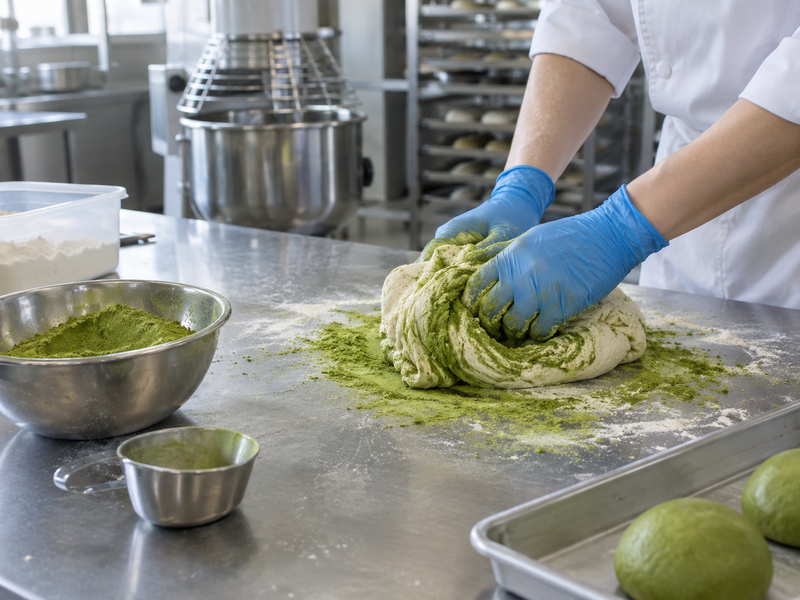
Sift matcha into the dry ingredients or prepare another repeatable addition method that prevents pockets of powder. Fine tea can absorb moisture and color the dough unevenly if it is added after gluten development. Compare dough temperature, mixing time, elasticity and stickiness with the plain control. The team should record whether flour dusting during makeup increases, because extra flour can quietly change the finished texture. A dough that looks smooth from a distance may still contain dark streaks that appear after slicing.
Ask the baker who shapes it. Product developers often judge a small batch by its baked color while ignoring how it behaves on the line. Have a production baker portion and shape the dough. Note tearing, drag at the divider and residue on equipment. If the dough needs extra handling, calculate that labor cost. A better preblend or modest hydration change may solve the problem. Approve those changes only after confirming the loaf still has the right softness and shelf behavior.
| Handling point | Compare with plain control | Record |
|---|---|---|
| Mixing | Time to target dough | Temperature and consistency |
| Dividing | Portion accuracy | Residue or sticking |
| Shaping | Surface smoothness | Tearing or flour pickup |
5. How Should You Check Proofing?
Give matcha dough the same measured test as the base
Proofing depends on the dough system, yeast, temperature and production schedule. Matcha can change how bakers perceive dough readiness because color hides some visual cues. Record proof conditions and compare volume, surface tension and bake spring with a plain control. Do not shorten proof merely because the green dough looks dense. Equally, a loaf that expands well in a small warm test box may behave differently on a busy line. Use the bakery’s normal equipment for an intermediate batch.
Keep the cut test. Slice several loaves from each trial after cooling and examine cell structure. A loaf with large tunnels near the top or a compressed bottom may indicate shaping or proofing issues, not a poor matcha grade. Take notes while the process is fresh. If a sweet filling is added, it may also affect proof and bake, so approve the plain matcha dough first. Only then should the team add a swirl, paste or inclusions and repeat the handling test.
6. What Baking Condition Protects the Result?
Bake for bread quality before chasing a bright green crust
Oven heat changes matcha color and aroma, but underbaking a loaf to preserve green is not an acceptable solution. Set the same core quality and safety criteria used for the base bread. Compare a small range of oven settings and bake times in the actual pan. Check the center, crust, sliceability and moisture after cooling. A covered or lidded pan can yield a different crust appearance from an open loaf; choose the format because it suits the product, not merely because it hides browning.
Photograph real slices. A slice cut warm may smear and look darker than one cut after proper cooling. Standardize the cooling period before comparing trials. If the intended product is toasted by the customer, taste it toasted too; heat at service can change the perceived flavor. A green crumb with a brown crust is ordinary baked food, not a defect by itself. Make sure marketing images show the product a customer will actually open.
| Trial variable | Keep fixed | Judge |
|---|---|---|
| Oven setting | Formula, pan, proof | Crust and internal bake |
| Bake time | Formula, pan, proof | Moisture and color |
| Pan format | Formula and target weight | Shape and customer use |
7. How Will You Judge Crumb and Crust Color?
Use a repeatable visual reference
Phone photos under different lights can make two identical loaves look far apart. Cut slices at the same thickness, place them beside a plain control and view them under consistent lighting. Record a range of acceptable green rather than one perfect shade. Tea lot, oven load and slice age can all shift appearance. A visual reference helps staff decide whether a batch is within target without expecting an unnatural neon color. If a dark swirl is part of the design, check that it remains distinct without becoming a bitter stripe.
Look after a day. Bread color at the oven exit is not the same as color when sold. Pack the loaf as planned and inspect it at the normal sale point. Light through a clear bag can change the look; condensation can make a slice appear blotchy. If an opaque pack is chosen, the label photograph should still represent the loaf inside. A customer who opens a muted olive bread after seeing bright green artwork is likely to feel misled, even when the bread tastes good.
8. Does Tea Flavor Survive the Loaf?
Taste the actual serving, not a crumb pinch
Matcha bread can smell strongly of tea when cut and taste much weaker after chewing. Compare full slices blind at the same temperature. If the loaf will be served with butter, jam or a savory filling, run that use case. Sweet additions can make a weak matcha note seem stronger at first, then dominate it. Ask tasters to describe the finish: clean tea, roasted, grassy, dry or bitter. Those comments guide powder or dose decisions more usefully than an average preference score alone.
Keep the audience in mind. A specialty tea bakery can sell a more assertive loaf than a broad supermarket range. Set a target for the intended customer rather than trying to make one dough please everyone. If the brand also sells plain matcha, linking the bread to the powder may be useful, but do not claim the bread offers the same drinking experience. Baking transforms both flavor and texture. Let the loaf be judged as bread.
| Tasting context | Question |
|---|---|
| Plain slice | Is tea recognizable without topping? |
| Toasted slice | Does heating improve or dull flavor? |
| Intended filling | Does matcha still have a role? |
| Day-after slice | Is the finish still pleasant? |
9. How Will the Bread Perform After Sale?
Test the planned pack and sales window
A fresh loaf can be soft, fragrant and easy to slice; a day later it may dry or develop a stale tea note. Pack trial loaves in the proposed bag or wrapper and assess them at realistic sale points. Note crumb softness, visible moisture, flavor, slice integrity and any condensation. A longer claimed shelf life needs the manufacturer’s normal safety and quality validation for the exact formula and pack. Do not borrow the date from a plain loaf if matcha, fillings or glazes have changed the product.
Follow one loaf home. Ask a small internal panel to use it as a customer would: store it, open it, toast or spread it. This reveals issues that a bakery bench test misses. If the pack has a clear window, check whether light exposure affects appearance. If the loaf is frozen for distribution, test thawing and slicing. The business should know what a customer experiences, not only what the line can produce at 8 a.m.
10. What Makes the Formula Ready for Production?
Write an instruction a second shift can repeat
The production sheet should identify matcha supplier and acceptable lot characteristics, dose relative to flour, all ingredient weights, addition order, mix endpoint, proof conditions, pan, bake, cooling and pack. Include photos of acceptable crumb and notes from full-slice tastings. Purchasing needs a substitute-sample procedure so an ingredient shortage does not prompt an untested switch. Costing should include powder, extra handling, rejects, packaging and the number of saleable loaves per batch.
Run the second-shift test. Have another baker make an intermediate batch from the written sheet while developers observe silently. Compare slices with the approved reference after cooling and again during the sales window. Fix ambiguous steps before scaling up. A good matcha bread is not simply green. It is a loaf that handles well, tastes of tea at the intended serving and remains honest to its product photo when the customer opens the pack.
| Approval | Evidence |
|---|---|
| Powder | Sample, specification and lot record |
| Dough | Mixing and handling notes |
| Bake | Oven and pan trial results |
| Eating quality | Full-slice sensory panel |
| Sale window | Pack and storage assessment |
FAQ
Q1: Can culinary matcha be used in bread? It can be trialed, but judge the finished loaf rather than the grade label. Flavor, color and cost should all work at the chosen dose.
Q2: Why did matcha bread turn brown? Baking heat and crust formation alter appearance. Compare pan, oven and cooling conditions without sacrificing a proper bake.
Q3: Does matcha change dough hydration? Its dry solids can change handling. Run controlled dough trials and record any water adjustment.
Q4: Should a bakery add more matcha for brighter color? A higher dose may also increase bitterness and cost. Taste the full loaf before changing the formula.
Q5: What should a supplier provide? Request a lot-linked sample, specification, relevant quality records and a plan for repeatable commercial supply.
For powder handling before baking, see matcha storage. The SERP reference bread recipe shows a home-scale loaf; commercial bakeries need line and shelf tests as well.