
A matcha travel kit has to protect powder and let a customer mix a drink where there may be no bowl, sink or counter. Gift buyers often judge a kit by its contents; travelers judge it when a lid leaks or a damp whisk cannot be packed. Define the trip and run a packed-bag trial before ordering. MatchaWhat’s travel-kit guide discusses portable options, but its suggested prices and storage periods are not specifications for your product.
Contents
- 1. What travel situation must the kit handle?
- 2. Which preparation method fits that situation?
- 3. How should powder be portioned and protected?
- 4. What makes the drink container leak resistant?
- 5. Can the kit be cleaned and dried on the road?
- 6. How should parts pack together?
- 7. What instructions belong in the kit?
- 8. How should transport and handling be tested?
- 9. Which claims and documents need review?
- 10. When is the travel kit ready for wholesale?
1. What travel situation must the kit handle?
Write the customer scenario
An office commuter, hotel guest and outdoor-event visitor have different access to water, washing and storage. Decide whether the kit is for a same-day drink, a multi-day trip or a gift used mostly at home. Note where users will obtain liquid, whether they can wash parts immediately and how the kit will travel. A compact case is valuable only if it holds the pieces customers will actually use.
Trial one realistic day. Pack the proposed kit in a normal work bag, carry it, prepare a drink and repack it. Record weight, number of loose pieces and any point where a clean surface is required. Observe whether powder packets are readable and whether a wet mixing component has a safe place to wait before cleaning. Do not market the kit as suitable for every trip because it worked on a studio table. A good buyer brief names the specific setting and the inconvenience the kit removes.
For a branded program, the travel setting can be written as a short acceptance story: a commuter opens one portion, adds readily available cool water, closes the vessel, prepares the drink and cleans it later at the office. Run the entire story with a person who did not develop the kit. Record every item they ask for. If they request a towel, funnel or measuring cup, decide whether to include it, change the design or explain the requirement. This is a better check than a studio photograph of all pieces laid out neatly.
2. Which preparation method fits that situation?
Choose between shaking and whisking
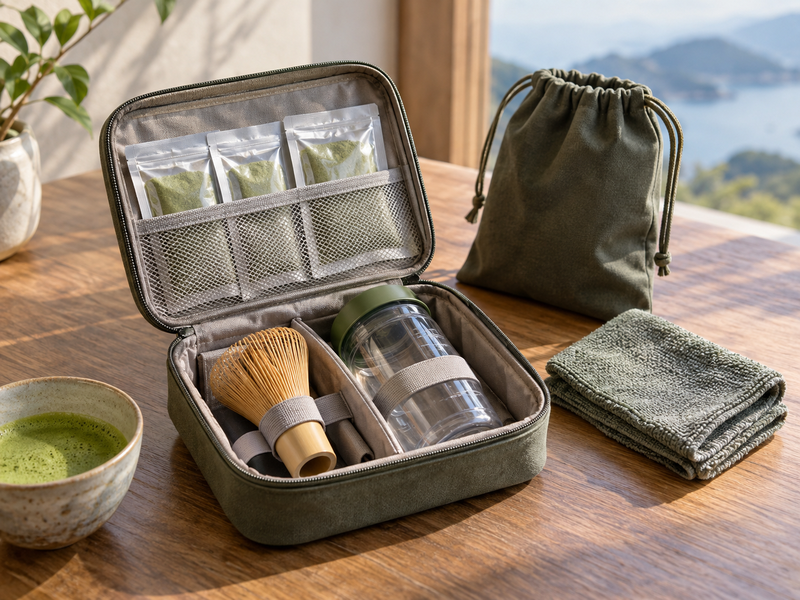
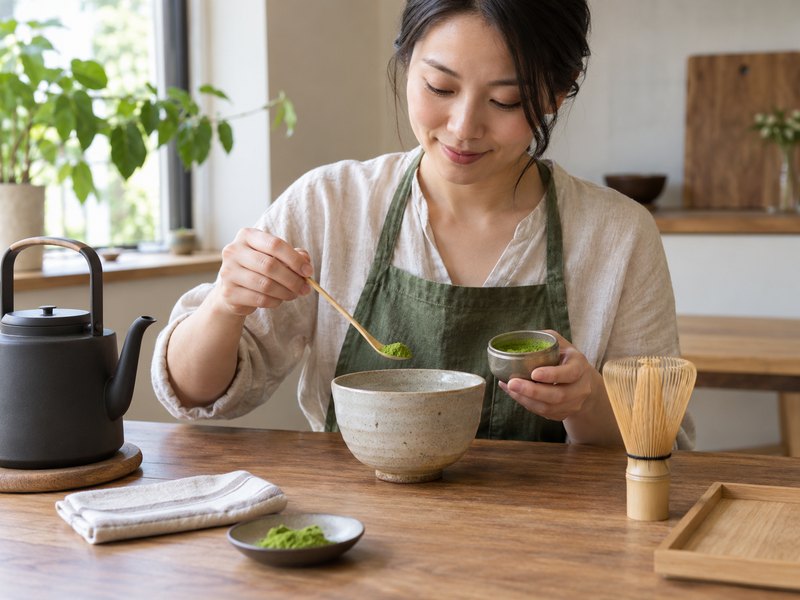
A shaker may work for a quick cold drink without a bowl. A bamboo whisk and small bowl may suit a hotel stay or a planned tasting where drying space is available. A rechargeable frother adds power and cleaning questions. Select one primary method before adding accessories. Sencha Naturals’ mini-shaker directions show a manufacturer-specific cool-water method; another bottle may have different limits.
Compare use under constraints. Give testers the kit and only the water and surfaces expected during the trip. Ask them to make the same measured drink without help. Record clumps, spillage, preparation time and cleanup. A bamboo kit may deliver a familiar bowl, while a shaker may be easier to carry. Neither outcome is universal. Retail packaging should state the method the kit supports and identify any extra item, such as water or a cup, that the customer must supply.
| Method | Useful setting | Trial concern |
|---|---|---|
| Shaker | Quick cold drink | Lid and cleaning |
| Bowl and whisk | Stationary stay | Fragility and drying |
| Powered frother | Available power | Charging and wash access |
3. How should powder be portioned and protected?
Keep the ingredient separate
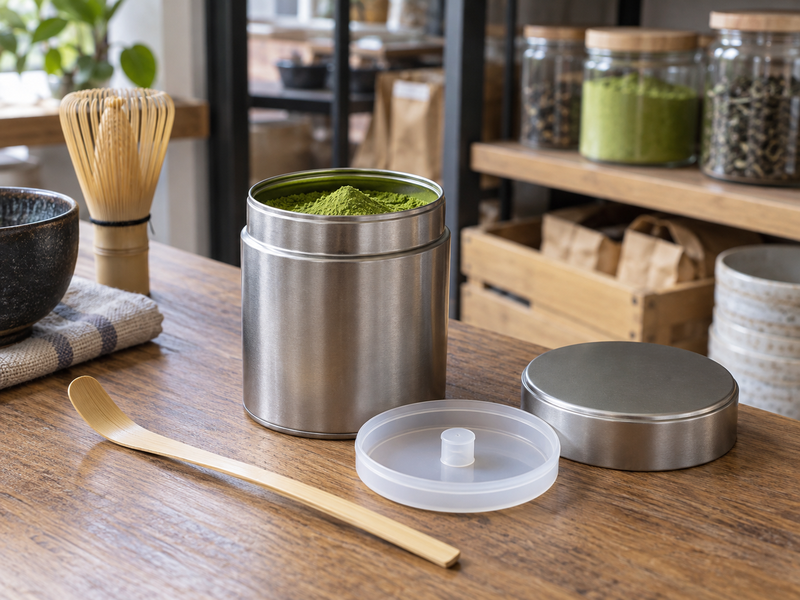
Powder may travel in sachets, a small sealed tin or another food-contact container. Select a format based on trip length, dose control and whether users will open it repeatedly. A convenient vessel should still carry lot and ingredient information where the destination requires it. If the kit includes matcha, connect the powder to a current specification and batch record; the accessory supplier’s reputation does not establish ingredient quality.
Test powder after normal handling. Compare sealed portions with a reference kept under the supplier’s recommended conditions. Observe whether powder clumps after being opened in a humid setting and whether the container closes without trapping powder in the seal. Ippodo’s storage guidance discusses using a can for frequent matcha preparation, but your kit’s pack needs its own stability evidence. Do not copy a fixed freshness period from an online guide. Matcha Village’s company materials list bulk matcha and retail packaging options; ask for the exact available format and documentation if it supplies the tea.
4. What makes the drink container leak resistant?
Test the closure as a system
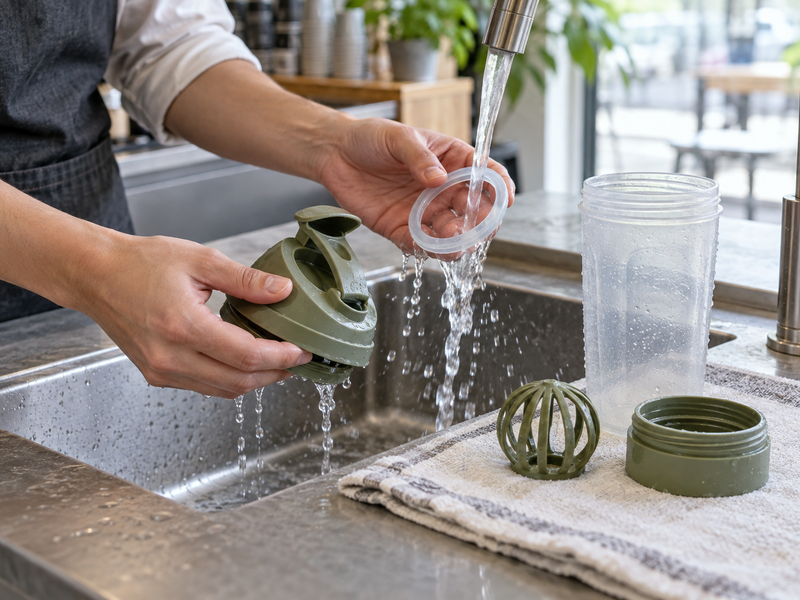
A lid, gasket, spout and thread all affect leakage. A supplier’s “leakproof” claim should be challenged with a trial using the filled bottle, at the intended maximum level and orientation. Check the closure after repeated opening, washing and reassembly. Include any mesh, ball or mixing insert, because a loose part may prevent the cap from seating correctly.
Use a bag test before rollout. Place the filled container inside a clean absorbent sleeve, carry it in a normal bag and inspect for moisture. Repeat after staff have opened and closed it several times. This is a proposed buyer test, not a certified laboratory standard. Record whether a user can tell when the lid is fully closed and whether the drinking spout can open accidentally. If the manufacturer prohibits hot liquids or carbonated drinks, those limits must appear in your instructions. Avoid a broad travel claim if the supplied bottle has not passed your scenario.
| Closure feature | Buyer check | Failure mode |
|---|---|---|
| Main lid | Repeated close and invert | Thread leak |
| Drinking spout | Bag movement | Accidental opening |
| Gasket | Remove, clean and refit | Poor seating |
5. Can the kit be cleaned and dried on the road?
Test the least convenient location
Fine powder collects around bottle threads, inserts and narrow corners. Ask the maker for cleaning instructions and test them with the water and tools a traveler can expect to have. A bottle that requires a special brush might still be suitable, but that brush must be included or clearly listed. A bamboo whisk needs air-drying space; Ippodo advises open-air drying for its chasen.
Record the repacking problem. Have a tester make a drink, rinse the parts and repack after the realistic interval. Note any retained water, odor or powder residue. Do not promise that a case can safely store a wet whisk or sealed damp vessel. If the user cannot wash immediately, the instructions should explain when cleaning is required under the maker’s guidance and how the wet component should be carried separately. Cleanability can decide whether a travel kit becomes a daily habit or an unused gift.
6. How should parts pack together?
Control movement inside the case
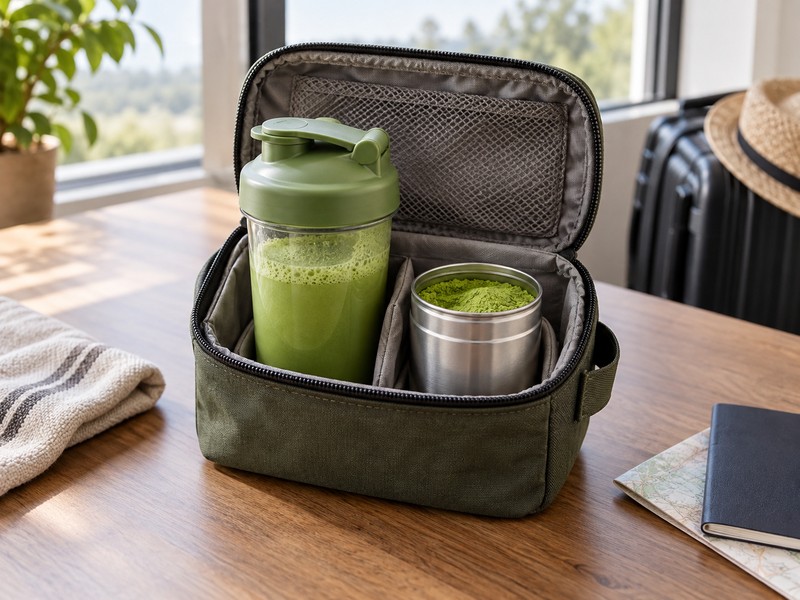
List every component with its dimensions and packed orientation. A ceramic bowl needs protection from hard accessories; a whisk needs protection for its tines. A shaker’s lid and mixing insert should not rattle loose. Try the packed case in both a full backpack and a lightly loaded tote. Check whether the case becomes awkward when a powder tin is added.
Design for reassembly by the user. A diagram showing where each dry part sits can reduce damage. Test whether a customer can put the kit away without forcing a lid shut on a whisk. Ask the supplier for packaging material, component weights and carton dimensions before pricing freight. A small retail box can still ship inefficiently if it needs oversized protective cartons. Keep the design honest: the product should fit the promised use even after customers discard the presentation packaging.
| Part | Protection need | Packing check |
|---|---|---|
| Ceramic bowl | Impact | No hard contact |
| Whisk | Tine shape | Separate cavity |
| Powder vessel | Closure | Upright or secured |
7. What instructions belong in the kit?
Write for a person without a kitchen
Instructions should state dose measurement, liquid type, fill level, mixing action and cleanup for the exact components supplied. If the kit has a shaker, include the bottle maker’s temperature and pressure limits. If it has a bamboo whisk, explain rinsing and drying. Show which pieces contact powder and which belong only to carrying or display. Keep text brief enough to use on a small card.
Pilot the wording before printing. Hand a sample kit and draft card to users unfamiliar with your brand. Watch where they pause, overfill or misassemble a seal. Revise the card based on those observations. If matcha powder is included, ingredient and labeling information should be reviewed separately for the target market. A travel kit should not imply that cold water, hot water or milk is always available. Ask users to carry or purchase liquid according to their setting. Clear instructions are a component of the product, not an afterthought.
8. How should transport and handling be tested?
Simulate the ordinary trip
Test the complete packed product through the shipping route and a user carry scenario. For wholesale, inspect cartons after representative transport for damaged ceramics, cracked plastic, loose caps and crushed powder packs. Check that printed lot codes remain readable. A good-looking sample delivered by hand does not show how a palletized shipment or parcel network will treat the kit.
Separate two failure types. A damaged retail box is a merchandising problem; a cracked drink vessel or spilled powder is a product problem. Record each with a photo and component identifier. Ask the supplier how replacement claims will be handled and whether spare parts can ship alone. Repeat handling after a user has removed and repacked the parts, since internal inserts may be discarded. The test should produce a defect list and packaging revision, not a vague statement that the kit “travels well.”
| Trial | Observe | Corrective question |
|---|---|---|
| Parcel or carton | Breakage and print | More protection? |
| Carried bag | Leaks and loose parts | Better closure? |
| Repack | Fit after use | Better layout? |
9. Which claims and documents need review?
Keep promises within evidence
Review material declarations and intended-market food-contact information for components that touch drink or powder. Check the maker’s instructions for dishwasher use, hot liquid and gasket replacement. If the kit includes tea, review its product code, origin wording and batch records. A pouch marked “airtight” or bottle marked “leakproof” should be supported by a defined test rather than promotional language alone.
Do not borrow travel rules from a blog. Airport screening and import rules can change by route, quantity and jurisdiction; direct customers to current carrier and authority guidance if the product is marketed for flying. Avoid a blanket statement that powder always passes without inspection. Do not promise a fixed shelf life after decanting unless the tea pack and conditions were studied. Your wholesale file should record what the kit contains, how it is used and which claims the supplier can substantiate for each destination.
10. When is the travel kit ready for wholesale?
Approve a complete use case
The order should name every component, material, color, instruction revision and packing method. Keep a signed sample of the finished kit. Check leak performance, preparation quality, cleaning and transport damage against your own acceptance criteria. If the powder is included, approve its specification and lot release process as a separate workstream. A good accessory sample cannot approve an unknown ingredient.
Plan what happens after delivery. Ask whether customers can replace a lid, gasket or whisk individually. Agree on defect reporting and spare stock for retailers. Test the kit at the price and shipping configuration you intend to sell, not a more elaborate prototype. A wholesale program is ready when its contents match the claim on the box and a traveler can make, clean and repack a drink without hidden equipment.
| Approval gate | Evidence | Buyer owner |
|---|---|---|
| Preparation | User trial | Product team |
| Closure | Bag test | Quality |
| Fulfillment | Pack and carton check | Operations |
For an importer, ask who will replace a single damaged lid or missing powder portion after retail delivery. A customer may contact the brand months after the original shipment, when a whole replacement kit is wasteful. Keep spare-component codes and a clear claim route with the approved bill of materials. If the product is sold through several countries, check that translated instructions still match the exact bottle limits and powder label.
FAQ
Q1. Is a bamboo whisk necessary in a matcha travel kit? No. Select a method that fits access to water, washing and drying space.
Q2. Should matcha travel in a large tin? Portion size should match the trip and the supplier’s packaging guidance.
Q3. Can every shaker hold hot water? No. Follow the specific bottle maker’s temperature instructions.
Q4. What should a retailer inspect on arrival? Check lids, gaskets, ceramics, powder packs, instructions and carton damage.
Q5. Is a leakproof label enough? Run a defined filled-container test under the intended carry conditions.
Give suppliers a travel scenario, proposed contents and your closure and cleaning tests. Request a packed production sample before committing to branded cartons. A useful kit respects the limited space and time its customer will actually have away from home.