
Matcha labeling often starts with an appealing story about a region, a grade or a vivid green cup. The trouble begins when the printed words are broader than the records behind the powder. A useful label lets a buyer identify what is in the pack, how it should be handled and which claims have been checked for the market where it will be sold. Start with the formula and lot path, then write the public language. These ten steps give a brand and its supplier a practical review sequence before packaging is printed.
Contents: Identity · Ingredients · Origin · Grade · Organic · Other claims · Use · Market · Artwork · Changes
1. What Exact Product Is in the Pack?
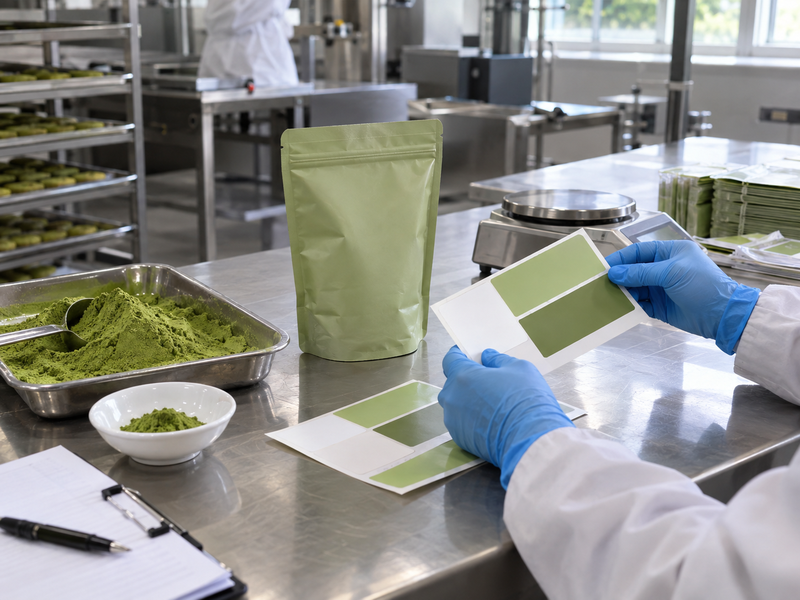
Connect the name to the formula
A pouch of plain matcha, a sweetened latte mix and a flavored beverage powder should not share an undifferentiated label template. Write the supplier’s exact SKU, formula version, manufacturing site and intended pack size at the top of the artwork brief. Then compare the proposed product name with what the pack contains. If the product is a blend, make that clear rather than letting the front panel imply pure matcha. If a brand plans to sell several grades, give each its own controlled specification and artwork file. A clear name helps.
Keep a physical reference
Retain a labeled sample of the product used to approve the text and photographs. The reference lets marketing, procurement and quality teams discuss the same powder. Check that the pouch image used online shows the current pack, not a concept mockup or an earlier supplier’s product. The public title should help a customer understand the item in seconds. It should not force the customer to read a long story to discover that sugar or milk powder has been added. Clear identity supports both trust and search relevance.
| Product | Front-panel question | Supporting file |
|---|---|---|
| Plain matcha | Is it described as powder? | Ingredient specification |
| Latte blend | Is “blend” clear? | Formula and ingredient list |
| Flavored mix | Is flavor named accurately? | Approved formula version |
2. Does the Ingredient List Match the Formula?
Read the current formula line by line
The ingredient statement belongs to the product that will be packed, not the first development sample. Compare each raw material, including added flavors and sweeteners, with the approved production formula. In the United States, the FDA’s overview of food ingredients describes the general requirement to list ingredients in descending order of predominance by weight, subject to specific rules and exemptions. Other markets use their own requirements. A label reviewer should apply the relevant rules to the actual formula and selling market.
Check changes after sample approval
An apparently minor switch from one creamer, flavor or sweetener to another can change the ingredient statement and possibly allergen information. Make a formula version part of every artwork approval. Ask the manufacturer to notify the brand before substitutions are used in a product carrying its label. For plain matcha, the list may be simple, but the team still needs to confirm that the packed item is truly the single-ingredient powder described. For a blend, use the full supplier disclosure under an appropriate confidentiality arrangement rather than guessing from the taste.
3. What Can You Support About Origin?
Write claims at the level the records support
“Japanese matcha,” “from Uji” and “packed in Japan” refer to different things. Trace where the tea leaves were grown, where the powder was processed, and where the final pack was filled. Ask for lot-linked records for each claim that will appear on the pack. A warehouse address or shipping port does not establish where tea was grown. If multiple origins are blended, the label needs wording appropriate to the actual composition and market. Keep the claim as narrow as the evidence. An attractive region story is useful only when the delivered lots follow it.
Check every supply path
Brands often qualify a second supplier or move filling to another plant. Review origin statements before that transition, even when the flavor seems similar. A front-panel flag, map or place name can be a claim just as much as a sentence. Ensure the artwork team sees the origin file rather than receiving only a verbal assurance. Matcha Village’s B2B supply options can be discussed with its team through its matcha products, but any specific origin wording should follow the documents for the selected product and lot. The same principle applies to all suppliers.
| Wording idea | Evidence to seek | Risk if generalized |
|---|---|---|
| Country of leaf origin | Lot-linked sourcing record | Alternate-origin lots |
| Processing location | Facility record | Confusing milling with growing |
| Packing location | Filling record | Claiming tea origin from pack site |
4. What Does the Grade Language Mean?
Use it to describe, not disguise
Terms such as “ceremonial,” “premium” and “culinary” appear frequently in matcha marketing, but a buyer should not assume every supplier applies them in the same way. Ask what the supplier means by the grade: sensory target, intended use, harvest or blend selection, and price position. Then test the powder in the intended drink or food. A high-priced grade may be lovely with water and wasted in a heavily sweetened cookie. A foodservice grade may be the better fit for a latte. The label should not promise a universal quality ranking from an undefined adjective.
Keep the approval sample
Define an acceptable range for color, aroma, bitterness and particle feel against a retained sample. If the company changes its grade naming, review the artwork and listings together. Avoid copying a competitor’s grade claim because the words sell well. Explain the product’s use in concrete language: for whisking, iced lattes or baking, if supported by trials. That helps customers choose. A label that says “ceremonial” while the back panel recommends large amounts of syrup may confuse the customer about the experience to expect.
5. Is an Organic Claim Documented?
Follow the product and operator chain
An organic claim needs the right certification and traceability for the product and destination market. Ask for current records that cover the selected matcha, relevant operators and any repacking or blending step. Do not assume that organic raw powder makes a sweetened, packed blend eligible for the same claim. Packaging artwork, online listings and purchase documents should all use the approved wording and symbol. If the supplier cannot provide the needed evidence, keep the claim off the pack while the team investigates. Tasting a clean, green powder cannot substitute for certification.
Review the intended market
The exact organic logo, permitted phrase and import documentation can differ by sales destination. Consult the appropriate certifier and qualified label reviewer before a large print run. The buyer can help by stating the destination markets early; a supplier cannot prepare the right pack if the brand has not decided where it will sell. Keep certificate dates and product names in a controlled record and recheck them at renewal. An expired file in an old email folder is a weak basis for a current shelf claim.
| Claim check | Ask for | Recheck when |
|---|---|---|
| Product status | Current product certificate | Renewal or SKU change |
| Operator scope | Covered processing and packing | Site change |
| Artwork | Approved logo and wording | New market or design |
6. Which Other Claims Need Separate Evidence?
Make a claim register
List every explicit and implied statement on the front panel, back panel and product page. Examples include origin, kosher, halal, vegan, pesticide-related statements, caffeine amount and “no added sugar.” Assign a supporting document and a reviewer to each. A supplier certificate for one claim does not prove the others. A “lab tested” sentence should specify what was tested and how the brand will keep it true for future lots. Remove claims that cannot be supported in the normal supply process. The resulting pack is often clearer and easier for customers to understand.
Treat wellness language carefully
Matcha has a long cultural and culinary history, but broad health promises can change the regulatory review required for a label or advert. Avoid lifting claims from social media or a competitor’s blog. Describe flavor, preparation and verified product features instead. If the business wants a nutrition or function statement, route the exact wording through its qualified market reviewer with the relevant substantiation. The same rule applies to a cafe menu, marketplace listing and paid ad. A claim removed from the pouch can still cause trouble when the online description keeps it.
7. Do Instructions Match the Product?
Test the printed method
Preparation directions should use the actual powder, serving size and equipment the customer is likely to have. If a label says “whisk with hot water,” test that method and choose a useful temperature range through tasting rather than copying a generic instruction. If the powder is intended for milk drinks, show a measured ratio that works in the standard cup. For a blend with sugar, account for the sweetness already present. A user should not have to guess whether the scoop is level or heaped. Simple, tested directions reduce complaints that are really recipe problems.
Check storage and handling
Powder appearance and flavor depend on how the pack is stored after opening. Ask the supplier for appropriate handling guidance for the exact pack and product; then make the label instruction fit available space and real customer behavior. If the brand gives a use-by or best-before period, base it on its validated product and packaging program. Do not transfer a bulk-bag date to a small repack without review. Include any required handling information for a blend with added ingredients. Clear directions do not need to make dramatic promises.
8. Have You Reviewed the Destination Market?
Start before artwork is final
A product sold in several countries may need different language, declarations, units, nutrition panels and claims. Put each destination on the launch list and assign a qualified reviewer. The FDA Food Labeling Guide is a primary starting point for US food labeling questions; it is not a global rulebook. Ask the import partner what information they need for their market. The supplier can provide product data, while the brand and its reviewer decide how that data appears on the final consumer label.
Keep an approved version for each market
Do not allow a printer to improvise a sticker from one country’s panel for another. Use versioned artwork, proof approval and a market code on the order. Test barcode, net quantity and mandatory information placement with the pack size that will actually be produced. If a distributor adds a local-language label, agree who checks its translation and where it will be applied. A modest review at design stage costs less than relabeling finished cartons after arrival.
| Destination task | Owner | Record |
|---|---|---|
| Product data | Supplier | Current specification |
| Market review | Brand and specialist | Approved wording |
| Print proof | Brand and packer | Versioned artwork |
| Import check | Distributor | Market-specific approval |
9. Does the Final Artwork Match Approved Text?
Proof the pack, not a loose document
Read the actual printer proof at full size. Compare the product name, ingredient list, claims, certifications, directions, net quantity and company details with the signed-off text. Color and typography can make a qualifying phrase unreadable, and a layout change can separate a claim from its explanation. Check the side panels and seal area; small pouches have less usable space than flat mockups suggest. Someone other than the designer should perform the final line check. Keep a dated approval record tied to the print file version.
Audit the online version
The product page may contain older wording even when the physical pouch is correct. Compare marketplace title, bullets, images and FAQs with the approved pack. Replace lifestyle photos that show a claim or symbol no longer valid. If a second seller writes its own listing, give it a controlled facts sheet. Search snippets can display stale titles for a time, so keep the source page accurate and monitor changes after launch. Product copy is part of labeling work in practice, even when a separate team owns the website.
10. How Will the Label Stay Correct After Launch?
Connect change control to the next order
Set triggers for re-review: new supplier, origin, formula, processing site, certification status, pack material, destination market or preparation instruction. The purchasing team often hears of a change first, while marketing holds the artwork file. Give both teams a short escalation path. If a substitution is proposed, pause the affected print or order until the claim register and ingredient statement are checked. Document who approved the revised version and which inventory lot first uses it. This prevents old and new packs from becoming indistinguishable in a warehouse.
Check against a real shipment
At receiving, compare the delivered carton and pouch with the approved SKU, lot information and artwork version. Periodically buy one retail unit and inspect it as a customer would. Is the preparation instruction still useful? Does the powder match the sensory reference? Is a certification mark current? A quarterly look at the actual shelf product can catch errors that a spreadsheet misses. Good matcha labeling is maintained by a simple evidence and review routine, not by polishing the opening story once and leaving it untouched.
| Change event | Hold point | Evidence to update |
|---|---|---|
| New formula | Before production | Ingredients and claims |
| New origin | Before artwork reuse | Sourcing record |
| New market | Before shipment | Local label approval |
| New packer | Before repacking | Site and certification scope |
FAQ
Q1: Is “ceremonial grade” a standard legal category everywhere? Do not assume so. Ask the supplier what the term means for its product and review the claim for the sales market.
Q2: Can a matcha label name a region if the pack is filled there? Packing location and tea origin are different facts. Support the exact origin wording with lot-linked records.
Q3: Does organic raw matcha make an entire blend organic? Not automatically. Review the finished product and operator chain with the relevant certifier.
Q4: Should online copy match the pouch? Yes. Keep product names, ingredients and claims consistent across listings, sales sheets and the physical pack.
Q5: When should artwork be reviewed again? Review it when the formula, source, site, pack, certification or target market changes, and at planned intervals after launch.