
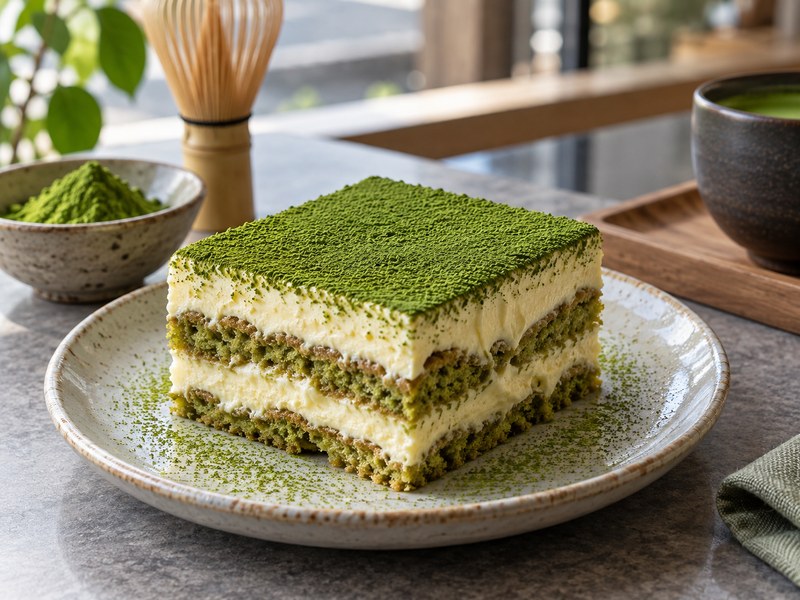
Matcha tiramisu is a chilled layered dessert that replaces some or all coffee flavor with powdered green tea. It usually has soaked biscuits or sponge, a mascarpone-based cream, and matcha dusting. For a bakery or restaurant, the difficult work is controlling soak, tea strength, cream stability, cold handling, and portion cost across batches. This guide provides a development framework rather than a fixed home recipe. The Teak & Thyme matcha tiramisu is a useful example of the dessert format; commercial production needs its own ingredient specification, safety plan, and shelf-life study.
1. What makes matcha tiramisu different from classic tiramisu?
Classic tiramisu is commonly associated with coffee-soaked layers and a rich cream. A matcha version uses green tea in the soaking liquid, cream, topping, or a combination. It may omit coffee entirely or retain a small coffee note; the menu should say which. Matcha’s grassy, savory, and bitter traits meet a sweet, high-fat cream, so a plain matcha tasting cannot predict the final dessert. The product succeeds when tea flavor remains clear in a full forkful, the layers cut cleanly, and the biscuits are moist without collapsing.
What should the product brief specify?
Define the slice before mixing. Set serving weight, cup or tray dimensions, number of layers, intended color, sweetness, and service temperature. Decide whether the audience expects a light tea finish or a strong matcha dessert. If coffee remains in the soak, decide whether the menu says “matcha and coffee tiramisu.” A visible green top can mislead customers if the cream and biscuit contain little tea. Taste the entire portion after its planned chill, not components at room temperature.
| Layer | Job in the dessert | Common failure |
|---|---|---|
| Biscuit or sponge | Holds tea soak | Mushy center or dry edge |
| Matcha soak | Carries tea through layers | Bitter or uneven wetting |
| Cream | Richness and structure | Slumping or tea masking |
| Top dusting | Immediate aroma and color | Damp dark patches |
2. Which matcha powder belongs in the dessert?
Select powder in the assembled dessert. A delicate drinking matcha can vanish behind mascarpone and sugar. An inexpensive, forceful powder may survive but leave a harsh finish. Test several lot samples at the same dose, with the same cream and soak. Evaluate immediate flavor and the flavor after the planned holding period. Green color matters, but a vivid powder that fades on a moist top may require a different finishing method. Grade terms are not universal product specifications; the buyer needs an ingredient statement, origin, lot number, shelf-life advice, and relevant tests.
Should one powder serve every layer?
One powder simplifies purchasing, but the soak and top dusting have different jobs. A powder that disperses well in liquid may be suitable for soaking, while a finer, bright powder may look better when dusted shortly before sale. Test a one-powder formula first. If two products materially improve the dessert, calculate the added stock complexity and train staff so they cannot be confused. Blind-code samples during testing. Ask whether a powder is pure matcha or a sweetened blend; the latter changes the sugar calculation and may add allergens.
3. How strong should the matcha soak be?
Begin with a measured dispersion rather than a spoonful of powder stirred into cold water. For a bench trial, disperse 10 g pure matcha in 200 ml water, then test how much liquid the biscuits actually absorb. This is a trial concentration, not a finished formula. The right strength depends on biscuit type, number of layers, cream sweetness, and portion size. Keep the soak cool before assembly so it does not warm a dairy cream. Record grams of matcha and milliliters of water, plus any sugar or other flavor added.
How can a bakery prevent soggy layers?
Weigh the soak pickup. Weigh a group of dry biscuits, dip them by a defined method, then weigh them again. Record absorbed liquid per biscuit or per tray. A quick dip can still vary with biscuit density and operator speed. If the center stays dry, change contact time or the layer design; if it collapses, reduce pickup. Let a test tray chill for the intended setting time before judging. The first slice of a fresh tray is a poor predictor of a portion sold hours later. For a layered cake comparison, see our matcha cake guide.
4. How should matcha be incorporated into cream?
Matcha can clump in a thick cream. Disperse it in a small measured portion of liquid or a small portion of the cream base, then fold it into the larger batch. Count that liquid in the formula. Keep mascarpone and other dairy ingredients at temperatures suitable for the recipe and safety plan; overworking or warming can destabilize the cream. Sugar influences both flavor and texture. If tea tastes weak, reduce excess sweetness or change powder before increasing matcha without limit. Compare a plain cream and matcha cream with identical sweetness to understand the powder’s contribution.
What makes cream consistent at scale?
Specify ingredient brands, mixing equipment, batch size, ingredient temperature, mixing speed, and endpoint. A stand-mixer method may overwhip a much larger batch. Record final cream yield and grams applied per layer. Pipe or spread to a measured target rather than judging depth by eye. A firm cream can cut neatly but feel heavy; a soft cream may eat well yet collapse in delivery. Test the assembled product after transport vibration if it will be sold off-site. If gelatin or another stabilizer is introduced, test texture and review the ingredient label before launch.
5. Which assembly sequence gives even portions?
Choose a tray or cup, then calculate the component mass needed for each layer. Spread a thin cream base if it helps anchor biscuits, add standardized dipped biscuits, apply a weighed cream layer, and repeat. Keep edges level. For tray service, mark a cutting grid that matches the selling weight; for individual cups, use the same nozzle and deposit weight. Chill the complete dessert for a defined setting period before cutting. A neat top is less useful than a consistent interior, so inspect slices from center and edge.
When should matcha be dusted on top?
Matcha on a moist cream surface can darken and form patches. Compare dusting immediately after assembly, after setting, and just before service. Use a measured amount per tray so one shift does not spend twice as much powder as another. If a stencil is used, check that it can be cleaned and dried between batches. A cocoa-and-matcha pattern can work, but the dessert name should reflect actual flavor. For packaged portions, test whether the lid touches the dusting during transport. A separate topping sachet is possible, but it adds labor and packaging.
| Assembly control | Record | Failure prevented |
|---|---|---|
| Biscuit count | Number per layer | Uneven slices |
| Soak pickup | Grams per layer | Dry or collapsed base |
| Cream deposit | Grams per layer | Variable portion cost |
| Chill time | Start and release times | Loose cuts |
| Dusting | Grams and timing | Patchy top |
6. Can matcha tiramisu be made without raw eggs?
Yes. Many commercial formulas use a cream that does not require raw egg. If a recipe includes eggs that remain raw or undercooked, use pasteurized eggs or egg products appropriate for that application and follow local rules. The FDA specifically lists tiramisu among foods where raw eggs can present a risk and recommends pasteurized options. “Fresh eggs” alone do not resolve that issue. A bakery should document the chosen process, supplier, and handling method before offering the product, especially to customers with greater foodborne-illness risk.
What about an egg-free recipe?
Check every component. A cream made without egg may still use dairy, while commercial ladyfingers or sponge may contain egg. “No raw egg in the cream” is more precise than “egg-free” unless the whole ingredient chain supports the claim. The same care applies to alcohol, gelatin, gluten, and nuts. Ask suppliers for current declarations and manage cross-contact in the bakery. If a plant-based version is developed, it needs separate texture and shelf-life validation; swapping mascarpone for a plant cream changes water balance and setting behavior. Menu staff should use approved allergen information, not a guess from the recipe name.
7. What cold handling does a commercial tray need?
Treat the dessert as a refrigerated, ready-to-eat product unless a validated process says otherwise. Keep dairy and prepared components cold, limit time at room temperature during assembly, and return completed trays to controlled refrigeration promptly. FoodSafety.gov gives a general reference of 40°F/4°C or below for cold foods and a two-hour limit without cold holding, shorter in high heat. A business must follow the rules and its own food-safety plan for its market. Matcha powder does not protect cream from temperature abuse.
Which temperatures and times should staff record?
Record receipt and storage temperature for dairy, start and finish of assembly, chill start, release for sale, and any transport temperature. Set a maximum batch size the team can assemble while components remain within the approved process. Use shallow or smaller trays if a large mass cools too slowly under the existing setup. Keep utensils and work surfaces clean and separate from raw ingredients. A temperature log is useful only when someone acts on an out-of-range result; specify who holds or discards a batch and how that decision is recorded.
| Control point | Record | Action if outside plan |
|---|---|---|
| Dairy receipt | Product temperature and lot | Hold for review |
| Assembly | Start and finish time | Evaluate exposure |
| Refrigeration | Actual storage temperature | Correct and assess product |
| Delivery | Temperature at handoff | Reject unsafe shipment |
8. How should shelf life be established?
Shelf life must be tested on the finished dessert in its real package. Cream stability, microbial safety, biscuit texture, tea flavor, and top color can fail at different times. Make pilot batches with representative ingredients and process. Observe slices at each proposed sale day and use appropriate microbiological testing or expert support for the intended market. An attractive day-two photograph does not prove safety. If the dessert is frozen for distribution, validate thawing, water migration, and the cream’s texture separately. Do not adopt a home recipe’s storage note as a commercial expiry date.
What changes should trigger a new test?
A different cream, biscuit, matcha dose, package, portion size, or cooling process can alter shelf life. So can a new distribution route. Keep a versioned formula and record which version each trial used. For case display, test the exact lighting and opening frequency. Matcha dusting may be the first visible failure even when internal flavor remains acceptable. Set quality limits alongside safety limits so the bakery does not sell a technically within-date slice that looks tired and tastes flat.
9. What does one saleable portion cost?
Calculate the full tray, then divide by portions actually sold. Include matcha in soak, cream, and topping; biscuits; mascarpone and other dairy; sugar; packaging; labor; trimming; and unsold slices. A nominal twelve-slice tray may yield ten clean retail portions after edge losses. That difference changes the matcha cost per slice and the margin. Weigh each component during a pilot and track the amount left in mixing bowls and soaking pans. Those residues can be material when a premium powder is used.
How can cost be reduced without losing tea character?
Test one change at a time. A stronger soak may carry flavor more efficiently than adding matcha everywhere; a less sweet cream may make existing tea more apparent. A cheaper powder may cost more if its weak flavor requires a larger dose or creates dull top color. Compare finished portions blind, then calculate cost per accepted slice. Labor also matters: individual cups can avoid cutting waste but take more assembly time. Select the format that works for the channel, not the one with the lowest ingredient cost on paper.
| Cost line | Calculation basis | Hidden loss |
|---|---|---|
| Matcha | Total grams in all layers | Dusting and slurry residue |
| Biscuit | Pieces per saleable portion | Breakage |
| Cream | Grams per portion | Bowl residue |
| Packaging | Tray or cup plus lid | Damage in transport |
| Labor | Minutes per batch | Rework and cutting |
10. What should a bakery ask a matcha supplier?
Request several pure-matcha samples that fit the dessert’s flavor and budget, then test them in the complete chilled portion. Ask for the current lot specification, origin and ingredient declaration, storage guidance, available safety tests, pack size, lead time, and continuity plan. Matcha Village can discuss bulk powder for a dessert application, but the bakery must approve its own formula and handling controls. Do not commit based only on the color of a dry powder or a supplier’s suggested grade.
What belongs in the final production file?
Keep the accepted matcha sample, component formulas, soak pickup, assembly weights, allergen review, cold-handling procedure, shelf-life evidence, and cost sheet. Include a photograph of a cut portion at the intended sale day. When a new matcha lot arrives, compare it in the dessert before replacing the approved one. Begin with two or three coded powders in one tray format, then scale the winner into a normal production run. A customer should receive the same balanced, cleanly cut portion whether it was made by the development chef or the next shift.
| Approval record | Purpose |
|---|---|
| Matcha lot sample | Future sensory comparison |
| Formula and deposit weights | Repeatable layers |
| Egg and allergen review | Accurate safety and menu information |
| Cold and shelf-life plan | Controlled sale period |
| Cost and yield sheet | Commercial pricing |
FAQs
Q1. Does matcha tiramisu contain coffee? It can, but many versions omit coffee. State the actual ingredients on the menu.
Q2. Can it be made without raw egg? Yes. Use an egg-free cream method or suitable pasteurized egg products when a recipe needs egg.
Q3. Why does the top turn dark? Matcha dusting absorbs moisture and can change color. Test dusting time and packaging.
Q4. How much matcha goes in the soak? Start with a measured trial, then adjust after checking biscuit pickup and the chilled full portion.
Q5. How long does commercial matcha tiramisu last? Establish shelf life for your finished recipe, process, package, and storage conditions; do not copy another recipe’s date.