
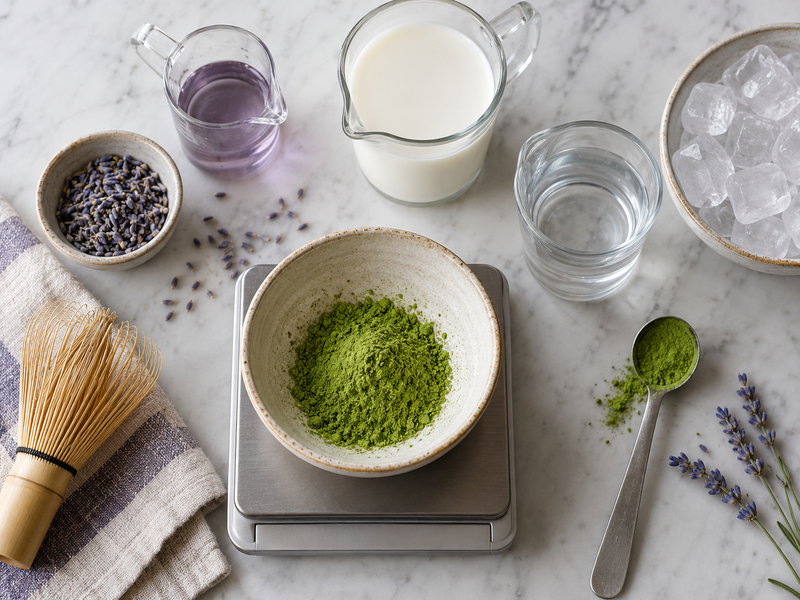
A lavender matcha latte should taste first of tea, then gently of lavender. The Metolius Tea Wholesale recipe uses unsweetened matcha, hot water, lavender syrup, milk and ice; its simple build is a useful reference. A café still needs to decide how strong the syrup is, what a finished serving weighs, and whether the first and last sip taste alike. The method below gives a testable starting formula, then shows how to approve it for service without assuming that one supplier’s syrup or powder will behave like another’s.
Contents
- 1. What should the finished drink taste like?
- 2. Which ingredients belong on the recipe card?
- 3. How much lavender syrup should you use?
- 4. How do you prepare the matcha base?
- 5. Which milk makes the balance work?
- 6. What build order gives a consistent iced latte?
- 7. How should a café test its first batch?
- 8. How do you handle ingredients safely?
- 9. What does each serving cost?
- 10. When should the menu recipe change?
1. What should the finished drink taste like?
Set a sensory target before measuring syrup
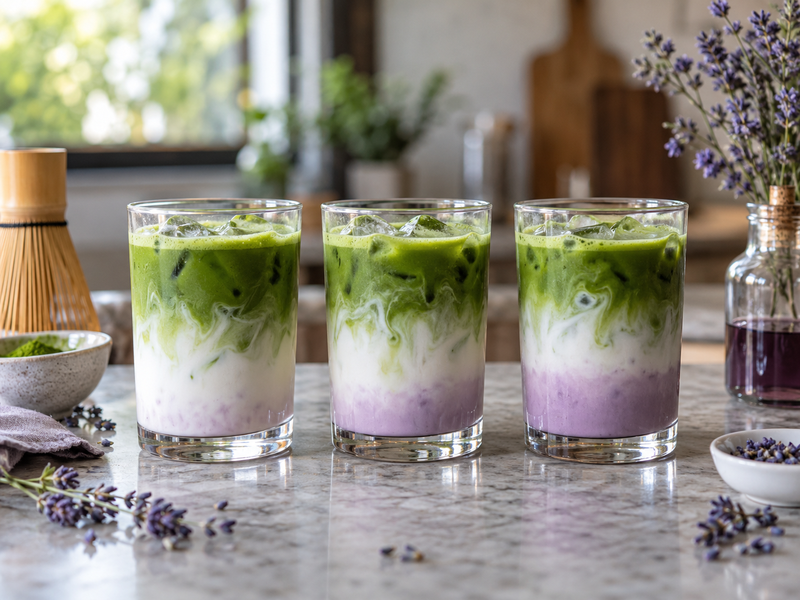
Specify a clear tea note, a light floral aroma and enough sweetness to connect the two. Lavender can turn a cup perfumed or soaplike when its intensity outruns the matcha. That is a sensory judgment, not a universal threshold in milliliters: syrups differ in concentration and different milks change perception. Taste the drink after stirring rather than judging only the striking green and white layers in a photo. Look for a smooth mouthfeel, no dry clumps, and a tea note that remains recognizable as ice melts.
Write the target in language a barista can use. “Light lavender on the nose; matcha identifiable at the first sip; no lingering perfume” is more useful than “balanced and premium.” Serve the approval sample in the same cup and with the same ice used at the counter. Compare it at once and after several minutes. If lavender dominates later, the drink may need a different syrup, not merely another sweetener. A tea-forward version may suit customers who already order matcha; a sweeter floral version may be a separate menu item. Agree on one default before training staff.
| Check | Desired observation | Adjustment to test |
|---|---|---|
| Tea identity | Matcha remains distinct | Increase tea dose in small steps |
| Lavender | Noticeable but restrained | Reduce syrup or change product |
| Sweetness | Supports tea and flower | Test unsweetened milk |
| Texture | No visible powder clumps | Refine whisking step |
| Last sip | Still pleasant after dilution | Recheck ice and liquid volumes |
2. Which ingredients belong on the recipe card?
Record the complete cup, not a vague “splash”
For a pilot serving, try 3 grams of matcha dispersed in 45 grams of water, 12 grams of commercial lavender syrup, 180 grams of milk, and a fixed 120 grams of ice. These are development amounts, not a claim that the resulting cup fits every vessel or syrup. Weigh the filled glass and adjust it to the actual cup. Metolius uses a different reference formula, including roughly half an ounce of its own lavender syrup; copy its process as a comparison, not its syrup dose as a guaranteed match for yours.
List the supplier and product code for each ingredient. Record whether the syrup is ready to use or concentrated, whether the milk is sweetened, and which matcha lot passed the trial. Check the lavender ingredient declaration. Food-grade culinary lavender and a beverage syrup made for consumption are relevant; decorative flowers or fragrance oil are not substitutes. If using a house syrup, document its recipe, production date, container and handling procedure. A pump count is acceptable only after the pump has been calibrated in grams across several strokes. Keep a scale at the development bench, then translate the approved gram amount into a service-friendly measure.
3. How much lavender syrup should you use?
Run a short, controlled dose trial
Prepare identical matcha and milk bases, then compare a low, middle and high syrup dose such as 8, 12 and 16 grams. These figures illustrate a trial range for a particular pilot cup; strong and weak syrups may need different values. Stir each fully before tasting. Ask at least two tasters to record whether the floral note is absent, pleasant or intrusive, and whether the added sweetness hides the tea. Blind-coded cups reduce the pull of the prettiest layer. Repeat the preferred dose with a fresh cup on another day.
If the middle cup is too sweet but the lavender aroma is right, adding more syrup will not solve the problem. Try a less sweet lavender product or adjust the milk and tea. If the floral aroma disappears under milk, compare syrups or use a restrained edible garnish where permitted; do not assume dried flowers will release the same flavor in a cold glass. Keep the approved syrup brand on the recipe card. A supplier substitution requires a new dose trial because “lavender syrup” describes a flavor category, not a fixed concentration.
| Trial cup | Example syrup mass | What to record |
|---|---|---|
| A | 8 g | Can tasters detect lavender? |
| B | 12 g | Does matcha still lead? |
| C | 16 g | Is perfume or sweetness excessive? |
| Retest | Chosen dose | Does another barista reproduce it? |
4. How do you prepare the matcha base?
Make a smooth concentrate before it meets milk
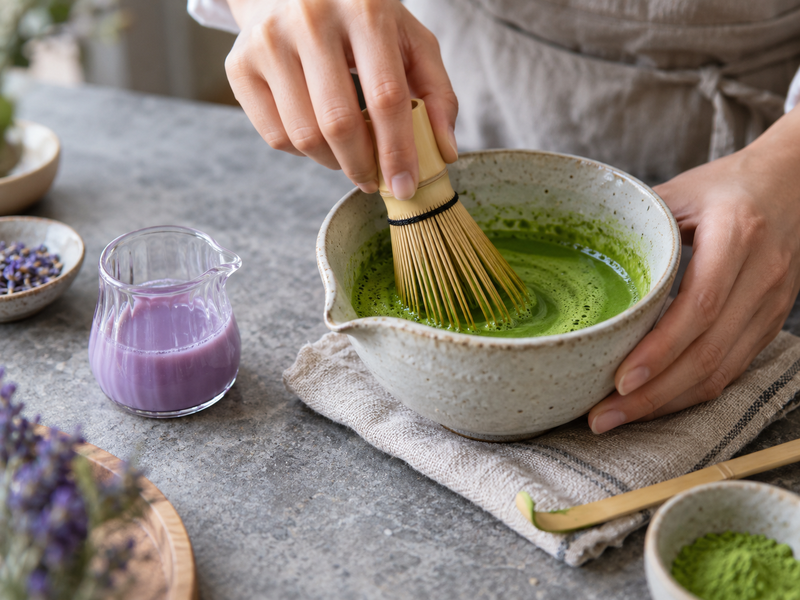
Sift the weighed matcha if the powder clumps, add the measured water and whisk until no dry pockets remain. The reference recipe whisks matcha with hot water first. For your powder, test a practical warm-water range and note the setting you approve; water that is too hot for comfortable service or that dulls the flavor is a poor fit, even if it disperses quickly. Do not put dry powder straight onto ice and expect the finished drink to mix evenly. A small spouted bowl can make the layer easy to pour, while a shaker may be faster during a rush. Compare both using the same dose.
Inspect the concentrate before milk is added. Look at the whisk, the bowl wall and the bottom after a brief pause. If a gritty deposit remains, adjust the dispersion method or powder choice. Weigh water rather than estimating a splash. A change from 45 to 80 grams weakens the final serving and may crowd the glass before the milk is added. Record the tool, water amount and preparation order so two baristas make the same tea base. For a broader powder selection framework, see the site’s matcha green tea powder guide.
5. Which milk makes the balance work?
Evaluate milk with the approved tea and syrup
Milk changes body, sweetness and how quickly the floral note appears. Test the planned dairy milk or plant drink at the service temperature with the same matcha and syrup doses. An oat drink with added sugar may make the lavender syrup seem excessive, while a lighter unsweetened milk may expose more of the powder’s bitterness. Do not choose the milk from a plain cup tasting alone. Keep one standard milk for recipe approval, then test each offered substitution as its own finished drink. A substitution that needs a different syrup dose should be spelled out on the service card rather than improvised.
Check the ingredient statement for allergens. In the United States, FDA lists milk, soy, tree nuts and other foods among the major allergens. A milk change can alter the information staff must give a guest. Use dedicated or properly cleaned tools according to the site’s allergen procedure. Store opened milk and plant drinks according to their labels and local food rules. When measuring a finished cup, count the milk actually poured rather than the nominal carton amount. Small differences in milk volume can make the tea vanish behind floral sweetness.
| Milk option | Sensory check | Operational check |
|---|---|---|
| Dairy milk | Tea and floral balance | Milk allergen disclosure |
| Unsweetened oat drink | Body without excess sugar | Product-specific allergen statement |
| Sweetened oat drink | Total sweetness | Syrup reduction trial |
| Almond drink | Nut flavor with lavender | Tree-nut allergen procedure |
6. What build order gives a consistent iced latte?
Layer for appearance, then test the stirred drink
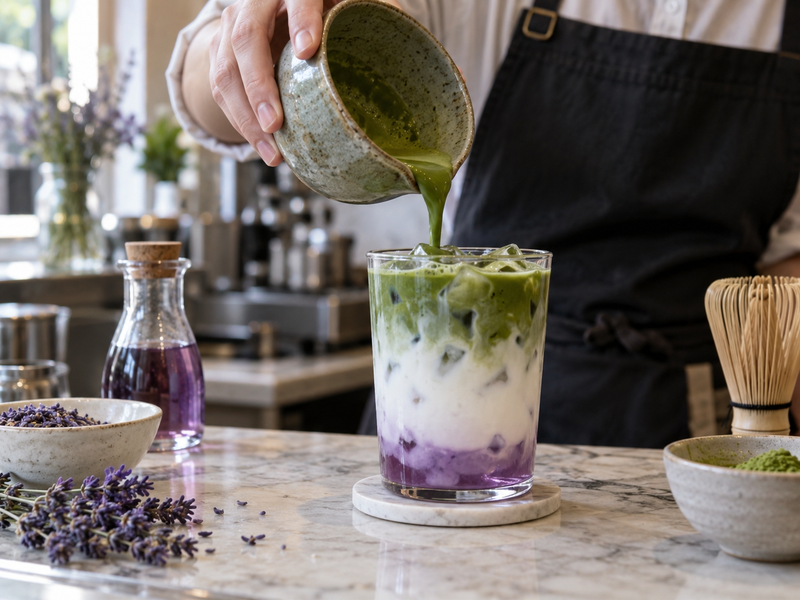
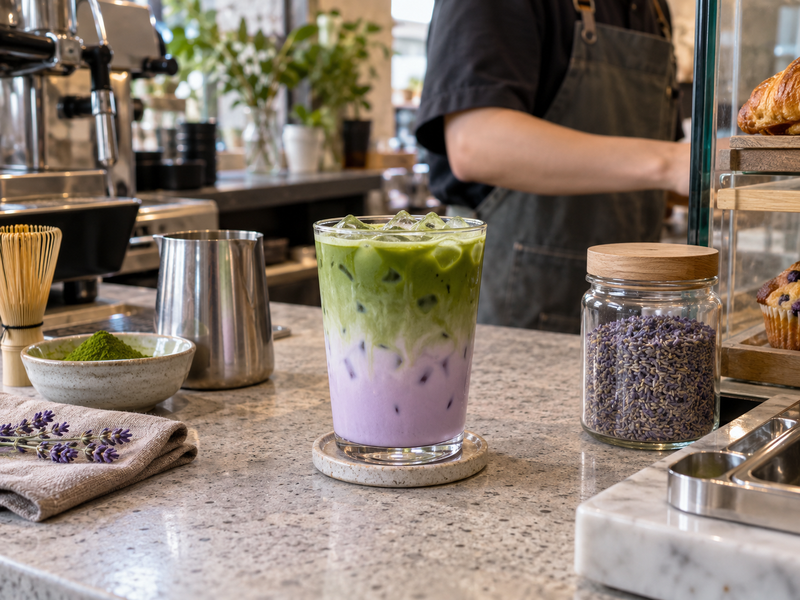
For an iced presentation, add the approved syrup to a clean glass, add measured ice and milk, then pour freshly whisked matcha slowly over the top. Metolius uses this sequence. The layers help show the green tea and floral base, but guests may stir before drinking. The recipe must taste good both immediately and after stirring. If syrup collects as a very sweet bottom layer, consider mixing it into the milk before ice is added. Choose the sequence that gives both an acceptable visual result and an even drinking experience.
Write one service sequence with weights and tools. For example: weigh syrup, add the specified ice scoop after calibrating it by mass, measure milk, whisk tea and pour. Measure the total time from order to handoff during a busy trial. A beautiful drink that needs multiple unmeasured corrections is hard to repeat. If lavender garnish is used, verify that the garnish is intended for food and train staff on a small, consistent amount. Never allow garnish to conceal a cup that misses its matcha or syrup specification.
7. How should a café test its first batch?
Compare different makers and different waiting times
Have two staff members prepare the recipe independently from the same card. Weigh the finished cups, photograph them in the usual pickup area and taste each after a gentle stir. If they differ, observe the process before changing ingredients. A pump may deliver different amounts when partially filled; an ice scoop may hold different masses of small and large cubes. Repeat the trial with both variables measured. Check whether matcha settles, whether the lavender remains recognizable and whether the drink becomes watery after five or ten minutes. Those times are observation points, not promises of shelf life.
Ask tasters to write short notes without a sales script. “Tea missing after five minutes” identifies a change to investigate; “delicious” does not. Test the drink with the menu’s dairy-free option if it will be offered. Photograph the approved serving and record glass size, ice type, powder lot, syrup brand and milk. Training a barista from that record is a better readiness check than a single successful developer cup. If the menu is seasonal, repeat the trial when ingredient supply changes before reopening the item.
| Trial variable | Hold constant | Record |
|---|---|---|
| Barista | Ingredients and recipe card | Finished mass and service time |
| Ice size | Liquid recipe | Dilution and last sip |
| Milk substitution | Matcha dose | Sweetness and texture |
| Matcha lot | Cup and syrup | Tea presence and clumping |
8. How do you handle ingredients safely?
Treat the flavored latte as a ready-to-serve food
Use potable water, clean tools and ice handled with dedicated utensils. Keep opened milk and any house-made lavender syrup under the conditions required by the product label and the café’s food safety plan. The FDA Food Code is a model for retail food rules in the United States; local adoption and the classification of a particular ingredient can differ. Check the applicable rule rather than declaring a universal holding time for a mixed latte. Make the drink for prompt service instead of presenting a layered cup as a room-temperature display item.
Document allergens for every milk option and syrup ingredient. A lavender garnish sold for decoration is not automatically food grade. Check supplier documentation for the edible product and keep it sealed and dry as directed. If staff prep matcha concentrates or syrup in advance, set a site-approved container, date and handling procedure, then validate the taste after storage. Reusing a container without a clean-and-sanitize step can introduce contamination or stale floral aroma. A straightforward batch record is enough: product, lot or prep date, responsible person and discard instruction.
9. What does each serving cost?
Calculate from actual usage, including waste
Multiply the approved matcha dose by the landed cost per gram, then add syrup, milk, ice, cup, lid and garnish. Do not use the supplier’s price per kilogram as if it were the serving cost. A powder that costs more per kilogram may need a smaller dose to remain distinct in this milk and syrup; test that outcome rather than assuming it. Include syrup waste from an uncalibrated pump and the portion of a house syrup batch that expires before sale. If the recipe uses six or seven ingredients, the receiving team should know which specifications are fixed and which substitutions require a tasting.
For planning, calculate a low and high cost using the actual approved suppliers. For example, if 3 grams of matcha cost $0.18 per gram, matcha contributes $0.54; that is arithmetic, not a market price claim. Add measured material cost and compare it with the café’s desired menu margin. Track how many cups are remade because layers mix or syrup is mispumped. A visually elaborate pour can carry a real labor cost. Keep the final pricing decision with the business owner, who knows rent, labor, tax and market positioning.
| Cost item | Calculation |
|---|---|
| Matcha | Dose × landed cost |
| Syrup | Dose × unit cost |
| Packaging | Cup + lid |
10. When should the menu recipe change?
Revise after evidence, then version the card
Change the recipe when a supplier lot, syrup formulation, milk choice, cup or ice format changes, or when repeated service checks show a problem. Record the old and new doses and the reason for the revision. A new lavender syrup may have the same label name but a different sweetness or aroma. Run the three-dose trial again and keep the matcha and milk constant. If the tea changes, compare the old and new powders in the finished drink before altering syrup. Adjusting several variables at once hides the cause.
Review guest feedback for concrete patterns: “too floral,” “cannot taste matcha” or “too sweet after stirring.” Do not chase every isolated preference by weakening the standard recipe. If enough guests request a lower-sugar option, test one as a named variation and make its taste target explicit. Keep the approved card where baristas work, with a revision date and an owner. The best lavender matcha latte recipe is the one that produces the agreed cup repeatedly from the actual ingredients the café can buy.
FAQ
Q1. Can a lavender matcha latte be served hot? Yes. Develop a separate hot version, because heating milk changes the aroma and the iced syrup dose may not give the same result. Document its milk temperature and final volume.
Q2. Can dried lavender replace syrup? A food-grade culinary lavender infusion can be tested, but it needs a documented recipe, straining method, sweetness adjustment and safe handling procedure. Dry buds alone are not a measured syrup substitute.
Q3. Is ceremonial-grade matcha required? No universal grade guarantees the right latte. Compare commercial powder samples in the finished milk-and-lavender formula at a fixed dose, then approve a product and lot process.
Q4. How do I reduce sweetness without losing lavender? Test a less sweet lavender product, a controlled infusion or an unsweetened milk. Recheck the matcha presence and the final cost after each change.
Q5. Can the matcha base be prepared in advance? Only under an approved site procedure covering preparation, storage, labeling and sensory quality. Make a small trial and compare it with a freshly whisked base before changing service.